
Revolutionizing Science: Harvard Scientists Pioneer 3D Printed Living Materials with Revolutionary Microbial Ink
Imagine a future where science is transformed by materials that are not just inert structures, but living, programmable entities. This vision is rapidly becoming a reality, thanks to groundbreaking research at Harvard University and Brigham and Women’s Hospital. A dedicated team of scientists has engineered an innovative microbial ink, essentially a hydrogel infused with living microorganisms, designed for advanced 3D printing applications. This revolutionary material holds immense promise, with researchers envisioning its ability to autonomously release targeted drugs within the body or efficiently remove hazardous chemical contaminants from the environment. Such capabilities could catalyze a paradigm shift in diverse fields, from advancing cancer research and personalized medicine to enabling sophisticated applications for long-duration missions in outer space. The pivotal findings of this multi-year project, detailing the intricate development process and the demonstrable effectiveness and vast opportunities presented by this cutting-edge technology, were meticulously published in the prestigious journal Nature Communications. The article, titled Programmable microbial ink for 3D printing of living materials produced from genetically engineered protein nanofibers by Duraj-Thatte et al., provides an in-depth exploration of how they successfully demonstrated the transformative potential of this technology in scientific and practical domains.
The Dawn of 3D Bioprinting: A Synergistic Revolution
We are currently witnessing an unprecedented era of convergence between biology and materials engineering, a synergy significantly propelled by the integration of additive manufacturing techniques. This powerful combination is fast becoming an indispensable tool for fabricating complex, functional biological structures. The field of 3D bioprinting, in particular, has seen remarkable advancements in recent years, pushing the boundaries of what is possible in regenerative medicine, drug discovery, and environmental science. We have already celebrated inspiring success stories that exemplify this progress. For instance, researchers at the University of Colorado successfully developed a novel 3D printable material that could intricately mimic the complex mechanical and biological properties of real biological tissues. Similarly, other pioneering scientists unveiled a novel bioink derived from ulvan, a sustainable type of seaweed, which they believe holds significant potential for promoting and accelerating wound healing. Building upon these foundations, experts from Harvard University have now taken a monumental step forward by creating truly programmable microbial inks, meticulously crafted from genetically modified protein nanofibers. This achievement not only expands the existing landscape of bioinks but introduces an entirely new dimension of functionality and responsiveness, harnessing the power of living cells within engineered structures.
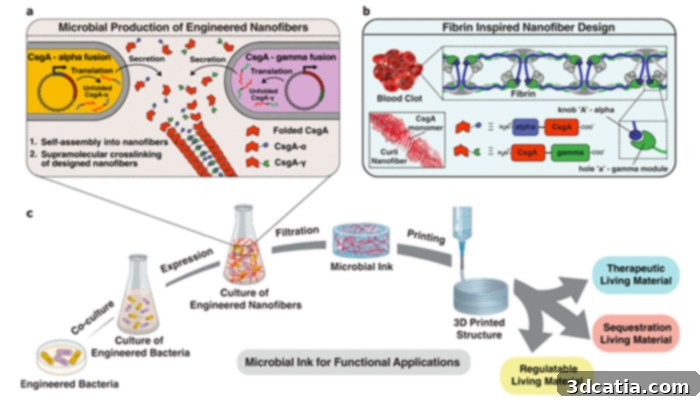
Photo Credits: Harvard University / Brigham and Women’s Hospital
Unveiling Harvard’s Microbial Ink: A Game-Changer in Bioprinting
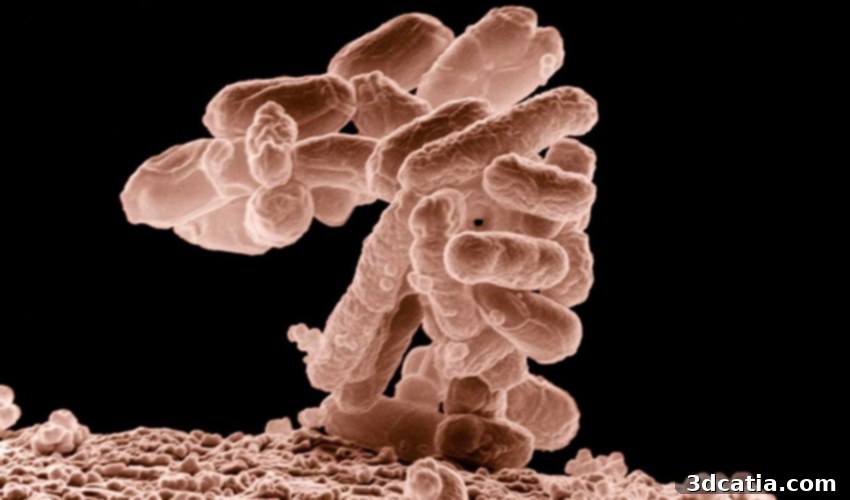
The ingenuity behind Harvard’s microbial ink lies in its sophisticated composition and the precise engineering of its living components. At its core, the researchers strategically incorporated genetically engineered strains of the bacterium *Escherichia coli* (commonly known as *E. coli*) and meticulously modified protein nanofibers directly into the ink formulation. While *E. coli* is often associated with adverse health effects, it is fundamentally a bacterium belonging to the enterobacteria family, naturally found as a key component of the microbiota in the gastrointestinal tract of homeothermic animals, including humans. Its well-understood genetics and ease of manipulation make it an ideal candidate for biotechnological applications. For the printing process, a carefully calibrated mixture comprising alginate, a naturally occurring polysaccharide derived from brown algae, and the engineered *E. coli* was expertly 3D printed onto a surface pre-treated with calcium chloride. This specific choice of substrate is critical because the alginate molecules undergo a rapid and robust cross-linking reaction when they come into contact with calcium ions, leading to the instantaneous formation of a solidified, stable hydrogel. This rapid gelation is essential for maintaining the intricate architectural fidelity of the 3D printed structures.
The Precision of Extrusion Bioprinting for Living Materials
Regarding the fabrication methodology itself, the research team detailed their strategic choice of 3D printing technique in their published article. They emphasized the advantages of extrusion-based bioprinting, stating, “Although inkjet printing, contact printing, screen printing, and lithographic techniques have been explored to print microbes, extrusion-based bioprinting has become one of the most widely used techniques due to its simplicity, compatibility with a variety of bioinks, and cost-effective instrumentation.” This highlights the practical and scalable nature of their chosen method. Extrusion bioprinting allows for a continuous deposition of the microbial ink, layer by layer, enabling the creation of complex three-dimensional geometries with embedded living cells. The ability to work with a diverse range of bioinks, coupled with the relatively low cost and operational simplicity of extrusion bioprinters, makes this approach particularly attractive for developing and scaling up advanced biotechnological applications. The precision afforded by this technique ensures that the engineered *E. coli* remain viable and functional within the printed scaffold, ready to perform their programmed tasks, whether it’s drug synthesis or environmental detoxification, once activated.
Overcoming Bioprinting Challenges: Nature as an Inspiration
The journey of developing such sophisticated living materials is often fraught with significant technical challenges, and the Harvard team’s research was no exception. A primary hurdle revolved around optimizing the rheological properties of the living materials themselves to ensure successful and stable 3D printing. For a bioink to be effectively extruded through a nozzle, it must possess a sufficiently low viscosity. However, immediately after printing, the material must then exhibit a high enough viscosity and structural integrity to retain its intricate printed shape without collapsing or deforming. Balancing these two contradictory requirements – low viscosity for flow and high viscosity for structural stability – proved to be a critical engineering conundrum. To address this, the scientists ingeniously drew inspiration from biological systems, specifically the human body’s natural processes. Their solution was inspired by fibrin, a remarkable fibrillar protein that plays a crucial role in blood clot formation. Fibrin’s ability to rapidly assemble into three-dimensional networks, creating stable yet dynamic structures, provided a blueprint for designing a bioink that could exhibit similar dual properties. By mimicking fibrin’s self-assembly and cross-linking capabilities, the researchers were able to formulate a microbial ink that was fluid enough to print with precision, yet quickly solidified into robust, self-supporting living structures, ensuring the integrity and functionality of the printed designs.
Transformative Applications: From Medicine to Outer Space
While the field of living materials development is still in its nascent stages, the future it promises is exceptionally bright and replete with transformative potential. The Harvard team’s microbial ink represents a significant leap forward, opening doors to applications that were once confined to the realm of science fiction. The programmable nature of these living materials means they can be tailored to perform a vast array of functions, fundamentally altering how we approach critical challenges in health, environment, and space exploration.
Advancing Drug Delivery and Therapies
One of the most immediate and impactful applications of this technology lies in advanced drug delivery systems. Imagine a microscopic, 3D printed structure made of microbial ink, implanted within the body. This living material could be programmed to continuously synthesize and release therapeutic compounds, such as insulin for diabetics or specific antibodies for immune disorders, directly at the site of need. Such a system could offer personalized medicine solutions, delivering precise dosages over extended periods, minimizing side effects, and improving patient adherence. It could also revolutionize the treatment of chronic diseases, offering sustained therapeutic effects without the need for frequent administration, thereby significantly enhancing patient quality of life and treatment efficacy.
Environmental Guardians: Cleaning Our Planet
Beyond medical applications, the microbial ink holds tremendous promise for environmental remediation. Genetically engineered microbes embedded within 3D printed structures could be deployed to target and degrade specific pollutants in contaminated soil or water bodies. For instance, they could be designed to break down plastics, neutralize heavy metals, or even convert industrial waste into harmless byproducts. These “living filters” could offer scalable, sustainable, and highly efficient solutions for environmental clean-up, addressing some of the most pressing ecological challenges facing our planet today. Their ability to self-replicate and adapt could also provide long-term, self-sustaining bioremediation strategies, reducing the need for continuous human intervention.
A New Frontier in Cancer Research
The potential impact on cancer research is equally profound. The programmable microbial ink could be utilized to create sophisticated 3D tumor models that more accurately mimic the complex microenvironment of real tumors than traditional 2D cell cultures. These living models would allow researchers to test new anti-cancer drugs, observe drug resistance mechanisms, and study tumor progression in a more physiologically relevant setting. Furthermore, in the future, it might be possible to engineer microbial inks to deliver targeted chemotherapies or immunotherapies directly to cancer cells, minimizing damage to healthy tissues and improving treatment outcomes. The precision of 3D printing combined with the biological activity of engineered microbes could unlock entirely new avenues for cancer diagnosis and treatment.
Enabling Space Exploration and Martian Colonies
Looking to the stars, the Harvard team envisions the microbial ink playing a pivotal role in supporting future space missions and potential human colonies on Mars. In the harsh and resource-limited environments of space, the ability to 3D print living materials on-demand could be transformative. These materials could be engineered to synthesize essential nutrients, medicines, or even construction materials from locally available resources. Imagine Martian habitats with self-sustaining biological systems providing food, oxygen, and even recycling waste, all fabricated using living inks. This technology could significantly reduce the payload requirements for long-duration space travel, making extraterrestrial colonization more feasible and sustainable by enabling closed-loop life support systems and in-situ resource utilization.
Broader Implications for Regenerative Medicine
While not explicitly stated in the original text, the broader implications for regenerative medicine are undeniable. The ability to 3D print living materials opens up possibilities for creating functional tissue constructs, such as organoids for drug testing or even rudimentary replacement tissues for transplant. By precisely arranging living cells within a bioprinted scaffold, researchers could engineer complex biological systems that replicate the function of damaged or diseased organs, offering hope for patients suffering from organ failure or severe tissue damage. The programmable nature of the microbial ink means these constructs could also be designed to release growth factors or other biological cues to encourage integration with native tissues.
There is still a considerable journey ahead in the comprehensive development and refinement of these living materials, yet the horizons they unveil are exceptionally promising. The Harvard team confidently asserts that their microbial ink could be broadly implemented in critical research efforts against various forms of cancer, or even serve as a vital resource for sustaining future human colonies on Mars, demonstrating the vast spectrum of its potential impact. For those eager to delve deeper into the specifics of this groundbreaking research and the detailed methodologies employed, more comprehensive information regarding the project is readily available in the official publication HERE.
What are your thoughts on this incredible microbial ink developed by Harvard University and Brigham and Women’s Hospital? We invite you to share your insights and comments below, or engage with us on our social media platforms: Linkedin, Facebook, and Twitter! Don’t miss out on the latest advancements in additive manufacturing—be sure to sign up for our free weekly Newsletter here to receive all the newest 3D printing news directly in your inbox. Additionally, you can discover all our insightful videos and in-depth content on our dedicated YouTube channel.