
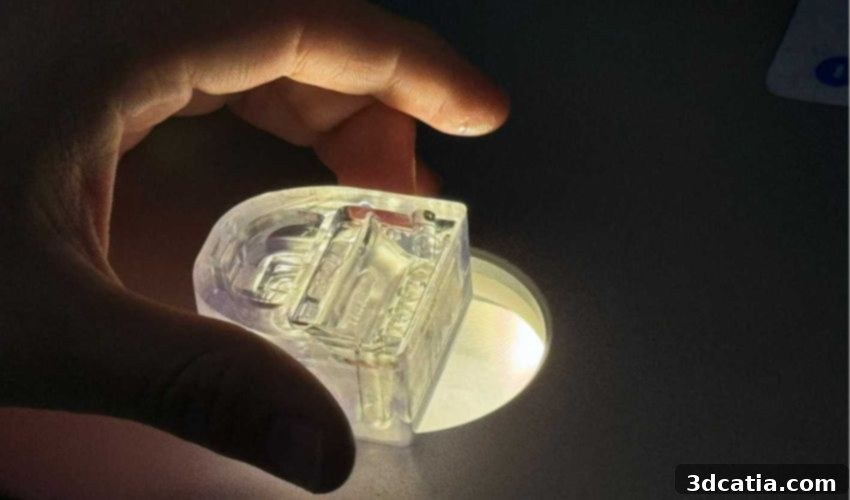
Revolutionizing Reproductive Biology: How Gameet Uses 3D Printing for Advanced Assisted Fertilization
3D printing has emerged as a truly transformative technology, demonstrating its incredible versatility across a myriad of sectors, from complex engineering and innovative medical procedures to advanced pharmaceutical development. Its impact, however, extends even further, now significantly influencing the specialized field of assisted reproduction. Here, additive manufacturing unlocks unprecedented possibilities by enabling the precise creation of intricate biological microenvironments that closely mimic natural fertilization processes. This is precisely where Gameet, an pioneering Argentine company, steps in. Gameet leverages the power of 3D printing alongside specialized resins to develop innovative microdevices meticulously designed to optimize the selection and fertilization of gametes (reproductive cells). To delve deeper into this groundbreaking application, we had the privilege of speaking with Alejandro Guidobaldi, PhD in Biological Sciences, who serves as both CSO and CTO of this dynamic young company. In this exclusive interview, Dr. Guidobaldi shares invaluable insights into the technical complexities behind their invention, the promising progress already achieved in animal models, and his compelling vision for how 3D printing is poised to become an indispensable ally for the future of reproductive biology. Prepare to be inspired by this fascinating intersection of cutting-edge technology and life sciences.
From Biological Research to Additive Manufacturing: The Journey of Dr. Alejandro Guidobaldi
My name is Alejandro Guidobaldi, and my academic journey has deeply rooted me in the biological sciences. I hold a PhD in this field and currently direct the Center for Cell and Molecular Biology, in addition to being a Full Professor in the Department of Cell and Molecular Biology, both within the Faculty of Exact, Physical and Natural Sciences at the National University of Córdoba. My commitment to scientific advancement also extends to my role as an Assistant Researcher at CONICET, Argentina’s National Scientific and Technical Research Council. Given my extensive background, it might initially seem that my work is far removed from the realm of 3D printing. However, my involvement with this technology stems from a powerful blend of both necessity and profound scientific curiosity. Throughout my career as a scientist, I have consistently found immense satisfaction in developing new technologies and refining existing ones to make laboratory work more efficient, precise, and impactful. This drive has led me to explore innovative techniques and processes that push the boundaries of traditional research. In this context, 3D printing has proven to be an invaluable tool, allowing me to transform abstract ideas into tangible solutions. It has enabled me to rapidly prototype and create custom supports, accessories, and specialized equipment that complement and enhance biological research. The ability to tailor these tools precisely to specific experimental needs, adapting them with unprecedented speed and flexibility, has made 3D printing an indispensable asset in my scientific endeavors, bridging what might initially appear to be a gap between biology and advanced manufacturing.

The Gameet team. From left to right: Fernando Cardiello (CBDO), Maximiliano Tourmente (CEO), and Alejandro Guidobaldi (CSO/CTO).
Introducing Gameet: Bridging Decades of Research with Innovative 3D Printing Solutions
Gameet stands as a quintessential example of the innovative spirit I previously described, embodying the fusion of advanced scientific knowledge with cutting-edge technology. It is a company passionately dedicated to manufacturing state-of-the-art devices for assisted reproduction treatments, all made possible through the revolutionary capabilities of 3D printing. The foundational idea for Gameet sprang from a profound desire to translate more than two decades of intensive scientific knowledge generation into tangible societal benefits. Over this significant period, our team has accumulated an unparalleled understanding of the intricate sperm selection processes that are crucial for optimizing fertilization in mammals. This is far from a simple process; it involves a highly complex interplay of specific spatial architectures within the reproductive tract, along with delicate mechanical and chemical interactions that occur naturally between the gametes and their physiological environment. Traditional assisted reproduction techniques often struggle to fully replicate these nuanced natural conditions. This is where 3D printing emerged as a game-changer, opening up an entirely new realm of possibilities for us. It has provided the means to precisely recreate this highly sophisticated biological microenvironment in a way that allows these finely-tuned natural processes—honed over millions of years of evolution—to unfold optimally. These critical processes, which ensure efficient and successful fertilization, are often inadvertently overlooked or significantly under-optimized in the conventional, often manual, procedures currently employed in assisted reproduction. Gameet’s mission, therefore, is to leverage additive manufacturing to close this critical gap, bringing the wisdom of nature directly into advanced fertility treatments.
The Gameet Microdevice: A Lab-on-a-Chip Solution for Streamlined Fertility Treatment
Our innovative devices are conceptually rooted in the “lab-on-a-chip” paradigm, though in our specific application, we refer to them as “lab-on-a-device” given their slightly larger, yet still remarkably compact, scale. Current assisted fertilization treatments are notoriously multi-faceted, involving a sequence of distinct processes that are often performed separately across several workstations and require multiple skilled operators. This traditional approach is not only time-consuming but also increases the risk of variability and potential harm to sensitive gametes due to extensive handling. Our microdevice represents a radical departure from this conventional methodology. It not only integrates and optimizes the crucial natural processes for sperm selection and fertilization but also consolidates what were previously disparate procedures into a single, highly advanced, yet user-friendly device. Designed to fit comfortably in the palm of a hand, this complex system requires minimal user intervention once initiated. By consolidating these steps, we dramatically reduce the need for extensive gamete handling, a critical factor in maintaining their viability and integrity. Furthermore, our device provides a meticulously engineered microenvironment that is optimally designed for these natural biological processes to occur, mirroring the efficiency and selectivity found in vivo. This integrated approach aims to significantly enhance the success rates of assisted reproduction while simultaneously simplifying the entire treatment workflow for fertility specialists.
Overcoming Technical Hurdles: Resolution and Biocompatibility in 3D Printed Microdevices
The development of our sophisticated microdevice has presented two primary technical challenges that we have systematically addressed: achieving the necessary resolution with 3D printing and ensuring the absolute biocompatibility of the chosen resins. Given that natural fertilization typically occurs within the oviduct, our goal is to meticulously recreate complex tubular structures internally. These structures are designed with intricate features that guide and select gametes based on natural biological cues. While 3D resin printing offers exceptional resolution for surface details and external geometries, creating internal channel-like structures at the very limits of the printer’s resolution capacity proves to be remarkably challenging. The precision required for these microscopic channels, which are fundamental to the device’s functionality, pushes the boundaries of current additive manufacturing capabilities. To navigate this, a deep understanding of the specific printer’s limitations, coupled with intimate knowledge of how various resins behave during the printing process, is crucial. Adjusting print orientation can sometimes mitigate issues, but it often necessitates a more fundamental rethinking of the device’s internal architecture. Instead of striving for exact morphological copies of natural structures, we often redesign them to replicate the *necessary functionality* with achievable geometries, ensuring the biological processes can still occur as intended within the constraints of the technology.
Biocompatibility represents another paramount challenge. Gametes are profoundly more sensitive than the somatic cells typically utilized for cytotoxicity testing under standard ISO certifications. This heightened sensitivity means that materials deemed safe for other medical applications often fall short for assisted reproduction. Our devices require materials that can successfully pass rigorous embryotoxicity and HSSA (Human Sperm Survival Assay) tests, which are significantly more stringent than standard evaluations. Consequently, even many FDA-approved resins, while generally considered safe, are frequently unsuitable for direct contact with gametes or embryos within this type of device. Our innovative solution to this critical issue involves a two-step approach: first, we print the base structure of the device using a resin that provides the required resolution and structural integrity. Second, we apply a specialized plastic coating system to the interior surfaces. This coating is meticulously selected and validated for its superior biocompatibility with gametes, effectively creating a non-toxic interface that ensures the health and viability of the reproductive cells. This layered approach allows us to harness the structural benefits of 3D printing while guaranteeing the delicate biological environment required for successful fertilization.
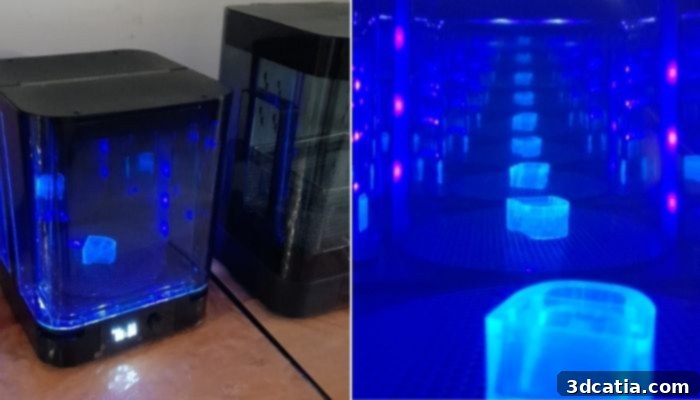
Gameet’s 3D devices are inspired by lab-on-a-chip technology.
Gameet’s Vision for the Future: From Animal Models to a Full Suite of Fertility Products
We are currently at an incredibly exciting juncture in Gameet’s journey. Our team is just finalizing the development of our inaugural biocompatible device, and we have already begun conducting the initial, highly successful fertilization tests in cattle. These positive results in animal models are a critical milestone, validating the core principles and efficacy of our technology. Our immediate and overarching goal is to achieve comprehensive validation in the animal model, encompassing not only successful fertilization rates but also all necessary biocompatibility tests that meet the most stringent industry standards. This thorough validation is an indispensable step that will allow us to confidently advance towards initiating crucial clinical trials involving human patients. This first device, while groundbreaking, is envisioned as merely our Minimum Viable Product (MVP). It serves as the foundational stepping stone from which we plan to strategically develop and launch a comprehensive suite of products specifically tailored for the dynamic and evolving field of assisted reproduction. Each future product within this suite will similarly be underpinned and powered by the advanced capabilities of 3D printing, consistently aiming to enhance efficiency, safety, and success rates in fertility treatments globally.
The Transformative Power of 3D Printing: A Final Reflection
Before concluding, I want to share a perspective that, to me, often evokes scenes from classic science fiction, particularly from shows like Star Trek. In those futuristic narratives, characters could instantly synthesize anything they desired, from gourmet meals to complex tools, simply by issuing a command to a machine and watching it materialize. What fascinates me most about 3D printing today is that we possess a nascent, yet remarkably powerful, version of this capability. We now have the incredible ability to conceptualize or imagine an object and then, often within minutes or a few hours, transform that abstract idea into a tangible, physical reality. Witnessing an idea take shape, layer by painstaking layer, from a digital blueprint to a functional object, is still an experience that fills me with profound amazement and a sense of wonder. I vividly recall the excitement of my very first print; it felt like magic unfolding before my eyes. This technology, with its capacity to bridge imagination and physical creation so directly, is not just a tool for specialists or engineers. It is a fundamental innovation that I firmly believe should be integrated into the basic education of future generations. Understanding 3D printing’s principles and potential will equip them with a unique problem-solving mindset and creative capabilities that will be invaluable in an ever-evolving world. You can explore more about our pioneering startup and its mission HERE.
What are your thoughts on Gameet’s revolutionary 3D printed device for assisted reproduction? We invite you to share your insights and comments below. For more engaging content and updates on the latest in additive manufacturing, be sure to find all our videos on our YouTube channel or follow us on Facebook and LinkedIn! Don’t miss out on the latest 3D printing news and innovations – remember to sign up for our free weekly Newsletter here, delivered straight to your inbox every week!
*All Photo Credits: Gameet