
How 3D Printing is Revolutionizing the Automotive Industry: Leading Companies and Their Innovative Applications
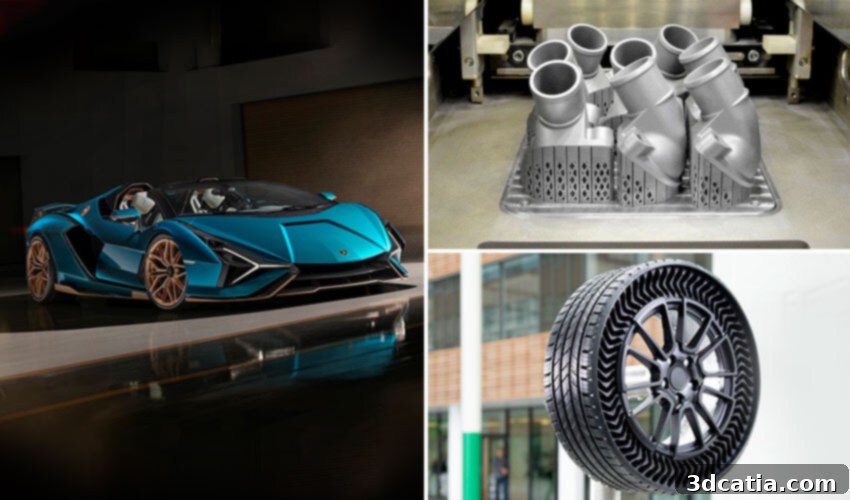
The automotive industry stands as one of the most dynamic sectors to wholeheartedly embrace additive manufacturing (AM) technologies. This transformative shift is driven by AM’s unparalleled ability to deliver significant benefits, including substantial reductions in costs, manufacturing time, and component weight, especially when dealing with complex parts. Beyond these efficiencies, 3D printing unlocks unprecedented levels of design freedom and customization, allowing automotive companies to innovate at a rapid pace. The profound impact of 3D printing on vehicle production and design is evident in its projected market growth, with estimates suggesting the industry will reach an impressive $12.4 billion by 2028. To provide a clearer understanding of how this technology is reshaping the landscape of car manufacturing, we have compiled an in-depth look at major automotive companies that are leading the charge in integrating 3D printing, exploring their diverse applications and strategic advancements. These pioneering companies are listed in alphabetical order to offer a comprehensive overview.
Audi Accelerates Automotive Design and Prototyping with Additive Manufacturing
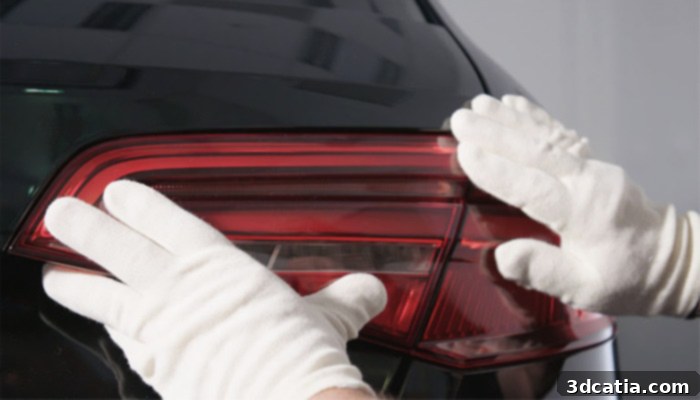
Audi, the renowned German multinational specializing in high-end sports cars and a proud member of the Volkswagen group since 1965, has strategically leveraged additive manufacturing to revolutionize its design and prototyping workflows. A few years ago, the company partnered with Stratasys, integrating their advanced solutions to dramatically accelerate automotive design iterations. Specifically, PolyJet technology became a cornerstone of Audi’s development process, enabling engineers to create and thoroughly evaluate multiple prototypes with exceptional speed and accuracy before committing to final part production. By incorporating the J750 3D printer into its prototyping line, Audi significantly expanded its capabilities. This allowed for the rapid production of intricate models for components such as wheel covers, front grilles, door handles, and even rear light housings, which typically require transparent plastics. The ability to quickly produce high-fidelity, multi-material prototypes with realistic textures and colors empowered Audi to streamline its design verification, accelerate the creation of final parts, and ultimately meet evolving customer demands with greater efficiency and innovation. This integration not only cut down development cycles but also fostered a more experimental and iterative design environment, leading to superior final products.
Bentley’s Extensive Use of 3D Printing: Over 15,000 Parts in a Single Year
The esteemed British car manufacturer Bentley is celebrated not only for its iconic luxury car bodies but also for its ambitious and expanding applications of 3D printing in automobile production. Demonstrating a significant commitment to this technology, Bentley invested over 3 million euros, which enabled the company to manufacture more than 15,000 components using 3D printing in 2021 alone. This substantial adoption of additive manufacturing has yielded considerable benefits, including significant time savings in both design and manufacturing processes, alongside a notable reduction in material waste. Beyond these internal process and economic advantages, Bentley’s integration of AM has also brought substantial added value to its discerning customers. Thanks to 3D printing, clients can now commission components that are completely individual and personalized to their exact specifications, further enhancing the bespoke luxury experience synonymous with the Bentley brand. This level of customization, particularly for interior elements and unique accessories, would be prohibitively expensive or impossible to achieve with traditional manufacturing methods, making 3D printing a crucial enabler for ultra-luxury personalization.
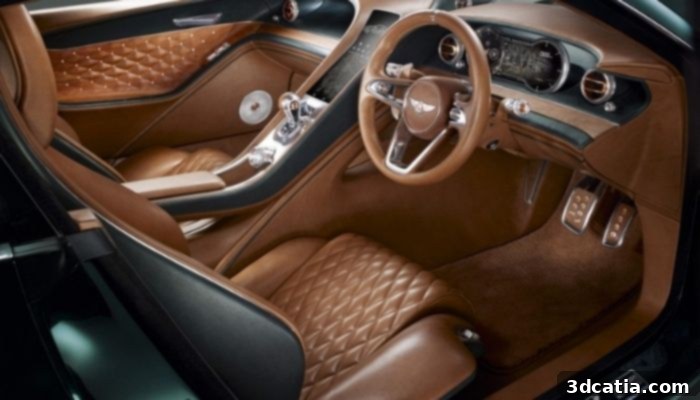
Photo Credits: Bentley
BMW’s Decades-Long Commitment to Additive Manufacturing
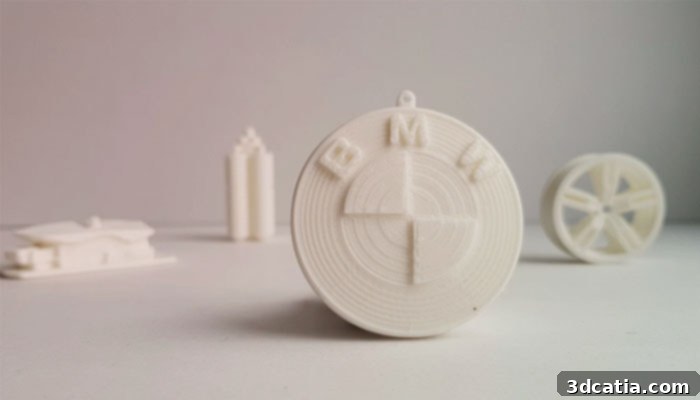
Another titan on our list of companies embracing 3D printing in the automotive sector is the German automotive giant, BMW. Headquartered in Munich, BMW boasts an impressive history with additive manufacturing, having utilized the technology for over 25 years, making it one of the pioneering automakers to integrate AM into its production and R&D processes. This long-standing commitment culminated in a significant milestone in June 2020 with the inauguration of its dedicated Additive Manufacturing Campus. This state-of-the-art facility was established with the explicit goal of centralizing and pooling BMW’s extensive production skills and expertise in 3D printing. The campus is a hub of innovation, staffed by over 80 dedicated employees and equipped with more than 50 industrial additive manufacturing solutions, capable of handling a wide range of materials and technologies. Beyond its specialized center, BMW has consistently demonstrated the practical benefits of AM, notably with its i8 Roadster sports car. This iconic model incorporates parts that are significantly lighter than if they had been produced using conventional manufacturing methods. For instance, components like the bonnet support are now not only lighter but also stronger and more structurally optimized, thanks to 3D printing. This advanced method has become integral to optimizing car production, enabling BMW to achieve superior performance, efficiency, and design flexibility across its vehicle lines.
The Bugatti Bolide: Achieving Unprecedented Lightweighting and Speed with 3D Printing
To engineer its most extreme, lightest, fastest, and aggressive vehicle to date, the esteemed French car manufacturer Bugatti decisively turned to additive manufacturing. The Bugatti Bolide, a hypercar designed to push the boundaries of performance, incorporates numerous 3D printed parts that dramatically reduce the weight of its components. Bugatti meticulously integrated many previously developed individual AM-manufactured parts into the Bolide’s design. Key examples of these innovative applications include a titanium 3D printed brake caliper, which offers exceptional strength-to-weight ratio, and highly optimized spoiler supports and engine mounts produced using advanced techniques from partners like SLM Solutions. The strategic integration of 3D printing was particularly crucial for fabricating parts with complex geometries that would be impossible or incredibly challenging to produce via traditional methods. By leveraging AM, Bugatti successfully achieved significant lightweighting throughout the Bolide, directly contributing to its phenomenal speed and agility, truly making it a groundbreaking sports car in terms of both innovation and performance.
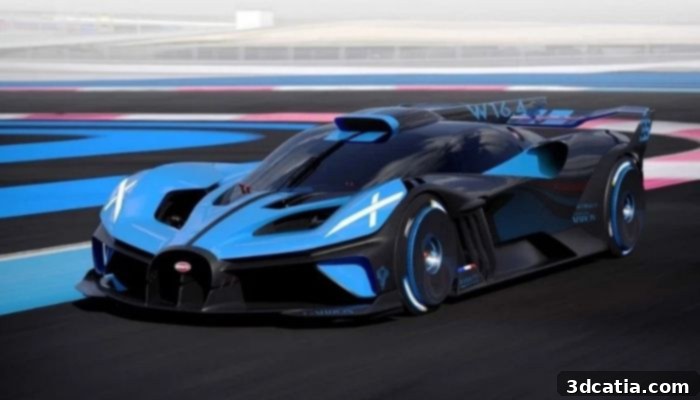
Photo Credits: Bugatti
Dallara and the Innovation of 3D Printed Heat Exchangers for Motorsport
The Italian automaker Dallara, a name synonymous with high-performance motorsport, has strategically partnered with Conflux Technology to manufacture specialized heat exchangers for its demanding Formula 3 cars. Dallara’s reliance on additive manufacturing stems from its ability to produce components that are not only more efficient in thermal management but also exhibit enhanced resistance to the extreme conditions encountered in racing. Specifically, the company utilizes advanced laser fusion machines on a powder bed, developed by EOS, to achieve these superior parts. The particular challenge and innovation in this project lay in the compact size requirements for the heat exchangers, which needed to meet the stringent demands of motorsport without compromising performance. Conflux Technology rose to this challenge by developing several sophisticated CAD and CFD (Computational Fluid Dynamics) designs. Through an iterative process, they 3D printed multiple versions, meticulously validating each geometry and studying critical part characteristics such as surface roughness, ensuring optimal heat transfer and aerodynamic efficiency. This iterative design and manufacturing approach, made possible by AM, allowed Dallara to rapidly develop and deploy highly optimized, compact heat exchangers that deliver a competitive edge on the track.
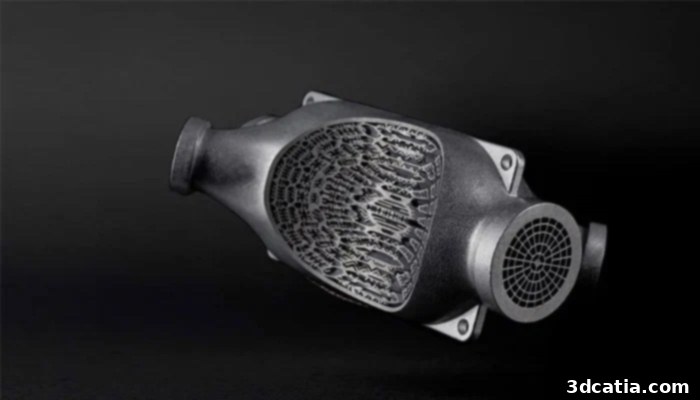
Photo Credits: Conflux Technology
Ferrari Unleashes Performance with Metal Additive Manufacturing
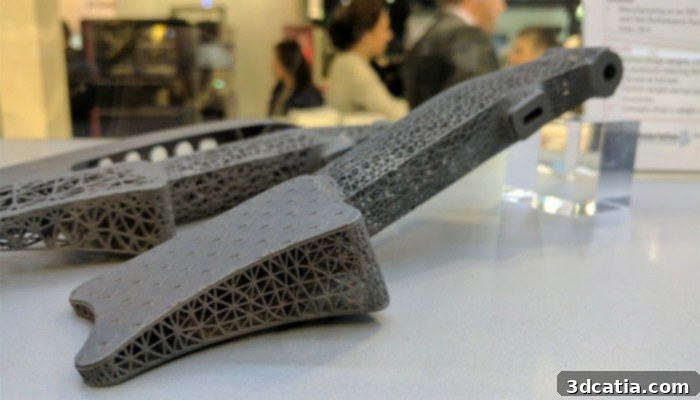
Additive manufacturing plays an absolutely critical role in high-stakes motorsport, enabling the design and production of lighter, stronger, and significantly more efficient parts within drastically shorter timeframes. The legendary manufacturer Ferrari has fully embraced this technology, particularly focusing on metal 3D printing, to engineer key components for its engines. Ferrari, for instance, utilized an EOS machine with titanium powder to design the pistons for one of its high-performance engines. The company highlights that additive manufacturing allowed them to conceptualize and realize a far more complex, resistant, and lightweight piston design, primarily through the application of topology optimization. This advanced design method optimizes material distribution to maximize performance and minimize weight. Furthermore, AM significantly boosts the number of possible design iterations, allowing Ferrari to explore countless designs as necessary and drastically accelerate its prototyping phase. Beyond pistons, Ferrari has also pioneered the design of 3D printed brake pedals featuring intricate hollow structures – an achievement that would have been impossible to realize with traditional manufacturing methods. These innovations underscore Ferrari’s commitment to pushing the boundaries of engineering through advanced manufacturing techniques.
Ford’s Extensive and Innovative 3D Printing Projects
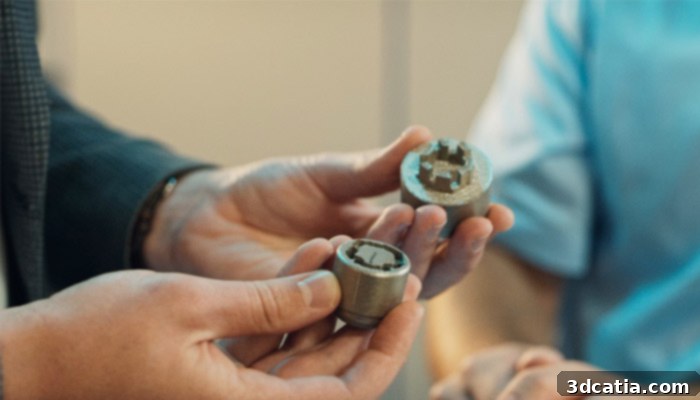
Ford, a pioneer in mass production, has also been an early adopter of 3D printing, having invested in three 3D printers as far back as 1988. By 2015, the company estimated its production of 3D printed parts at an impressive 500,000, clearly demonstrating the technology’s established importance within the American automotive giant. Ford has forged strong strategic partnerships with leading additive manufacturing companies such as Desktop Metal and Carbon, expanding its capabilities across various AM processes. Among its notable 3D printed parts, the aluminum air intake manifold stands out as one of the largest 3D printed metal components for automobiles. Weighing 6 kilograms, this complex part was produced in a remarkable 5 days, showcasing AM’s speed and capacity for large-scale metal fabrication. More recently, Ford introduced an innovative application with customized wheel nuts designed to protect rims from theft. These unique lug nuts, printed on EOS machines, are modeled from the driver’s voice: the voice pattern is converted into a 3D model and then intricately printed inside the nut. This ingenious method offers an effective anti-theft solution, as only the specific driver’s voice can be used to generate the key needed to remove the nuts, highlighting the potential of AM for personalized security features.
Lamborghini Utilizes AM for Unrivaled Personalization in the Sian Roadster
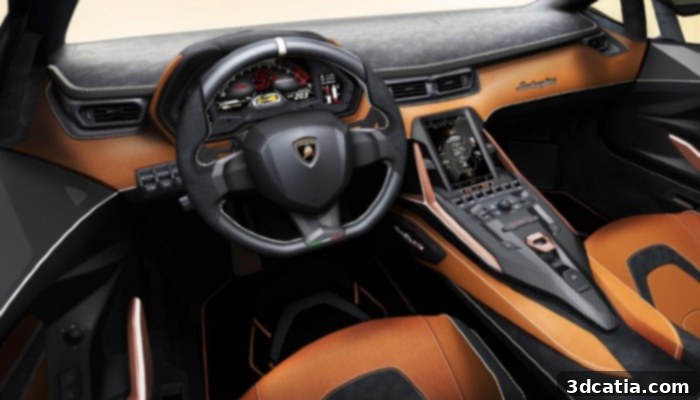
Lamborghini, a brand synonymous with exclusivity and high-end luxury sports cars, actively embraces additive manufacturing not just for cost savings or rapid production, but primarily for the endless opportunities it presents for unparalleled customization. The company understands that for its discerning clientele, personalization is a key differentiator. Unveiled in the summer, Lamborghini’s Sian Roadster exemplifies this philosophy, offering an exceptional degree of personalization tailored to client preferences. For instance, the newly designed air vents, critical aesthetic and functional elements, were manufactured using additive manufacturing technology. This enabled perfect customization, allowing customers to have their initials or other bespoke designs intricately integrated into the car’s interior elements. This level of intricate, on-demand personalization for luxury vehicles showcases how 3D printing can enhance brand value by creating truly unique and bespoke ownership experiences, solidifying Lamborghini’s position at the forefront of automotive innovation and customer-centric design.
McLaren’s New Artura Hybrid Supercar: Enhanced Performance Through 3D Metal Printing
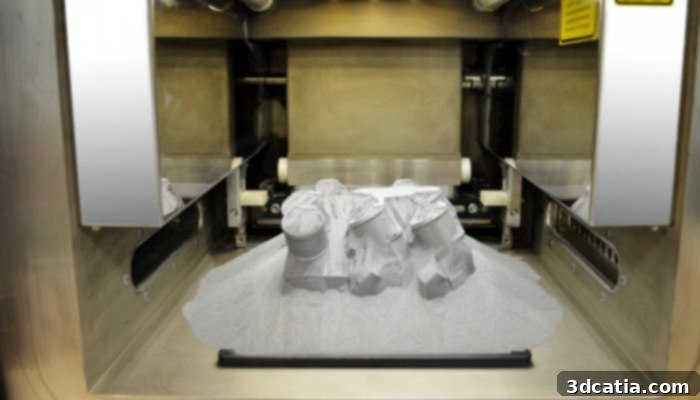
Luxury carmaker McLaren, like many of its high-performance counterparts, is a strong proponent of the benefits offered by additive manufacturing. For its groundbreaking Artura, a high-performance hybrid supercar engineered to masterfully blend cutting-edge technology, sophisticated design, and unmatched driving dynamics, McLaren strategically opted to integrate 3D metal printing. The British automotive manufacturer utilized this innovative method to design and produce complex engine block and cylinder head cores. This advanced application allowed for the creation of intricate internal geometries that significantly improve engine cooling, directly leading to enhanced performance and efficiency. A core focus during the supercar’s development was achieving a substantial weight reduction compared to similar vehicles. To accomplish this, the design team utilized lightweight carbon fiber for the chassis. Complementing this, they incorporated 3D printed cores within the engine block and aluminum cylinder heads. These intricate components, which would have been impossible to create with such precise detail using traditional manufacturing methods, played a vital role in achieving the Artura’s impressive lightweight design and superior thermal management, underscoring AM’s critical role in optimizing supercar engineering.

Photo Credits: McLaren
Mercedes-Benz: Diverse Applications of Additive Manufacturing from Trucks to Electric Cars
The automotive industry extends far beyond passenger vehicles, encompassing a vast sector of commercial transport, particularly trucks. Mercedes-Benz has made significant strides in this area, initially focusing successfully on 3D printing plastic parts for prototypes and interior components. However, the company has since expanded its additive manufacturing capabilities to include metal parts for its trucks. By employing metal 3D printing, Mercedes-Benz is able to produce replacement parts that are not only stronger and more durable but also offer increased flexibility and improved performance compared to conventionally manufactured components. A key advantage of this approach is the ability to produce these specialized parts in small quantities and at a reduced cost, making it ideal for on-demand manufacturing and parts that might otherwise be obsolete. Mercedes-Benz stands out as one of the first major companies to specifically focus on the production of truck parts using AM. Furthermore, the German brand also leverages 3D printing to optimize its passenger car lines. For instance, in its advanced electric vehicle, the EQXX, 3D technologies were instrumental in achieving significant weight reduction for various components, thereby limiting manufacturing costs and shortening production times. This dual approach demonstrates Mercedes-Benz’s comprehensive adoption of AM across its entire vehicle portfolio, from heavy-duty trucks to cutting-edge electric cars.
Michelin Pioneers Sustainable Mobility with 3D Printed Airless Tires
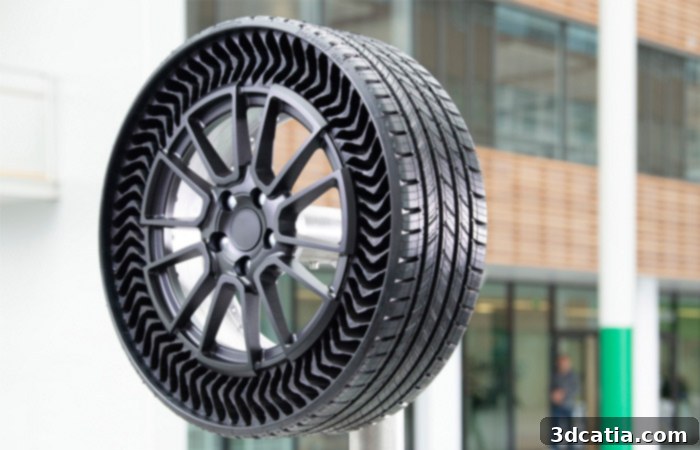
French tire manufacturing giant Michelin took a significant leap forward in sustainable mobility by introducing its first prototype tire utilizing additive manufacturing technologies in 2019. Christened Uptis (Unique Puncture-proof Tire System), these revolutionary tires were ingeniously designed to be airless, virtually eliminating the risk of punctures and enhancing vehicle uptime. Michelin collaborated closely with U.S.-based General Motors to develop this innovative 3D printed prototype, showcasing the power of cross-industry partnership. Beyond the initial production, the company envisions using additive manufacturing for potential repairs to the puncture-resistant rubber strip if needed, further extending the lifespan of the tires. As a testament to its success and viability, the Uptis tires successfully completed their inaugural road tests in 2021. Following this promising outcome, Michelin harbors ambitious plans to move towards commercialization by 2024. To date, 3D printing has been exclusively employed for the development of the prototype, utilizing renewable and bio-based materials to align with sustainability goals. However, as production scales to higher volumes, the technology is poised for larger-scale implementation. The Uptis tires represent a paradigm shift towards reducing waste and promoting sustainable mobility, incorporating a flexible fiberglass and rubber-reinforced structure mounted on a lightweight aluminum wheel, demonstrating AM’s potential to redefine fundamental automotive components.
The Mini Strip: A Sustainable Vehicle Concept Thanks to 3D Printing
The British car manufacturer MINI has made a clear statement about its commitment to environmental responsibility by integrating 3D printing into its vision for more sustainable cars. The MINI Strip, a concept vehicle designed in collaboration with fashion designer Paul Smith, embodies this eco-friendly ethos. To achieve its sustainability goals, the teams behind the project leveraged 3D printing to produce various components from recycled materials. These innovative parts include floor mats crafted from recycled rubber, unique under-door panels, and stylish hubcaps. Beyond the significant environmental benefits of utilizing recycled feedstock, these multiple 3D printed parts also contribute to the MINI Strip’s distinctive aesthetic, characterized by a simplified geometry and a sleek, minimalist design. This project highlights how additive manufacturing can be a powerful tool not only for optimizing performance and customization but also for promoting circular economy principles and sustainable design within the automotive sector, offering a glimpse into the future of eco-conscious vehicle manufacturing.
Porsche Pioneers with 3D Printed Engine Pistons and Strategic Investments
The legendary luxury carmaker Porsche, renowned for its high-performance vehicles, has a surprisingly long history with additive manufacturing, having utilized the technology since the early 1990s. In 2020, Porsche made headlines with several major projects that showcased its commitment to 3D printing. Most notably, the company successfully developed and implemented 3D printed engine pistons for the high-performance engine of the iconic Porsche 911 GT2 RS. These advanced pistons were not only lighter but also designed with optimized internal structures for enhanced performance and durability. Furthermore, Porsche also introduced a 3D printed electric drive housing that achieved a remarkable 40% weight reduction, demonstrating AM’s potential for lightweighting in electric powertrains. While recent major news regarding new 3D printed parts from Porsche has been less frequent, the company reiterated its strategic vision at the end of 2021 by announcing a significant investment in INTAMSYS, a leading specialist in 3D printing known for its expertise in high-performance materials. This investment strongly suggests that additive manufacturing will continue to play a pivotal and evolving role in the design, development, and production of Porsche’s future vehicles, particularly as they explore new materials and complex applications.
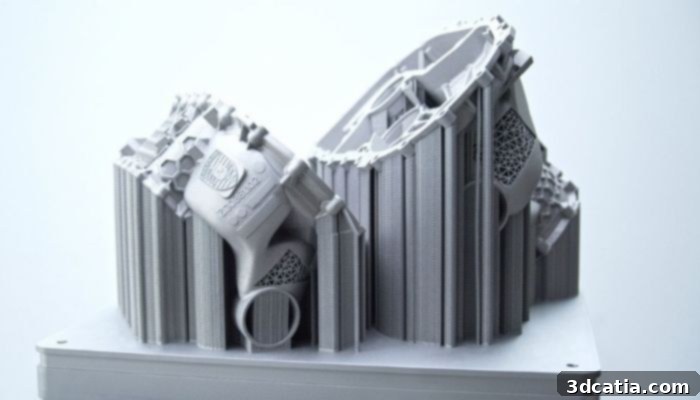
Photo Credits: Porsche
SEAT’s Dedicated Additive Manufacturing Center Boosts Automotive Innovation
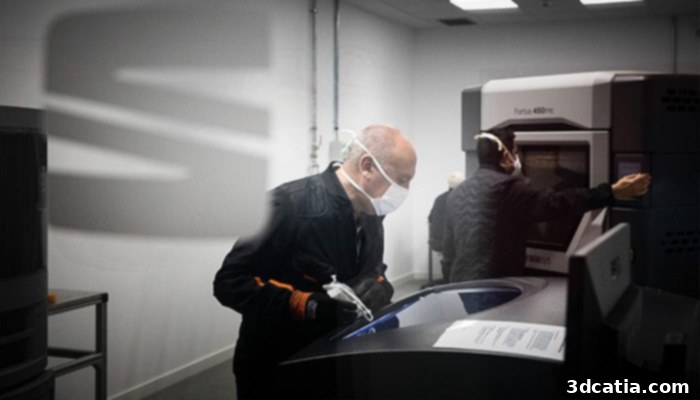
The Spanish manufacturer SEAT is rapidly advancing its integration of 3D printing within the automotive sector through strategic infrastructure development. The company recently completed a state-of-the-art 3,000 m2 building, specifically designed to unify all pre-production processes and activities for new model development. A significant portion of this expansive new center is dedicated to additive manufacturing projects, serving as a hub for innovation and rapid prototyping. SEAT’s AM center is exceptionally well-equipped, housing a diverse fleet of nine industrial 3D printers. This impressive array includes an HP Multi Jet Fusion system, an SLS (Selective Laser Sintering) machine, six FDM (Fused Deposition Modeling) 3D printers, and a PolyJet solution. The diversity of these technologies empowers SEAT to produce parts with varying levels of detail, from highly functional prototypes requiring important mechanical properties to advanced functional components and intricate customization elements. The machines operate around the clock, 24 hours a day, producing an average of 50 parts daily. According to SEAT, approximately 80% of these parts are prototypes, crucial for accelerating vehicle development cycles, while the remaining 20% primarily consists of tooling, jigs, fixtures, and bespoke customization components for both internal use and customer offerings. This integrated approach positions SEAT as a leader in leveraging AM for efficient and innovative vehicle development.
Vital Auto: Shaping the Cars of the Future with Rapid 3D Prototyping
Founded in 2015, the British industrial design studio Vital Auto has carved out a niche as a specialist in cutting-edge automotive design and rapid prototyping. The company boasts an illustrious client roster that includes many of the world’s leading car manufacturers, such as Volvo, Nissan, and McLaren. To provide these demanding clients with high-quality prototypes swiftly and at a reduced cost, Vital Auto extensively utilizes Formlabs’ advanced Form 3L and Fuse 1 3D printers. Additive manufacturing has been seamlessly integrated into Vital Auto’s entire production process, from initial design conceptualization to final prototype realization. Anthony Barnicott, Design Engineer in charge of additive manufacturing at Vital Auto, elaborates on their approach: “We’ve used 3D printing from day one. We wanted to introduce it to our manufacturing processes, not only to reduce costs, but to give the customer more diversity with their designs and their ideas. What interests me most about the Form 3L machines is their versatility, the ability to do a material change in less than five minutes and the variability of those materials going from a soft, flexible material to a hard and rigid material for us is priceless.” This flexibility in materials and rapid iteration capabilities are crucial for meeting the diverse and evolving demands of the automotive design industry.
YOYO: The Fully 3D Printed Electric City Car by XEV
As global warming intensifies worldwide, there is an increasing shift towards more eco-friendly alternatives to traditional products, including a significant surge in demand for electric cars. In this burgeoning market, 3D printing is proving to be a game-changer for sustainable vehicle production. A prime example of this innovation is the YOYO, a fully-electric city car developed by XEV. This pioneering vehicle was largely constructed using large-format additive manufacturing, signifying a fundamental rethinking of automotive assembly. According to XEV, the YOYO represents a more sustainable solution for urban mobility, not only due to its 100% electric motor but also because of the inherent environmental benefits of 3D printing itself. Additive manufacturing was specifically chosen for its ability to reduce material waste, optimize material usage, and allow for localized production, making it a far more sustainable choice compared to conventional manufacturing methods. The YOYO showcases the profound potential of 3D printing to enable the creation of lightweight, efficient, and environmentally conscious vehicles that are perfectly suited for the demands of modern urban environments, pushing the boundaries of what is possible in sustainable automotive engineering.
The rapid adoption and diverse applications of 3D printing across these leading automotive companies clearly illustrate its transformative impact on the industry. From accelerating design cycles and enabling unprecedented customization to lightweighting critical components, enhancing performance, and driving sustainable manufacturing practices, additive manufacturing is redefining how vehicles are conceived, developed, and produced. As the technology continues to evolve, its influence on the future of automotive innovation is set to grow even further, promising more efficient, personalized, and environmentally conscious vehicles. What are your thoughts on these groundbreaking 3D printing applications in the automotive sector? Let us know in a comment down below or on our Facebook and Twitter pages! Don’t forget to sign up for our free weekly Newsletter, with all the latest news in 3D printing delivered straight to your inbox!