
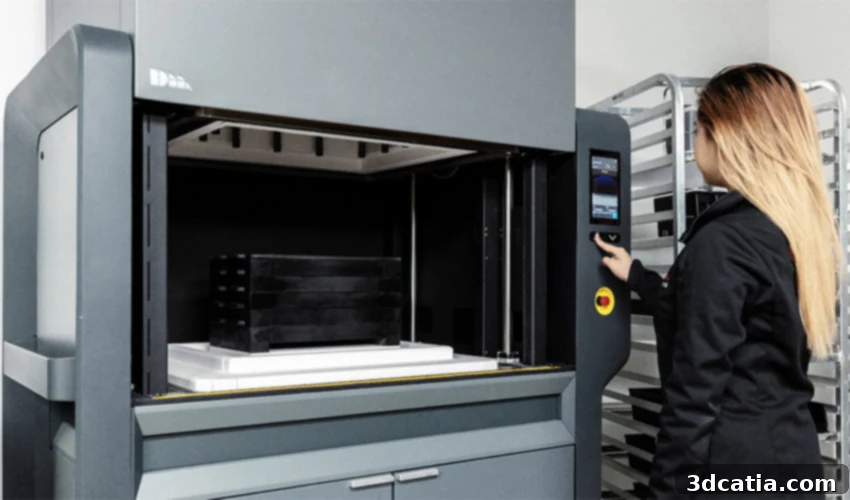
Desktop Metal Bolsters Multi-Material 3D Printing Capabilities with Strategic Aerosint Acquisition
Desktop Metal, a leader in the additive manufacturing space, has been actively expanding its portfolio through a series of strategic acquisitions, signaling a clear vision for the future of industrial 3D printing. Following its significant move to acquire EnvisionTEC in January, which brought pioneering polymer and bioprinting technologies under its umbrella, the American firm continued its growth trajectory by announcing the acquisition of Forust Corporation. This addition saw Desktop Metal venture into wood additive manufacturing, showcasing a commitment to diverse material applications. The latest, and perhaps one of the most transformative, additions to this growing list is the Belgian company Aerosint. This acquisition is poised to significantly enhance Desktop Metal’s capabilities in multi-material additive manufacturing, a frontier widely recognized as the next major leap in the industry. Aerosint will now operate as a wholly-owned subsidiary of Desktop Metal, with its esteemed founders, Edouard Moens de Hase and Matthias Hick, taking on crucial roles as Managing Director and Chief Innovation Officer, respectively, ensuring continuity of expertise and vision.
Desktop Metal’s Vision for Industrial Additive Manufacturing
Desktop Metal’s aggressive acquisition strategy is not merely about accumulating companies; it’s a deliberate, calculated effort to build a comprehensive ecosystem for industrial additive manufacturing. Each acquisition fills a critical gap or strengthens an existing offering, creating a synergistic effect across different material types and printing technologies. The integration of EnvisionTEC broadened Desktop Metal’s reach into photopolymer and bioprinting, crucial for applications requiring high precision and biocompatibility. Forust brought an innovative, sustainable approach to producing wood-based components, tapping into a vast market for consumer goods and architectural applications. Now, with Aerosint, Desktop Metal is making a definitive statement about the future of 3D printing: multi-material capabilities are paramount for truly transformative product development. This strategic accumulation positions Desktop Metal not just as a provider of 3D printers, but as a full-spectrum solution provider for advanced manufacturing needs, capable of addressing an ever-increasing range of industrial applications from prototyping to mass production.
Aerosint: Pioneering Multi-Powder Deposition Technology
Founded in 2016 in Liège, Belgium, Aerosint quickly distinguished itself in the additive manufacturing market with its groundbreaking selective powder deposition technology. This innovative process enables the production of multi-material parts with unprecedented precision and efficiency. The ability to print with a mix of multiple materials is considered by many, including Desktop Metal’s founder and CEO, Ric Fulop, as the logical next step for the industry. Fulop articulated this vision, stating, “Multi-material printing is the next frontier of additive manufacturing. Today, we print parts, but in the future, we will try to print complete products, which could be made of several materials.” He further emphasized the profound impact of this acquisition: “The industrialization of Aerosint’s core technology and related powder processing systems will bring many benefits to the widespread adoption of additive manufacturing solutions.” This outlook underscores the strategic importance of Aerosint’s technology in moving beyond mere component fabrication towards the creation of fully integrated, functional products in a single print job.
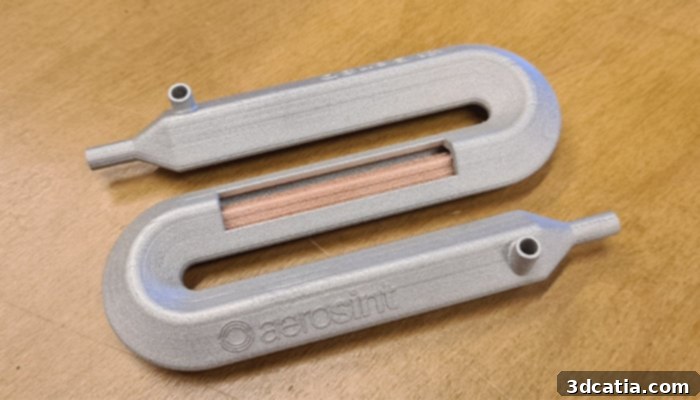
An example part designed using Aerosint’s selective powder deposition process. (Photo Credit: Aerosint)
The Transformative Potential of Multi-Material 3D Printing
The ambition to print “complete products” rather than just individual parts represents a paradigm shift in additive manufacturing. Current limitations often necessitate assembling multiple single-material components, a process that adds complexity, cost, and potential points of failure. Multi-material 3D printing, especially through Aerosint’s selective powder deposition technology, promises to overcome these hurdles. Imagine a single component that combines rigid structural elements with flexible hinges, or an electronic device with embedded conductive traces and insulating layers, all fabricated in one continuous process. This capability opens doors to creating parts with optimized performance characteristics, such as specific thermal, electrical, or mechanical properties tailored to different sections of a single object. Industries ranging from aerospace and automotive to healthcare and consumer electronics stand to benefit immensely from this advancement, enabling the design and manufacture of truly next-generation products that are lighter, stronger, more functional, and more efficient.
Delving into Aerosint’s Selective Powder Deposition Technology
At the heart of Aerosint’s innovation is its selective powder deposition technology, engineered to deliver multi-material capabilities at a reasonable cost and with significantly reduced material waste – a common challenge in traditional powder bed fusion processes. Unlike conventional Selective Laser Sintering (SLS) or Selective Laser Melting (SLM), which typically utilize a single powder type across an entire layer, Aerosint’s patented process selectively deposits two or more different powders within the same layer. This is achieved by using a recoater head equipped with multiple hoppers and a sophisticated series of valves, allowing for precise control over where each powder is placed. For instance, one powder can be designated for the structural elements of a part, while another can be used for support structures, or even to create different functional zones within the part itself. This granular control not only enables the creation of complex multi-material geometries but also optimizes material usage. By only placing the expensive functional material where it is truly needed, and using a cheaper, sometimes recyclable, material elsewhere, the process dramatically cuts down on overall material costs and waste. Designed for versatility, this technology is capable of handling a wide variety of materials, including polymers, metals, and ceramics, making it highly attractive to industrial manufacturers looking to push the boundaries of product design and functionality.
The ability to mix powders on a layer-by-layer basis allows manufacturers to engineer parts with novel, previously unattainable properties. For example, a single component could feature sections with high tensile strength alongside areas designed for electrical conductivity or specific thermal insulation. This level of material customization opens up immense possibilities for creating advanced functional parts tailored to exact application requirements. Furthermore, by strategically deploying support materials that can be easily removed, or even functional materials that integrate into the final product, Aerosint’s technology ensures greater design freedom and material efficiency. This inherent capability to save material, both during the printing process and by enabling more efficient post-processing, truly differentiates selective powder deposition from other additive manufacturing technologies. With this pivotal acquisition, Desktop Metal not only broadens its technological reach but also significantly deepens its offerings in the advanced additive manufacturing landscape, solidifying its position at the forefront of industrial innovation.
Synergy and Future Impact on the Additive Manufacturing Industry
The integration of Aerosint’s selective powder deposition technology into Desktop Metal’s extensive portfolio creates a powerful synergy that promises to accelerate the adoption of multi-material solutions across various sectors. Desktop Metal’s expertise in scaling industrial additive manufacturing processes will be crucial in bringing Aerosint’s innovative technology to a broader market, moving it from specialized applications to mainstream industrial production. This acquisition directly addresses the growing demand for higher-performance, more complex, and more functional 3D printed parts. By enabling the seamless combination of different materials, Desktop Metal can empower engineers and designers to overcome current design constraints, fostering innovation in areas like lightweighting, thermal management, and sensor integration. The ability to print complete products with varied material properties in a single step will significantly reduce manufacturing lead times, simplify supply chains, and lower overall production costs. This strategic move is a testament to Desktop Metal’s commitment to not just participate in, but to actively define, the future trajectory of additive manufacturing, making advanced, multi-functional 3D printing accessible and economically viable for a wider range of industrial applications.
What are your thoughts on Desktop Metal’s recent series of acquisitions and the increasing focus on multi-material 3D printing? Do you foresee this becoming the dominant trend in industrial additive manufacturing? Share your insights and join the conversation in the comments below or on our Facebook and Twitter pages. Don’t miss out on the latest advancements and news in the dynamic world of 3D printing – remember to sign up for our free weekly newsletter, delivered straight to your inbox!