
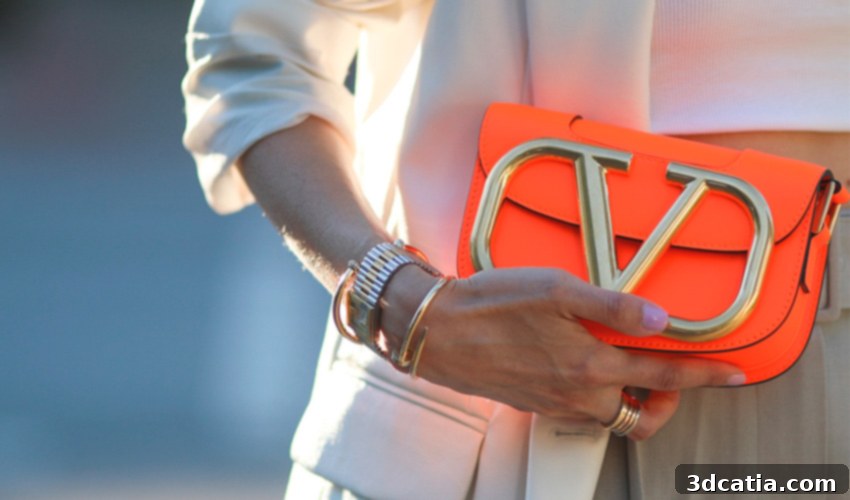
XJet’s NanoParticle Jetting: Pioneering High-Quality Metal and Ceramic 3D Printing for Fashion, Healthcare, and Beyond
Additive manufacturing (AM) has experienced an astonishing surge in growth over recent years, particularly within the metal and ceramic sectors. This technological revolution is reshaping industries globally, driven by the unique properties and capabilities these advanced materials offer when integrated with 3D printing. A recent report from USD Analytics highlights this trend, estimating the global metal AM market at a substantial $4.9 billion in 2023. This market is projected to expand significantly, boasting an impressive compound annual growth rate (CAGR) of 22.85% through 2030. While ceramic 3D printing is a more niche field, largely due to the inherent complexities of working with these materials, its market is nonetheless anticipated to reach approximately $3.5 billion by the same year. This remarkable growth is not merely a statistical anomaly; it stems from the ability of metal and ceramic 3D printing to unlock previously unattainable applications across a myriad of fields. Companies like XJet are at the forefront of this innovation, with their groundbreaking 3D printing technology making a profound impact, especially within demanding sectors such as high fashion and healthcare.
XJet, an innovative Israeli company, has consistently pushed the boundaries of additive manufacturing with its revolutionary material jetting technology, known as NanoParticle Jetting (NPJ). This advanced process is redefining what’s possible in both metal and ceramic 3D printing, enabling the scalable production of high-quality, complex end-use parts. At the core of NPJ is an ingenious method where specialized inks, containing either solid metal or ceramic nanoparticles, are jetted precisely onto a build tray. This approach fundamentally differentiates itself from conventional powder-bed fusion techniques, offering significant environmental advantages. Notably, NPJ is entirely powderless, eliminating the challenges associated with handling fine powders, such as airborne particles and material waste. Furthermore, it utilizes a fully water-soluble support material, simplifying post-processing and further enhancing its eco-friendly credentials. These tangible benefits are now gaining widespread recognition and adoption across diverse industries, from the creation of exquisite high-fashion accessories to the manufacturing of precision medical surgery tools. XJet, along with its strategic partners, is set to showcase these transformative applications and more at the upcoming Formnext exhibition, demonstrating the versatility and power of NPJ technology.
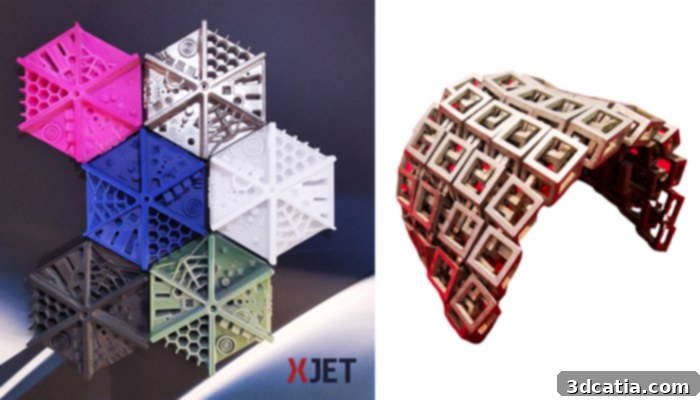
XJet is notable for its groundbreaking technology, NanoParticle Jetting (NPJ)
Reinventing High Fashion Accessories with XJet’s Advanced 3D Printing
For those intimately familiar with the intricacies of high-precision, direct material jetting, it comes as no surprise that XJet’s NanoParticle Jetting (NPJ) technology is exceptionally well-suited for the demanding world of high fashion and luxury wearables. This includes a broad spectrum of items such as bespoke glasses frames, premium ceramic earbuds, and sophisticated luxury and smartwatches. The inherent precision of NPJ technology enables the creation of incredibly complex and accurate parts, characterized by an exceptionally high surface quality. This attribute is paramount, especially when producing goods that will be worn directly by consumers, where tactile feel, visual appeal, and durability are non-negotiable standards. The ability to achieve such fine detail and smooth finishes sets NPJ apart, offering designers unprecedented freedom to innovate without compromising on the meticulous quality expected in high-end products.
Traditionally, the manufacturing of high-fashion accessories relies heavily on established conventional techniques. These methods have been refined over decades to meet the industry’s stringent requirements for unparalleled quality, exquisite design, and artisanal craftsmanship. However, these traditional processes often come with significant drawbacks, including protracted lead times that hinder rapid response to market trends, limited flexibility in design iteration, and inefficiencies when producing short runs or highly customized items. Furthermore, many conventional techniques involve manual steps that introduce variability, alongside finishing processes that can be environmentally taxing. The luxury market has long sought a scalable 3D manufacturing solution capable of upholding its rigorous quality benchmarks while simultaneously streamlining production, reducing manual assembly, and minimizing environmentally impactful finishing stages.
XJet’s NanoParticle Jetting technology seamlessly addresses these industry challenges. It offers an innovative, automated three-step manufacturing process: Print – Wash – Sinter. This streamlined workflow provides scalable production of superior-quality parts and complete assemblies, dramatically reducing the manual intervention often required in traditional methods. Crucially, NPJ empowers designers and manufacturers to fully leverage the core benefits of additive manufacturing, including unparalleled design freedom and exceptional flexibility in run sizes. This means that highly intricate designs, complex geometries, and personalized pieces can be produced with unprecedented ease and efficiency, making XJet a pivotal player in the evolution of luxury manufacturing.
A compelling example of how metal additive manufacturing is being embraced for the production of high-end jewelry and luxury fashion accessories is evident in the adoption of XJet’s solution by XOLUTIONS. This forward-thinking consortium comprises Progold, a renowned setter in alloys and master alloys for jewelry manufacturing, and Blucad, a market leader in electroplating solutions for metal accessories. Together, XOLUTIONS aims to cement its position as a cornerstone of innovation within the Italian fashion accessory and jewelry markets. Their strategic decision to integrate XJet’s printers, specifically the powerful XJet Carmel 1400M system, underscores the technology’s relevance and potential for transformative impact in this sector. The Carmel 1400M offers the precision and reliability necessary to meet the exacting standards of luxury goods production, enabling XOLUTIONS to push the boundaries of design and manufacturing.

The Israeli company has a multitude of applications for the fashion and consumer goods sector
Damiano Zito, CEO of Progold, articulated the perfect synergy between XJet’s technology and the luxury market’s stringent demands. He explained, “XJet technology fits the needs of the luxury market perfectly. The surface finish and the resolution – crucial for this market – that is achieved by NanoParticle Jetting is a step change above what any other AM technology can deliver, there is just no comparison.” XOLUTIONS plans to leverage NPJ to create exquisite parts in stainless steel. Beyond the celebrated benefits of design freedom and accelerated time-to-market, Zito emphasized NPJ’s unparalleled capacity to produce highly intricate and aesthetically captivating pieces. The company envisions 3D printing as a revolutionary force across various luxury segments, from sophisticated watches to personalized jewelry, enabling a future where “fashion not just to be worn but experienced.” This sentiment encapsulates the transformative potential of additive manufacturing to elevate consumer interaction with luxury items, moving beyond mere aesthetics to offer deeply personal and uniquely crafted experiences.
The impact of additive manufacturing extends far beyond just the fashion industry, ushering in a new era for consumer goods in general. Several factors contribute to this paradigm shift, most notably AM’s inherent ability to personalize products with incredible precision and speed. Items like watches, once mass-produced with limited customization, can now be tailored to individual preferences, offering unique designs and features that truly reflect the wearer. Furthermore, the immense potential for on-demand production is a game-changer. This capability allows manufacturers to produce goods only when needed, drastically reducing waste associated with overproduction and unsold inventory. This aligns perfectly with growing consumer awareness and demand for sustainability, all while maintaining the exclusivity and allure of seasonal collections and limited-edition releases. Additive manufacturing empowers brands to respond dynamically to market demands while upholding environmental responsibility and preserving the unique value of their products.
XJet actively champions the principle that manufacturing products on demand through its advanced technology significantly reduces waste, a philosophy that resonates deeply with the evolving consumer mindset. In recent years, the detrimental consequences of fast fashion, characterized by rapid production cycles and disposable garments, have become increasingly apparent. Simultaneously, there’s a heightened global concern for sustainability and the reduction of our collective environmental footprint. XJet’s NanoParticle Jetting (NPJ) technology offers a powerful solution, as it is inherently eco-friendly. Its powderless process and water-soluble support materials contribute to a cleaner, more sustainable manufacturing workflow, making it an even more compelling choice for industries striving to minimize their ecological impact while delivering superior quality products. This alignment with environmental values positions NPJ as a leading technology for a sustainable future in manufacturing.
Innovative Ceramic 3D Printing for the Medical Sector
While XJet’s metal NanoParticle Jetting (NPJ) solutions present a significant draw for the fashion and luxury sectors, the company’s advanced ceramic printing capabilities are equally remarkable, particularly for their transformative potential within the medical sector. Ceramic parts are highly valued in healthcare due to their exceptional biocompatibility, superior wear resistance, and inertness, making them ideal for implants, surgical instruments, and various diagnostic components. However, working with ceramics, whether through traditional methods or many other additive manufacturing processes, can be notoriously challenging due to their brittle nature and high sintering temperatures. NPJ technology simplifies the creation of these complex ceramic components, overcoming many of the hurdles previously faced. This innovative approach has been recognized by Ceramaret, a leading technical ceramic manufacturer, which has strategically adopted the XJet Carmel 1400C Additive Manufacturing system to develop groundbreaking medical applications. This partnership signifies a major step forward in leveraging advanced ceramic 3D printing for critical healthcare solutions.
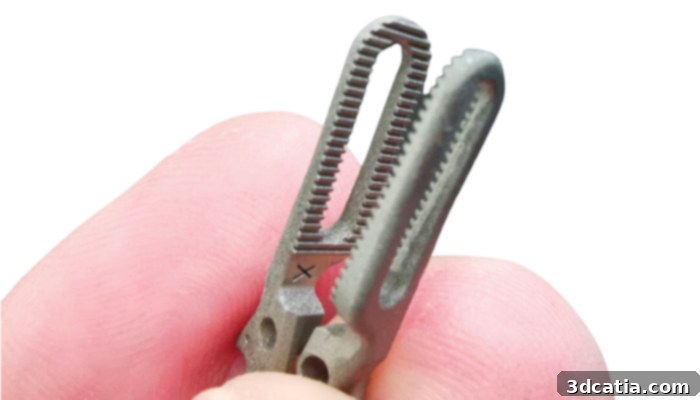
Example of a 3D printed part for the medical sector
Senad Hasanovic, VP of Innovation at Ceramaret, eloquently articulated the transformative impact of XJet’s technology on their capabilities. He stated, “XJet technology will provide us with new capabilities, new geometries we can offer our customers, whilst also delivering exceptional time-to-market. We saw parts that are beyond the reach of any other production method. In particular, there were parts with internal shapes or channels down to 300 microns in diameter and near 300 mm long, which either cannot be produced in a single piece or cannot be produced in bulk with our existing techniques.” This highlights NPJ’s unique ability to produce highly intricate internal structures, a crucial advantage in the medical field where complex channels for fluidic control or anatomical conformity are often required. The ability to create such geometries in a single piece, rather than through multi-part assembly, enhances part integrity and reduces manufacturing complexities.
In the realm of 3D printed parts for healthcare, Ceramaret is actively producing a wide array of critical components, leveraging XJet’s capabilities to innovate. Their applications span from precision rotary valves and intricate pump elements essential for delicate fluid handling systems to advanced endoscope tips and sophisticated surgical instruments. The potential for innovation does not end there; Ceramaret is embarking on an ambitious testing program, evaluating 39 distinct products encompassing approximately 300-400 individual manufacturer parts. This comprehensive assessment aims to thoroughly demonstrate the profound value and transformative impact of additive manufacturing within their specialized field. For those interested in delving deeper into XJet’s cutting-edge technologies and their applications, more information can be found on their official website HERE. Additionally, visitors to Formnext 2023 will have the invaluable opportunity to meet with XJet representatives in person at Hall 12.0, Booth C139, where they can experience these innovations firsthand.
What are your thoughts on these innovative applications of XJet’s NanoParticle Jetting technology across diverse sectors like high fashion and medical devices? We invite you to share your insights in a comment below or join the conversation on our LinkedIn, Facebook, and Twitter pages! Don’t miss out on the latest advancements in the world of 3D printing; make sure to sign up for our free weekly Newsletter here, delivering the freshest news directly to your inbox. You can also explore all our compelling video content by visiting our YouTube channel.
*All Photo Credits: XJet