
f3nice: Pioneering Sustainable Metal Powders for a Circular Economy in Additive Manufacturing
In an era defined by pressing environmental challenges, the imperative for sustainability has never been more critical. Global warming, the depletion of non-renewable resources, and the vast carbon footprint of industrial processes demand innovative solutions across all sectors. Traditional manufacturing methods, often resource-intensive and waste-generating, are increasingly being re-evaluated. It is within this global context that Additive Manufacturing (AM), commonly known as 3D printing, emerges as a transformative technology, offering a viable alternative with significant potential for environmental improvement. This pursuit of sustainable innovation is precisely where f3nice, our featured startup of the month, makes its mark. This innovative Italian startup has developed a groundbreaking method to produce high-quality metal powders from scrap materials, effectively promoting a robust circular economy within the additive manufacturing ecosystem. We recently had the opportunity to interview the f3nice team to delve deeper into their pioneering project and understand how they are shaping the future of sustainable industrial production.
3DN: Hello! Could you introduce yourselves?
Certainly! We are f3nice, an innovative Italian startup with strong operational bases in both Italy and Norway. We take immense pride in our Italian roots, which we believe contribute significantly to our unique market position. Our identity is deeply intertwined with Italy’s exceptional expertise in manufacturing, steel production, and metallurgy. At the core of f3nice’s foundation is the profound expertise brought by our two visionary co-founders, Matteo Vanazzi and Luisa Elena Mondora. Their extensive backgrounds in materials engineering enabled them to identify a crucial business opportunity at the intersection of advanced metal alloy knowledge and the rapidly evolving 3D printing model. Guided by this strategic vision, f3nice is dedicated to establishing itself as a premier producer of sustainable metal powders specifically designed for 3D printing applications. Our name, f3nice, is a deliberate homage to the mythical phoenix – the legendary bird that attains new life by rising triumphantly from the ashes of its predecessor. This powerful symbolism encapsulates our core ambition: to breathe new life into discarded scrap metal and disused industrial parts, transforming them into valuable metal powders that fuel new, sustainable additive manufacturing processes. This commitment to regeneration and circularity is not just a part of our name; it is the driving force behind our entire operation.
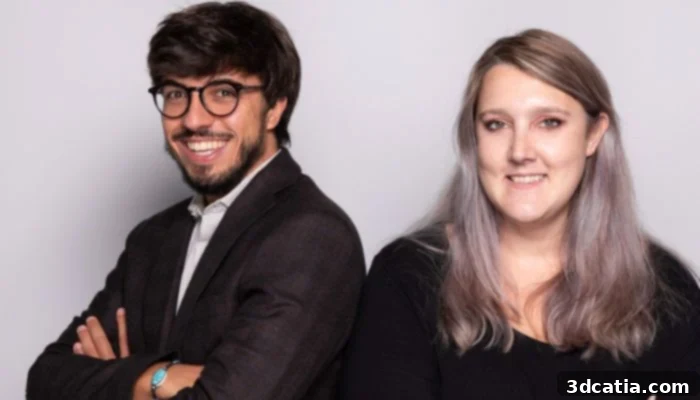
Matteo Vanazzi and Luisa Elena Mondora, co-founders of f3nice. (Photo credits: f3nice)
3DN: When and how was your startup born?
f3nice officially came into existence in May 2020, during the challenging and unprecedented months of global lockdown. However, the foundational idea for the startup was conceived much earlier, in 2019, following a comprehensive and in-depth analysis of the oil & gas industry. This analysis revealed a significant opportunity within the decommissioning of offshore assets, particularly in the North Sea oil fields. Coupled with the modern advantages offered by digital inventory models and the potential for on-demand and just-in-time production of spare parts, this scenario presented a compelling case for recovering and processing high-value alloys. This insight sparked the vision for a circular economy project where valuable resources could be recaptured and repurposed. In this evolving landscape, f3nice aims to innovate the Additive Manufacturing sector by steering it towards more sustainable production paradigms. We actively champion the creation of circular economy ecosystems that maximize potential synergies found within industrial districts and along complex supply chains. Through the proprietary f3nice process, a substantial portion of the inherent value in metal waste generated by the manufacturing sector can be reclaimed. This is achieved through sophisticated upcycling and regeneration techniques, transforming what would otherwise be waste into high-quality virgin-like powder. Our primary objective is unequivocal: to significantly mitigate the environmental and resource impact associated with 3D printing. This involves drastically reducing the reliance on virgin resources and the substantial energy content embedded in their extraction and processing, consequently leading to a considerable reduction in associated CO2 emissions. By transforming waste into valuable feedstock, f3nice is actively working to close the loop in industrial material lifecycles.
3DN: Why did you choose to work with 3D printing?
Additive Manufacturing is unequivocally one of the most transformative and promising technologies poised to revolutionize the modern manufacturing industry. Our decision to focus on 3D printing stems from its unparalleled advantages and its inherent alignment with our sustainability goals. This technology offers extraordinary flexibility in the production of intricate and complex parts, granting engineers and designers an unprecedented degree of design freedom that is simply unattainable with conventional methods. Furthermore, 3D printing significantly reduces lead times, accelerating product development and delivery. Beyond these operational benefits, 3D printing presents a more cost-effective and faster production model. It empowers manufacturers to create or repair parts on-demand and facilitates localized production, thereby eliminating the need to order new components from distant global suppliers. This localized and on-demand approach dramatically reduces transportation costs, logistical complexities, and associated carbon emissions. Critically, from an environmental perspective, Additive Manufacturing represents a far more sustainable production paradigm compared to conventional manufacturing techniques, such as subtractive machining. While traditional methods often generate substantial waste through the removal of excess material, 3D printing builds parts layer by layer, utilizing only the material necessary for the final product. This inherent efficiency in material consumption is a cornerstone of our commitment to eco-friendly practices and positions 3D printing as an essential tool in achieving a truly circular economy in manufacturing.
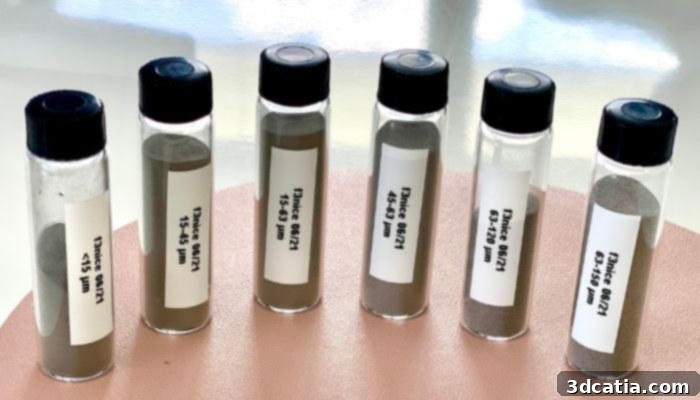
F3nice’s metal powders. (Photo credits: f3nice)
3DN: How does your process of recycling 100 per cent scrap to produce metal powders work?
The innovative process of producing high-quality metal powders entirely from scrap material is the foundational competitive advantage of f3nice. This proprietary technology distinguishes us significantly from our competitors in the market. Consequently, the protection of our intellectual property is of paramount importance, and we have diligently pursued patent applications at Italian, European, and international levels to safeguard our unique methodology. The critical success factor for our recycling process begins with the meticulous sourcing and rigorous selection of the raw material. Scrap metal must undergo a stringent selection and treatment protocol to ensure its suitability for the subsequent atomization process. Any chemical contamination could lead to impurities within the final metal powder, compromising its quality and performance in additive manufacturing applications. Therefore, eliminating all forms of contamination is a non-negotiable step. Furthermore, immense care and precision are dedicated to defining the correct mix of various waste materials to be processed. This precise formulation is essential for achieving optimal atomization results, ensuring that the resulting metal powders possess the desired metallurgical properties, particle size distribution, and flow characteristics required for advanced 3D printing. Our sophisticated approach ensures that every batch of recycled powder meets the highest industry standards, demonstrating that sustainability can go hand-in-hand with uncompromising quality and performance.
3DN: How important is sustainability in AM and how do you see this combination developing in the future?
In recent years, an unprecedented level of attention and significant resources have been allocated to addressing sustainability aspects across a multitude of industries. Among these, the manufacturing industry has been profoundly impacted by this global shift and is expected to become even more deeply involved in the future. To put the environmental challenge into perspective, the production of just one tonne of metal alloy from virgin ore can be responsible for the emission of up to 50 tonnes of CO2 equivalent into the atmosphere. This staggering figure underscores the urgent necessity for developing new, cleaner production processes and implementing more effective recycling practices. With this critical understanding, we firmly believe that Additive Manufacturing represents the most promising and victorious production model for seamlessly integrating sustainability concepts into industrial operations. More specifically, the environmental footprint of AM is significantly reduced when compared to traditional, CNC-based manufacturing methods, primarily due to two crucial aspects.
The first key advantage lies in material consumption efficiency. AM processes are inherently more efficient than conventional techniques in terms of the material input required to produce an identical component. The layer-by-layer nature of the AM printing process ensures that only the precise amount of material needed is utilized, virtually eliminating the waste generated by traditional machining methods, such as chips or swarf (apart from the substrate that must be removed post-printing). This precision minimizes raw material demand and reduces material loss. The second aspect concerns waste management. Given the significantly more efficient use of input material, the overall production of waste is drastically curtailed. Furthermore, any residual waste material generated from AM processes, such as unused powder, can be recovered and recirculated at exceptionally high rates, often approaching 100 percent, perfectly embodying the principles of a circular economy approach. This high recyclability further amplifies the sustainability credentials of additive manufacturing.
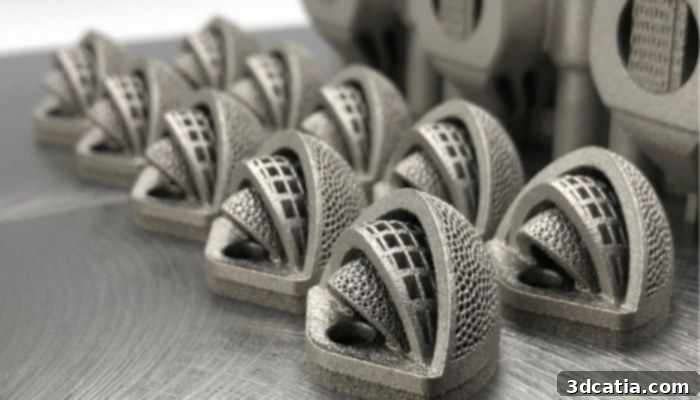
Photo credits: f3nice
In today’s global landscape, component manufacturing must undergo a fundamental transformation, transitioning from a linear system that produces end-parts and discards waste to a truly circular model that maximizes the potential and value of every single resource. This represents the imperative future scenario in which the manufacturing industry must position itself, embracing it as both a significant challenge and an inspiring aspiration. It aligns with the fundamental principle that every individual, and every company, has a responsibility to contribute positively to the preservation of our planet. In our strategic vision, the widespread adoption and intelligent application of Additive Manufacturing technologies represent the simplest and most efficient pathway to close the production cycle effectively. We see AM as the crucial missing link required to transition decisively from a wasteful linear economic model to a sustainable, regenerative circular model. We firmly believe that 3D printing is poised to fundamentally reshape and redefine the manufacturing sector as we understand it today, ushering in an era of greater efficiency, sustainability, and resourcefulness.
To objectively quantify these environmental and energy benefits, f3nice is currently undergoing a comprehensive Life Cycle Assessment (LCA) in accordance with the stringent ISO 14044 standards. This assessment will be independently certified by a reputable third-party certification body, ensuring transparency and credibility. Looking ahead, contingent upon the evolution of European and international regulations, the substantial CO2 savings achieved through the use of f3nice’s sustainable metal powders may be monetized and valorized through mechanisms such as carbon credits and dedicated schemes, including the Emissions Trading System (ETS) at the European level. This potential for economic incentive further strengthens the business case for sustainable additive manufacturing and incentivizes broader adoption of eco-friendly practices.
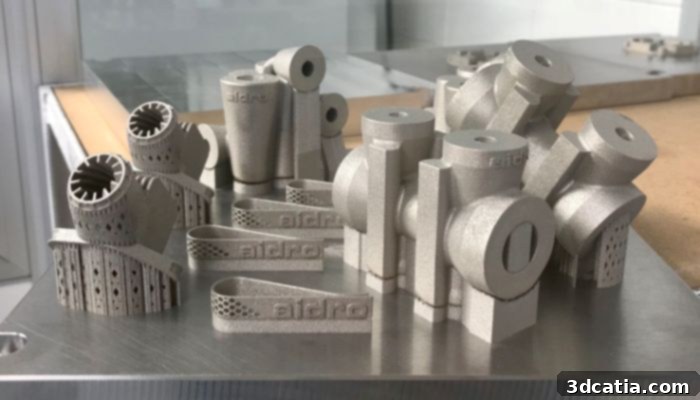
Photo credits: f3nice
3DN: What are your future plans?
Our ambitious growth strategy is meticulously designed to achieve a significant global presence, characterized by localized production facilities strategically positioned in key geographical areas. This distributed production model will enable us to serve markets worldwide efficiently and sustainably. Following the successful construction and operationalization of our first atomization plant in Norway, where we have already forged crucial strategic partnerships and engaged with potential customers, our expansion plan outlines further installations. These future facilities are slated for locations in the Middle East, South-East Asia, Latin America, and the Far East. We remain agile and responsive to emerging market opportunities, which may lead us to localize production in additional regions as demand dictates. We anticipate that the potential demand for f3nice’s innovative metal powders will be highest in those regions where there is a notable absence of a traditional, well-established steel industry. These areas typically include North America, Europe, India, and key markets in the Far East such as China, South Korea, and Japan. By establishing local production, we aim to minimize logistical footprints, reduce transportation emissions, and provide agile, region-specific supply chain solutions that cater to the unique needs of these burgeoning additive manufacturing hubs.
3DN: Any final words for our readers?
Prepare yourselves for a profound shift in the Additive Manufacturing world – f3nice is here to drive the revolution! We are incredibly excited about the future and our role in making industrial production more sustainable. For more detailed information about f3nice, our mission, and our innovative processes, we invite you to visit our official website by clicking HERE.
What are your thoughts on f3nice, our inspiring 3D startup of the month for November? We value your insights and encourage you to share your comments below or connect with us on our LinkedIn,Facebook, andTwitter pages! Don’t miss out on the latest advancements and news in the 3D printing industry; be sure to sign up for our free weeklyNewsletter here, delivering essential updates directly to your inbox. You can also sign up for our special Formnext newsletter HERE for event-specific news. Additionally, discover all our compelling video content on ourYouTube channel.
*Cover photo credits: f3nice