
Deutsche Bahn Revolutionizes Rail with 3D Printing: A Decade of Innovation
Deutsche Bahn (DB), Germany’s national railway company, is celebrating a decade of groundbreaking advancements in 3D printing, showcasing the technology’s transformation from an experimental tool to a fundamental component of its maintenance and supply chain strategy. Since 2015, DB has significantly expanded its additive manufacturing ecosystem, producing over 200,000 printed parts for more than 1,000 distinct applications. This achievement positions Deutsche Bahn as one of the most forward-thinking and advanced rail-related additive manufacturing programs globally.
Initially focused on simple plastic components, DB’s 3D printing capabilities have rapidly evolved to encompass a diverse range of functional tools, customized interior fittings, sophisticated electronic test rigs, and robust, heavy-duty metal parts. The early success with basic items like coat hooks spurred DB to digitize a larger portion of its spare parts inventory, culminating in the creation of the Digital Warehouse. This centralized database now holds over 1,000 component designs that can be produced on demand, streamlining operations and reducing downtime.
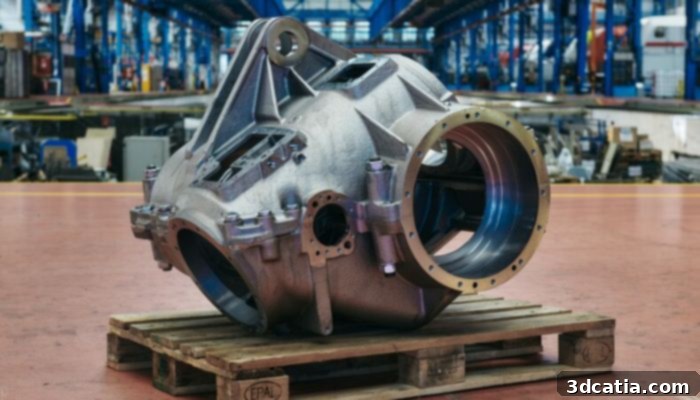
A 3D printed 540-kilogram gearbox housing that is used for DB’s shunting locomotives.
The breadth of 3D printed parts demonstrates the depth of integration of this technology within DB’s operational framework. Maintenance teams regularly employ 3D printing to produce custom test fixtures, such as the printed circuit board testing assembly for ticket validators created by DB Kommunikationstechnik. This allows for rapid and efficient testing and repair of critical equipment. Moreover, DB utilizes 3D printing to manufacture handrail signs with braille, enabling swift replacement of accessibility-related components in stations and trains. This ensures that accessibility standards are consistently met without the delays associated with traditional external suppliers.
One of the most impressive achievements is the successful production of a 540-kilogram gearbox housing for shunting locomotives. This demonstrates that even large, structural components can be effectively manufactured using additive manufacturing techniques, particularly when conventional supply chains face limitations or are unable to provide timely solutions. This capability is crucial for maintaining the operational efficiency of DB’s diverse fleet of locomotives.
The versatility of 3D printing allows Deutsche Bahn to tailor its manufacturing processes to the specific requirements of each part. Powder bed fusion is used for creating intricate polymer parts with highly detailed geometries, ensuring precision and accuracy. For larger metal components, DB employs wire or powder-based processes, which offer the necessary strength and durability for demanding applications. Material extrusion also plays a significant role, particularly in the creation of tools and fixtures, where DB can experiment with alternative materials to optimize performance and cost-effectiveness.
In line with its commitment to sustainability, DB is actively exploring the use of recycled materials in its 3D printing operations. Several depots are currently experimenting with recycled filaments, including plastic derived from discarded ski boots. This initiative aims to further reduce the environmental impact of production and promote a circular economy model within the company. The use of recycled materials not only reduces waste but also lowers the carbon footprint associated with the manufacturing process.
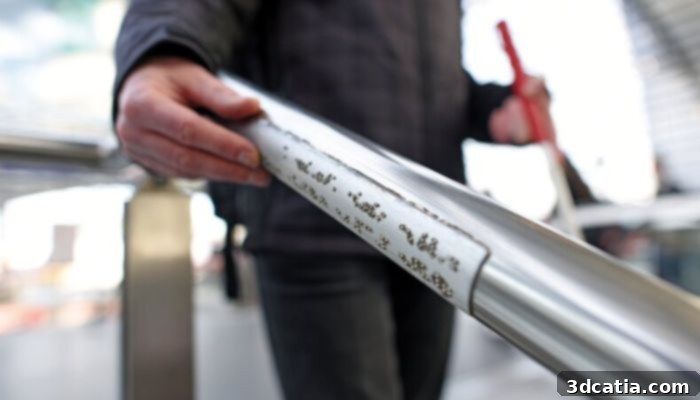
DB also began 3D printing handrail signs with braille to help replace and install new accessibility-related components in stations.
One of the primary advantages of DB’s approach to 3D printing is its ability to produce parts precisely when they are needed. This on-demand manufacturing capability eliminates the need for extensive warehousing of slow-moving spares, significantly reducing storage costs and optimizing space utilization. Moreover, it dramatically shortens repair timelines, minimizing disruption to rail services and improving overall operational efficiency. By producing parts on demand, DB can respond quickly to maintenance needs and keep its trains running smoothly.
In situations where original manufacturers have discontinued production of older components, 3D printing offers a viable solution for keeping aging trains in service. Rather than prematurely retiring these trains, DB can utilize 3D printing to create replacement parts, extending the lifespan of its rolling stock and maximizing its investment in existing infrastructure. This capability is particularly valuable for maintaining the operability of specialized or legacy equipment.
DB has also implemented a comprehensive nationwide recycling system for 3D printing waste, demonstrating its commitment to environmental responsibility. In collaboration with various partners, the company collects unused prints, failed prototypes, and other scrap material from its sites across Germany. This waste material is then shredded, converted into granules, and extruded back into new filament on reusable spools. This closed-loop process ensures that materials are kept in circulation, minimizing waste and strengthening DB’s overall sustainability efforts. The recycled filament is then used for new 3D printing projects, further reducing the company’s environmental footprint.
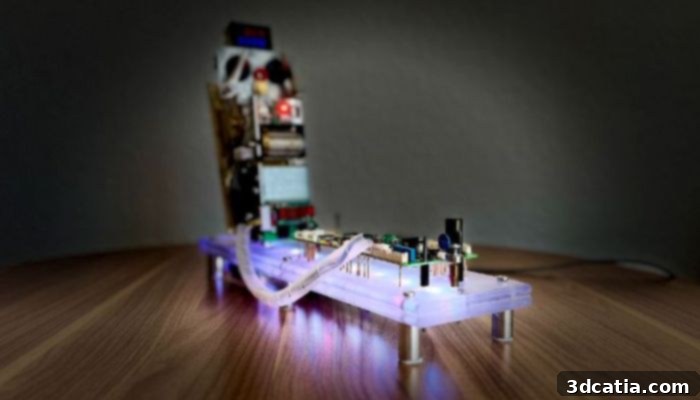
A 3D printed circuit board for ticket validators was created by the DB Kommunikationstechnik.
Additive manufacturing is now integrated into DB’s vocational training programs, providing apprentices with hands-on experience using design and production tools. This ensures that the next generation of railway engineers and technicians are well-versed in the latest 3D printing technologies. Furthermore, DB actively promotes internal innovation through an annual competition that encourages employees to develop creative applications for 3D printing. This competition has resulted in a variety of innovative solutions, including camera covers, specialized tanking tools for ICE high-speed trains, and even furniture made from recycled concrete. This fostering of innovation demonstrates DB’s dedication to exploring new possibilities and leveraging the full potential of 3D printing.
After a decade of dedicated effort, DB’s additive manufacturing program shows no signs of slowing down. With a vast library of digital models ready for instant production, a robust recycling system for materials, and over 1,000 proven use cases, 3D printing has become a strategic asset for Germany’s extensive rail network. The technology facilitates faster repairs, reduces manufacturing waste, and provides a critical lifeline for obtaining parts that are no longer available through traditional supply chains. This comprehensive approach to additive manufacturing has transformed DB’s operations and positioned it as a leader in the application of 3D printing within the transportation industry.
The impact of Deutsche Bahn’s adoption of 3D printing extends beyond mere efficiency gains. It represents a fundamental shift towards a more sustainable, resilient, and innovative approach to railway maintenance and operations. By embracing additive manufacturing, DB is not only enhancing its own capabilities but also setting a benchmark for other transportation companies around the world.
The ability to rapidly prototype and produce custom parts allows DB to adapt quickly to changing needs and address specific challenges with tailored solutions. This agility is particularly important in the context of an aging railway infrastructure, where maintaining the operability of older equipment can be a significant challenge. 3D printing provides a cost-effective and efficient way to extend the lifespan of these assets and ensure their continued reliability.
Moreover, the decentralization of manufacturing capabilities enabled by 3D printing reduces DB’s reliance on external suppliers and strengthens its supply chain resilience. By producing parts in-house, DB can mitigate the risks associated with disruptions to global supply chains and ensure a more consistent and reliable source of critical components.
Looking ahead, Deutsche Bahn is likely to continue to expand its 3D printing capabilities and explore new applications for the technology. As materials and processes continue to improve, the potential for additive manufacturing in the railway industry is virtually limitless. From customized passenger amenities to advanced sensor systems, 3D printing has the power to transform the way railways are designed, built, and maintained.
The success of Deutsche Bahn’s 3D printing program serves as an inspiring example of how innovation can drive efficiency, sustainability, and resilience in the transportation sector. As more companies embrace additive manufacturing, the benefits of this transformative technology will become increasingly apparent, paving the way for a more sustainable and efficient future for transportation worldwide.