
D-Shape’s Vision: Revolutionizing Sustainable Construction and Ocean Ecosystems with Pioneering 3D Printing Technology
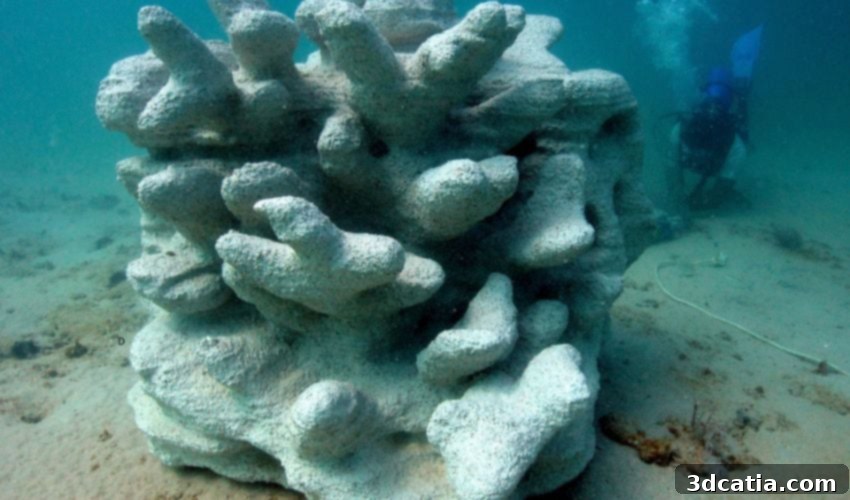
In a world increasingly seeking innovative solutions for both urban development and environmental protection, D-Shape stands out as a true pioneer. The brainchild of Pisan engineer and inventor Enrico Dini, D-Shape is at the forefront of leveraging advanced 3D printing technologies to construct not just more affordable, but also more aesthetically pleasing and sustainable buildings. Their most ambitious and impactful project focuses on using large-scale 3D printing to create artificial reefs – ecologically suitable modules designed specifically for underwater environments. These modules are already playing a crucial role in coastal protection and marine habitat restoration efforts worldwide. In this comprehensive feature, we delve into the exemplary story of D-Shape’s inception, explore their cutting-edge projects, and uncover the driving philosophy behind their mission to safeguard the planet’s natural beauty and enhance human living spaces.
Introducing Enrico Dini and the Vision Behind D-Shape
“Hello. My name is Enrico Dini, and I am both an engineer and an inventor,” begins the visionary founder. Dini’s early career spanned fifteen years in automation and robotics before he returned to his core passion: engineering, specifically with the audacious idea of 3D printing entire houses. His roots trace back to a distinguished Pisan family steeped in both academia and industry. His ancestor, Ulisse Dini, was a renowned mathematician and rector of the Scuola Normale Superiore in Pisa. His father, Egisto, served as the head of the Calculations Office at Piaggio in Pontedera and was the trusted right-hand man of Corradino D’Ascanio, the famous inventor of the helicopter and the iconic Vespa scooter. It is from this rich lineage of innovation and problem-solving that Enrico attributes his innate aptitude for invention and his relentless pursuit of groundbreaking solutions.
D-Shape serves as the umbrella brand under which Dini’s companies consolidate the technology of his invention, widely recognized in academic circles as 3D Particle Bed Printing. The name D-Shape itself signifies a multi-faceted entity: it represents a unique fabrication method, the sophisticated machinery employed, and, most importantly, a grand project imbued with a profound mission in the field of architecture and environmental conservation. While D-Shape has historically produced 3D printers, its current strategic focus is entirely on the production of bio-attractive and regenerative modules for underwater environments, commonly known as Artificial Reefs. With its headquarters strategically located in London and production units nestled in the picturesque region of Tuscany, D-Shape maintains a global footprint. The recent establishment of D-Shape Limited in Hong Kong underscores the company’s ambition to expand its innovative solutions across the Asian market, further cementing its international presence.
The Genesis of D-Shape: From “Monolith” to Global Impact
The ambitious journey of D-Shape commenced in 2004, following a pivotal moment during a demonstration of a small powder 3D printer for technicians at Piaggio. It was then that Enrico Dini experienced a profound revelation: by scaling this process by two orders of magnitude, it would be theoretically possible to construct an entire building. This audacious idea quickly gained traction, and by 2005, encouraged by fellow adventurers Moreno Chiarugi and Roberto Nannini, who championed his vision, Dini filed his first patent. The project was initially christened “Monolith,” a name reflecting the revolutionary concept of printing houses as single, unified pieces. Despite repeated and unsuccessful attempts to secure financing in Italy, Dini’s unwavering determination led him to England. There, in 2006, he founded “Monolite UK Limited,” the inaugural company established with the express purpose of advancing digital additive manufacturing within the construction industry.
At that time, additive construction by extrusion, particularly the method known as Contour Crafting invented by Professor Behrokh Khoshnevis in the United States, was largely confined to academic research. Dini’s vision offered a distinct and innovative alternative. In 2007, he filed a second patent, crucial for addressing practical challenges related to the actual feasibility of constructing buildings with this technology. This paved the way for the creation of his first large-scale printer, which was rigorously tested in 2008. In collaboration with his brother and partner Riccardo, Dini achieved a monumental feat: the creation of The Radiolaria Pavilion. This groundbreaking concept, proposed by architect Andrea Morgante of London-based Shiro Studio, was hailed across numerous trade magazines as “The world’s first 3D printed structure.” This achievement was not merely a technical triumph but a beacon of possibility that fundamentally altered perceptions within the traditionally conservative construction sector. It demonstrated that if such a building automation company could be established, a vast future potential and promising prospects lay ahead for digitally fabricated architecture.
“I can proudly say that everything we witness today in the realm of businesses dedicated to 3D printing at the architectural scale originated from that initial business venture,” Dini asserts. As the early examples of D-Shape’s architectural achievements gained viral recognition online, the company underwent a strategic re-branding. Their communications team proposed the name D-Shape®, which has since become the recognized brand under which Monolite UK and its various dealerships and spin-offs promote Dini’s unique 3D printing technique. The journey from a daring idea to a globally recognized brand underscores D-Shape’s pioneering spirit and enduring influence.
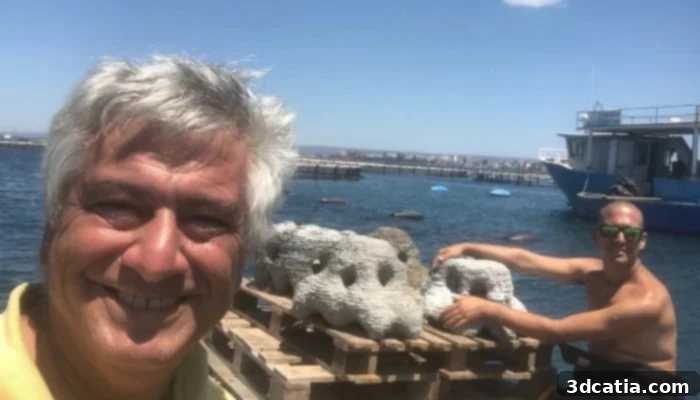
Photo Credits: D-Shape
The Ethical Core: Democratizing Beauty in Architecture
At the heart of D-Shape’s mission lies a profound ethical commitment: to empower the new generation of architects with tools that can materialize beauty at an accessible cost, integrating it seamlessly into the fundamental construction expenses of a building. Enrico Dini vividly recalls his early efforts to articulate this mission in the company’s first brochures. “It was written in English and sounded something like this: ‘Living in a beautiful place increases our self-esteem. Beauty should not be an optional extra, but should be included in the cost of construction. D-Shape intends to help shape a better world.’” This philosophy, often referred to by Dini’s colleagues as the “Democratization of Beauty,” posits that aesthetic value should not be a luxury item reserved for the privileged few, but an inherent quality of all built environments. By making complex, organic, and truly inspiring architectural forms financially viable, D-Shape aims to elevate human experience and foster a greater sense of well-being within communities.
The Transformative Power of Additive Manufacturing
“Inside, I have always felt like an architect,” Dini shares, reflecting on his lifelong connection to design. As a child, he was captivated by a postcard of Barcelona’s Sagrada Familia, its organic forms inspiring dreams of realizing similar architectural wonders. However, his formal education in Technical Architecture decades later revealed a stark reality: traditional construction methods offered little room for such “whimsical ideas.” Straight lines, flat molds, and utilitarian formwork dominated, with any deviation leading to prohibitive costs. The advent of surface modelers like Rhinoceros in the 1990s and early “rapid prototyping” systems (the precursor to modern 3D printing) began to bridge this gap conceptually. Dini quickly recognized a critical disconnect: while CAD software allowed for the creation of incredibly complex geometric shapes, the actual physical realization of these designs in construction remained largely impossible or exorbitantly expensive.
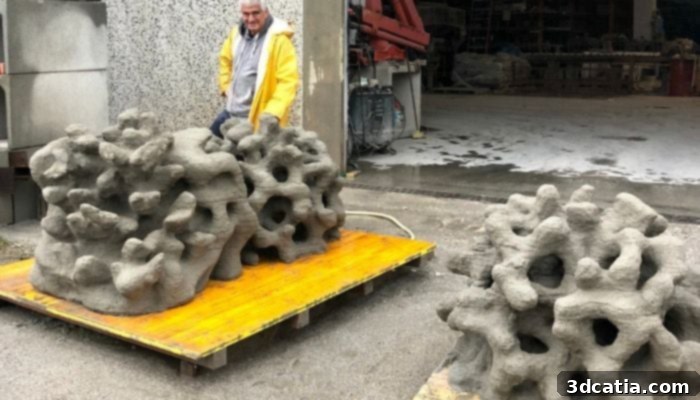
Photo Credits: D-Shape
This realization spurred Dini to develop a 3D printing system specifically tailored for architecture. The primary benefit of additive manufacturing, in his view, is its unparalleled ability to fuse engineering precision with architectural vision. It enables the creation of intricate, non-standard geometries without the exponential cost increases associated with traditional methods. Years later, Dini profoundly understood that Antoni Gaudi’s work, such as the Sagrada Familia, was an early, intuitive example of form-finding and topological optimization. Gaudi intuitively optimized static function and concrete conglomerates into forms that, ironically, only modern 3D printing can physically realize today at an affordable cost. This technology not only liberates architects from the constraints of conventional construction but also unlocks unprecedented potential for structural efficiency, material optimization, and aesthetic expression, fundamentally transforming how we conceive and build our environments.
3D Printing Artificial Reefs: Designing for Marine Biodiversity
The application of D-Shape’s 3D printing technology extends far beyond terrestrial architecture into the vital realm of ocean conservation. Artificial reefs, to be truly effective in fostering marine biodiversity, must possess specific characteristics. They require a high ratio of surface area to volume, providing ample space for marine life to attach and thrive. Critically, they must be rich in diverse cavities and complex structures to accommodate a wide array of fish species and offer protective hideaways. Furthermore, a high degree of surface roughness is essential to facilitate the robust rooting of corals, gorgonians, and a vast variety of biomass. D-Shape achieves these intricate and bio-attractive shapes primarily through the innovative use of Generative Geometry applications, such as Grashopper. This computational design approach allows for the creation of highly optimized and complex forms that mimic natural reef structures, providing ideal conditions for ecological recovery and enhancement.
To push the boundaries of artificial reef design, D-Shape actively collaborates with a network of brilliant digital architects, many of whom have established specialized architectural firms focused exclusively on artificial reef design. Notable collaborators include James Gardiner, David Lennon, and Alex Goad from Australia; Under Water Gardens in Spain; and Rossella Siani in Italy, who designs truly wonderful and effective shapes for their projects. D-Shape pioneered the manufacturing of these advanced bio-attractive structures using their proprietary technology, setting a benchmark that has since inspired and been adopted by numerous companies worldwide. This collaborative and innovative approach ensures that each reef module is not only structurally sound but also maximally effective in promoting marine life.
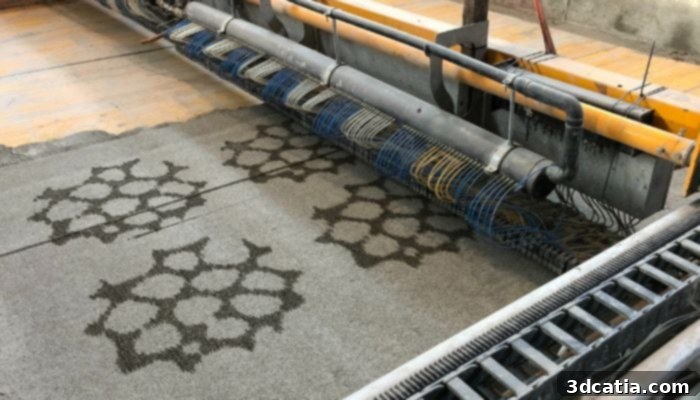
The materials selected for these artificial reefs are chosen with sustainability and bio-compatibility in mind. D-Shape primarily utilizes quarry aggregates combined with pozzolanic or magnesian-based cementitious binders. These materials are inert and provide a stable substrate for marine organisms. Enrico Dini’s long-term vision also includes a significant commitment to the circular economy. His initial idea was to incorporate shells derived from aquaculture processes. After successful experimentation, Dini hopes that in the near future, D-Shape will be able to produce reefs utilizing this recycled material, which would represent a perfect synergy of circularity, bio-compatibility, and environmental sustainability, further minimizing ecological footprint.
D-Shape’s Current Projects: Global Impact and Local Restoration
D-Shape is currently engaged in a diverse portfolio of impactful projects that underscore its global reach and commitment to environmental stewardship. A flagship initiative is the Ocean Citizens project, funded under the prestigious Horizon2020 program by the European Union. In this significant undertaking, D-Shape plays a crucial role, tasked with producing approximately 400 specialized reef modules. These modules are destined for deployment in key locations across Europe, including Tenerife, Tarragona, Norway, and Denmark, contributing to broader marine restoration and research efforts. Beyond European borders, D-Shape has also shipped 20 modules to Albania as part of an international cooperation project, extending its expertise to emerging economies seeking to protect their coastlines.
Closer to home, D-Shape is actively involved in projects financed by Italy’s PNRR (National Recovery and Resilience Plan) funds, with interventions planned in vital coastal regions such as Marche, Puglia, Sardinia, and Tuscany. These national initiatives highlight the importance of their technology for local ecological recovery and infrastructure resilience. Furthermore, D-Shape fosters robust collaborations with local WWF chapters in Holland and Denmark, leveraging their specialized design and manufacturing capabilities to support localized conservation strategies. In Asia, the newly established Hong Kong branch, D-Shape Limited, is already making significant strides, participating in critical regeneration projects within the biodiverse Hong Kong Bay. These projects collectively demonstrate D-Shape’s versatile application of 3D printing, from large-scale international collaborations to focused local interventions, all aimed at enhancing marine ecosystems and coastal resilience.
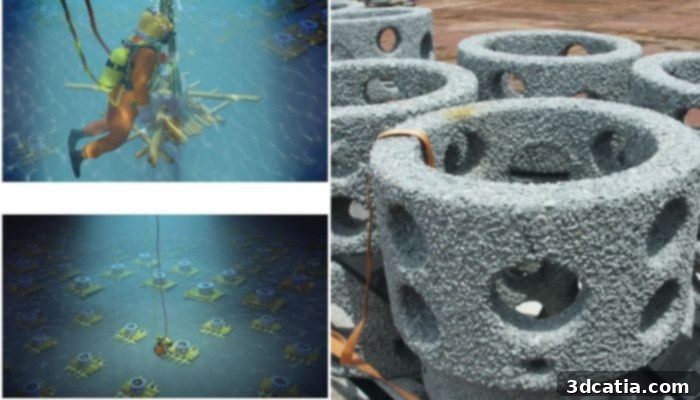
Underwater operations for reef installation in Hong Kong Bay. (Credits: DFA Design for Asia Awards)
Navigating Challenges: The Holistic Approach to Innovation
The journey of D-Shape is not without its intricate challenges, primarily centered around maintaining the holistic approach that has defined the project for over two decades. “The challenge every day is to maintain this holistic approach,” Enrico Dini explains. This involves a continuous, multifaceted effort: developing and refining advanced materials and complex shapes, optimizing production means to ensure both affordability and reasonable delivery times, and striving to industrialize processes while fiercely preserving the craft and artistic vocation inherent in their products. This delicate balance requires D-Shape to continually engage in interdisciplinary learning. They must absorb insights from marine biologists on ecosystem needs, collaborate with material experts to ensure environmental safety and durability, and work hand-in-hand with architects and designers to integrate all functional and aesthetic requirements into their products.
This dynamic interaction is critical to making their products not only functional but also maximally effective. Throughout this complex process, Dini emphasizes the unwavering importance of their core dream of beauty, which remains the powerful driving force behind all their initiatives. In essence, the daily challenge for D-Shape is to consistently synthesize cutting-edge technology, rigorous eco-sustainability principles, and boundless creativity into every single module and architectural solution they produce. This commitment to integrating diverse fields and values ensures that D-Shape continues to innovate responsibly and beautifully, contributing positively to both the built and natural worlds.
Looking Ahead: Printing Big, Thinking Bigger for a Better World
As D-Shape continues its pioneering work, the future is ripe with potential for even greater impact. “We want to continue to do beautiful things in coastal restoration to help save the planet,” Enrico Dini affirms, highlighting the ongoing commitment to environmental initiatives. However, the initial audacious vision of 3D printing entire beautiful houses—”in one piece,” from foundation to roof ridge, complete with integrated floors, stairs, intricate bas-reliefs, and biomimetic patterns—still resonates strongly within the company. Will this grand architectural dream become a widespread reality? “Who knows!” Dini muses, expressing an optimistic readiness for the next big leap.
The realization of this vision awaits an enlightened builder, a visionary individual or entity courageous enough to take a leap of faith and provide the crucial support needed to build a D-Shape 12x12x12 printer—a machine truly fit for such an ambitious purpose. This would unlock an unprecedented era of architectural freedom and sustainable construction. D-Shape’s enduring motto, “Print Big, Think Bigger!”, perfectly encapsulates their philosophy of pushing boundaries, challenging conventions, and constantly striving for monumental achievements that benefit humanity and the planet. For those eager to explore D-Shape’s remarkable work and stay updated on their groundbreaking projects, more information can be found on their official website HERE.
What are your thoughts on D-Shape’s innovative approach to 3D printing in both architecture and environmental conservation? We invite you to share your insights in a comment below or engage with us on our LinkedIn, Facebook, and Twitter pages! Don’t forget to sign up for our free weekly Newsletter here to receive the latest 3D printing news directly in your inbox. You can also find all our compelling videos on our YouTube channel, showcasing the incredible advancements in this transformative technology.
*Cover Photo Credits: D-Shape