
Celebrating the International Day of 3D Printing: A Decade of Transformative Innovation and Future Horizons
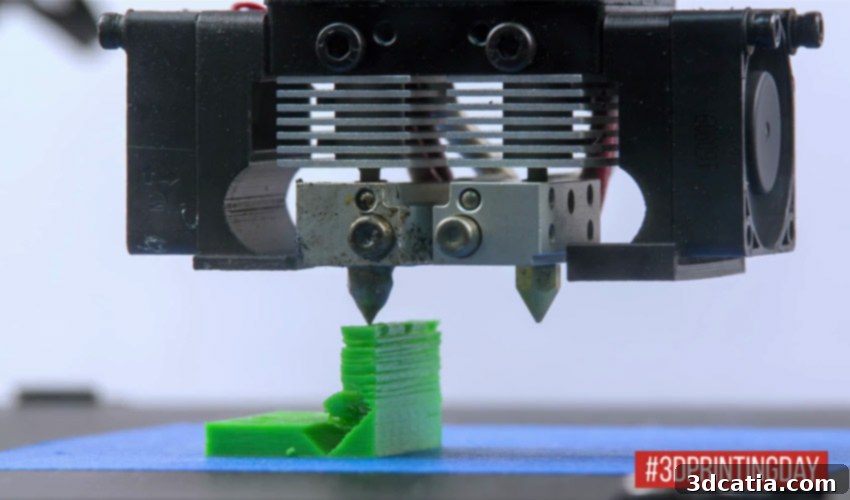
Today, December 3rd, marks the International Day of 3D Printing – a date symbolically chosen for its “3D” resemblance. This special occasion offers a prime opportunity for us at 3Dnatives to reflect on the remarkable evolution of this groundbreaking technology and anticipate the exciting trends that lie ahead. The journey of additive manufacturing, commonly known as 3D printing, has been nothing short of extraordinary. To visually illustrate this rapid expansion, we’ve prepared a captivating video that encapsulates the industry’s dynamic growth. The financial figures alone speak volumes: global industry revenues are projected to soar to an impressive 32.7 billion dollars by 2023. This represents a monumental leap from just 2.5 billion dollars in 2013, underscoring the technology’s rapid maturation and widespread adoption across diverse sectors. This exponential growth isn’t just about financial success; it signifies a profound shift in manufacturing paradigms, enabling unprecedented levels of customization, efficiency, and innovation. Join us as we revisit the milestones and celebrate the impact of 3D printing on this special #3Dprintingday.
The proliferation of 3D printers globally is a clear indicator of this accelerating growth. In 2008, the world housed a mere 388 3D printers, a number primarily confined to specialized research labs and industrial prototyping facilities. Fast forward to today, and that figure has exploded to over 500,000 machines in operation worldwide. This includes everything from accessible desktop FDM (Fused Deposition Modeling) machines, which democratized the technology for hobbyists and small businesses, to sophisticated industrial-grade solutions like additive manufacturing metal systems capable of producing high-strength, complex components for critical applications. The innovation doesn’t stop there; advanced fields such as bio-printing are pushing the boundaries of what’s possible, promising revolutionary advancements in medicine and beyond. This expansion has led to an incredible diversification of uses for 3D printing across virtually all sectors of the economy, transforming industries from design and engineering to healthcare and consumer goods. While its influence is felt everywhere, aerospace and medical sectors stand out as two markets where 3D technologies are becoming increasingly indispensable, driving unparalleled innovation and efficiency.
In the aerospace industry, additive manufacturing enables the creation of lightweight, highly complex parts with optimized designs that were previously impossible to achieve with traditional methods. This leads to significant reductions in material waste, increased fuel efficiency for aircraft, and enhanced performance for critical components like turbine blades and rocket engines. The ability to consolidate multiple parts into a single, intricately designed printed component simplifies assembly, reduces supply chain complexities, and improves overall reliability. Similarly, within the medical field, 3D printing is revolutionizing patient care. It allows for unprecedented personalization of treatments, from patient-specific surgical guides and custom prosthetic limbs that perfectly match an individual’s anatomy, to tailor-made implants and dental devices. This level of customization not only improves patient outcomes and comfort but also accelerates the development of more effective remedies, offering new hope for complex medical challenges. Furthermore, bioprinting, a cutting-edge subset of 3D printing, holds immense potential for creating functional tissues and organs, paving the way for regenerative medicine and drug discovery. The versatility and precision offered by 3D printing continue to unlock new possibilities, reinforcing its status as a pivotal technology for the future.
Expanding Across Ages, Industries, and Global Reach
The increasing integration of 3D technologies is not confined to industrial behemoths or advanced research facilities; it is also profoundly evident within educational institutions across all levels. From primary schools to colleges and universities, students are now learning to utilize 3D printers from a very young age. This early exposure is crucial, as it cultivates essential skills in design thinking, problem-solving, and digital fabrication, which are becoming increasingly vital in the modern workforce. Mastering 3D printing technology is no longer a niche skill but a fundamental competency that can significantly enhance job prospects in a rapidly evolving job market. According to a study conducted by Ricoh, a staggering nine out of ten professionals in higher education firmly believe that acquiring knowledge in 3D technologies would empower young job seekers to find employment faster. This sentiment underscores the growing demand for individuals proficient in additive manufacturing, as industries worldwide continue to embrace this transformative technology. Educational institutions are proactively responding to this demand by integrating 3D printing into various curricula, including engineering, architecture, product design, and even art, ensuring that the next generation is well-equipped for the challenges and opportunities of the future.
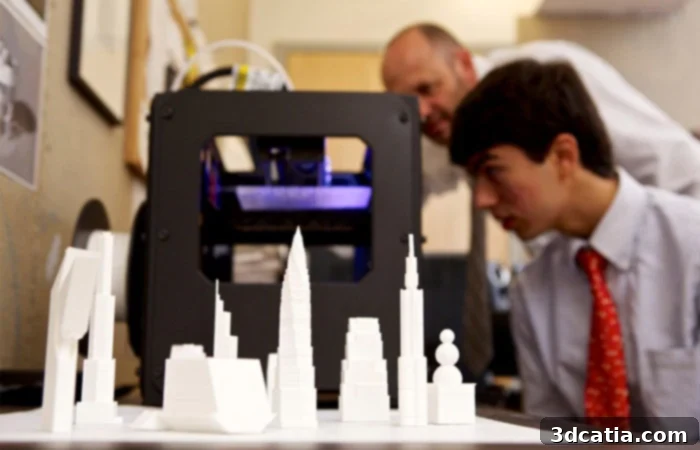
Princeton Hun School Uses 3D Printing in Classes
The global reach and community engagement around 3D printing are further exemplified by the sheer volume of events dedicated to additive manufacturing technology. The International Day of 3D Printing serves as a reminder that conferences, trade shows, and workshops related to 3D technologies are now more prevalent and accessible than ever before. These gatherings are organized at an accelerating pace across all continents, showcasing the worldwide interest and investment in this field. These events provide invaluable platforms for sharing knowledge, presenting the latest innovations, and fostering collaboration within the industry. Exhibitors, ranging from established manufacturers to innovative startups, consistently report growing numbers of visitors at major expos, maker fairs, and specialized conferences. Such events are crucial for driving market adoption, facilitating technological transfer, and keeping the global additive manufacturing community connected and informed. A prime example of this undeniable momentum is Formnext 2018, the world’s largest additive manufacturing event. With an astounding 630 exhibitors showcasing cutting-edge advancements and attracting over 26,000 visitors, Formnext powerfully demonstrated the robust health and incredible potential of the 3D printing ecosystem. These numbers are not just statistics; they represent a vibrant, growing community of professionals, researchers, and enthusiasts dedicated to pushing the boundaries of what 3D printing can achieve.
Looking ahead, the future of 3D printing promises even more revolutionary developments. Advancements in materials science are rapidly expanding the capabilities of additive manufacturing, moving beyond traditional plastics and metals to include ceramics, composites, bio-inks, and even smart materials with embedded functionalities. This diversification of materials will unlock new applications across previously unimaginable domains, from creating custom electronics to highly durable structural components. Furthermore, the integration of artificial intelligence (AI) and machine learning (ML) is set to optimize every stage of the 3D printing process, from generative design that creates ultra-efficient geometries to predictive maintenance for printers and automated quality control. These intelligent systems will enhance efficiency, reduce costs, and improve the reliability of printed parts, propelling 3D printing further into mainstream industrial production. The concept of decentralized manufacturing is also gaining traction, envisioning a future where products can be printed on-demand closer to the point of consumption, minimizing transportation costs and environmental impact. This shift towards localized, sustainable production could revolutionize global supply chains, making manufacturing more resilient and environmentally friendly.
Sustainability is indeed a critical area where 3D printing offers significant advantages. By enabling precise material usage, optimizing designs for minimal waste, and facilitating the repair or replacement of individual components rather than entire products, additive manufacturing contributes substantially to a more circular economy. Its ability to produce custom, lightweight parts also reduces energy consumption in industries like aerospace and automotive. The ongoing research into multi-material printing and continuous production methods will further enhance speed and scalability, allowing for high-volume manufacturing of highly customized products. As we continue to innovate, the lines between design, engineering, and manufacturing will increasingly blur, with 3D printing serving as the core enabling technology for this convergence. The journey from niche prototyping to a global manufacturing powerhouse has been swift and impactful, and the future holds even greater promise for additive manufacturing to reshape industries and enrich lives.
As we reflect on the incredible journey and ongoing evolution of this transformative technology, we invite you to share your experiences. What about you, how do you recognize the rapid progress and celebrate the impact of 3D Printing? Let us know what 3D printing means to you in a comment below or connect with us on our Facebook and Twitter pages! Don’t forget to sign up for our free weekly Newsletter, ensuring you stay up-to-date with all the latest news, innovations, and trends in the dynamic world of 3D printing, delivered straight to your inbox!