
Weekly 3D Printing Insights: From Essential Fixes to Enduring Innovations
Welcome to our comprehensive compilation of this week’s most compelling developments and highlights from the dynamic world of 3D printing and additive manufacturing. This week, we delve into a fascinating array of topics, beginning with a crucial fix for a popular 3D printer that recently faced a widespread recall. We’ll then journey to a unique festival showcasing the incredible long-term durability of 3D prints exposed to the elements for years, offering valuable insights into material science. Our exploration continues with a deep dive into the pivotal role of a national institute driving innovation and collaboration in additive manufacturing. Following this, we’ll break down the fundamental yet often overlooked components of 3D printers: the nozzles, understanding their varied designs and critical functions. Finally, we’ll marvel at an impressive open-source project featuring a highly functional 3D printed RC excavator, complete with significant design enhancements. Prepare to be informed, inspired, and amazed by the continuous evolution of this transformative technology. Let’s get started!
1. Addressing the Bambu Lab A1 Recall: A DIY Solution for Heatbed Cables
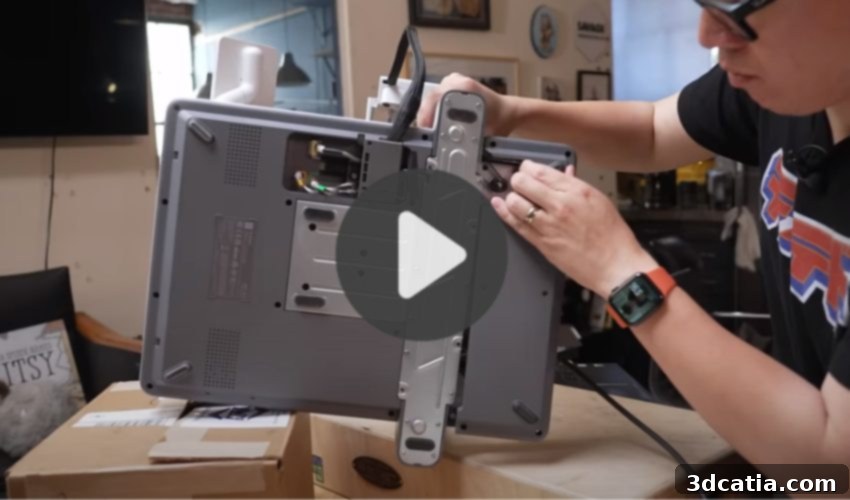
Our first highlight addresses a critical issue that recently impacted many enthusiasts and professionals alike: the mass recall of the Bambu Lab A1 3D printer. Earlier this year, Bambu Lab proactively issued a recall due to a potential safety hazard stemming from a faulty heatbed cable connection. This swift action demonstrated the company’s commitment to user safety, as they promptly halted sales of the affected units and offered comprehensive solutions, including replacements or store credit, to all customers with the recalled printers. While Bambu Lab provided official remedies, many users sought more immediate or hands-on solutions. Norman, from Adam Savage’s renowned “Tested” channel, steps in to provide an invaluable DIY guide for repairing the Bambu Lab A1 printer, offering a practical pathway for those who prefer to handle the fix themselves or want to better understand the underlying issue.
Norman’s detailed video meticulously walks viewers through the process of replacing the problematic heatbed cable. He doesn’t just show how to swap parts; he explains the intricacies of the new, improved design. A key highlight of this upgraded component is its enhanced durability, featuring a robust braided cable that offers superior flexibility and resistance to wear and tear. Furthermore, the connection point itself has been significantly reinforced, addressing the original vulnerability and ensuring a more secure and reliable power transfer to the heatbed. This proactive design modification by Bambu Lab, coupled with Norman’s clear instructions, empowers users to not only resolve the immediate safety concern but also to gain confidence in the long-term reliability of their 3D printer. The simplicity of the repair process, despite its critical nature, makes this video an essential resource for the Bambu Lab A1 community, reinforcing the power of community-driven solutions in the additive manufacturing space and ensuring the continued enjoyment of 3D printing technology for all users.
2. The Unseen Durability: 3D Prints Enduring 7 Years Outdoors
Next, we turn our attention to an extraordinary experiment in material science and the longevity of 3D printed objects, brought to us by Stefan from CNC Kitchen. While exploring the Rocky Mountain RAPR Festival in Loveland, Colorado, Stefan stumbled upon a truly remarkable exhibit: a collection of 3D prints that had been left exposed to the harsh outdoor elements for an astounding seven years. This incredible display was orchestrated by Stan Baldwin, whose dedication to understanding material degradation provides invaluable insights for anyone considering long-term applications for additive manufacturing. Stan’s experiment involved a variety of common 3D printing filaments, each subjected to relentless exposure to UV radiation from the sun, fluctuating temperatures, rain, snow, and general atmospheric conditions.
The results, as meticulously documented by Stan and discussed by Stefan, offer a rare glimpse into the real-world durability of different filament types. Viewers witness firsthand how various materials react to prolonged environmental stress, revealing which plastics maintain their structural integrity and aesthetic qualities, and which succumb to brittleness, discoloration, or warping. This practical demonstration goes far beyond theoretical material specifications, providing crucial data on factors such as UV resistance, moisture absorption, and thermal cycling performance. The implications of this experiment are profound, particularly for applications where 3D printed parts are intended for outdoor use, such as custom garden fixtures, drone components, outdoor signage, or even architectural models. Beyond Stan’s unique experiment, Stefan’s visit to the RAPR Festival also encompasses broader discussions on the latest advancements in 3D printing technology, the evolving properties of new filaments, and the boundless creative potential that these tools and materials unlock for hobbyists and industrial designers alike. This segment underscores the importance of rigorous testing and real-world validation in advancing the frontiers of additive manufacturing, offering a practical perspective on material selection for enduring 3D prints.
3. America Makes: Powering the Future of Additive Manufacturing Through Collaboration
Our next segment takes us behind the scenes of America Makes, the National Additive Manufacturing Innovation Institute, to explore its indispensable role in shaping the future of 3D printing in the United States. This video provides a compelling narrative of how America Makes functions as a crucial public-private partnership, acting as a catalyst for innovation and education across the additive manufacturing landscape. At its core, America Makes serves as a vital connector, meticulously bridging the gaps between diverse stakeholders. These include leading industry giants, pioneering academic researchers, various government agencies, and impactful non-profit organizations. By fostering an environment of unprecedented collaboration, America Makes enables these disparate entities to collectively tackle some of the most pressing challenges and opportunities within the 3D printing sector.
The institute’s initiatives span a wide array of critical industries, demonstrating the pervasive impact of additive manufacturing. From revolutionizing medical device prototyping and custom implants to enhancing lightweight components in aerospace and streamlining complex tooling in automotive manufacturing, America Makes is at the forefront of driving practical applications. Their work involves facilitating research and development projects, establishing industry standards, and developing workforce training programs designed to cultivate the next generation of additive manufacturing talent. By strategically promoting collaboration, knowledge sharing, and cutting-edge innovation in 3D printing, America Makes is not merely advancing technology; it is actively strengthening America’s manufacturing competitiveness on a global scale. This strategic focus is essential for ensuring the nation’s continued leadership and success in the rapidly evolving technological landscape of the 21st century, making their work integral to the national advanced manufacturing strategy, and solidifying the U.S. position as a leader in additive manufacturing technologies.
4. Unraveling the Secrets of 3D Printer Nozzles: Size, Material, and Design
Fourth in our lineup, we delve into a fundamental yet often underestimated component of any FDM (Fused Deposition Modeling) 3D printer: the nozzle. The team at 3D Revolution provides an incredibly insightful explanation of the intricacies surrounding 3D printer nozzles, meticulously discussing their varying sizes, materials, and innovative designs. Far from being a simple metal tip, the nozzle is a critical component that directly influences print quality, speed, and the range of materials a printer can handle. The video breaks down the main considerations into easily digestible segments, starting with the most apparent factor: the diameter of the nozzle’s orifice.
The nozzle diameter directly dictates the volume of filament extruded per unit of time, which in turn impacts print resolution and speed. A smaller diameter, typically 0.2mm to 0.4mm, allows for finer details and smoother surfaces, ideal for intricate models, but at the cost of significantly longer print times. Conversely, larger diameters, such as 0.6mm or 0.8mm, enable faster printing and stronger parts due to thicker extrusion lines, making them suitable for functional prototypes or large objects where detail is less critical. Beyond size, the material from which the nozzle is crafted plays an equally vital role. Common materials include brass, known for its excellent thermal conductivity and affordability, ideal for standard filaments like PLA and PETG. However, for abrasive filaments such as carbon fiber-filled or glow-in-the-dark materials, hardened steel or ruby-tipped nozzles become essential. These materials offer superior wear resistance, preventing premature degradation of the nozzle and ensuring consistent extrusion over prolonged printing sessions. The video thoughtfully concludes by exploring innovative designs, such as the BondTech CHT (Core Heating Technology) nozzle. These advanced designs often feature internal geometries that divide the filament into multiple streams, significantly increasing the surface area exposed to the heater block. This ingenious approach dramatically enhances melting speed and improves print efficiency, allowing for higher flow rates without compromising print quality, thereby pushing the boundaries of what’s achievable with FDM 3D printing and offering a deeper understanding of this small but mighty component essential for any successful 3D printing endeavor.
5. The Evolution of Engineering: Professor Boots’ 3D Printed RC Excavator 2.0
Wrapping up our weekly highlights, we celebrate the spirit of innovation and community-driven design with Professor Boots, who introduces the highly anticipated version 2.0 of his incredible 3D Printed RC Excavator. This project is a testament to the capabilities of additive manufacturing for creating complex, functional prototypes and models, empowering hobbyists and engineers to bring their intricate designs to life. The original RC excavator was already an impressive feat, but Professor Boots has taken it to the next level with a suite of sophisticated new attachments and significant design refinements.
Version 2.0 boasts an array of versatile tools designed to enhance its functionality and adaptability. Among these are a robust push blade, perfect for leveling terrain or clearing debris, and integrated lights specifically designed for nighttime operations, adding a layer of realism and practicality. Perhaps the most exciting addition is the rotating claw grabber, which significantly expands the excavator’s utility for picking up and manipulating objects with precision. A crucial part of Professor Boots’ development process, and highlighted in the video, involves rigorous testing of different servo motors for the claw attachment. He methodically evaluates various options to identify the ideal balance of speed, torque, and accuracy. Ultimately, he settles on a high-torque servo motor, demonstrating its superior gripping power and control, which is essential for handling a variety of loads effectively. Throughout the video, Professor Boots generously shares his valuable insights into the iterative design process, candidly discussing challenges faced and solutions implemented. He provides clear demonstrations of each new attachment’s functionality, showcasing the excavator’s enhanced capabilities in action. More than just presenting a finished product, Professor Boots actively encourages viewers to replicate, modify, and even improve upon his open-source design, fostering a vibrant community of makers and engineers. This collaborative approach not only drives further innovation but also exemplifies how 3D printing democratizes access to advanced manufacturing and engineering projects, making complex robotics accessible to a broader audience.
We hope you enjoyed this week’s dive into the fascinating world of 3D printing and additive manufacturing. Which video resonated most with you? Were you already aware of the practical fix for the Bambu Lab A1 3D printer, or perhaps inspired by the incredible durability of 3D prints exposed for years? Maybe the collaborative spirit of America Makes or the detailed insights into 3D printer nozzles sparked your curiosity. Or did Professor Boots’ latest RC excavator revision ignite your passion for creating functional 3D printed models? We’d love to hear your thoughts and engage in discussion! Let us know in a comment below or join the conversation on our LinkedIn, Facebook, and Twitter pages. For those eager to stay at the forefront of additive manufacturing news, don’t forget to sign up for our free weekly newsletter here, delivering the latest updates directly to your inbox. You can also find an extensive library of all our engaging videos on our YouTube channel. Thank you for being a part of our community and exploring the endless possibilities of 3D printing!
*Cover Photo Credits: Adam Savage’s Tested