
Formnext 2022: Unveiling the Future of Additive Manufacturing Through Robotic Innovation and Strategic Partnerships
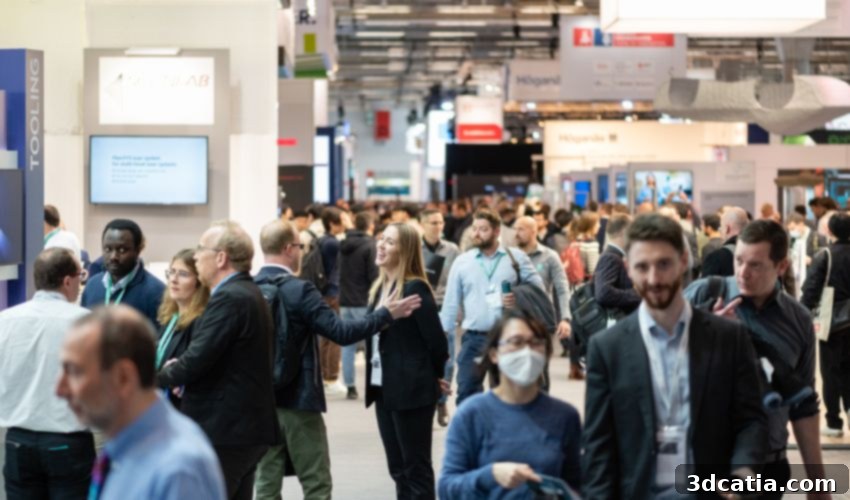
Formnext 2022, Europe’s premier gathering for the additive manufacturing industry, concluded recently, marking a triumphant return to pre-COVID levels of engagement and innovation. This landmark event shattered previous records, welcoming over 800 exhibitors and thousands of visitors from across the globe, all eager to witness the cutting-edge advancements presented daily. Formnext 2022 served as a vital catalyst for the market, providing a much-needed platform for networking, collaboration, and the exchange of ideas that propel the industry forward. Despite the continued absence of some Asian contingents, the robust attendance and the sheer volume of strategic partnerships announced underscored a market that is not only evolving but also rapidly consolidating. This retrospective delves into the key takeaways from Formnext 2022, highlighting the transformative trends that are shaping the future of 3D printing.
The Ascendancy of Robotic Arms in Additive Manufacturing
One of the most striking observations at this year’s Formnext in Frankfurt was the pervasive presence of robotic arms across numerous exhibitor stands. These versatile solutions are rapidly gaining traction due to their ability to unlock unprecedented printing volumes and material flexibility, pushing the boundaries of what’s possible in additive manufacturing. Prominent industry players such as CEAD, Caracol, MX3D, Fraunhofer, Weber Additive, VLM Robotics, Meltio, and ALOtec Dresden were among the many showcasing these advanced machines, demonstrating a clear industry shift towards larger, more flexible, and economically viable 3D printing systems. This extensive display signified that robotic integration is no longer a niche application but a mainstream trend defining the next generation of industrial 3D printing.
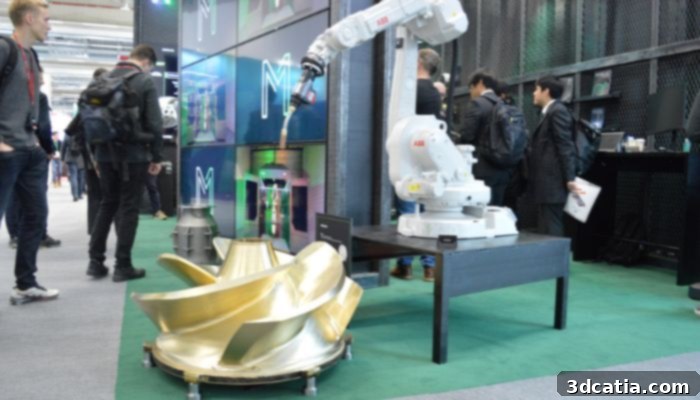
Multiple robotic arms were on display at Formnext (photo credits: 3Dnatives)
Unleashing Flexibility and Cost-Efficiency
As we navigated the four bustling halls of Formnext, the sight of robotic arms extruding both metals and polymers on XXL-sized machines was impossible to miss. These powerful systems were frequently responsible for producing impressively large parts, with Italian manufacturers like Breton and CMS captivating visitors with their multi-meter-long solutions. A key advantage of these robotic systems lies in their modularity; they often feature different tool heads that can be rapidly and effortlessly interchanged. This adaptability significantly expands the manufacturing possibilities, allowing for diverse processes beyond just 3D printing, such as milling or welding, on a single platform. During a discussion with CEAD, Emiel de Voogd, Robot Extruder Sales, elaborated on this flexibility: “While many 3D printing processes offer specific benefits, robotic arms stand out for their inherent advantages. They offer incredible flexibility – you can easily swap out heads for 3D printing, milling, or other processes. Crucially, they also present a lower cost barrier. A secondhand robotic arm can be acquired online for as little as €6000 and then customized with various heads to suit specific user requirements. For these reasons, we anticipate continued strong growth in robotic arm adoption, especially for continuous printing of small and medium series, addressing key industry trends.” This insight highlights the economic accessibility and operational versatility that makes robotic arms a game-changer for businesses of all sizes.
Material Versatility and Sustainable Practices
Our visit also included a stop at the booth of the innovative Italian company Caracol, where Violetta Nespolo, Marketing and Strategy Manager, provided further insights into the benefits of robotic additive manufacturing. She explained: “First and foremost, robotic arms provide immense printing flexibility, enabling the easy creation of highly complex geometries. For instance, our robotic arms can print at a 45° angle, allowing for the creation of intricate hollow structures that would be challenging with traditional methods. Another significant advantage is the ability to utilize pellets as printing material. This opens up a vast array of materials for experimentation and allows us to explore new formulations. Furthermore, the use of granules strongly supports a circular economy; they can be produced by shredding customers’ own waste and scrap materials, or by sourcing materials from recycled supplies.” This underscores a dual advantage: not only do robotic systems offer unparalleled freedom in terms of geometry, shape, and size, but they also provide a substantial benefit on the material side, particularly in promoting sustainability and environmental responsibility – a critical trend that was already widely observed at Formnext 2021 and continues to gain momentum.
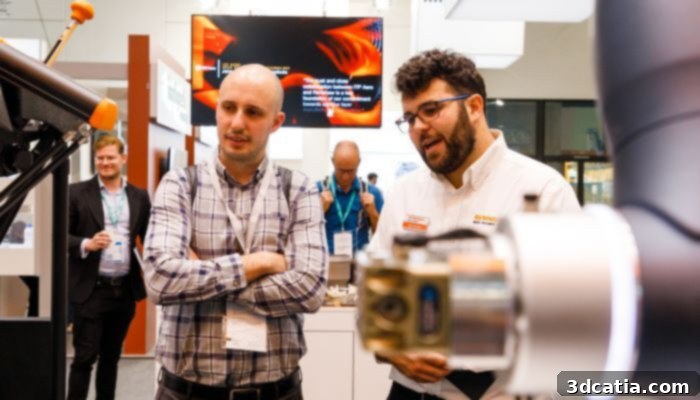
Photo Credits: Mesago/Marc Jacquemin
Innovation Driven by Robotic Integration
It was particularly inspiring to witness how numerous startups at Formnext 2022 have strategically adopted robotic arms to develop their groundbreaking innovations. Examples include Rivelin Robotics, which leverages robotic systems for advanced post-processing, and the manufacturer REV3RD. Alessandro Torre, founder of REV3RD, shared his perspective: “Why are more and more companies turning to robotic arms for 3D printing? Primarily, this technology optimizes material usage, especially crucial when producing large parts that typically demand significant material volumes. Additionally, it offers a remarkably wide selection of materials, allowing users to choose the optimal one for their specific needs, alongside the capability to print intricate shapes and fine details with high precision. And perhaps most excitingly… this is truly the technology of the future! There remains an enormous scope for discovery and invention, which is what makes this field so thrilling.” These testimonials collectively highlight that robotic arms are not just improving existing processes but are actively enabling new forms of innovation, making complex manufacturing more accessible, efficient, and sustainable.
A Consolidating Market Driven by Strategic Partnerships
The additive manufacturing industry is a complex ecosystem whose growth is inherently dependent on robust collaborations across its entire value chain. From chemists developing novel materials to machine manufacturers, and from OEMs to software vendors and 3D solution developers, interdependence is key. As the market steadily progresses towards widespread industrialization, its full potential can only be unlocked through the formation of strategic partnerships among these diverse players. While this trend has been observed for several years, Formnext 2022 saw a remarkable surge in such announcements, signaling a significant acceleration in market consolidation and integration.
Photo Credits: Mesago/Mathias Kutt
Seamless End-to-End Solutions and Post-Processing
A significant portion of these strategic alliances focused on creating comprehensive, end-to-end solutions, particularly between 3D printer manufacturers and post-processing machine developers. Partnerships like those between AMT and HP, or DyeMansion and Nexa3D, clearly demonstrate the market’s strong demand for integrated workflows. The overarching objective is to enable industrial customers to achieve high levels of productivity with minimal manual intervention. Kevin McAlea, in discussing one such collaboration, explained: “It was a natural progression for us to formalize this partnership with DyeMansion, a recognized leader in automated post-processing solutions for powder bed fusion technologies. This collaboration ensures that our industrial customers can fully leverage end-to-end manufacturing capabilities, thereby significantly reducing their total cost of operation and streamlining their production processes.” These partnerships are crucial for transforming additive manufacturing from a prototyping tool into a reliable and efficient industrial production method, addressing critical needs for speed, quality, and cost-effectiveness across the entire manufacturing pipeline.
Advancements in Materials Development and Open Platforms
Collaborations in the realm of materials are also becoming increasingly prevalent and vital for market expansion. A growing number of materials are now being certified for specific 3D printers, which dramatically simplifies manufacturing and qualification processes for users. For example, leading solutions from Stratasys are now open to utilizing materials developed by specialized companies such as Kimya, Victrex, or Covestro. This shift towards open material platforms fosters innovation and allows users to select the best material for their application without proprietary restrictions. Re-emphasizing the critical theme of sustainability and environmentally conscious materials, the partnership between Thought3D, LEHVOSS Group, Ultimaker, and Aquafil is particularly noteworthy. Together, they have developed a PA6 (Nylon 6) filament produced using renewable energy sources, which is not only fully recyclable but can also be transformed back into raw material, demonstrating a truly circular approach to advanced manufacturing. These material-centric partnerships are not just about new properties; they are about making additive manufacturing more versatile, more reliable, and fundamentally more sustainable for a greener future.
Driving Towards Industry 4.0 and Comprehensive Automation
The ultimate focal point of Formnext 2022 clearly revolved around the industrialization of processes and their comprehensive automation, embodying the core principles of Factory 4.0. Numerous exhibitors and participants articulated their commitment to developing and implementing solutions that meet these ambitious expectations. The primary objective is to achieve even higher levels of productivity and efficiency while simultaneously minimizing the need for human intervention in repetitive or hazardous tasks. This trend was visibly manifested throughout the show by the proliferation of advanced robotics designed to automate various stages of the 3D printing workflow. We observed impressive robotic systems capable of autonomously removing a finished build tray from a 3D printer and seamlessly replacing it with a fresh one, ensuring continuous and uninterrupted machine operation. This level of automation signifies a monumental leap towards lights-out manufacturing and significantly boosts overall throughput.
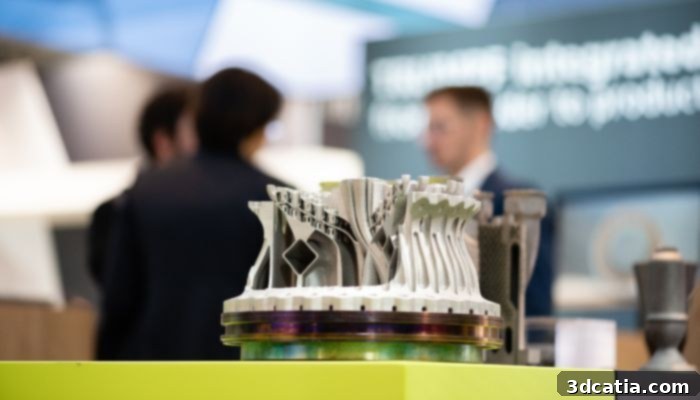
Photo Credits: Mesago/Mathias Kutt
While there are still several crucial steps to navigate before achieving complete end-to-end automation of additive manufacturing processes, the advancements showcased at Formnext 2022 confirm that the industry is rapidly moving in this direction. The vision of fully autonomous 3D printing factories is becoming increasingly tangible, promising unprecedented levels of efficiency, consistency, and scalability. We eagerly anticipate witnessing the profound transformations the market will undergo in the next five years as these technologies mature and become more widely adopted. In the interim, we look forward to reconvening at the 2023 edition of Formnext, scheduled to take place from November 7th to 10th, once again in the vibrant city of Frankfurt.
What were your key takeaways from Formnext 2022? We encourage you to share your thoughts in a comment below or connect with us on our LinkedIn,Facebook, andTwitter pages! Don’t forget to sign up for our free weeklyNewsletter here to receive the latest 3D printing news directly in your inbox. You can also explore all our insightful videos on ourYouTube channel.
*Cover Photo Credits : Mesago/Mathias Kutt