
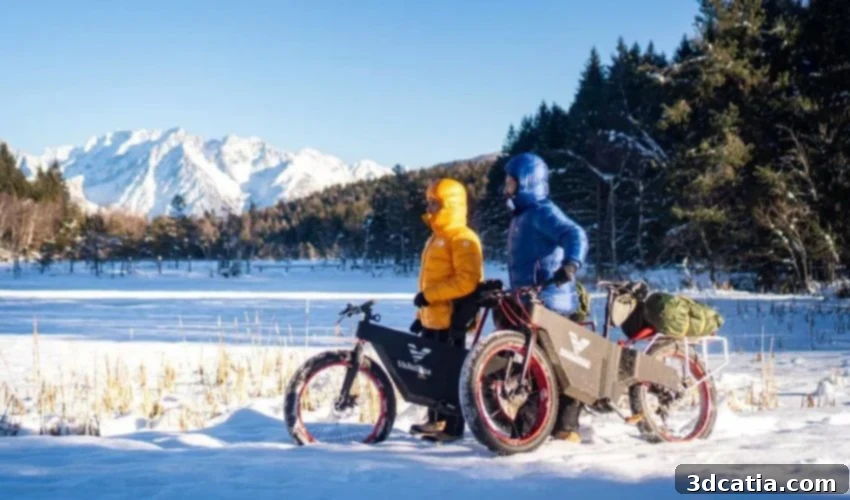
Pioneering the Arctic: Alex Bellini’s Sustainable 3D-Printed ‘Impact’ Bike for the “Eyes on Ice” Expedition
The integration of 3D printing into cycling for the creation of high-performance bicycles is experiencing a remarkable surge in popularity and innovation. This advanced manufacturing technique is no longer a niche concept but a proven method for achieving unparalleled customization and performance in the world of competitive and extreme cycling. Consider the monumental achievement of Filippo Ganna, who etched his name in cycling history with his bespoke 3D-printed Pinarello Bolide F HR 3D. Similarly, British athletes are set to leverage 3D-printed bikes for a competitive edge at the 2024 Olympics, showcasing the technology’s capability at the highest levels of sport. Now, this transformative technology is extending its reach beyond competitive arenas to support explorer Alex Bellini in an unprecedented, record-breaking mission. For the first time on an expedition to the challenging terrains of Alaska, Bellini will rely on a fully customized, 3D-printed frame mountain bike, pushing the boundaries of what’s possible in exploration and sustainable design.
Alex Bellini, a seasoned explorer with two decades of experience navigating the planet’s most extreme conditions, dedicates his journeys to chronicling the state of the world and raising critical awareness about pressing environmental issues. His latest ambitious undertaking, dubbed “Eyes on Ice,” sees him embarking on a truly one-of-a-kind adventure across Alaska, Greenland, and the vast Arctic Ocean. This monumental project, which recently commenced its three-year duration from Italy, is more than just an exploration; it’s a scientific and advocacy mission to spotlight the fragile beauty and urgent threats facing Earth’s polar regions. For this extraordinary endeavor, Bellini and his traveling companion, Alessandro Plona, will be using the “Impact” mountain bike – a marvel of custom engineering specifically designed and 3D-printed to meet the unique physical requirements and extreme demands of the expedition, ensuring optimal performance and comfort in the harshest environments imaginable.
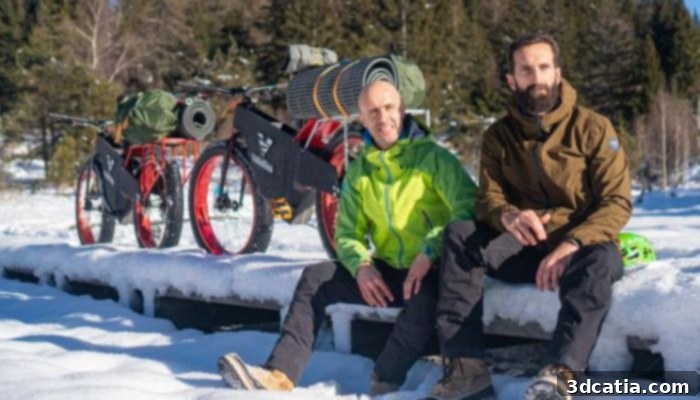
Alessandro Plona (left) and Alex Bellini (right) with the custom 3D-printed bike.
From Alaskan Wilds to Arctic Ices: The “Eyes on Ice” Expedition with the Impact Mountain Bike
The “Eyes on Ice” project is an ambitious initiative designed to traverse the Earth’s polar areas over a period of three intense years. Alex Bellini’s primary objective extends far beyond mere exploration; it is to critically examine and draw global attention to the severe environmental challenges these pristine yet vulnerable regions are currently enduring. From the accelerating rate of glacier melt to the myriad other devastating consequences of climate change, Bellini aims to provide a firsthand account that resonates with urgency and inspires action. The custom-designed “Impact” mountain bike, built through advanced 3D printing techniques, is not merely a mode of transport but a symbol of innovative and sustainable solutions in the face of environmental crisis, embodying the spirit of the mission itself.
The perilous journey for Alex Bellini and Alessandro Plona will unfold in distinct stages, each presenting its own set of formidable challenges. The initial phase in 2024 involves a rigorous traverse from Anchorage, Alaska, to the remote village of Nome, covering an astonishing 1,800 kilometers between February and March on their bespoke Impact mountain bikes. Following this, 2025 will see them undertake a demanding crossing of Greenland, a land of vast ice sheets and unpredictable weather. The expedition will culminate in 2026 with an unprecedented attempt to cross the frozen expanse of the Arctic Ocean, aiming for the geographical North Pole. This multi-year voyage is powered by the “Impact” mountain bike, a unique prototype whose frame is constructed using industrial recycled plastic via cutting-edge 3D printing technology, underscoring the expedition’s commitment to sustainability and circular economy principles.
Reflecting on the deeper meaning of this ambitious project, Alex Bellini stated, “This is not meant to be simply an exploratory trip, but with Eyes on Ice we want to take a proactive role in understanding, popularizing and protecting polar ecosystems. Our history and our future are closely linked to ice.” This sentiment underscores the profound connection between humanity and the natural world, particularly the critical role polar ice plays in global climate regulation. Indeed, the “Eyes on Ice” project represents a significant continuation and evolution of Bellini’s lifelong advocacy, building upon foundations laid by his earlier work. It completes a journey that began in 2019 with the impactful “10 rivers 1 ocean” project, a previous mission during which Bellini extensively explored ten of the world’s most polluted rivers, raising an alarm about plastic pollution and its devastating effects on aquatic ecosystems. This latest endeavor further solidifies his reputation as a pioneering voice for environmental protection, utilizing his incredible endurance and innovative technology to convey a powerful message.
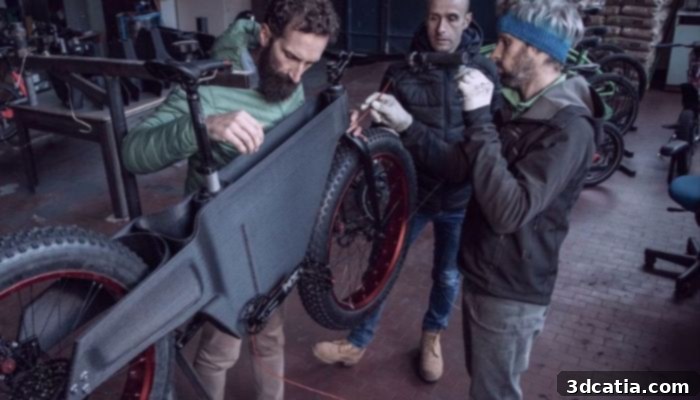
First tests of the 3D printed frame in extreme conditions.
Crafting the “Impact” Bike: The Power of Sustainable 3D Printing
In the extensive communications surrounding the “Eyes on Ice” project, while the overarching purpose of the mission—environmental advocacy—remains central, considerable emphasis has also been placed on the innovative realization of the “Impact” bicycle itself. The use of advanced 3D printing technology, coupled with a deep commitment to sustainability, highlights a new frontier in manufacturing. A key driver behind this choice was the desire to contribute actively to the development of a robust recycling supply chain for polycarbonate. Unlike more commonly recycled plastics such as polyethylene (PE), polypropylene (PP), or polyethylene terephthalate (PET), post-consumer polycarbonate is currently often incinerated rather than recycled, representing a significant loss of valuable material and a missed opportunity for circularity. The “Impact” bike project aims to demonstrate the viability and high performance of products made from recycled polycarbonate, advocating for a shift in industrial practices.
The conceptualization and initial assembly of the “Impact” frame were expertly handled by Daniele Rinaldi of Renaldi Telai, who meticulously translated the specific requests and technical requirements of Alex Bellini and Alessandro Plona into a functional design. The actual design and fabrication of the frame from scratch were then undertaken by the highly skilled eXgineering/Gimac/X-engineering team, led by Francisco Martins Carabetta. This collaborative effort ensured that every aspect of the bike’s form and function was meticulously refined over several weeks, incorporating feedback from rigorous field tests and the invaluable insights gleaned from the adventurers’ initial experiences. This iterative design process, facilitated by the flexibility of additive manufacturing, allowed for unparalleled customization and optimization for the extreme conditions the bike is expected to endure.
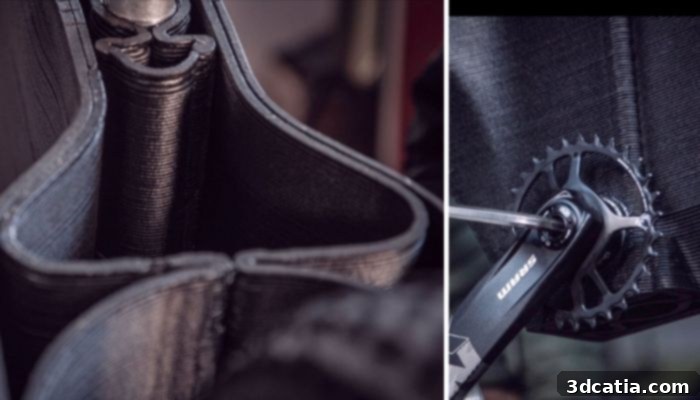
The frame itself was produced using the Robotic Additive Manufacturing (RAM) 3D printing process, a state-of-the-art technique that allows for the creation of large, complex geometries with high precision. The material chosen was recycled polycarbonate pellets, a conscious and sustainable choice, further enhanced by the incorporation of 30 percent carbon fiber to significantly boost its stiffness and structural integrity. This unique and sustainable design draws inspiration from the already established New01Bike concept, pushing the boundaries of what a bicycle frame can be. The entire production and refinement of this groundbreaking prototype were completed in approximately 15 days, a testament to the efficiency of 3D printing. This rapid turnaround time included intensive testing phases and crucial modifications, all aimed at ensuring the “Impact” bike was as reliable, high-performing, and comfortable as possible for its intrepid riders. Alex Bellini emphasized the dual triumph of the bike, stating, “Impact is the result of innovation and sustainability: thanks to polycarbonate, which is re-machinable and reprocessable for at least five cycles, we are showcasing a true circular economy model.” This highlights not only the immediate use of recycled materials but also the potential for future reuse, minimizing waste and maximizing resource efficiency throughout the product lifecycle.
To ensure the “Impact” bike could withstand the unimaginable rigors of an Arctic expedition, it underwent a battery of stringent tests. Initial trials were conducted on the snowy and challenging trails of Valtellina, providing real-world performance data in cold, demanding conditions. Beyond outdoor testing, the bike was subjected to the extreme environment of the climatic chamber at the Politecnico di Milano. Here, it endured temperatures as low as -40°C, a controlled simulation of the precise conditions anticipated in the Arctic. This rigorous testing regimen assessed the frame’s resilience under extreme cold, evaluating its structural integrity, material performance, and component reliability when subjected to typical riding loads, pedaling forces, and the unevenness of rough terrain. These comprehensive evaluations were crucial in validating the bike’s design and ensuring its readiness for Bellini’s ambitious journey, making it a true testament to engineering excellence and sustainable innovation.
What are your thoughts on Alex Bellini’s pioneering mission and the incredible capabilities of the 3D-printed “Impact” bike? His journey not only pushes the boundaries of human endurance but also showcases the immense potential of additive manufacturing and sustainable materials in addressing global challenges. We’d love to hear your insights and comments below, or engage with us on our LinkedIn, Facebook, and Twitter pages! Don’t forget to sign up for our free weekly newsletter here to receive the latest 3D printing news directly to your inbox. You can also explore all our videos and interviews on our YouTube channel for more fascinating content on additive manufacturing innovations.
*All Photo Credits: Alex Bellini/Alaska 2024