

Aleph Farms Pioneers Cultivated Meat: 3D Printing Steaks in Space for Sustainable Food Production
In a groundbreaking endeavor that promises to reshape the future of food, Aleph Farms, an innovative Israeli startup, has achieved a remarkable feat: producing cultivated beef steaks. This revolutionary method meticulously mimics the natural muscle-regeneration processes that occur within a cow’s body, yet under precisely controlled conditions. The company made global headlines by successfully 3D printing meat on the International Space Station (ISS), an environment far removed from any conventional natural resources. This monumental achievement was realized through a strategic partnership with 3D Bioprinting Solutions, whose advanced technology was instrumental in facilitating this scientific leap. Aleph Farms’ overarching mission is ambitious yet vital: to ensure global access to safe, nutritious, and ethical meat at any time and in any location on Earth, all while utilizing minimal resources. To delve deeper into this transformative project and understand its profound implications for our existing food production paradigms, we had the privilege of interviewing Didier Toubia, the visionary co-founder and CEO of Aleph Farms.
The Visionary Enterprise of Aleph Farms
Aleph Farms stands as a pioneering food technology company and a recognized global leader within the burgeoning cultivated meat industry. At its core is a passionate and devoted team of professionals, united by a shared commitment to making a tangible impact on some of humanity’s most pressing contemporary challenges. These include the escalating crisis of climate change, the looming threat of food shortages, and the ethical concerns surrounding traditional animal agriculture. The company’s innovative approach offers a promising pathway toward a more sustainable and secure food future for all. Throughout the past year, Aleph Farms has cultivated a highly fruitful cooperation with 3D Bioprinting Solutions, a partnership that culminated in the historical achievement of 3D printing meat in space. This collaboration not only showcased the immense potential of cellular agriculture but also underscored the power of interdisciplinary innovation in tackling complex global issues.
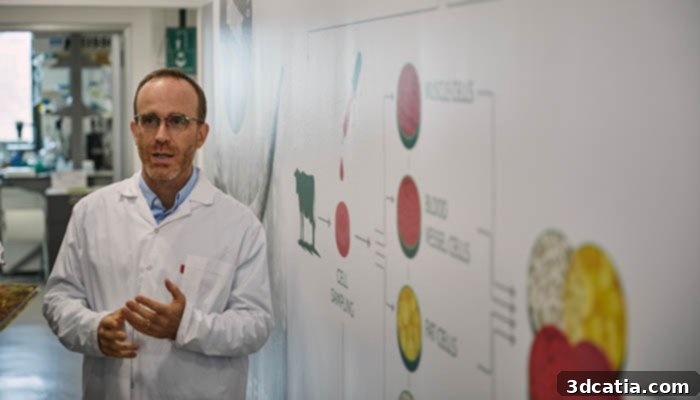
Didier Toubia, Co-Founder and CEO of Aleph Farms | Image via Aleph Farms
Genesis and the Grand Mission for a Sustainable Future
Aleph Farms was co-founded in 2017, a pivotal year that marked the beginning of its journey to revolutionize food production. The company emerged from a collaborative effort with The Kitchen, an Israeli food-tech incubator that is an integral part of the Strauss Group, a global leader in the food and beverages sector. This entrepreneurial foundation was further strengthened by the scientific brilliance of Prof. Levenberg from the Technion, an internationally recognized expert in the highly specialized field of tissue engineering. This unique combination of entrepreneurial drive, industry backing, and cutting-edge scientific expertise provided a robust platform for Aleph Farms’ ambitious mission.
The urgency of Aleph Farms’ mission is underscored by critical global reports. A landmark report published on September 10, 2019, by the Intergovernmental Panel on Climate Change (IPCC), established by the United Nations, unequivocally highlighted the substantial contribution of conventional animal farming methods to climate change. The report emphasized that these practices are “creating a challenging situation worse and undermining food security.” According to the UN, the livestock farming and conventional meat industry alone are responsible for an alarming 18% of human-produced greenhouse gas emissions released into the atmosphere. Beyond atmospheric impact, the resource intensity is staggering: it requires over 15,000 liters of water to produce a mere 1kg of beef using traditional methods. Furthermore, intensive animal farming acts as a significant catalyst for biodiversity loss, driving widespread deforestation and contributing to devastating fires in regions like the Amazon. It is also directly responsible for the degradation and destruction of soils, largely due to the monoculture of soy cultivated solely for animal feed.
In the face of these formidable challenges, urgent action is imperative. To effectively tackle climate change and strive to keep global warming below the critical 1.8-degree threshold, while simultaneously ensuring food security for a burgeoning world population projected to reach 9 billion by 2040, a fundamental shift in our food ecosystem is non-negotiable. The food industry must innovate to provide consumers with high-quality, healthy, and ethically produced food – accessible to anyone, anywhere, at any time – but crucially, with only a fraction of the environmental footprint currently associated with such products. With the global demand for meat expected to double by 2050, the imperative to find sustainable solutions that can deliver the same desired and culturally significant products is more pressing than ever. As a food company, Aleph Farms recognizes that without such solutions, fulfilling this promise to future generations will be impossible.

The bovine cells were turned into a 3D structural whole-muscle beef steak | Image via Aleph Farms
Aleph Farms is driven by a profound ambition: to leave a superior legacy for future generations and to usher in a food culture that is inherently healthier, safer, more sustainable, and entirely free from animal suffering. By directly addressing the myriad ecological and health-related issues intrinsically linked with today’s mass production of meat, alongside alleviating the moral discomfort increasingly felt by conscious consumers, the company offers a highly desirable food product – a beef steak – devoid of the detrimental downsides and drawbacks of conventional production methods. This slaughter-free transition represents a powerful catalyst for more efficient and ethical solutions, poised to tackle fundamental problems in contemporary agriculture and pave the way for a truly sustainable food system.
Cultivating Meat with Minimal Resources: The Groundbreaking Space Experiment
The experiment conducted on September 26th, led by 3D Bioprinting Solutions, served as a powerful demonstration of the potential of integrated technologies. This pivotal project brought together unique advancements in cellular agriculture, developed by Aleph Farms, and sophisticated 3D bioprinting technology, provided by 3D Bioprinting Solutions. Working in concert, these cutting-edge methodologies were meticulously applied to achieve the anticipated output: real muscle tissue. From the cellular agriculture perspective, the specific cells provided for this experiment acted as the foundational building blocks for the final product, a small-scale muscle tissue, through a precise process of assemblance. The 3D bioprinter, ingeniously designed by 3D Bioprinting Solutions, is equipped with a magnetic force system. This innovative feature enabled the aggregation of various distinct cells into a coherent, small-scaled tissue, mirroring the fundamental construction of natural meat.
The choice of space as the experimental environment was highly symbolic and strategically significant. In the vacuum of space, it is impossible to access the 15,000 liters of water typically required to produce just one kilogram of beef using conventional, Earth-bound methods. Space inherently represents the most resource-scarce environment imaginable, thereby magnifying the central challenge Aleph Farms aims to overcome: the ability to produce authentic meat with an absolute minimum of resources, all while maintaining an environmentally respectful approach. This extreme environment served as the ultimate proving ground for their resource-efficient model.
Developing food for space missions and for astronauts presents a unique set of complex considerations. Factors such as microgravity conditions, the necessity for extended shelf-life, and precise nutritional requirements must all be meticulously addressed as primary considerations in the development process. The fundamental distinction between producing food on Earth and in space lies in the production method’s inherent dependency on local natural resources and their readily available supply. In space, the production facility is hundreds of miles removed from any accessible resources—be it land, water, or other vital inputs—that are conventionally needed for the process. On Earth, while the initial R&D phase of Aleph Farms’ cultivated meat occurs in laboratories, much like any other novel food product, the company’s forward-looking timeline envisions large-scale production in advanced “bio-farms.” These facilities are designed to resemble modern breweries or yogurt factories, emphasizing controlled environments and efficient processes. It is confidently anticipated that this production method will require only a small fraction of the resources typically consumed by conventional meat production, a possibility thoroughly verified and reinforced by the success of the space experiment.

The project was led with 3D Bioprinting Solutions on board of the ISS | Credits: Aleph Farms
The urgency for such sustainable alternatives is further heightened by the undeniable detrimental impacts of today’s intensive, industrial agriculture. This system is a breeding ground for widespread epidemics, exemplified by the African Swine Fever outbreaks in Asia. It is a primary driver of deforestation and contributes significantly to destructive fires, particularly in South America. The practice of monoculture soy cultivation for animal feed is systematically responsible for the destruction of vast swathes of fertile soils. Moreover, intensive farming is a significant contributor to the alarming development of antibiotic resistance, a global health crisis that tragically causes over 700,000 human deaths annually, a number that continues to rise. In essence, intensive animal farming stands as a major accelerator of both biodiversity loss and catastrophic climate change. With projections indicating that global meat consumption is set to increase by an astounding 50% to 70% by the year 2040, a radical and immediate transition in food production is not merely desirable, but absolutely essential. Cultivated meat, therefore, emerges as one of several critical solutions to mitigate this profound impact, working in concert with other sustainable practices such as regenerative agriculture and traditional extensive farming.
The Path to Consumer Plates: Bringing Cultivated Meat to Market
At Aleph Farms, the journey from scientific breakthrough to consumer availability is progressing with determined steps. The company’s ambitious but achievable goal is to introduce its cultivated beef steaks to the market through a limited launch within the next three to four years. This initial phase will involve strategically establishing a network of “bio-farms” – specialized facilities designed for the large-scale cultivation and growth of their sustainable meat products. These bio-farms will be engineered to optimize efficiency and sustainability, laying the groundwork for broader market penetration.
Aleph Farms has already demonstrated an impressive technical capability: the successful cultivation of various cell types that, after a carefully controlled period of three to four weeks, coalesce to form a thin-sliced beef steak. Crucially, this cultivated steak possesses a complex 3D structure that mirrors the beloved meat cuts enjoyed by consumers today. The primary challenge currently being addressed lies in perfecting the intricate process of mimicking, and ultimately emulating, the precise physiological conditions found within a cow’s body. These vital conditions – including the exact balance of nutrients, optimal temperature ranges, and specific growth factors – are what enable the diverse cells to differentiate and assemble into the identical tissue structures they would naturally form inside a mammalian organism. Achieving this level of biological fidelity is key to producing a product that is indistinguishable from conventional meat.
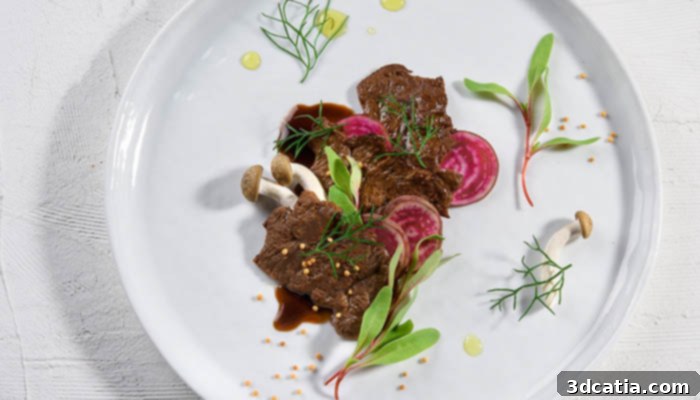
Credits: Aleph Farms
Ultimately, Aleph Farms is committed to providing consumers with a truly high-end product, one that makes no compromises whatsoever on the crucial attributes of taste, smell, and texture. This unwavering commitment to quality ensures that consumers will enjoy a premium meat experience without the environmental and ethical drawbacks. The main remaining challenges the company is actively working to overcome are multifaceted. These include the complex scale-up process, which involves transitioning from laboratory production to industrial volumes; significantly reducing the cost of commercial products to make cultivated meat accessible to a wider market; and addressing the vital aspect of consumer education, to build understanding, acceptance, and demand for this innovative new category of meat.
A Resounding Call to Action for Future Generations
Just a few weeks prior to this interview, during Climate Week, an unprecedented wave of climate strikes drew over 6.6 million people onto the streets across the globe. Yet, a significant portion of the world’s attention remained fixed on New York City for Climate Week NYC 2019, an influential event spearheaded by The Climate Group. Throughout this critical week, youth leaders from around the world were not merely marching in massive numbers; they were filing lawsuits, raising their voices, and exerting immense pressure on global leaders to take decisive and meaningful action. This particular juncture in history emphatically underscores the urgent necessity to act now, for the sake of future generations. The collective decisions we make today will irrevocably shape the future world in which our children and grandchildren will live. Do we desire for them to look back at Earth from the vast expanse of space and remember it as a vibrant, blue planet, teeming with life? Or as a desolate, red landscape, ravaged by our inaction?
It is unequivocally time for humanity to dismantle the metaphorical silos we have constructed over centuries – the divisions between industries, disciplines, and nations. Instead, we must embrace holistic, integrative solutions that are capable of addressing a wide spectrum of interconnected issues simultaneously. Cultivated meat stands as a prime example of such a comprehensive solution. It is poised to become a completely new and transformative category of meat products, offering a sustainable, ethical, and resource-efficient alternative that can contribute significantly to a healthier planet and a more secure food future for everyone. This paradigm shift requires not only technological innovation but also a collective change in mindset, fostering collaboration and a shared commitment to a sustainable tomorrow.
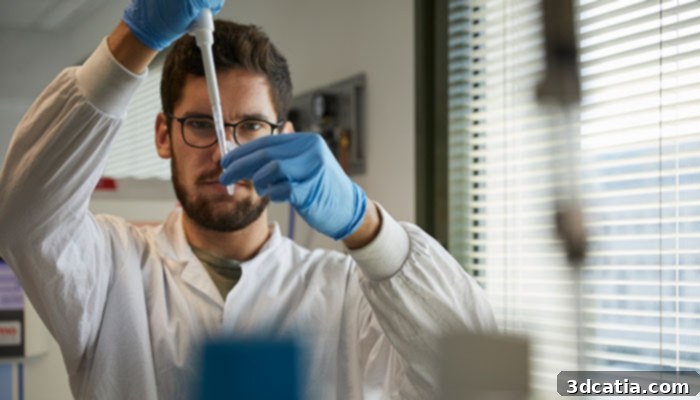
Credits: Aleph Farms
*Source: FAO, Institution of Mechanical Engineering
What are your thoughts on Aleph Farms’ groundbreaking mission and their remarkable work in cultivated meat? We invite you to share your perspective in a comment below or join the conversation on our Facebook and Twitter page! Don’t forget to sign up for our free weekly Newsletter, to receive all the latest news and innovations in 3D printing delivered directly to your inbox!