
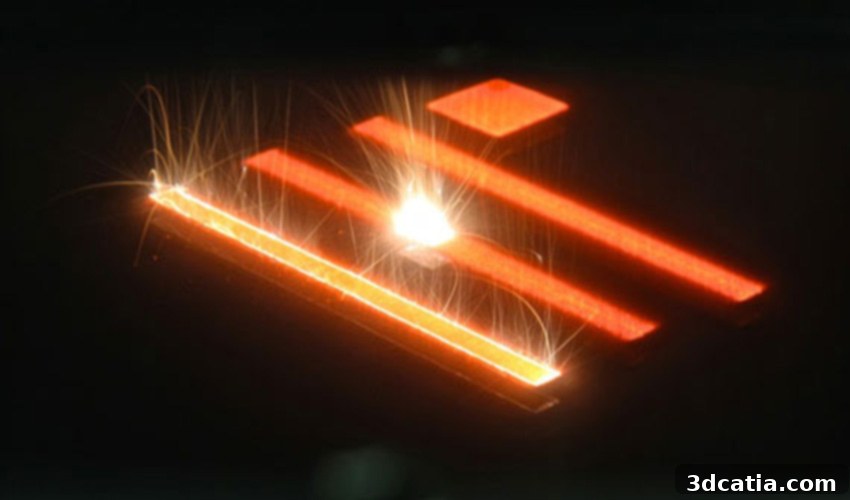
Pioneering Multi-Material Metal 3D Printing: Aerosint and Aconity3D Forge Ahead in LPBF Innovation
The landscape of additive manufacturing is continuously evolving, pushing the boundaries of what’s possible in design and functionality. In a significant stride forward for metal 3D printing, two prominent additive manufacturing (AM) innovators, Belgium-based Aerosint and Germany’s Aconity3D, have announced a groundbreaking collaboration. This partnership is set to accelerate the development of multi-metal applications within Laser Powder Bed Fusion (LPBF) technology, a move that promises to unlock unprecedented capabilities for various industries.
Aerosint, recognized for its pioneering Selective Powder Deposition (SPD) technology, brings a unique approach to multi-material processing. While the original content mistakenly refers to them as an SLS 3D printer manufacturer, their core innovation lies in precision powder dispensing for multi-material applications across various AM processes, including LPBF. Aconity3D, on the other hand, is a distinguished metal 3D printer manufacturer, specializing in advanced Laser Powder Bed Fusion (LPBF) systems and comprehensive post-processing equipment. Their combined expertise forms a formidable alliance aimed at overcoming one of the most significant challenges in metal additive manufacturing: the ability to print parts with multiple distinct materials in a single build.
Revolutionizing LPBF: Multi-Material Capabilities Take Center Stage
The ultimate objective of this strategic partnership is to seamlessly integrate Aerosint’s innovative re-coating technology into Aconity3D’s high-performance AconityONE LPBF 3D printer. This integration is poised to transform the capabilities of metal additive manufacturing, allowing for the creation of components with localized material properties – a true game-changer for functional part development.
Edouard Moens de Hase, Co-founder and Managing Director at Aerosint, expressed his enthusiasm for the collaboration, highlighting the shared values and innovative spirit between the two companies. “We are truly excited to partner with an OEM that has the same DNA as we have at Aerosint. Aconity is innovative and driven to solve challenges that haven’t been addressed yet. Together we have all the technical expertise needed to develop very unique LPBF hardware and multi-metal applications,” stated de Hase. His remarks underscore the synergistic nature of this alliance, where Aerosint’s expertise in multi-powder dispensing complements Aconity3D’s mastery of advanced LPBF systems. The collaboration is a testament to the industry’s drive to push beyond single-material constraints and explore the vast potential of multi-material designs.
Traditionally, LPBF technology has excelled in producing complex geometries from a single metal alloy. However, the demand for parts with varied mechanical, thermal, or electrical properties within a single component has been growing steadily across numerous sectors. This partnership directly addresses this burgeoning need, aiming to bring unprecedented multi-material functionality to Aconity’s robust LPBF process. The ability to deposit different metal powders precisely and selectively opens doors to designing parts that were previously impossible to manufacture through traditional means or even conventional single-material 3D printing.
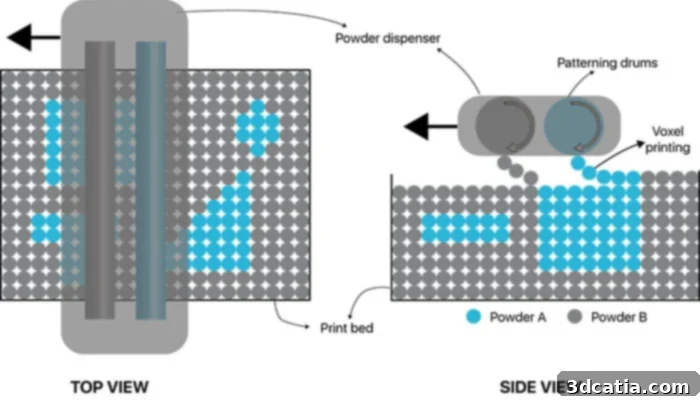
Aerosint’s multi-powder dispensing technology offers precise control over material placement, enabling true multi-material additive manufacturing. Image: Aerosint
The Unseen Potential: Industry Awaits Multi-Material LPBF
Yves Hagedorn, CEO of Aconity3D, also emphasized the pioneering nature of Aerosint’s technology and the significant impact it will have on the industry. “What Aerosint has invented is very unique. An LPBF system with multi-material capabilities is unseen in the industry,” said Hagedorn. His statement highlights the innovative edge of Aerosint’s solution, which promises to fill a critical void in the additive manufacturing market. “Our customers have been waiting for these capabilities and we are therefore excited to start working on a potential solution for them. Multi-material is for us the next evolution of 3D printing and we are happy we can be pioneers here together with Aerosint,” he added, underscoring the high demand for such technology and Aconity3D’s commitment to leading this evolutionary leap.
The concept of multi-material 3D printing is widely regarded as the next frontier in additive manufacturing. By allowing engineers and designers to combine different metals or even ceramics within a single part, it enables an unparalleled degree of design freedom and functional optimization. This capability moves beyond merely replicating existing designs to creating entirely new classes of components with localized properties tailored to specific performance requirements. Imagine a single component that exhibits high strength in one area, excellent thermal conductivity in another, and corrosion resistance where it’s most needed – all seamlessly integrated within the same structure. This level of functional specificity is what the Aerosint and Aconity3D collaboration aims to deliver.
Aerosint’s multi-powder dispensing technology, at its core, is designed to deposit different types of powders side-by-side or in specific patterns within the build plate. This selective deposition capability, when integrated with Aconity3D’s precise laser melting process, will allow for the creation of parts where material composition can vary strategically across the object. This is a significant departure from traditional powder bed fusion, where the entire powder bed consists of a single material. The technical intricacies involve precise control over powder delivery, recoating, and laser parameters to ensure optimal melting and bonding between dissimilar materials, mitigating issues like thermal stresses and metallurgical incompatibilities.
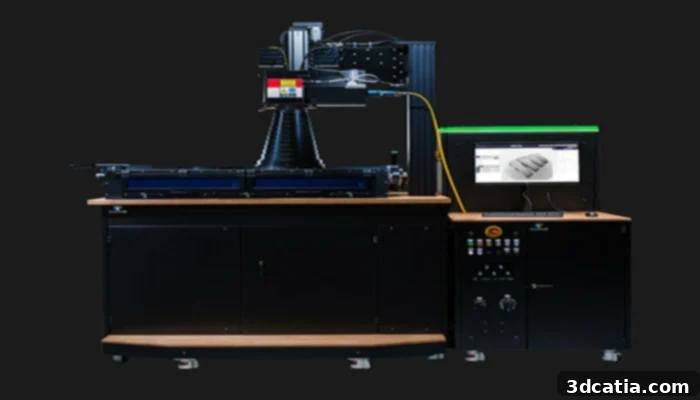
The AconityONE 3D printer, a core platform for this multi-material innovation. Photo: Aconity3D.
Transformative Applications Across Industries
The potential applications of multi-material 3D printing are vast and transformative, promising to impact numerous high-value industries. Aerosint provided compelling examples that illustrate this potential. One such opportunity lies in the medical sector, specifically in 3D printing rigid prosthetics with localized flexible cushioning. This innovation could significantly enhance patient comfort by integrating soft, biocompatible materials into rigid, load-bearing structures, leading to custom-fit devices that are both functional and comfortable. Similarly, in consumer goods, the ability to create colorful models such as toys with varying textures and mechanical properties opens up new avenues for product design and personalization.
Beyond these initial examples, the implications for industrial applications are even more profound. In the **aerospace industry**, engineers could design lighter components with integrated areas of high strength-to-weight ratio combined with localized regions of enhanced heat resistance or wear properties. For example, turbine blades could feature robust leading edges with cooling channels made from a different alloy optimized for thermal dissipation, all in a single print. This could lead to improved engine efficiency and component longevity.
The **medical field** stands to benefit immensely from advanced multi-material capabilities. Imagine orthopedic implants that promote faster bone integration through a porous titanium structure while incorporating areas of soft, elastic material for improved interface with surrounding tissues. Dental implants could feature varying material stiffness to better mimic natural tooth structure. Furthermore, surgical tools could be produced with specific ergonomic handles combined with active tips made from specialized, sterilizable alloys, enhancing both surgeon control and patient safety.
In the **automotive sector**, multi-material components could lead to more efficient engines and lighter vehicle structures. Parts could be optimized for specific stress points, with harder, wear-resistant materials used in high-friction areas and lighter alloys elsewhere. This could also extend to complex tooling and molds, where inserts with varying thermal conductivities could be printed to improve cooling channels and reduce cycle times in injection molding processes.
The **electronics industry** could leverage multi-material printing to create components with integrated conductive and insulating parts, potentially simplifying assembly and enabling more compact devices. Sensors with embedded functionalities, or specialized heat sinks that combine highly conductive materials with structural elements, are also within reach. The ability to control material placement at a granular level means that complex circuitry could be directly integrated into the structural components of a device.
This collaboration between Aerosint and Aconity3D is not just about integrating two technologies; it’s about pushing the entire additive manufacturing ecosystem forward. By addressing the critical need for multi-material capabilities in metal LPBF, they are paving the way for a new era of engineering and product development. The focus on developing “very unique LPBF hardware and multi-metal applications” signifies a commitment to not just incremental improvements, but fundamental advancements that will redefine what can be achieved with 3D printing. This partnership holds the key to unlocking innovative designs, enhanced functional performance, and ultimately, more sustainable and efficient manufacturing processes across a spectrum of global industries.
What are your thoughts on this exciting new collaboration and the future of multi-material metal 3D printing? We invite you to share your insights and predictions in the comments section below or join the conversation on our Facebook and Twitter pages! For all the latest news, trends, and breakthroughs in the dynamic world of 3D printing, don’t forget to sign up for our free weekly Newsletter, delivered directly to your inbox!