

Openbike: Revolutionizing Urban Mobility with Open-Source 3D Printed Bicycles
The dynamic intersection of sports technology and advanced manufacturing is continually yielding groundbreaking innovations, with 3D printing, or additive manufacturing, playing a pivotal role. Among various athletic disciplines benefiting from these transformative capabilities, cycling has emerged as a particularly vibrant arena for significant advancements. This modern manufacturing technique is being leveraged across the cycling world, ranging from the production of ultra-lightweight bicycle components that enhance performance and efficiency, to the meticulous creation of high-performance helmets offering superior safety and aerodynamic advantages for both professional cyclists and dedicated enthusiasts. Additive manufacturing consistently pushes the boundaries of design and functionality, overcoming traditional obstacles and enabling unprecedented levels of customization and performance optimization in competitive and recreational cycling.
Now, this innovative spirit finds a novel and highly accessible application that transcends high-performance gear, aiming to revolutionize everyday urban mobility. The Basque architecture firm Arquimaña has unveiled the ingenious Openbike project, a testament to the power of open-source design combined with modern manufacturing. Openbike introduces a comprehensive 3D model of a bicycle that is not only available for download but is also designed to be printed and assembled by individuals themselves. This pioneering initiative marks a significant shift, democratizing access to bicycle manufacturing and promoting a sustainable, DIY approach to personal transportation. It’s an exciting development that transforms the user from a mere consumer into an active creator, fostering a deeper connection with their mode of transport and empowering communities to build their own eco-friendly solutions.
The Vision Behind Openbike: Fostering Sustainable Urban Living and Community Engagement
At its very core, the Openbike project is driven by a profound commitment to environmental stewardship and the enhancement of urban quality of life. As eloquently stated on Arquimaña’s official website, the overarching mission is clear and compelling: “In increasingly densely populated cities, non-polluting transport is key for good co-existence. That is why we created Openbike, a project that allows you to build your own bike and be part of a community that seeks better cities for all.” This foundational statement not only articulates the project’s purpose but also highlights its ambition to cultivate healthier, more sustainable, and interconnected urban environments worldwide. It’s a holistic approach that goes beyond simply providing a mode of transport; it’s about nurturing a movement towards conscious living.
This visionary initiative directly addresses some of the most pressing challenges faced by contemporary cities, including rapid urbanization, increasing traffic congestion, and the urgent need to combat climate change. By championing non-polluting forms of transport, Openbike makes a tangible contribution to significantly reducing carbon emissions, mitigating harmful air and noise pollution, and alleviating the often-crippling gridlock in city centers. The ripple effect of these reductions is immense: improved air quality leads to better public health outcomes, quieter streets enhance livability, and less traffic makes urban spaces more enjoyable and accessible for pedestrians and cyclists alike. Furthermore, the act of constructing one’s own bike instills a unique sense of ownership and responsibility, which naturally encourages proper maintenance and a longer lifespan for the bicycle, thereby championing a more sustainable, circular economy model where resources are valued and waste is minimized.
Beyond its impressive environmental credentials, Openbike actively cultivates a vibrant and engaged community founded on shared principles of sustainability, craftsmanship, and local production. It empowers individuals to transition from passive consumers to active participants in addressing urban challenges, fostering a collective spirit of innovation and self-reliance. By embracing an open-source methodology, Arquimaña extends an open invitation for global collaboration, encouraging enthusiasts, designers, engineers, and makers from diverse backgrounds to contribute their ideas, expertise, and feedback to the project’s ongoing evolution. This collaborative ecosystem allows for endless customization possibilities and the sharing of experiences, transforming the process of acquiring a bicycle from a transactional purchase into an enriching and educational journey. Ultimately, this network of like-minded individuals forms a powerful force, collectively committed to shaping better, more livable cities for everyone, one self-built bike at a time.
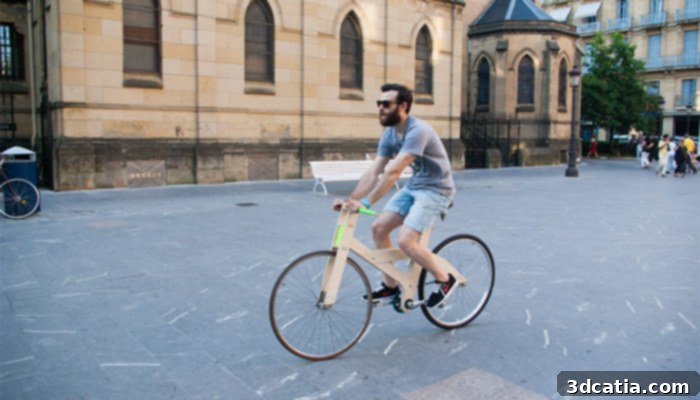
Photo Credit: Openbike
Designing Your Own Ride: The Openbike Blueprint and Smart Manufacturing Process
For those captivated by the unique allure of crafting their own bicycle, Arquimaña has thoughtfully provided a comprehensive suite of resources on its website, making the entire process remarkably accessible. Staying true to its nomenclature, the Openbike project is built upon an open-source foundation, a philosophy that champions accessibility, transparency, and the free sharing of knowledge. This means that anyone with an internet connection and a desire to build can freely download the detailed 3D models for all the individual components that comprise the Openbike. This democratic approach significantly lowers the entry barrier for aspiring bike builders, fostering widespread adoption and encouraging a vibrant community of innovators to further enhance and adapt the designs based on their unique needs and local contexts.
The construction of an Openbike ingeniously marries cutting-edge additive manufacturing techniques with more established, robust fabrication methods. The fundamental structural element, the bicycle’s main body or frame, is meticulously designed for production using CNC (Computer Numerical Control) machining. This process involves the precise cutting of durable plywood elements, a material chosen for its commendable strength-to-weight ratio, renewability, and appealing natural aesthetic. CNC machining ensures unparalleled accuracy and consistency in the creation of these critical frame components, guaranteeing a sturdy, reliable, and aesthetically pleasing backbone for every Openbike. This blend of traditional material with modern precision manufacturing highlights a thoughtful approach to sustainability and durability.
Beyond the CNC-machined frame, numerous other crucial components of the Openbike are perfectly suited for 3D printing. Parts such as the ergonomic saddle, comfortable handlebars, and essential wheel hubs are prime candidates for additive manufacturing, leveraging its capabilities for intricate geometries and custom fits. Arquimaña specifically advocates for the use of PLA (Polylactic Acid) for these 3D printed elements. PLA is a favored material in the 3D printing community due to its eco-friendly attributes, including biodegradability, its user-friendliness in printing, and its relatively low cost, all of which align seamlessly with the project’s overarching commitment to sustainability. This dual-pronged manufacturing approach not only facilitates a high degree of personalization for each builder but also champions sustainable sourcing. Builders have the option to either 3D print these specific parts themselves from the provided open-source models or, in a further commitment to ecological responsibility, repurpose and integrate functional components salvaged from bicycles that have reached the end of their conventional lifespan. This innovative approach maximizes resource efficiency, significantly minimizes waste, and truly embodies a comprehensive circular design philosophy.
Evolution and Customization: The Openbike Journey from Rev1 to Rev4 and Beyond
The Openbike project is far from a static design; instead, it represents a dynamic and continually evolving platform, meticulously refined through an iterative development process. To date, Arquimaña has thoughtfully released several distinct versions, commencing with the foundational Rev1 and progressing through to the most recent and advanced Rev4. Each subsequent iteration introduces specific enhancements, modifications, and improvements, powerfully demonstrating the firm’s unwavering commitment to continuous innovation and a user-centric design philosophy. This evolutionary approach is crucial, enabling the Openbike to adapt to an increasingly diverse array of user needs and preferences, showcasing the remarkable agility and responsiveness that are inherent strengths of well-managed open-source projects.
A compelling example of this commitment to inclusivity is the Rev3 model, which was specifically engineered to cater to individuals of shorter stature. This particular revision highlights Arquimaña’s deep dedication to making sustainable urban mobility accessible to a broader demographic. By carefully adjusting the frame geometry and optimizing component placements, Rev3 effectively addresses common comfort and fit challenges often experienced by smaller riders. This thoughtful attention to ergonomic detail ensures that urban cycling becomes a more comfortable, enjoyable, and safer activity for everyone, regardless of their height. Such practical applications of the open-source model underscore how direct community feedback and diverse user requirements can profoundly influence and drive meaningful design improvements, making the product truly adaptable and inclusive.
The Rev4, currently standing as the most advanced version of the Openbike, exemplifies significant advancements in user experience, modularity, and overall adaptability. This iteration boasts several key improvements meticulously designed to enhance comfort, portability, and convenience for the modern urban cyclist. A standout feature is the inclusion of a cleverly engineered removable handlebar, which adds a crucial layer of practicality for storage and transport, a particularly valuable attribute for urban dwellers navigating limited living and storage spaces. Furthermore, the Rev4 integrates a noticeably more comfortable saddle seat, directly addressing long-standing rider feedback regarding comfort during extended periods of use. These thoughtful enhancements in the Rev4 not only elevate the functional utility of the bike but also reflect a deeper, more nuanced understanding of the evolving demands of urban cycling, solidifying the Openbike’s position as an even more practical, appealing, and versatile choice for daily commutes and leisurely recreational rides alike.
The entire iterative development journey, from Rev1 to Rev4, vividly illustrates the immense potential and inherent dynamism of open-source projects. Each revision intelligently builds upon the invaluable lessons gleaned from its predecessors, seamlessly integrating user feedback, harnessing the latest technological advancements, and incorporating a growing understanding of global sustainable urban mobility needs. This relentless pursuit of refinement ensures that the Openbike remains at the vanguard of DIY, eco-friendly transportation solutions, continually offering enhanced features and fostering a vibrant culture of innovation among its burgeoning community of builders and riders. Comprehensive detailed information about each Openbike revision, alongside clear, step-by-step instructions, and the essential 3D model files, are all readily accessible for download on the company’s official website, inviting everyone to actively participate in and contribute to this inspiring and evolving journey towards a greener future.
The Wider Impact of DIY Biking and the Future of Sustainable Transport
The Openbike project transcends the realm of a mere novel application of 3D printing; it embodies a powerful and forward-thinking vision for the future of sustainable transportation and individual empowerment. By democratizing access to design files and actively encouraging self-assembly, Arquimaña is fostering a profoundly deeper connection between individuals and their chosen modes of transport. This hands-on, DIY approach offers multiple benefits: it significantly reduces manufacturing costs and mitigates the environmental impact traditionally associated with complex global supply chains. More importantly, it instills a valuable sense of craftsmanship, mechanical understanding, and self-reliance in the builder. Users gain invaluable practical experience in assembling their bike, which naturally translates into better maintenance practices and a greater propensity to repair components rather than simply discarding and replacing entire units, thereby making a substantial contribution to a truly circular and responsible economy.
Moreover, this groundbreaking initiative vigorously champions the fundamental principles of open design and localized production. In an era increasingly dominated by mass-produced, often disposable consumer goods, Openbike presents a compelling and sustainable alternative that prioritizes durability, repairability, and personalization. The ability to locally source sustainable materials such as plywood and to 3D print bespoke components on demand dramatically shrinks the carbon footprint historically associated with long-distance transportation and complex logistics. Furthermore, the inherent open-source nature of the project means that the core design can be continually adapted, enhanced, and creatively expanded upon by a diverse, global community of innovators. This collaborative model leads to an accelerated pace of development and fosters the creation of tailored solutions specifically suited for diverse geographical landscapes, varied climatic conditions, and unique cultural preferences. Imagine local communities across the globe developing customized Openbike variations that perfectly navigate their specific urban terrains or reflect their unique aesthetic sensibilities – the potential for localized innovation and creative adaptation is truly limitless.
In essence, the Openbike project serves as an inspiring and robust case study illustrating how advanced manufacturing technologies, when synergistically combined with an open-source ethos, can effectively democratize access to essential goods and actively promote sustainable living practices. It boldly challenges the conventional consumer model, inviting individuals to transition from passive recipients to active creators, innovators, and problem-solvers. As urban centers worldwide continue to expand and grapple with escalating environmental pressures, innovative solutions like Openbike offer a tangible, accessible pathway towards building more resilient, ecologically sound, and community-driven urban mobility systems. It stands as a powerful testament to the idea that with the right tools, shared knowledge, and a collaborative spirit, anyone can actively contribute to forging a better, greener, and more connected future, one thoughtfully constructed bicycle at a time.
What are your thoughts on the revolutionary Openbike project and its immense potential to reshape urban cycling and sustainable living? We warmly invite you to share your valuable perspectives and insightful comments below! You can also actively join the ongoing conversation and connect with our vibrant community on our various social media platforms, including LinkedIn, Facebook, and Twitter. To ensure you never miss out on the very latest advancements and breaking news in additive manufacturing, be sure to sign up for our free weekly Newsletter here, delivering top 3D printing news directly to your inbox every week! For comprehensive visual insights and deeper dives into the fascinating world of 3D printing, we encourage you to explore all our engaging and informative videos on our dedicated YouTube channel.