
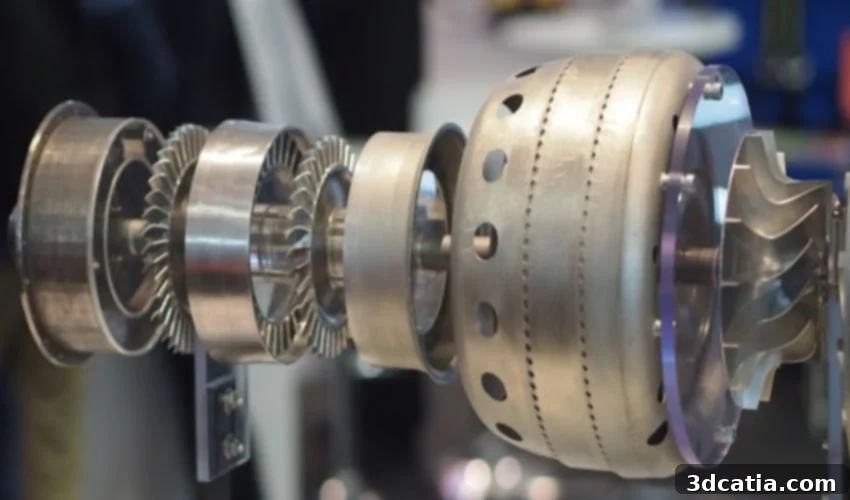
Revolutionizing Space Exploration: NASA’s Institute Accelerates 3D Printed Metal Part Certification
The transformative power of additive manufacturing (AM), commonly known as 3D printing, is widely recognized for its applications here on Earth. From rapid prototyping to customized medical devices, its utility is undeniable. However, its potential truly skyrockets when we consider its role in outer space. For years, 3D printing has been heralded as a cornerstone technology for advancing space exploration, and this belief has recently received a powerful reaffirmation. NASA, the world’s leading space agency, announced the establishment of two new Space Technology Research Institutes (STRIs), one of which is entirely dedicated to the intricate process of understanding, qualifying, and rapidly certifying metal parts produced using additive manufacturing techniques for spaceflight applications.
NASA’s commitment to and experience with 3D printing technologies are extensive. The agency has been an early and enthusiastic adopter of AM, continually pushing its boundaries across a myriad of applications. These have included the fabrication of critical rocket parts, the innovative production of 3D printed foods aboard the International Space Station (ISS), and even ambitious plans for constructing habitats and infrastructure on extraterrestrial bodies like the Moon and Mars. This latest announcement, however, signals a deepened and intensified strategic focus. It underscores NASA’s unwavering dedication to integrating cutting-edge, innovative technologies like advanced 3D printing as a fundamental pathway to achieving its ambitious long-term exploration objectives. Each of these newly formed institutes will be spearheaded by expert teams at leading U.S. universities, tasked with developing “multidisciplinary research and technology development programs critical to NASA’s future.” To fuel this crucial work, each institute is poised to receive substantial funding, up to $15 million, disbursed over a five-year period.
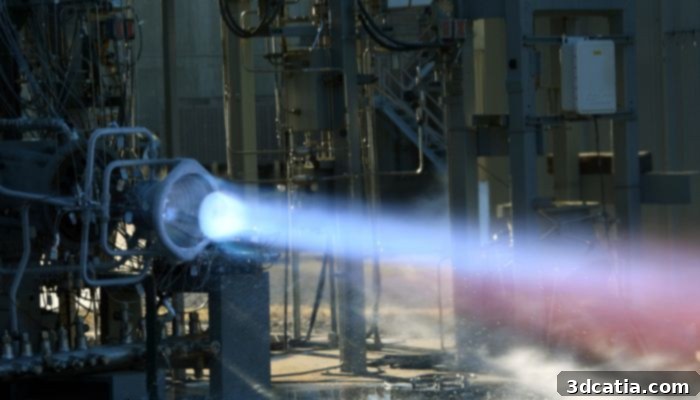
One of NASA’s new Space Technology Research Institutes (STRIs) will be dedicated to rigorously understanding and certifying metal 3D printed parts, a crucial step for future spaceflight missions. (Photo credits: NASA)
Elaborating on the strategic importance of these initiatives, Jim Reuter, associate administrator for the agency’s Space Technology Mission Directorate at NASA Headquarters in Washington, emphasized the agency’s proactive approach. “We’re thrilled to draw on the expertise of these multi-university teams to create technology for some of our most pressing needs,” Reuter stated. He further highlighted the profound impact of their work: “Their work will enable next-generation science for studying our home planet and broaden the use of 3D-printed metal parts for spaceflight with state-of-the-art modeling.” This statement not only underlines the scientific advancement potential but also the practical necessity of robust, certifiable 3D printed components for the increasing complexity and duration of future space missions. The ability to manufacture reliable components on demand, potentially even in space, promises unprecedented flexibility and sustainability for deep-space exploration.
What Can We Expect From the Institute for Model-Based Qualification & Certification of Additive Manufacturing (IMQCAM)?
The critical question for the additive manufacturing community and space enthusiasts alike is: precisely how will AM be studied and advanced within this new framework? The institute in focus is the Institute for Model-Based Qualification & Certification of Additive Manufacturing (IMQCAM), an ambitious collaborative effort co-led by the esteemed Carnegie Mellon University in Pittsburgh and Johns Hopkins University in Baltimore. As its comprehensive name suggests, IMQCAM’s core mission is to significantly enhance the computer models of 3D printed metal parts. This improvement is not merely academic; it is designed to expand the scope of spaceflight applications for these parts and, critically, to streamline and improve the qualification and certification processes that are currently a major bottleneck. The institute plans to achieve this through the innovative use of “digital twins.” These sophisticated virtual replicas will empower engineers with an unprecedented understanding of the parts’ capabilities and inherent limitations, including their precise stress tolerance before potential failure, a crucial metric for safety-critical components in space.
The development of high-accuracy predictions regarding the characteristics and performance of metal 3D printed parts is absolutely vital. This predictive capability allows engineers to understand critical part properties and behaviors long before a physical component is even fabricated. This pre-manufacturing insight not only accelerates the design and iteration process but also forms a foundational element of the eventual certification process, making it more efficient and reliable. A key aspect of IMQCAM’s approach involves basing these digital twins on spaceflight materials that are already well-established and commonly utilized in 3D printing. A prime example is the NASA-developed copper-chromium-niobium alloy known as GRCop-42, renowned for its excellent high-temperature strength and thermal conductivity, making it ideal for rocket engine components. Beyond existing materials, scientists at IMQCAM will also leverage these advanced models to rigorously evaluate and accurately model new and novel materials for future space applications, effectively broadening the material palette available for space-grade additive manufacturing.
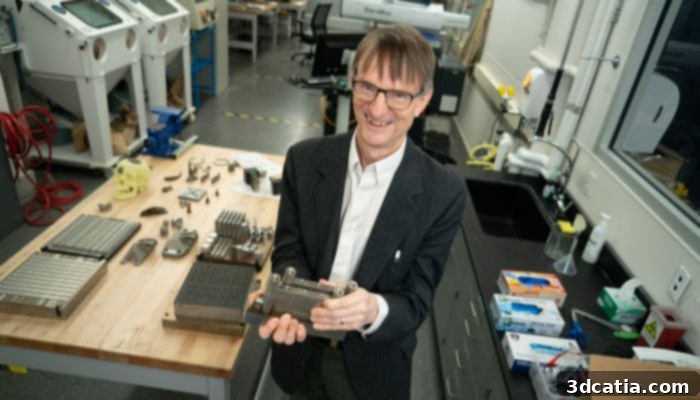
Tony Rollett, a distinguished professor at Carnegie Mellon, will serve as one of the co-directors for the pioneering IMQCAM project, bringing extensive expertise in metallurgy and materials science. (Photo credits: Carnegie Mellon University)
Understanding the unique nature of additive manufacturing processes is central to IMQCAM’s work. As Tony Rollett, principal investigator for the institute and US Steel Professor of Metallurgical Engineering and Materials Science at Carnegie Mellon University, eloquently explains, “The internal structure of this type of part is much different than what’s produced by any other method.” This fundamental difference, encompassing factors like grain structure, porosity, and residual stresses inherent to layer-by-layer fabrication, presents significant challenges for traditional qualification methods. Rollett further elaborates on the institute’s practical focus: “The institute will focus on creating the models NASA and others in industry would need to use these parts on a daily basis.” This pragmatic goal addresses one of the most persistent and formidable obstacles to the widespread adoption of additive manufacturing for end-use, safety-critical components, particularly within the demanding aerospace and defense sectors. Historically, the arduous and time-consuming processes of certification and qualification have often stalled the integration of AM parts into mainstream applications.
IMQCAM’s efforts to develop robust, model-based certification methodologies represent a paradigm shift. By moving beyond purely physical testing and integrating sophisticated computational models and digital twins, the institute aims to dramatically accelerate the qualification timeline, reduce associated costs, and enhance the overall reliability of AM parts. This breakthrough could pave the way for a rapid expansion of AM applications, not only for NASA’s ambitious missions to the Moon and Mars but also for commercial space ventures, advanced aeronautics, and other industries where safety and performance are paramount. The ability to predict part behavior with high fidelity and ensure consistent quality across batches will unlock the full potential of additive manufacturing, transitioning it from a specialized manufacturing technique to a standard, certifiable process for critical hardware. This work promises to establish new industry standards and best practices, ultimately fostering greater confidence and broader adoption of advanced manufacturing solutions across the globe. For those interested in delving deeper, more information about the IMQCAM initiative can be found in the official NASA press release HERE.
What are your thoughts on NASA’s pivotal investment in model-based certification for 3D printed metal parts? Do you believe additive manufacturing will become an indispensable pillar for the future of space exploration, enabling missions that were once impossible? Share your insights and join the conversation by leaving a comment below or connecting with us on our LinkedIn, Facebook, and Twitter pages! Don’t miss out on the latest advancements and news in the world of 3D printing; remember to sign up for our free weekly Newsletter here, delivering the freshest updates straight to your inbox! You can also explore our extensive library of videos and interviews on our YouTube channel for more in-depth content.
*Cover Photo Credits: NASA