
EOS Acquires Vulcan Labs: Powering Next-Gen Powder Bed Fusion and Accelerating Integra P400 Innovation
In a significant strategic move set to reshape the landscape of industrial additive manufacturing, EOS, a global leader in providing high-end solutions for the additive manufacturing (AM) of components in both metals and polymers, has officially announced the acquisition of Vulcan Labs. This acquisition is poised to substantially expand EOS’s existing expertise and market reach, particularly within the polymer powder bed fusion segment. Vulcan Labs, a company that strategically spun out of Stratasys just last year, brings to EOS specialized knowledge and patented technologies in powder bed fusion additive manufacturing. Their core mission has been to tackle and overcome some of the most pressing challenges faced by the industry, including enhancing productivity, ensuring consistent quality, and achieving rigorous certification standards for critical end-use applications. This integration of Vulcan Labs into the EOS ecosystem is expected to foster accelerated innovation and deliver even more robust solutions to the rapidly evolving additive manufacturing market.
Vulcan Labs Expertise to Drive Integra P400 Development and Global Commercialization
The acquisition comes at a pivotal time, especially considering EOS’s recent innovations in plastic additive manufacturing. In December 2018, EOS proudly unveiled its Integra P400 machine, a cutting-edge technology engineered specifically to meet the escalating global demand for high-performance plastic additive manufacturing. Designed with a keen focus on industrial applications, the Integra P400 offers an impressive combination of unprecedented productivity, sophisticated software controls for precise process management, broad material compatibility, and simplified serviceability, making it a highly attractive solution for manufacturers seeking to scale their AM operations. Initially launched exclusively in North America to gauge market response and fine-tune its capabilities, the Integra P400 quickly garnered significant interest. The strategic deal with Vulcan Labs is specifically aimed at leveraging their deep technical expertise and development prowess to further refine and enhance the Integra P400 printer, ultimately paving the way for its wider commercialization and global availability. This collaboration is set to accelerate the machine’s evolution, ensuring it remains at the forefront of polymer additive manufacturing technology.
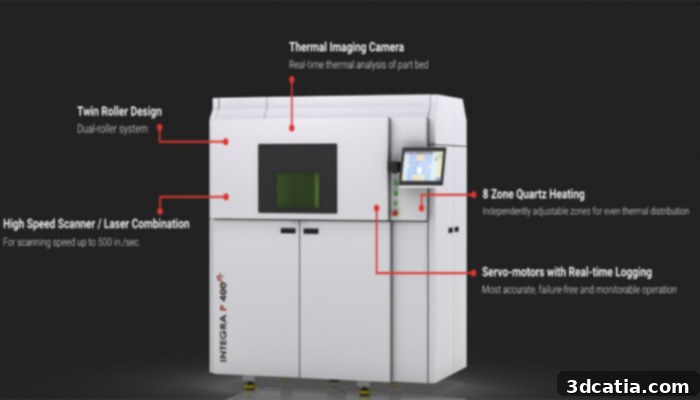
Despite its relatively recent introduction, the Integra P400 has already seen remarkable early adoption, with approximately a dozen leading organizations placing orders for the machine. This early success underscores its perceived value and potential within the industry. The Integra P400 is meticulously designed to address high-quality, mid-temperature applications, offering a generous build area of 420 x 420 x 500 mm, powered by a single, highly efficient laser. This substantial build volume allows for the creation of larger parts or the production of multiple smaller components in a single build, significantly enhancing throughput and operational efficiency. Furthermore, the machine boasts impressive material versatility, capable of processing advanced engineering polymers such as high-performance Thermoplastic Polyurethane (TPU), Thermoplastic Elastomer (TPE), and a newly developed, proprietary HT-23 material. These materials are crucial for applications requiring specific mechanical properties, including flexibility, durability, and resistance to various environmental factors, thereby expanding the range of industries and applications the Integra P400 can effectively serve. The combination of a robust build platform, advanced laser technology, and broad material support positions the Integra P400 as a versatile and powerful tool for industrial additive manufacturing.
A critical aspect of this acquisition involves the physical integration of talent. The highly skilled engineers from Vulcan Labs will now primarily operate out of EOS’s sophisticated technical center located in Pflugerville, Texas, as well as the company’s Advanced Laser Materials (ALM) research and production facility situated in Temple, Texas. This strategic co-location is designed to foster seamless collaboration, knowledge transfer, and rapid innovation between the teams. Glynn Fletcher, President of EOS North America, elaborated on the profound implications of this acquisition, stating, “This acquisition vividly illustrates our unwavering commitment to providing the absolute best support for our valued customers, while simultaneously challenging the market status quo through both internal innovation and external disruption. We firmly believe that continuous evolution is key to staying ahead.” Fletcher further emphasized the immediate impact of integrating Vulcan Labs’ top-tier AM industry talent: “With this strategic acquisition of highly specialized expertise, we have now successfully formed an entirely dedicated engineering services group. This team will be solely focused on addressing the specific and evolving requirements of our customers, enabling us to deliver highly tailored and impactful solutions that directly meet their industrial additive manufacturing needs.” This dedicated focus is expected to significantly enhance EOS’s ability to respond to complex customer demands and drive technological advancements more rapidly.
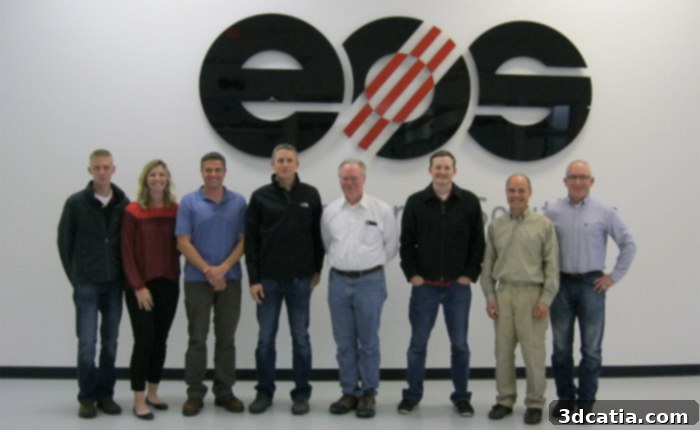
Team for Vulcan Labs and EOS North America – Photo Credits: EOS
A Market Bustling with Acquisitions, Investments, and Rapid Expansion
The landscape of 3D printing, or additive manufacturing, has been incredibly dynamic, particularly experiencing a surge in investments and strategic acquisitions at the beginning of 2019. This heightened activity is a clear indicator of a market undergoing rapid growth and actively preparing to meet escalating demand across a diverse range of industrial sectors. Just recently, the industry observed significant movements such as Xerox’s entry into the 3D printing world, signaling a major traditional player recognizing the transformative potential of AM. A few weeks prior, Desktop Metal’s funding round reached a groundbreaking $160 million, establishing it as the largest total funding secured by any private 3D printing company to date. These examples, alongside numerous others, paint a vivid picture of an industry maturing beyond its nascent stages and moving firmly into a phase of industrialization and widespread adoption.
Beyond these headline-grabbing events, the broader market trends underscore a fundamental shift. Industries such as aerospace, automotive, medical, and consumer goods are increasingly integrating additive manufacturing into their production workflows, driven by the promise of design freedom, mass customization capabilities, reduced lead times, and optimized supply chains. This growing acceptance is fueling demand for more robust, reliable, and production-ready 3D printing solutions. The focus is no longer solely on prototyping but on enabling end-part production, demanding higher levels of precision, repeatability, and material performance. Consequently, there’s a strong emphasis on developing advanced materials, enhancing process control, and improving the overall economics of additive manufacturing to compete effectively with traditional manufacturing methods. Companies are not just investing in hardware, but also in software for design optimization, simulation, and workflow management, creating a comprehensive ecosystem designed to streamline the entire additive manufacturing process from concept to final product. This strategic acquisition by EOS of Vulcan Labs is a direct response to these evolving market dynamics, positioning EOS to capitalize on these trends and further solidify its leadership in the industrial AM space.
Leigh, now the Chief Operating Officer at EOS North America, eloquently articulated the perfect timing of this union: “The time is absolutely perfect to bring together EOS and Vulcan Labs. Industrial 3D printing is still relatively new as a mainstream manufacturing technology, but it has decidedly moved beyond purely theoretical applications and into the realm of practical, everyday use.” He further elaborated on the challenges and opportunities within the industry, stating, “As organizations worldwide wrestle with the complexities of integrating additive manufacturing into their core production chains, industry-leading experts like EOS are precisely what will make the critical difference between struggle and resounding success. Achieving that success undeniably requires not only a stable of unparalleled experts but also a robust ecosystem of partners dedicated to innovation and support.” Leigh concluded by highlighting the unique synergy created by this acquisition: “Vulcan Labs doesn’t just add to our capabilities; it profoundly augments existing EOS know-how, setting us distinctly apart in the market and enabling us to bring truly unique, high-value solutions directly to our customers. This combined strength will empower our clients to overcome existing barriers and unlock the full potential of industrial 3D printing.” This perspective underscores the strategic importance of talent and collaborative expertise in driving the industrialization of additive manufacturing and solving complex production challenges for a global customer base.
What are your thoughts on EOS’s strategic new acquisition of Vulcan Labs and its potential impact on the future of industrial additive manufacturing, particularly for the Integra P400? We invite you to share your insights and predictions in a comment below, or join the ongoing discussion on our Facebook and Twitter pages! Don’t miss out on the latest advancements and breaking news in the exciting world of 3D printing – make sure to sign up for our free weekly Newsletter, delivering all the essential updates straight to your inbox!