
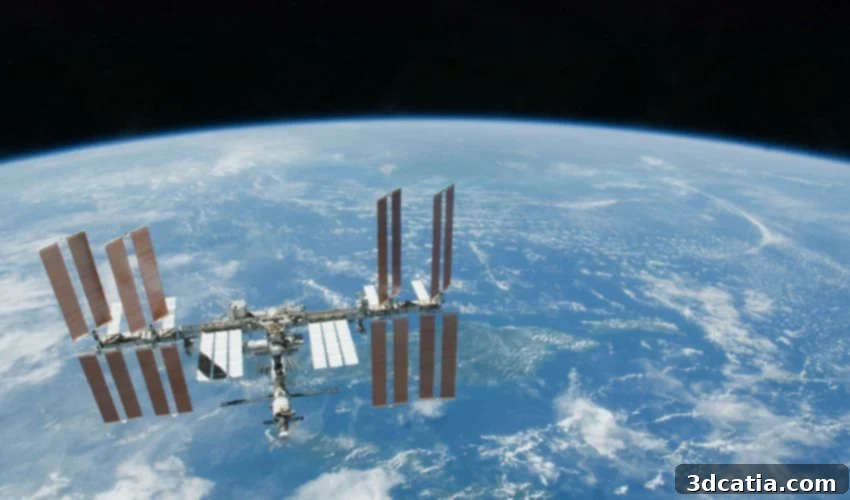
MIT Pioneers 3D Printed Plasma Sensors for Satellites: Revolutionizing Space Exploration and Earth Observation
Researchers at the Massachusetts Institute of Technology (MIT) have achieved a significant breakthrough by successfully 3D printing the first-ever completely digitally manufactured plasma sensors, specifically designed for space satellites. These innovative sensors, also known as Retarding Potential Analyzers (RPAs), were created using an advanced vat polymerization technique. This novel approach promises to transform the production of space-grade instruments, making them significantly faster and more cost-effective to produce than traditional methods. The scientific community holds high hopes that these robust and efficient sensors will be widely adopted, playing a crucial role in improving scientists’ ability to predict space weather, monitor critical climate change indicators, and deepen our understanding of Earth’s upper atmosphere and beyond.
The aerospace sector has increasingly recognized and leveraged the immense benefits of additive manufacturing, leading to a surge of groundbreaking projects and inventions that have propelled the industry to unprecedented heights. Additive manufacturing continually inspires scientists and engineers to explore innovative ways to utilize these technologies to their strategic advantage, as vividly demonstrated by this latest discovery from MIT. In a recently published paper, researchers from the renowned North American university announced the successful creation of entirely digitally manufactured plasma sensors tailored for orbiting spacecraft, particularly small, CubeSat-class satellites. These compact, lightweight, and relatively inexpensive satellites, when compared to larger conventional spacecraft, are primarily deployed for essential functions such as communication, environmental monitoring, and scientific research. The ability to rapidly produce specialized sensors for these platforms unlocks new possibilities for constellations of satellites, enhancing data collection capabilities on a global scale.
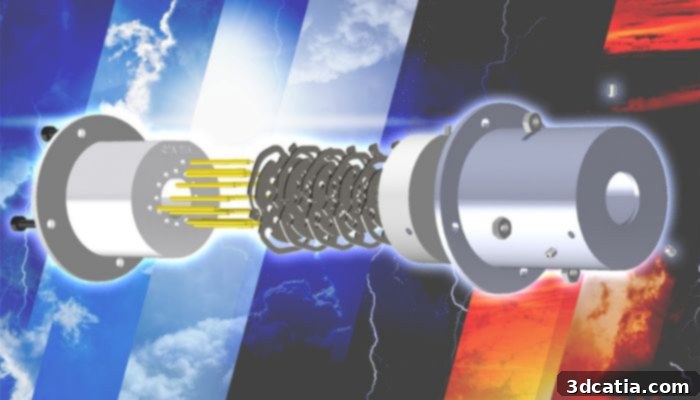
Photo Credits: MIT
What sets these newly introduced 3D printed plasma sensors apart is their dramatically reduced production time and cost, a direct result of employing vat polymerization instead of more traditional, laser-based microfabrication processes. Conventionally, the manufacturing of highly sensitive sensors can take several weeks and often necessitates strict, controlled environments, such as cleanrooms. A cleanroom, in scientific and manufacturing contexts, is a meticulously controlled environment designed to be virtually free from contaminants like dust, airborne microbes, and aerosol particles. The rigorous requirements of cleanroom manufacturing render the process inherently expensive and time-consuming. Luis Fernando Velásquez-García, a principal research scientist in MIT’s Microsystems Technology Laboratories (MTL), elaborates on this advantage, stating, “When you make this sensor in the cleanroom, you don’t have the same degree of freedom to define materials and structures and how they interact together. What made this possible is the latest developments in additive manufacturing.” This digital manufacturing approach bypasses many of these traditional constraints, offering unprecedented flexibility in design and material integration, which is paramount for optimizing sensor performance in the harsh environment of space. The ability to rapidly iterate and customize designs without the overhead of traditional cleanroom processes represents a paradigm shift for aerospace instrumentation.
Using the Right Material and Process for Space Applications
To ensure the sensors could withstand the extreme conditions of outer space, the MIT scientists meticulously selected Vitrolite, a specialized glass-ceramic material. Vitrolite possesses highly desirable properties, including exceptional thermal stability, low thermal expansion, and excellent electrical insulation, making it perfectly suited to endure the drastic temperature fluctuations and radiation exposure encountered in orbit. The fabrication process itself leveraged vat polymerization, a sophisticated additive manufacturing technique where photopolymer resins are applied layer by layer and precisely hardened using ultraviolet light. This method is distinct from “graft polymerization,” which is typically a chemical process for polymer modification, and in this context, refers to a high-resolution 3D printing approach like stereolithography (SLA) or digital light processing (DLP). The involvement of such advanced additive manufacturing technologies makes it possible to create intricate and extremely complex geometries, allowing operators to achieve the high level of precision and structural integrity demanded for sensitive space-grade sensors. During their intensive research, the team successfully developed four distinct prototypes, each featuring unique designs and properties. These variations allowed them to explore different performance characteristics and optimize the sensors for a diverse array of potential applications, showcasing the flexibility and power of digital fabrication for specialized instrumentation.

Luis Fernando Velásquez-García (photo credits: MIT)
Once these new 3D printed sensors are ready for commercial deployment, they promise to significantly enhance scientific capabilities across multiple domains. In particular, they will empower scientists to more accurately predict space weather events, enabling better protection for our vital satellite infrastructure, communication networks, and power grids on Earth. By providing precise measurements of ionospheric plasma and charged particle flows, these RPAs will offer crucial data for understanding and mitigating the impacts of solar flares and geomagnetic storms. Furthermore, these sensors will contribute significantly to studying climate change by offering unprecedented insights into the dynamics of the Earth’s upper atmosphere and its interaction with space, indirectly revealing how our planet’s climate is evolving. Beyond these primary applications, the sensors hold potential for numerous other areas of research, including fundamental space physics, planetary science missions, and improving the operational efficiency and longevity of satellite constellations. Although acknowledging the ongoing journey of further developing and refining these sensors, Luis Fernando Velásquez-García expressed profound satisfaction with the team’s pioneering work. He concluded with an insightful observation: “Additive manufacturing can make a big difference in the future of space equipment. Some people think that when you 3D-print something, you have to accept less performance. But we have shown that this is not always the case. Sometimes there’s nothing to trade off.” This statement underscores the transformative potential of additive manufacturing, demonstrating that it can not only match but often surpass the capabilities of traditional manufacturing methods, opening new frontiers for high-performance space instrumentation and exploration. If you are interested in delving deeper into this groundbreaking research, you can visit the official website of MIT HERE.
What are your thoughts on these innovative 3D printed sensors designed for space satellites? We invite you to share your comments and insights below or engage with us on our LinkedIn, Facebook, and Twitter pages! For the very latest updates in the world of 3D printing delivered straight to your inbox, don’t forget to sign up for our free weekly Newsletter here. Additionally, you can find all our compelling videos and content on our YouTube channel.
*Cover Photo Credits: NASA, Public domain, via Wikimedia Commons