
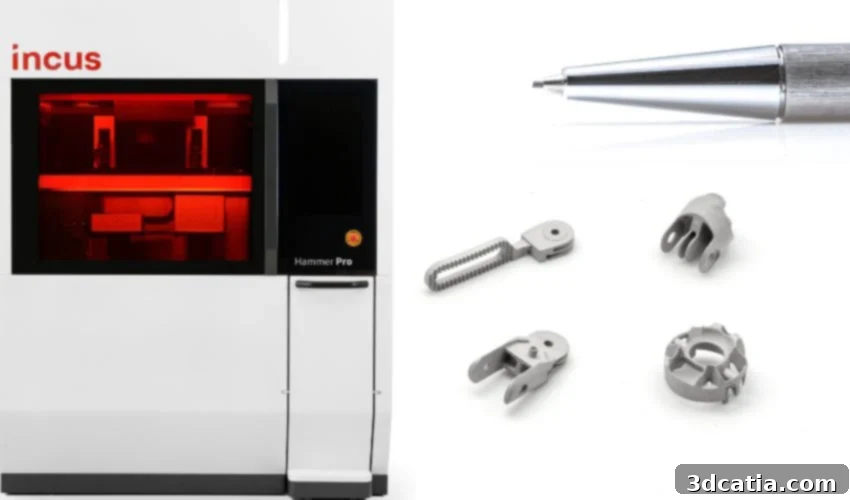
Lithography-based Metal Manufacturing (LMM): Achieving MIM-Level Production with 3D Printing
For decades, Metal Injection Molding (MIM) has been the undisputed champion for mass-producing small, intricate metal components. Its ability to deliver speed, consistency, and cost-efficiency at scale has set a high benchmark. While metal additive manufacturing (AM) has long promised to revolutionize production, replicating these critical industrial characteristics, especially concerning high precision and repeatability, has remained a significant challenge. However, a groundbreaking technology is closing this gap, offering a new paradigm for industrial metal part production.
Gerald Mitteramskogler and his team at Incus are pioneering this transformation with Lithography-based Metal Manufacturing (LMM). This innovative, sinter-based process is meticulously engineered to merge the design freedom inherent in additive manufacturing with the exceptional precision and favorable production economics of MIM. Already gaining significant traction in demanding sectors from patient-specific orthodontics to advanced smart electronics, LMM is proving to be a viable and powerful solution for true industrial-scale manufacturing.

The journey to develop LMM stemmed from a clear and persistent gap in the market. Despite the numerous promises made by the additive manufacturing industry over the last decade, the output quality of many metal AM systems often fell short of the rigorous standards set by industrial manufacturers. There was a pressing need for a technology that could reliably and efficiently produce small, highly complex metal components with excellent surface quality, tight tolerances, and consistent repeatability at scale. This vision became the foundation of Incus and the driving force behind the development of LMM.
How Does Lithography-based Metal Manufacturing (LMM) Work?
Lithography-based Metal Manufacturing is a unique additive process that builds metal parts layer by layer from a specialized feedstock. This feedstock is a paste-like material composed of fine metal powder suspended within a light-curable polymer binder. The process unfolds in a few key stages:
- Layering and Curing: A thin layer of the feedstock is applied to the build platform. A high-resolution digital light projector then selectively exposes the layer, curing the polymer binder in the desired shape of the part’s cross-section. This process is repeated, building the object layer by layer. The result is a “green part,” which is dimensionally precise but fragile, with the metal particles held together by the cured polymer.
- Debinding: The green part is carefully moved to a furnace for a two-step thermal process. The first step, debinding, involves gently heating the part to burn away the polymer binder, leaving behind a porous structure of loosely connected metal particles known as a “brown part.”
- Sintering: In the final step, the brown part is heated to a temperature just below the metal’s melting point. During this sintering process, the metal particles fuse, causing the part to densify and shrink uniformly to its final, solid metal state with the desired mechanical properties.
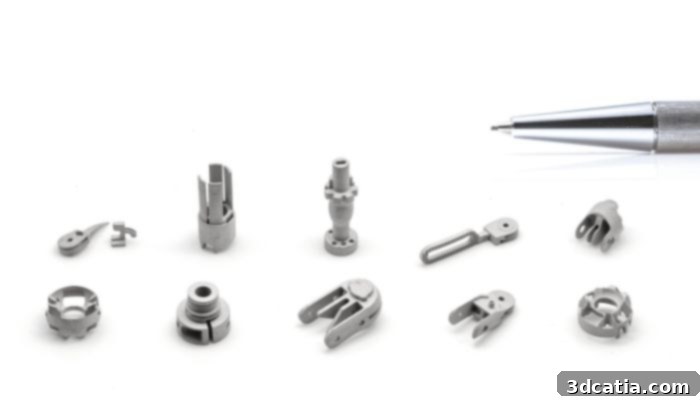
This methodology allows LMM to achieve outstanding dimensional accuracy, resolve incredibly fine features, and produce a surface quality that rivals traditional methods like MIM and lost-wax casting. Unlike processes such as Laser Powder Bed Fusion (LPBF), which can introduce internal stresses due to rapid melting and cooling, LMM’s sinter-based nature results in a stress-free microstructure, leading to superior fatigue performance. Furthermore, compared to Binder Jetting, LMM produces green parts with significantly higher strength, making them easier and safer to handle during post-processing.
Key Applications Where LMM Excels
LMM is not a one-size-fits-all solution; it is particularly well-suited for applications demanding the reliable, scalable production of small, complex metal components. This focus has led to strong adoption in several key industries.
Patient-Specific Orthodontics
The largest customer base for LMM is currently in the field of orthodontics. The technology is used to create custom-fit brackets and other dental appliances. Here, LMM’s ability to combine high precision with reliable, scalable production is a game-changer. It allows for mass customization, where each part is unique to a patient, while maintaining production economics that are competitive with traditional mass-produced MIM components. This blend of personalization and efficiency is transforming patient care.
Jewelry and Precious Metals
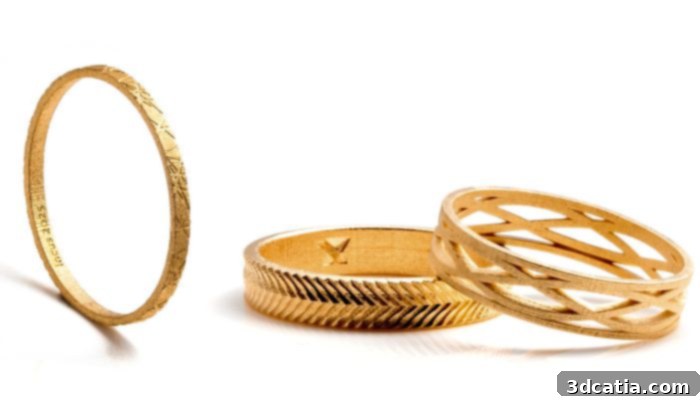
The jewelry industry has also embraced LMM for its unique benefits. When working with expensive materials like gold, platinum, and silver, minimizing waste is paramount. LMM enables near-zero material waste because any unused feedstock can be fully recovered and reused in subsequent prints. This, combined with the technology’s capacity for creating highly intricate and complex geometries that would be impossible with casting, unlocks new creative possibilities for designers while improving cost-efficiency.
Miniaturized Components and Smart Electronics
Another critical area of application is in the manufacturing of miniaturized components for smart electronics and other high-tech devices. Major OEMs are turning to LMM for its ability to deliver on the trifecta of design freedom, tight tolerances, and exceptional surface quality. Many of the complex micro-geometries required for next-generation sensors, connectors, and heat sinks cannot be produced using conventional manufacturing methods. LMM provides a practical and scalable pathway to bring these innovative designs to life.
From Prototyping to Mass Production: The LMM Scaling Advantage
A common hurdle for many additive technologies is the transition from prototyping to true serial production. The requirements at each stage are vastly different. In the early development phases, flexibility and rapid iteration are key. As a company moves toward high-volume manufacturing, the focus must shift to process stability, system integration, and robust production monitoring. LMM is designed to support this entire lifecycle.
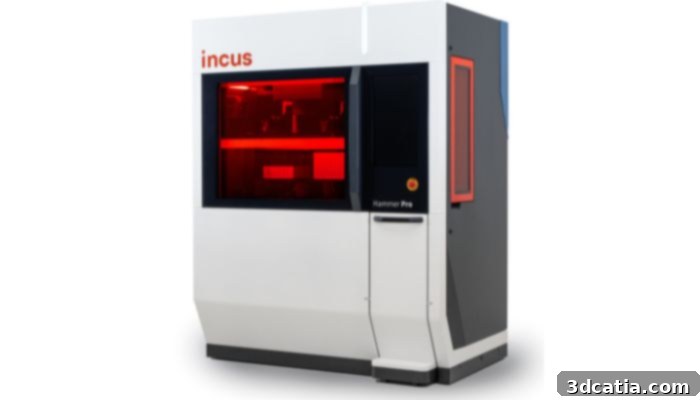
With systems like the Incus Pro25, LMM provides an industrial production platform built for scale. The Pro25 features a large build volume, allowing for optimized part nesting and high throughput. Its highly precise exposure system ensures part-to-part consistency, while features like controlled printing environments and in-process monitoring are essential for the reliability required in large-scale production. This focus on industrial readiness allows companies to seamlessly transition from producing a few prototypes to manufacturing millions of parts per year with confidence.
Design Principles for LMM: Leveraging MIM Expertise
When engineers design for production rather than just demonstration, their approach evolves. For any sinter-based AM technology, including LMM, the final sintering step must be a central consideration during the design phase. While LMM offers immense freedom when printing the green part, certain design guidelines are critical to ensure success during sintering, where the part is subject to gravity and shrinkage.
Fortunately, many of these design rules are already well-established from decades of experience with Metal Injection Molding. These include ensuring a stable base on the ceramic setter plate, avoiding large unsupported overhangs, and strategically adding sintering supports to prevent deformation. In fact, Incus often describes LMM as a process that replaces the physical MIM mold with a digital, light-based process. The rest of the production chain—debinding, sintering, and finishing—remains largely the same. This familiar logic significantly lowers the adoption barrier for manufacturers already versed in powder metallurgy, allowing them to leverage existing knowledge and infrastructure.
The Future of Metal Additive Manufacturing
As the additive manufacturing industry continues to mature, the coming years will be defined by further consolidation and increased competition. In this evolving landscape, technology providers must deliver solutions that are not just innovative but truly ready for industrial scaling. Companies that can demonstrate clear differentiation and a strong application focus will be best positioned for long-term success.
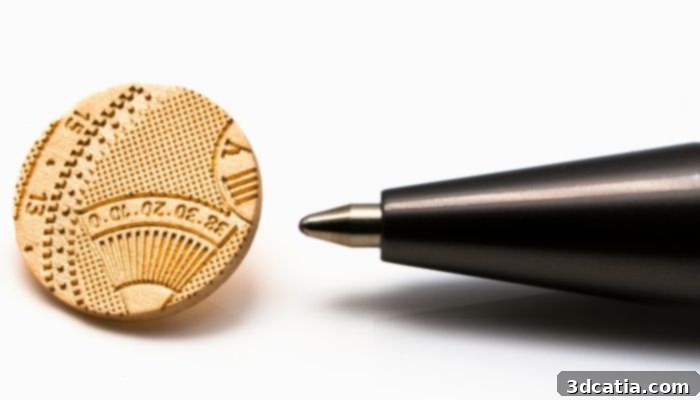
Lithography-based Metal Manufacturing is poised to play a meaningful role in this next phase of industrial additive manufacturing. The real-world applications emerging today are a powerful testament to the technology’s capability to bridge the gap between AM’s design flexibility and MIM’s production prowess. For small, complex metal parts, LMM offers a compelling path to high-volume, high-precision manufacturing.
What do you think of Lithography-based Metal Manufacturing and its potential for industrial production? Let us know in the comments below or on our LinkedIn and Facebook pages. Plus, sign up for our free weekly Newsletter to get the latest 3D printing news straight to your inbox. You can also find all our videos on our YouTube channel.
*All Photo Credits: Incus