
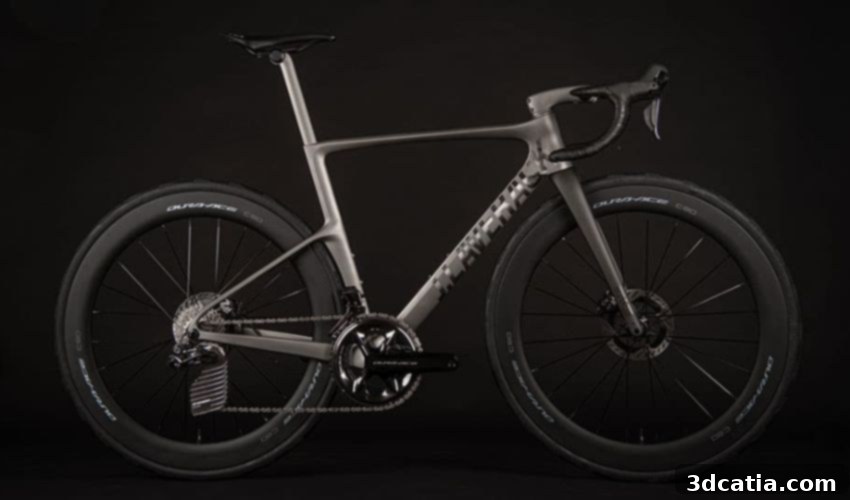
Revolutionizing Cycling: J.Laverack’s 3D Printed Titanium Speedform Bike
The world of high-performance cycling has been redefined with the arrival of Speedform, a groundbreaking road bike crafted entirely from 3D printed titanium. Developed by the renowned British manufacturer J.Laverack, with crucial aerodynamic expertise provided by Loughborough University, the Speedform represents a significant leap forward in bicycle design and manufacturing.
Officially unveiled at the prestigious Rouleur Live show in London, this innovative bike showcases the remarkable potential of metal additive manufacturing within the cycling industry. The Speedform isn’t just an evolution; it’s a revolution, pushing the boundaries of what’s possible in terms of performance, customization, and design.
The Speedform’s construction is a testament to the power of 3D printing. The frame is meticulously built from three distinct titanium sections, each printed individually and then seamlessly joined together to form a cohesive, aerodynamically optimized structure. This innovative approach liberates designers from the constraints inherent in traditional tube-and-lug construction methods.
With 3D printing, the design team was able to prioritize aerodynamic efficiency, shaping the bike around the specific needs of airflow rather than being limited by the possibilities of conventional fabrication techniques. The result is a frame that can be precisely tailored to each individual rider, offering millimeter-level precision in fit and aerodynamic shaping that would be simply unattainable using traditional manufacturing processes.
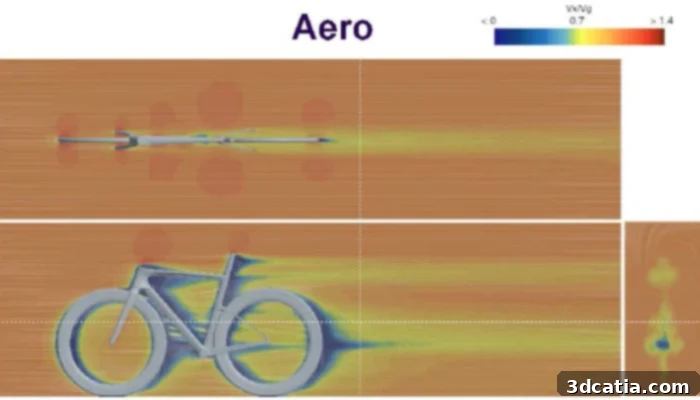
Loughborough CFD tests demonstrate that the Speedform reduces drag by up to 26%, resulting in energy savings of as much as 17 watts.
To rigorously validate the design choices and quantify the aerodynamic benefits, J.Laverack collaborated with Loughborough University for in-depth computational fluid dynamics (CFD) testing. Professor A. Duncan Walker spearheaded the analysis, comparing the performance of the Speedform against J.Laverack’s existing, conventionally manufactured road bike model.
The results of the testing were compelling, demonstrating a significant drag reduction of between 20 and 26 percent across a speed range of 30 to 48 kilometers per hour. This translates directly into substantial energy savings for the rider, potentially reducing power output by as much as 17 watts. According to Professor Walker, these impressive gains are a direct result of the intelligent form-finding enabled by additive manufacturing.
The ability to create complex, optimized shapes through 3D printing has allowed J.Laverack to push the boundaries of aerodynamic performance in a way that was previously impossible. This partnership between cutting-edge manufacturing technology and rigorous scientific analysis has resulted in a truly revolutionary cycling machine.
The Speedform boasts a range of key features designed to enhance both performance and rider experience. These include dropped seat stays, carefully sculpted to improve airflow and increase frame stiffness, and fully internal cable routing, which contributes to a clean aesthetic and further reduces aerodynamic drag. The bike also features a T47 bottom bracket, known for its stiffness and reliability, and a 3D printed KT1 seatpost, with an optional printed stem for further customization.
J.Laverack’s innovative use of parametric design allows each Speedform frame to be precisely tailored to the individual rider’s measurements and preferences. This is achieved through a detailed fitting session, ensuring optimal comfort, efficiency, and power transfer. The level of customization offered by the Speedform is unmatched by mass-produced carbon frames, making it a truly bespoke cycling experience.
The integration of these features represents a holistic approach to bike design, where every element is carefully considered to maximize performance and provide a superior riding experience.
According to J.Laverack co-founder Oliver Laverack, the Speedform project is a clear demonstration of the remarkable synergy that can be achieved when additive manufacturing and traditional craftsmanship are combined. He emphasizes that the bike represents a harmonious blend of sculptural freedom and rigorous engineering discipline, resulting in a high-performance road machine designed for discerning riders who value both exceptional performance and unique individuality.
The Speedform embodies a new era of cycling design, where technology and artistry converge to create a truly exceptional product. It’s a testament to the power of innovation and the enduring appeal of handcrafted quality.
With only ten build slots available worldwide for 2026, the Speedform is positioned not only as a technological milestone but also as a highly exclusive, collector-level project that provides a glimpse into the future of high-end bike design. As metal 3D printing continues to advance, unlocking complex shapes and performance characteristics previously unattainable, the Speedform stands as a pioneering example of how the cycling industry is likely to evolve in the coming years.
The implications of this technology extend beyond just high-end bikes. As 3D printing becomes more accessible and affordable, we can expect to see its influence permeate all levels of the cycling industry, leading to more customized, efficient, and innovative bike designs for all riders.
The J.Laverack Speedform is more than just a bike; it’s a symbol of the future of cycling, a testament to the power of innovation, and a celebration of the enduring passion for performance and individuality.
The development of the Speedform raises several important questions about the future of cycling. Will 3D printing become the dominant manufacturing method for high-performance bikes? How will it impact the design and performance of bikes at all price points? And what role will customization play in shaping the future of the cycling experience?
The answers to these questions remain to be seen, but one thing is clear: the J.Laverack Speedform has set a new benchmark for innovation in the cycling industry, and its impact will be felt for years to come.
What are your thoughts on this innovative 3D printed bicycle? Share your opinions on the J.Laverack Speedform and the research conducted by Loughborough University in the comments section below. We encourage you to engage with us and fellow cycling enthusiasts on our LinkedIn and Facebook pages. Stay informed about the latest advancements in 3D printing by subscribing to our free weekly Newsletter here, delivering cutting-edge news directly to your inbox! Don’t forget to explore our extensive collection of videos on our YouTube channel.
*Photo Credits: Loughborough University & J.Laverack Bicycles