
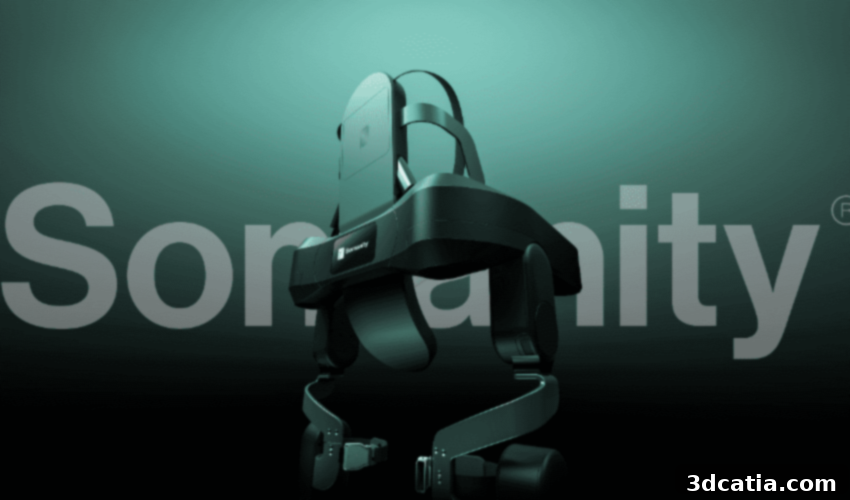
Revolutionizing Mobility: How Somanity Pioneers 3D Printed Exoskeletons for Enhanced Independence
The landscape of medical innovation is being profoundly reshaped by 3D printing, a technology consistently delivering groundbreaking solutions that significantly uplift the quality of life for individuals with disabilities. From the intricate design and production of customized prostheses that perfectly fit an individual’s unique anatomy, to ingenious aids like adapted keyboards that facilitate easier interaction with digital interfaces, this transformative technology continually opens new avenues of possibility. Despite these advancements, a significant hurdle for many people living with motor disabilities remains the pursuit of greater independence and enhanced mobility in their daily lives. This is precisely where the pioneering French company, Somanity, is making a profound and tangible difference. Somanity is at the forefront of developing fully 3D-printed exoskeletons, meticulously crafting personalized assistive devices engineered to dramatically improve both the physical mobility and the overall daily experience for its users. To gain deeper insight into their innovative approach and the impact they are creating, we recently had the invaluable opportunity to speak with Mathieu Veran, the visionary founder and CEO of Somanity.
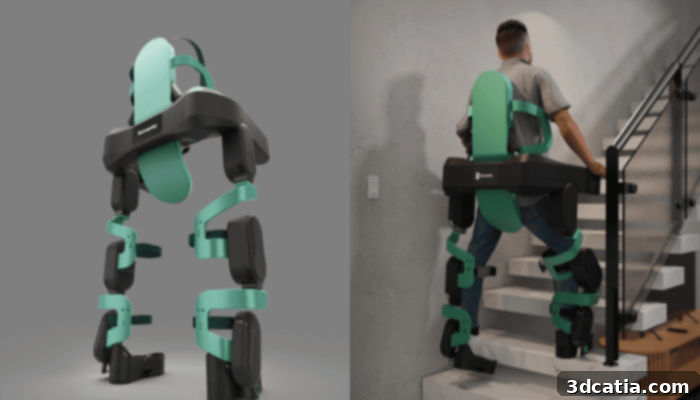
Somanity’s Vision: Redefining Mobility Through Additive Manufacturing
Somanity stands as an innovative and deeply committed company, wholeheartedly dedicated to the meticulous design and advanced manufacturing of fully 3D-printed exoskeletons. Our core mission is deeply rooted in the belief that technology should serve humanity, specifically aiming to restore crucial mobility and independence to individuals facing the daily challenges of motor disabilities. By seamlessly integrating the cutting-edge capabilities of additive manufacturing technologies, we are empowered to create highly customized devices that not only precisely meet but also anticipate the intricate and unique needs of each individual user. The inherent flexibility, remarkable precision, and unparalleled design freedom offered by 3D printing are fundamental to our work, allowing us to push far beyond the conventional boundaries of traditional design and engineering. This enables us to consistently offer state-of-the-art, truly personalized solutions that can dramatically enhance the quality of life for our users. We believe that true independence is within reach when devices are crafted to fit the individual, not the other way around.
The Strategic Imperative: Why 3D Printing is Essential for Somanity’s Exoskeletons
Our decision to extensively utilize 3D printing in the development of our exoskeletons was not merely a choice of convenience but a strategic imperative driven by its unparalleled advantages. This transformative technology offers virtually unlimited possibilities when it comes to both design complexity and comprehensive customization. This is particularly critical in the field of assistive devices, where a one-size-fits-all approach is inherently inadequate. 3D printing enables us to craft exoskeletons that are perfectly adapted to the specific morphology, biomechanics, and unique requirements of each user, ensuring maximum comfort, efficacy, and integration with their body. Beyond the bespoke nature of the devices, 3D printing also significantly streamlines our operational processes. It dramatically reduces the production time and associated costs that are typically incurred during the manufacturing of prototypes and smaller, specialized batches. By embracing this agile and responsive approach, we are also uniquely positioned to rapidly incorporate improvements, implement design adjustments, and iterate on our products quickly in direct response to invaluable user feedback, leading to continuously evolving and optimized devices. This iterative design process, facilitated by additive manufacturing, ensures that our exoskeletons are always at the forefront of assistive technology.
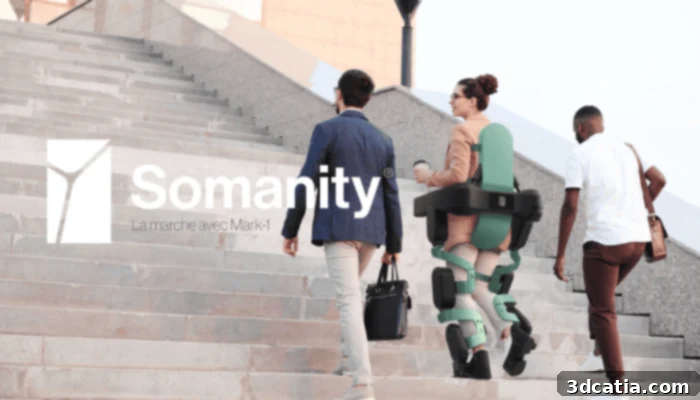
Advanced Processes and Materials: The Foundation of Somanity’s Exoskeletons
At Somanity, the integrity and performance of our exoskeletons are built upon the foundation of carefully selected 3D printing processes and advanced materials. We predominantly utilize two key additive manufacturing techniques: Volumic 3D’s Fused Deposition Modeling (FDM) and Selective Laser Sintering (SLS). FDM, a highly versatile and widely adopted method, is chosen for its exceptional reliability, remarkable precision, and its capability to effectively process a broad spectrum of engineering-grade materials. This process is instrumental in producing robust structural components and intricate geometries that form the core of our devices. On the other hand, SLS is specifically selected for its inherent ability to produce parts with truly exceptional mechanical properties, characterized by high strength, durability, and a smooth surface finish, all while offering unparalleled design freedom without the need for support structures. This support-free nature is particularly advantageous for creating complex internal channels and optimized lightweight structures within the exoskeleton. The materials we integrate into our manufacturing processes are critical for the comfort and effectiveness of our exoskeletons. These include PETG and Nylon PA12. PETG is valued for its excellent impact resistance, clarity, and ease of printing, making it suitable for various components requiring both strength and some flexibility. Nylon PA12, renowned for its superior tensile strength, fatigue resistance, and chemical stability, provides an optimal combination of lightness, inherent strength, and long-term durability. These material choices are carefully balanced to ensure maximum comfort for the user, coupled with the unwavering effectiveness and longevity demanded by medical assistive devices.
Unmatched Advantages: 3D Printing vs. Traditional Manufacturing for Medical Devices
The implementation of 3D printing offers a myriad of significant advantages over conventional manufacturing methods, particularly when it comes to the production of highly specialized medical devices like exoskeletons. Firstly, and perhaps most crucially, it enables extensive and unparalleled customization. Unlike traditional methods that rely on standardized molds and mass production, 3D printing allows us to digitally sculpt each device to the precise contours and requirements of an individual, ensuring a perfect, ergonomic fit that is vital for both comfort and functional efficacy of personalized exoskeletons. Secondly, 3D printing dramatically reduces both the developmental costs and the overall time-to-market. It effectively bypasses the expensive and time-consuming steps of creating physical molds or specialized tooling, common roadblocks in traditional manufacturing. This allows for rapid prototyping and iteration, meaning designs can be tested, refined, and improved much faster and more economically. In addition, additive manufacturing provides an unprecedented degree of design freedom. Engineers are no longer constrained by the limitations of subtractive processes; they can create complex, organic, and highly optimized structures that are impossible to achieve with milling, casting, or injection molding. This geometric complexity allows for lighter yet stronger components, crucial for reducing user fatigue and improving device performance. Finally, 3D printing supports more sustainable production practices. By building parts layer by layer, it inherently minimizes material waste compared to subtractive manufacturing processes, where significant material is cut away and discarded. This combination of personalization, efficiency, design flexibility, and environmental responsibility firmly positions 3D printing as the superior choice for the future of assistive technology.
Somanity’s Future Trajectory: Innovations and Expansions in Exoskeleton Technology
Looking ahead, Somanity is intensely focused on ambitious future goals and pioneering projects designed to continuously elevate the capabilities of our exoskeletons. Our immediate objectives include persistently improving our devices to make them even lighter, significantly more robust, and ultimately more comfortable for the end-user. This involves ongoing research into advanced materials, sophisticated structural optimization techniques, and ergonomic design principles. We are also actively engaged in the exciting integration of next-generation technologies, such as highly advanced sensors and sophisticated artificial intelligence (AI) systems. These innovations are intended to dramatically improve the interaction between the user and the exoskeleton, making the devices more intuitive, responsive, and adaptive to the user’s movements and intentions. Imagine an exoskeleton that learns and anticipates your movements, providing seamless assistance precisely when and where it’s needed. Another critical area of development for us is the refinement of our motor block, specifically through the implementation of new, precisely 3D-printed gearboxes. These advancements promise to further enhance the performance, efficiency, and power delivery of our devices, ensuring smoother and more natural movement. Beyond technological enhancements, we envision expanding our reach considerably. We plan to develop tailored solutions for an even wider spectrum of disabilities and specific needs, moving beyond our current offerings. This expansion will involve broadening our product portfolio to address diverse mobility challenges and actively exploring new markets where our innovative, personalized exoskeletons can make a profound difference in people’s lives globally.
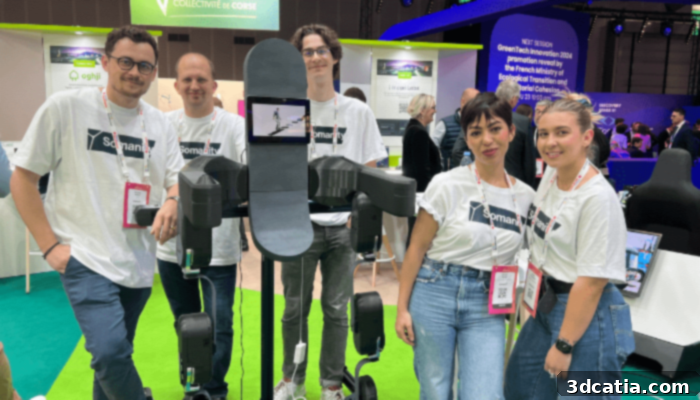
A Message of Hope and Innovation from Somanity
Here at Somanity, we hold a steadfast belief that technology’s highest purpose is to serve and empower people. Our unwavering commitment is to fundamentally transform the lives of individuals with reduced mobility by consistently offering them truly innovative, highly personalized, and effective solutions. 3D printing is not merely a manufacturing process for us; it is the cornerstone that enables us to realize this ambitious and deeply humanistic vision. We are immensely excited about the future possibilities that this technology continues to unveil, constantly pushing the boundaries of what is achievable in assistive medicine. We extend our sincerest gratitude to all our dedicated supporters and invaluable partners whose trust and collaboration fuel our progress. We eagerly anticipate continuing this extraordinary adventure together, collectively pushing the boundaries of what is possible in the realm of personalized medical devices and human mobility.
What are your thoughts on Somanity’s groundbreaking work in 3D printed exoskeletons? We encourage you to share your insights in a comment below or engage with us on our LinkedIn or Facebook pages! Additionally, don’t miss out on the latest advancements in additive manufacturing by signing up for our free weekly Newsletter, delivering the most current 3D printing news directly to your inbox. You can also explore all our informative videos on our YouTube channel. If you’re interested in more specialized news concerning medical and dental 3D printing, we invite you to visit our dedicated page HERE for in-depth coverage.
*All Photo Credits: Somanity