
Weekly 3D Printing Innovations: Top 5 Videos Showcasing Additive Manufacturing’s Impact
Welcome to our exclusive weekly roundup, where we delve into the most impactful and exciting developments in the world of 3D printing. This week, we’ve curated a compelling selection of five videos that highlight the diverse applications and transformative power of additive manufacturing. From humanitarian efforts providing prosthetic arms to war victims, to the cutting-edge integration of 3D printing in Formula 1 racing, and even exploring the frontiers of micromanufacturing for scientific research, these videos offer a comprehensive look at how this technology is reshaping industries and improving lives. We’ll also explore the latest advancements in 3D modeling software and the broader evolution of manufacturing processes, including the rise of digital twins and sustainable practices. Join us as we uncover the incredible potential of additive manufacturing.
1. Empowering Lives: Unlimited Tomorrow’s 3D Printed Prosthetic Arms for Ukraine
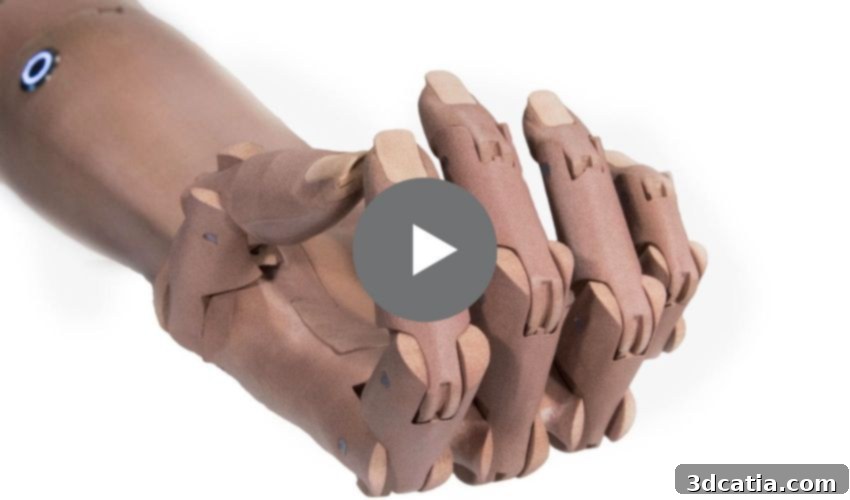
While 3D printing often serves industrial, commercial, or recreational purposes, its profound humanitarian impact is truly unparalleled. We’ve consistently highlighted how additive manufacturing is revolutionizing the creation of prosthetics, offering individuals enhanced mobility and the opportunity for fuller lives. Unlimited Tomorrow, a pioneering firm, is at the forefront of this mission, leveraging 3D printing to provide vital assistance to victims of the conflict in Ukraine. Their remarkable initiative aims to deliver 100 advanced 3D-printed prosthetic arms, meticulously crafted using state-of-the-art 3D scanning technologies to create highly customized and functional devices.
This ambitious project is made possible through a strategic collaboration with Siemens, a global technology powerhouse. Unlimited Tomorrow utilizes Siemens’ sophisticated software solutions to conduct remote 3D scans, enabling them to design and produce these cutting-edge prostheses even while operating from afar. Furthermore, Siemens’ extensive knowledge of Ukraine’s healthcare infrastructure has been instrumental in facilitating the efficient rollout and distribution of these life-changing solutions to those in desperate need. This partnership exemplifies how advanced technology and collaborative efforts can address urgent global challenges, making a tangible difference in the lives of individuals recovering from severe injuries by offering them dignity, independence, and hope through personalized medical devices.
The ability to rapidly prototype, customize, and produce these complex devices through 3D printing drastically reduces lead times and costs compared to traditional manufacturing methods. Each prosthetic arm is tailored precisely to the individual’s anatomy, ensuring a comfortable fit and optimal functionality, which is crucial for rehabilitation and long-term use. The video beautifully illustrates the meticulous process, from initial scanning to the final assembly of these sophisticated bionic limbs, underscoring the dedication of Unlimited Tomorrow to transform challenges into opportunities for recovery and empowerment. This application of 3D printing goes beyond mere innovation; it represents a commitment to compassion and a practical demonstration of how technology can serve humanity’s most pressing needs.
2. Speed and Precision: McLaren’s Formula 1 Journey with Additive Manufacturing
Our next feature takes us into the high-octane world of Formula 1 with McLaren, a name synonymous with speed, innovation, and engineering excellence. This captivating video provides a unique 24-hour glimpse into the relentless pace and precision required at the McLaren factory, showcasing the critical role of advanced manufacturing techniques in F1. Andrea Stella, the esteemed F1 Team Principal, offers invaluable insights into the demanding mindset that drives motor racing manufacturing, emphasizing the continuous pursuit of performance and efficiency under immense pressure. We witness firsthand the dedication of the design and build teams as they meticulously craft every component for their iconic racing cars.
The latter part of the video shines a spotlight on the integral role of additive manufacturing within McLaren’s operations. Henry Jarret, one of McLaren’s skilled technicians, elaborates on the indispensable importance of 3D printing technology, particularly for creating prototype parts. In the ultra-competitive environment of Formula 1, rapid iteration and testing are paramount. Additive manufacturing, specifically using Stereolithography (SLA) printers, allows McLaren to quickly produce highly detailed and accurate prototypes for aerodynamic testing, fitment checks, and functional evaluation. This agility in design and production significantly accelerates their development cycle, giving them a crucial edge on the track. We get to see these sophisticated SLA machines in full operation, working tirelessly as part of the continuous 24-hour shift, illustrating the seamless integration of 3D printing into their high-performance engineering workflow.
Beyond prototyping, 3D printing in F1 extends to manufacturing lightweight, complex end-use parts that are impossible or impractical to produce with traditional methods. These parts can improve aerodynamics, reduce weight, and optimize cooling, all critical factors in gaining fractions of a second on the racetrack. The ability to create intricate geometries and consolidate multiple parts into a single, optimized component showcases the strategic advantage that additive manufacturing provides in pushing the boundaries of automotive performance. McLaren’s embrace of this technology highlights a broader trend across high-performance engineering, where speed of development and material optimization are key differentiators.
3. Enhancing Design: Fusion 360’s Latest Features for 3D Modeling
For enthusiasts and professionals alike who engage in home 3D printing and enjoy creating their own digital designs, Autodesk’s Fusion 360 stands as a remarkably popular and versatile 3D modeling software. It empowers users to transform their innovative concepts into printable files with intuitive tools and a comprehensive workflow. This video provides an insightful overview of Fusion 360’s newest features, demonstrating Autodesk’s ongoing commitment to refining user experience and expanding design capabilities. These enhancements are crucial for both novices learning the ropes of computer-aided design (CAD) and experienced designers seeking greater efficiency and precision.
Among the notable improvements are new dropdown menus designed for enhanced ease of use, streamlining the interface and making complex commands more accessible. This focus on user-friendliness ensures that designers can navigate the software more intuitively, reducing the learning curve and accelerating the design process. Furthermore, the video highlights an improved geometry and stock contour selection feature, complete with better visualization tools. This advancement allows for more accurate and efficient preparation of designs for manufacturing, whether it’s for additive processes like 3D printing or subtractive methods like CNC machining. By providing clearer visual feedback and more precise control over design elements, Fusion 360 empowers users to achieve optimal results with greater confidence and accuracy.
These updates to Fusion 360 underscore the evolving demands of modern product design and 3D printing. As additive manufacturing becomes more sophisticated, so too must the software that drives it. The enhanced capabilities in Fusion 360, such as improved visualization and refined selection tools, directly translate to better print quality, reduced material waste, and a more efficient design-to-production pipeline. Whether you’re designing intricate functional parts, artistic models, or prototypes for a new invention, Fusion 360 continues to provide a robust platform for bringing digital ideas into the physical world, solidifying its position as a go-to tool for the 3D printing community.
4. The Evolution of Manufacturing: From Digital Twins to Circular Economies
Our fourth video features a thought-provoking discussion that explores the future trajectory of manufacturing and product design, presented by Dassault Systèmes, a leading French software firm. We hear from Stephane Sireau, Vice-President of High-Tech Systems at Dassault Systèmes, engaged in a conversation with Paul Armstrong, head of the technology advisory company Here/Forth. The dialogue begins with an introduction to their respective roles, setting the stage for an in-depth exploration of how technological shifts are fundamentally transforming the business landscape.
Their discussion delves into the profound impact of Industry 4.0 concepts, including digital twins, artificial intelligence (AI), and the Internet of Things (IoT). Digital twins, virtual replicas of physical assets, processes, or systems, are revolutionizing product lifecycle management by enabling real-time monitoring, simulation, and predictive analysis, leading to optimized performance and reduced downtime. AI is being integrated into design processes for generative design, quality control, and supply chain optimization, while IoT facilitates vast data collection for unprecedented insights into operational efficiency. Beyond these technological advancements, the conversation significantly emphasizes the lifecycle of products, highlighting the growing importance of a circular economy. Consumers are increasingly valuing products designed for longevity, repairability, and recyclability, shifting away from the traditional linear “take-make-dispose” model.
Sustainability is, of course, a cornerstone of modern manufacturing, and 3D printing inherently offers significant advantages in this regard. One key benefit of additive manufacturing is the substantial material savings it provides, as parts are built layer by layer, minimizing waste compared to subtractive methods. Furthermore, many pioneering firms are actively working with recycled or waste materials to create new products, dramatically decreasing their environmental impact and fostering a more sustainable production ecosystem. This video underscores how advanced software solutions, combined with innovative manufacturing techniques like 3D printing, are not just about efficiency and profit, but also about building a more responsible, resource-efficient, and environmentally conscious future for product development and industrial production.
5. Pushing Boundaries: Micromanufacturing and 3D Printing in Scientific Research
Finally, we turn our attention to the cutting edge of research and innovation, exploring the fascinating realm of micromanufacturing. This video features Dr. Arden Moore, the distinguished director of the Louisiana Tech Institute for Micromanufacturing (LIMMT), who elucidates the critical role of additive manufacturing in advancing scientific ideas and pushing the boundaries of what’s possible at the micro-scale. Micromanufacturing involves the creation of components with features typically measured in micrometers, enabling the development of miniature devices for a vast array of applications in medicine, electronics, and sensing.
The Institute for Micromanufacturing is a hub of innovation, offering graduate students unparalleled opportunities to develop advanced research capabilities, hone their 3D printing skills, and cultivate essential communication talents. This interdisciplinary approach is vital for fostering the next generation of scientists and engineers who can bridge the gap between theoretical concepts and practical applications. The video highlights two specific PhD projects that exemplify the groundbreaking work being done: one utilizing lasers for precision microfabrication, and another focusing on the creation of composite microdevices. Lasers provide unparalleled accuracy for creating intricate features, while composite materials offer enhanced functionality and durability for micro-scale components.
The team at LIMMT employs additive manufacturing extensively to produce these highly specialized microdevices, as well as critical prototypes for ongoing research. The ability of 3D printing to create complex geometries and functional parts at such a tiny scale is transformative for fields like biomedical engineering, enabling the development of new drug delivery systems, miniature sensors, and advanced diagnostic tools. This exploration into micromanufacturing demonstrates how 3D printing is not just a tool for large-scale production, but also an indispensable enabler of fundamental scientific discovery and technological innovation, laying the groundwork for future breakthroughs in countless high-tech industries.
We hope you’ve enjoyed this diverse selection of 3D printing videos, showcasing the extraordinary breadth and impact of additive manufacturing across various sectors, from humanitarian aid with Unlimited Tomorrow’s prosthetic arms to cutting-edge scientific research. What are your thoughts on these innovations? We invite you to share your perspectives in a comment below or connect with us on our LinkedIn, Facebook, and Twitter pages! To stay updated with the very latest in 3D printing news, don’t forget to sign up for our free weekly Newsletter here, delivered straight to your inbox! You can also find all our compelling videos and more on our dedicated YouTube channel.