
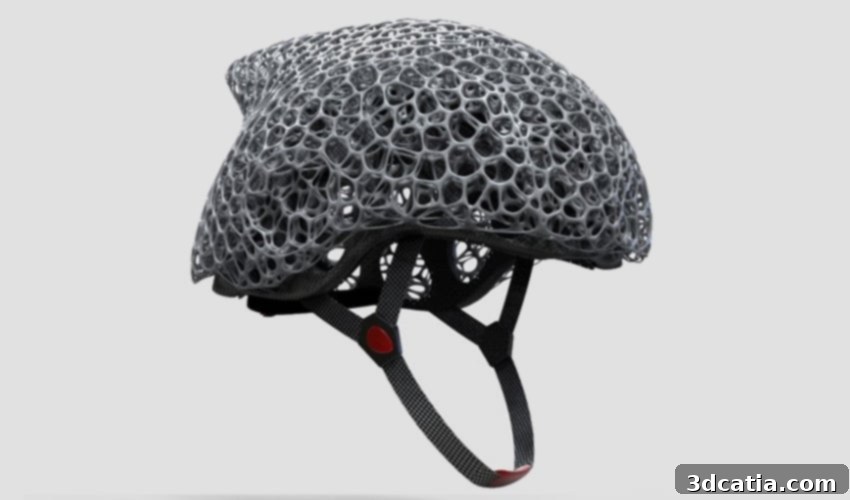
The Future of Cycling Safety: Exploring the Advanced 3D Printed Voronoi Bicycle Helmet
In the dynamic world of sports and physical activities, protective helmets stand as indispensable safeguards, evolving constantly to meet new demands for safety, comfort, and performance. For many decades, this critical piece of gear has seen continuous innovation, with each technological leap bringing significant improvements. From advancements in material science to sophisticated manufacturing processes, the quest for superior head protection is unending. Today, additive manufacturing, commonly known as 3D printing, is at the forefront of this evolution, inspiring designers and engineers across various fields to reimagine and upgrade conventional products. Protective helmets are a prime example of how this disruptive technology is paving the way for revolutionary designs, offering unprecedented levels of customization, structural integrity, and lightweight construction.
The impact of 3D printing on helmet design is already evident in numerous groundbreaking projects. We’ve previously highlighted how additive manufacturing enabled scientists at University College London (UCL) to develop HEXR, a revolutionary 3D printed bicycle helmet featuring a complex cellular structure. This innovation showcased the potential for personalized fit and enhanced energy absorption. Beyond cycling, 3D printing is transforming protection in other demanding sports, from 3D printed hockey helmets by KAV, designed for superior impact distribution, to glass helmets for American football, which leverage unique material properties for enhanced safety. These examples underscore a clear trend: additively manufactured protective equipment is rapidly becoming the new standard, pushing the boundaries of what’s possible in athlete safety and performance. The latest and most compelling invention to join this esteemed list is an innovative 3D printed bicycle helmet, distinguished by its unique and highly effective Voronoi structure.
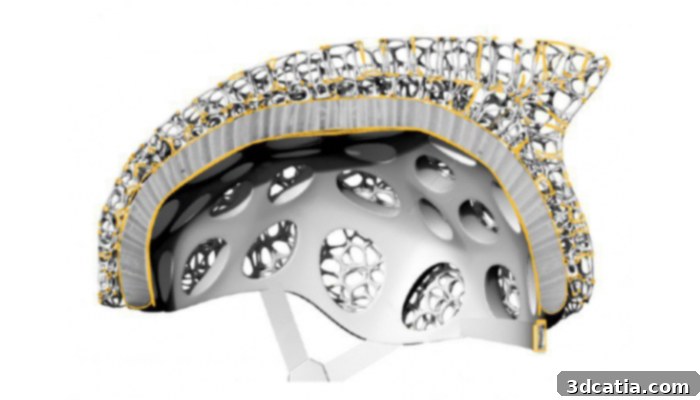
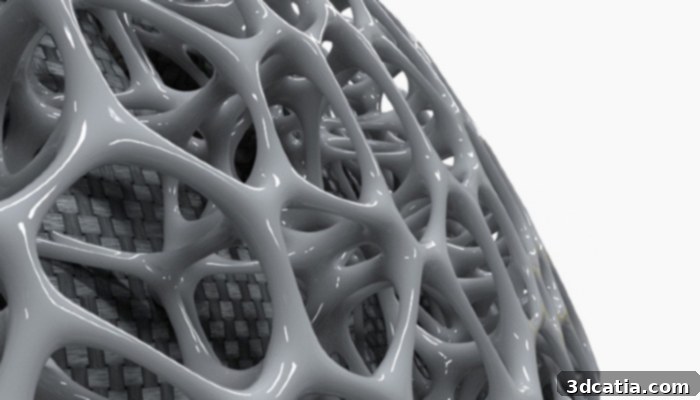
This cutting-edge bicycle helmet emerged from the innovative minds of three designers in Nanjing, China: Yuefeng Zhou, Zhecheng Xu, and Haiwei Wang. Their collaborative effort has culminated in a helmet that sets new benchmarks for both protection and lightweight design, significantly surpassing the capabilities of traditionally manufactured gear. The designers achieved this remarkable feat by ingeniously combining parametric techniques with principles of bionics. This fusion allowed them to engineer an external mechanical system of exceptional quality and performance. The core strength of this design lies in its ability to offer superior stability and force distribution when subjected to external impacts. This advanced structure draws profound inspiration from natural Voronoi patterns, which are ubiquitous in the biological world, visible in the intricate framework of animal bones and the resilient shells of turtles. The inherent web-like characteristics of the Voronoi pattern are crucial; they enable the helmet to effectively redirect external impacts, efficiently dispersing forces from the point of contact to broader areas across the helmet’s surface. This ingenious mechanism ensures a more stable and even distribution of force, dramatically enhancing the helmet’s protective capabilities and overall structural integrity during a collision.
All image credits: Zhecheng Xu and Yuefeng Zhou.
Unparalleled Safety, Lightweight Comfort, and Superior Airflow
What truly sets the Voronoi design apart from more conventional flake protection structures is its fully integrated, bionic 3D printed mechanical system. This holistic approach moves beyond simple layered protection, creating a complex, interconnected network that works as a single, optimized unit. The result is a perfect and delicate balance between paramount safety and extreme lightness, ensuring not only enhanced protection but also an unprecedented level of comfort for the wearer. Unlike bulkier traditional helmets that often sacrifice comfort for perceived safety, the Voronoi design proves that both can be achieved simultaneously through intelligent engineering.
Furthermore, this innovative helmet model boasts significantly better air permeability compared to standard bicycle helmets. The intricate, open structure of the Voronoi pattern naturally facilitates superior airflow, minimizing heat buildup and enhancing ventilation. This is a crucial factor for cyclists, particularly during long rides or in warmer climates, as it prevents overheating and maintains a more comfortable internal environment. The creators of the helmet eloquently articulate their design philosophy: “The Voronoi structure is a result of natural evolution, which gives the organisms perfect physical performance in aspects of lightness, stability and energy interaction. Thus, we applied this parametric technique into the improvement of helmet design. At the balance of lightness and safety, we hope to provide people with more comfortable, more fashionable, and safer personal protection bicycle helmet.” Their statement underscores a deep understanding of natural optimization and a commitment to translating these biological marvels into functional, human-centric design, ultimately aiming to elevate the cycling experience through superior personal protective equipment.
Materials, Aesthetics, and Future Implications of Customization
The structural integrity and impressive performance of the Voronoi bicycle helmet are underpinned by the careful selection of advanced materials. For the helmet shell, the main materials utilized are carbon kevlar and fiberglass resin, known for their exceptional strength-to-weight ratios and impact resistance. These high-performance composites provide the robust outer layer necessary to withstand significant forces. Internally, a polystyrene lining is integrated, which is a standard yet highly effective material for absorbing and dissipating impact energy, thus protecting the wearer’s head from kinetic forces. This combination of materials ensures both durability and effective energy management during an impact.
Beyond its technical superiority, the Voronoi helmet also stands out with its distinctive aesthetic appeal. The final product is slated to be available in three sizes to accommodate a broader range of users and in various colors, allowing for personal expression. The designers proudly characterize this helmet as having an “organic cool appearance,” a claim that is difficult to dispute. The visual aesthetic, with its intricate, nature-inspired patterns, is indeed unique and strikingly modern. It deviates significantly from the often monolithic and utilitarian designs of conventional helmets, offering cyclists an opportunity to ride in style while benefiting from advanced protection.
The advent of such sophisticated designs, coupled with the increasing accessibility of desktop 3D printers, raises intriguing possibilities for the future. Could a day soon come when owners of personal 3D printers begin manufacturing their own Voronoi helmets at home? While regulatory and safety standards for protective gear are stringent and require professional manufacturing, the underlying technology certainly opens doors for personalized designs, custom fits, and even localized production in the long term. This potential for widespread adoption and personal customization is one of the most exciting aspects of 3D printing in the protective gear industry. After all, who wouldn’t want to combine cutting-edge safety with a unique, fashionable statement when out on their bikes?
Industry Recognition and Call to Action
The innovative design and superior performance of the Voronoi bicycle helmet have not gone unnoticed in the design world. It is with great pride that we note this remarkable helmet was awarded the prestigious A’ DESIGN Award in the safety clothing and personal protective equipment design category for the 2019 – 2020 period. This international recognition is a testament to the helmet’s groundbreaking aesthetic, engineering excellence, and its significant contribution to enhancing cyclist safety and comfort. Such accolades highlight the impactful intersection of advanced manufacturing techniques, biomimicry, and thoughtful design in creating products that truly make a difference.
This award underscores the helmet’s status not just as a piece of safety equipment, but as a triumph of modern industrial design. It demonstrates that functionality and aesthetics can coexist harmoniously, delivering a product that is both highly effective and visually appealing. For those eager to delve deeper into the specifics of this award-winning project, including its detailed design rationale and technical specifications, more information can be found HERE.
What are your thoughts on the Voronoi 3D printed bicycle helmet and its potential to redefine cycling safety and style? We invite you to share your opinions and insights. Let us know what you think in the comments section below, or engage with us on our Facebook and Twitter pages! To stay abreast of all the latest developments, innovations, and news in the rapidly evolving world of 3D printing, be sure to sign up for our free weekly Newsletter, delivering the most important updates straight to your inbox.