
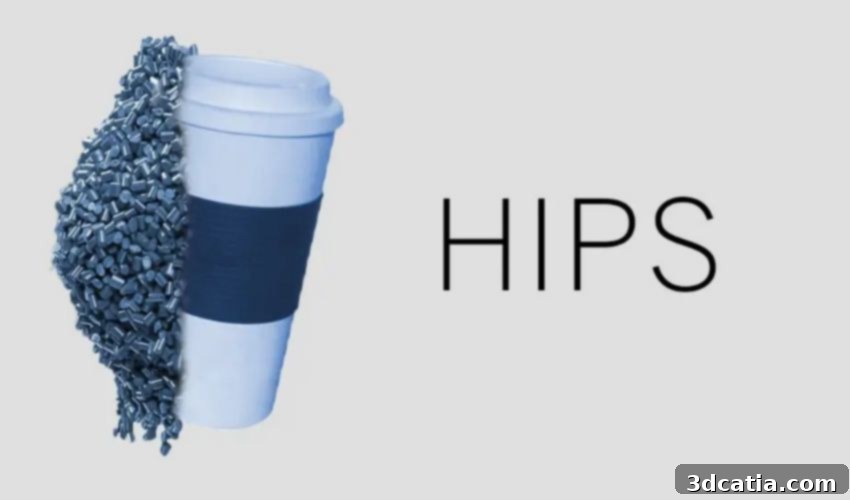
HIPS Filament: The Ultimate Dissolvable Support Material for 3D Printing
High Impact Polystyrene (HIPS) is a remarkable thermoplastic polymer, strategically engineered from a blend of polystyrene and polybutadiene rubber. While many advanced materials used in 3D printing are celebrated for their exceptional resistance to chemical solvents, HIPS stands out precisely because of its high solubility. This unique characteristic transforms a potential drawback into its greatest advantage, making HIPS primarily utilized in filament form as a dissolvable support material in Fused Deposition Modeling (FDM) 3D printing. Support structures are indispensable when printing complex geometries with overhangs exceeding 45 degrees, preventing sagging, warping, or collapse during the build process. Once printing is complete, the effective removal of these supports is crucial for achieving the final desired part quality. This is where HIPS shines; its high solubility allows for relatively easy and clean removal, a significant improvement over mechanical support removal which can damage delicate parts or leave unsightly marks. This comprehensive article delves into the properties of HIPS as a 3D printing filament, highlighting its production, key characteristics, advantages, limitations, and its indispensable role as a support structure in modern additive manufacturing.
Production and Key Characteristics
HIPS, or High Impact Polystyrene, is a widely adopted material within the 3D printing community, valued for its versatility and distinctive properties. It originates from polystyrene, a well-known synthetic polymer found across numerous consumer products. The production of HIPS filament typically involves an extrusion process, where the raw polymer blend is melted and forced through a die to form a continuous strand of precise diameter, which is then spooled. The critical addition of polybutadiene rubber significantly enhances the impact resistance and ductility of pure polystyrene, transforming it into a much tougher and less brittle material suitable for demanding applications, including 3D printing supports. HIPS shares many properties with ABS (Acrylonitrile Butadiene Styrene), such as good rigidity and heat resistance, but often exhibits superior impact strength. Its defining characteristic, however, is its comparatively high solubility in specific chemical solvents, most notably limonene. This property is pivotal for its application as a support material, enabling a remarkably smooth and non-destructive separation from the primary printed object. Limonene, a natural solvent derived from citrus peels, can dissolve HIPS without harming common printing materials like ABS, making it an ideal pairing. This makes HIPS an excellent choice for intricate designs, parts with internal cavities, or complex structures where manual support removal would be impossible or risky. Beyond its dissolvability, HIPS also boasts a smooth and scratch-resistant surface finish, good heat resistance, and a translucent white color that simplifies post-printing coloring or painting processes, offering flexibility for aesthetic finishes.
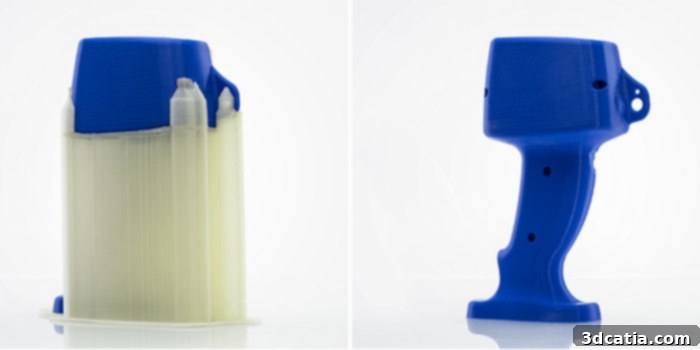
HIPS is mainly used as a support structure (Image credits: Zortrax)
Despite its numerous advantages, HIPS plastic does come with certain limitations that warrant careful consideration. One significant drawback is its vulnerability to degradation when exposed to a range of aggressive chemicals, including strong solvents, acids, and alkalis. Over prolonged periods or with potent concentrations, this exposure can lead to material embrittlement, noticeable discoloration, and ultimately, a breakdown of its structural integrity. While this property is leveraged for support removal, it limits its use in applications requiring chemical resistance. Furthermore, HIPS exhibits relatively low temperature resistance for an engineering thermoplastic, meaning it can become brittle and lose mechanical strength in cold environments, rendering it unsuitable for applications subjected to extreme temperature fluctuations or cryogenic conditions. Its limited resistance to UV light is another notable concern; extended exposure to direct sunlight or UV radiation can cause HIPS to yellow, become brittle, and degrade structurally, significantly shortening its lifespan, especially in outdoor applications.
Additionally, HIPS demonstrates poor flame resistance, tending to ignite and burn easily, which makes it an inappropriate material choice for applications where strict fire safety standards are a priority, such as certain consumer electronics or architectural components. Compared to other high-performance plastic materials, HIPS possesses relatively moderate tensile strength, meaning it may not withstand high pulling or stretching forces as effectively as, for instance, polycarbonate or nylon. This limits its use in load-bearing structural components. Moreover, HIPS is not considered biocompatible, making it unsuitable for medical applications that involve direct or prolonged contact with human tissue or bodily fluids, where materials must meet stringent safety and sterility requirements. Lastly, as previously hinted, HIPS is generally not recommended for outdoor use due to its combined susceptibility to UV degradation, moisture absorption, and vulnerability to extreme temperatures, all of which accelerate its breakdown and reduce its functional lifespan in harsh environmental conditions. Understanding these limitations is crucial for selecting HIPS appropriately for 3D printing projects, primarily for its strengths as a support material rather than as a standalone functional part in challenging environments.

HIPS can be flammable and sensitive to UV light (Photo credits: Thompson Coburn LLP, Unsplash)
3D Printing with HIPS
For optimal results when utilizing HIPS as a support structure, a 3D printer equipped with dual extruders is highly recommended. This configuration allows one extruder to print the main model material (e.g., ABS) while the second prints the HIPS supports, ensuring seamless integration and efficient operation. HIPS typically requires a printing temperature ranging between 230°C and 245°C for the nozzle, while the heated bed should maintain temperatures between 90°C and 110°C. These specific temperatures are crucial for ensuring proper layer adhesion and minimizing warping, a common issue with HIPS and ABS due to thermal contraction. Using a 3D printer with an enclosed build chamber is also highly beneficial, as it helps maintain a stable, elevated ambient temperature around the print, further mitigating warping and improving print quality. An important consideration during the printing process is ventilation: HIPS, like ABS, can release toxic fumes, particularly styrene, which can be irritating or harmful to the respiratory system. Therefore, adequate ventilation, ideally with a fume extraction system or printing in a well-aerated space, is absolutely essential to protect your respiratory health.
After the printing process is successfully completed, it is imperative to allow the printed part to cool down completely to room temperature before attempting any support removal. Rushing this step can lead to part deformation or damage. Unlike water-soluble support materials such as PVA or BVOH, HIPS requires chemical dissolution for removal. The preferred solvent for HIPS is limonene, a biodegradable, citrus-scented chemical. It is critical to use HIPS as a support material only for main print materials that are resistant to limonene, such as ABS. Many other materials, like PLA or PETG, can be sensitive to limonene, potentially leading to surface damage, discoloration, or structural weakening of your final component. To manage costs, especially given that a liter of professional-grade limonene solvent can be quite expensive, it is highly recommended to manually remove larger HIPS support sections by hand before immersing the part in the chemical bath. This reduces the volume of solvent required and speeds up the dissolution process for the remaining intricate supports. When working with limonene or any chemical solvent, strict safety precautions must be observed. Always wear appropriate personal protective equipment, including safety glasses to protect your eyes, gloves to shield your hands from irritation, and a respirator or ensure excellent ventilation to prevent inhalation of fumes. Proper disposal of the used solvent is also crucial and should adhere to local environmental regulations.
Versatile Applications of HIPS
HIPS plastic, renowned for its diverse properties including excellent impact resistance, lightweight nature, and ease of processing, finds extensive utility across a broad spectrum of applications beyond just 3D printing support. One prevalent application is in product packaging, where its low weight, inherent moisture resistance, and remarkable moldability into various complex forms make it an economical and effective choice. It is frequently employed in creating protective and attractive packaging for a wide array of consumer items, including toys, delicate electronics, cosmetics, and medical supplies, often in the form of blister packs or clam shells. Furthermore, HIPS serves exceptionally well in the fabrication of signs and displays, both indoor and temporary outdoor, owing to its good dimensional stability. This allows HIPS signs to retain their intended shape and form even when exposed to varying temperature and humidity conditions, ensuring brand messages remain clear and consistent. Its ease of printing and finishing also makes it popular for point-of-sale displays and promotional materials.
Within the demanding automotive industry, HIPS is a preferred material for manufacturing various interior components, such as instrument panel parts, door trim panels, and console elements. Its robust impact resistance provides durability in everyday use, while its ease of fabrication allows for intricate designs and good surface aesthetics. For the production of toys and children’s products, HIPS is an ideal material choice due to its excellent combination of lightweight properties, high impact resistance (crucial for durability with active play), and moldability into a myriad of shapes and vibrant colors. Its non-toxic nature (when food-grade versions are used, though not biocompatible for human contact) also adds to its appeal in this sector. Additionally, HIPS is extensively utilized as a casing material for a wide range of electrical and electronic equipment. Its exceptional dimensional stability ensures that components fit together precisely, while its resistance to moisture helps protect sensitive internal circuitry. In the medical field, HIPS is applied in the manufacture of various non-implantable medical devices and auxiliary components, including orthopedic splints, custom trays, and packaging for sterile instruments. This use benefits from its high impact resistance, low weight, and the ease with which it can be thermoformed or processed into custom shapes. Finally, HIPS plays a significant role in food packaging applications, particularly in the production of single-use items like yogurt cups, disposable trays, and clamshell containers for fresh produce. Its combination of moldability, strong moisture resistance, and ability to be thermoformed into complex shapes makes it a practical choice for ensuring food freshness and ease of transport, though specific food-grade variants are required for direct food contact.
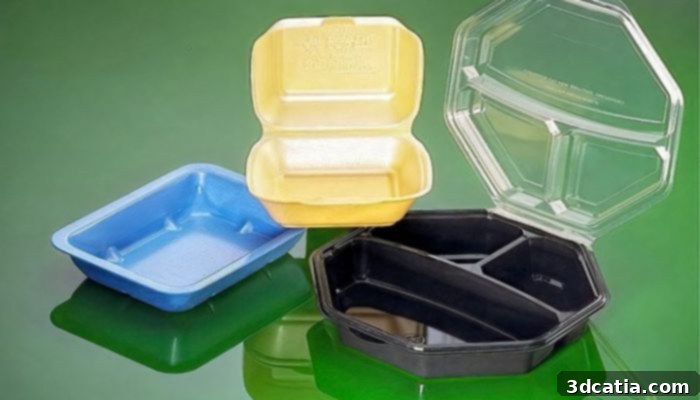
Photo Credits: Plastics technology
Manufacturers and Price Considerations
From a financial perspective, HIPS plastic stands out as a highly cost-effective solution when compared to many other engineering-grade 3D printing materials. A standard 1kg spool of HIPS filament is relatively inexpensive and can typically be purchased for prices ranging between $17 and $35, making it an accessible option for hobbyists and professionals alike. Several reputable manufacturers offer high-quality HIPS filaments, including well-known brands such as iGo3D, Zortrax, 3Dmensionals, and MatterHackers, each providing various colors and spool sizes. However, when selecting HIPS filament, it is crucial to look beyond just the price tag. Prospective buyers should meticulously examine the ingredients and technical specifications of the HIPS filaments. Some manufacturers might incorporate additives designed to enhance specific printing characteristics, such as improving flow or bed adhesion. While these additives can indeed facilitate a smoother printing process, they might inadvertently complicate the post-printing support removal, potentially requiring longer dissolution times or stronger solvent concentrations. Always check the manufacturer’s recommendations for printing and post-processing.
Beyond the immediate cost per spool, when choosing a manufacturer or supplier for HIPS filament, it is paramount to evaluate a broader range of criteria to ensure long-term satisfaction and consistent print quality. Factors such as the manufacturer’s reputation for quality control, the reliability of their products (e.g., consistent filament diameter, uniform color, proper spooling to prevent tangles), excellent product consistency across batches, responsive customer support, and efficient delivery timelines should all be thoroughly considered. Engaging in thorough research, comparing offerings from multiple suppliers, and critically reading customer reviews or testimonials from the 3D printing community can provide invaluable insights and help in making an informed purchasing decision. Furthermore, it is often beneficial to explore local suppliers or distributors, as they may offer competitive pricing, reduce shipping costs, and provide more convenient logistics for procuring HIPS filaments. Lastly, connecting with industry professionals, joining online forums, or seeking recommendations from relevant trade associations can furnish a deeper understanding of reputable manufacturers, current pricing trends, and emerging innovations within the HIPS filament market, ensuring you choose the best material for your specific 3D printing needs.
What are your thoughts on HIPS as a dissolvable support structure in 3D printing? Do you have any experiences, tips, or challenges you’d like to share? Let us know in a comment below or connect with us on our LinkedIn, Facebook, and Twitter pages! Don’t forget to sign up for our free weekly Newsletter here to receive the latest 3D printing news and insights straight to your inbox! You can also find all our comprehensive videos and tutorials on our YouTube channel for more visual guides and in-depth discussions.
*Cover image credits: Felfil