

Revolutionizing Regenerative Medicine: India’s Cost-Effective Silk Bioink for 3D Bioprinting
The field of regenerative medicine is on the cusp of a profound transformation, driven by groundbreaking innovations from the Indian Institute of Technology (IIT) Guwahati. A dedicated team of scientists at this esteemed institution is making significant advancements in 3D bioprinting, particularly through the development of an innovative and remarkably cost-effective bioink. This pioneering material, ingeniously derived from unique silk proteins, holds immense promise for the precise 3D printing of tissues, sophisticated medical implants, and, in the foreseeable future, potentially even complex human organs. What makes this discovery particularly impactful is its ability to achieve these feats at an unparalleled low cost. The core strength of this breakthrough lies in the remarkable capacity of these silk proteins to meticulously imitate the intricate biological architecture inherent in natural bone cartilage and living tissue, thereby providing a scaffold that is both inherently biocompatible and structurally robust.
Bioprinting, fundamentally, represents a paradigm shift in healthcare delivery, widely regarded as the definitive future of tailor-made medicine. This advanced additive manufacturing technique facilitates the exact creation of personalized cellular structures, utilizing the patient’s own cells as the foundational building blocks. This degree of personalization is critically important, as it dramatically minimizes the risk of immunological rejection and enables the development of therapeutic solutions perfectly attuned to an individual’s unique physiological requirements. While the technology is still navigating its developmental stages, the overarching vision for bioprinting is nothing short of revolutionary: the capability to produce custom-designed organs on demand. Such an achievement would directly address one of the most pressing and persistent challenges in global healthcare – the severe and enduring shortage of available organ donors. Presently, the number of organs available for transplantation falls drastically short of the overwhelming demand, leading to protracted waiting lists and countless preventable deaths annually. Although we have not yet reached the stage where we can routinely 3D print fully functional kidneys or complex organs like the human heart, the rapid and encouraging progress in this dynamic field offers substantial optimism for future clinical applications and widespread adoption.
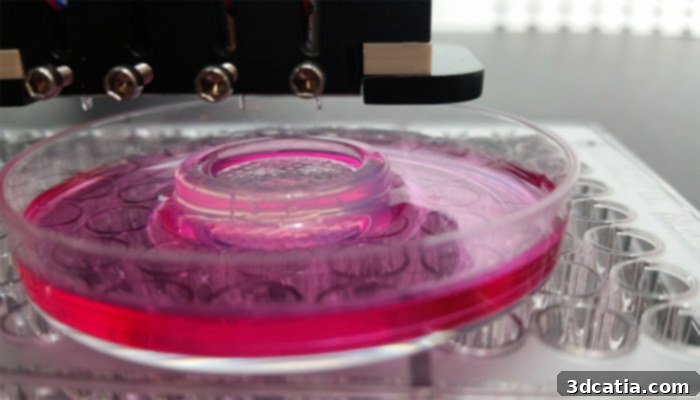
Bioprinting enables the creation of all kinds of cellular structures, from simple tissues to complex organ prototypes | Credits: Ozbolat Lab / Penn State University
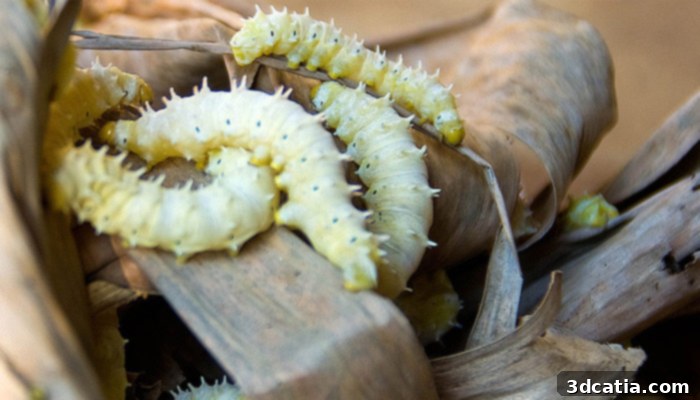
The research undertaken by the IIT Guwahati team distinguishes itself significantly through its innovative and unconventional selection of material: silk proteins, and more specifically, Muga silk. In contrast to many contemporary bioprinting endeavors that typically rely on more commonly used, yet often expensive, biomaterials, this project ingeniously leverages a resource with profound geographical and biological uniqueness. Muga silk is exclusively yielded by a particular species of silkworm indigenous to, and predominantly found in, the Assam region of India. This geographical specificity renders it a rare and specialized resource on a global scale. However, crucially for these Indian scientists, it represents an abundant, readily available, and sustainable local resource. This regional abundance is a pivotal factor underpinning their strategic decision to harness Muga silk, opting for it over conventional alternatives like collagen. Collagen, while widely utilized in bioprinting processes due to its natural presence in the body, carries a substantial cost burden. As one of the lead researchers eloquently illustrated, the financial discrepancy is striking: approximately 10 grams of medical-grade collagen can command a price exceeding 10,000 rupees (equivalent to roughly $140 USD), whereas an equivalent quantity of Muga silk can be procured for as little as 2 rupees. This profound cost difference not only vastly improves the accessibility of advanced bioprinting technology within India but also possesses the transformative potential to significantly reduce the overall expenses associated with bioprinting research and clinical applications globally, thereby democratizing access to cutting-edge regenerative therapies.
The transformation of raw Muga silk into a viable, functional bioink involves a meticulous and precise multi-step process. Researchers typically commence by obtaining liquid silk through one of two primary methods: either by carefully dissolving the silk fibers in a selection of appropriate and biocompatible solvents, or via direct, delicate extraction from the glands of the silkworms. Once the liquid silk is meticulously prepared to the required consistency and sterility, it is then precisely mixed with the patient’s own stem cells. This critical mixture forms the proprietary bioink, which then serves as the fundamental and intelligent material for printing artificial tissues and intricate scaffolds using advanced 3D bioprinters. These newly printed constructs, whether they are intricate tissue scaffolds designed to guide regeneration or preliminary organ models, are not immediately ready for surgical implantation. Instead, they undergo a vital and carefully controlled maturation period within a specialized laboratory environment. During this crucial phase, the stem cells embedded within the printed structure are actively encouraged to proliferate, differentiate into specific cell types, and organize themselves, thereby forming a more robust, integrated, and functionally viable tissue. The ultimate objective is to surgically implant these lab-grown tissues to effectively replace defective or severely damaged body parts, offering a biological and self-repairing solution rather than relying on inert synthetic implants. A key advantage of this silk-based approach lies in its inherent biocompatibility and controlled biodegradability. Once implanted, the stem cells within the 3D printed tissue are expected to grow, seamlessly integrate with surrounding host tissue, and proliferate naturally, gradually colonizing and replacing the silk scaffold. Concurrently, the silk protein itself undergoes a natural and predictable degradation process, breaking down into harmless amino acids that are safely absorbed by the body. This degradation is ingeniously timed, ensuring that as the new, healthy, and functional cells regenerate the damaged part of the organ, the silk scaffold gracefully recedes, leaving behind fully regenerated, native tissue. This sophisticated and self-regulating method thoughtfully circumvents the need for additional surgical procedures to remove the implant, a common necessity with many synthetic scaffolds, thereby significantly minimizing patient discomfort, reducing recovery times, and lowering overall surgical risks.
Under the astute and visionary leadership of laboratory manager Biman Mandal, the IIT Guwahati team has already achieved a series of truly impressive milestones that underscore the breadth of their success. Their diligent and innovative efforts have led to the successful creation of sophisticated prototypes for various structural tissues, including critical load-bearing components like bone, cartilage, and even the anatomically complex knee meniscus. Beyond these rigid support structures, they have also ventured successfully into the challenging realm of bioprinting soft tissues, showcasing promising preliminary prototypes for vital organs such as sections of the liver, cardiac tissue for the heart, and various dermal layers of the skin. These diverse achievements vividly demonstrate the versatility, adaptability, and immense potential of their unique silk-based bioink across a spectrum of biomedical applications. Mandal proudly articulates the significance of their work, stating, “Bioprinting has come a long way… We are now able to recreate a meticulous architecture down to the micron, which conventional methods were not able to do before.” This remarkable ability to achieve micron-level precision is absolutely paramount for successful tissue engineering, as it ensures that the printed structures closely replicate the intricate cellular organization, microvasculature, and functional complexity of natural, healthy tissues. The implications of such unparalleled precision are profound, paving the way for the development of far more effective, integrated, and durable biological repairs and replacements. This pioneering research not only underscores India’s rapidly growing prowess in advanced scientific innovation but also firmly positions the nation as a key global player in the ongoing pursuit of accessible and transformative regenerative medicine solutions. Further detailed information on the cutting-edge research being conducted at IIT Guwahati can be found directly on their official institution website HERE.
The future of medicine is increasingly characterized by personalization, precision, and accessibility, and the groundbreaking advancements made by the IIT Guwahati team with their cost-effective silk bioink are a powerful testament to this evolving paradigm. By offering a sustainable, highly biocompatible, and economically viable alternative to traditional bioprinting materials, they are not only addressing local healthcare challenges but are also making a substantial contribution to global efforts aimed at overcoming critical healthcare hurdles such as organ scarcity, the limitations of current prosthetic devices, and the high costs associated with many existing regenerative therapies. This intelligent and innovative utilization of a regionally abundant natural resource exemplifies a powerful synergy between indigenous knowledge, sustainable practices, and cutting-edge scientific exploration. It sets a new and inspiring benchmark for the development of accessible biomedical technologies that can have a global impact. The potential for widespread clinical application, particularly in developing nations where healthcare costs frequently present significant barriers to advanced treatments, is truly immense. As researchers continue to refine the bioprinting process, scale up production methodologies, and navigate regulatory pathways, we can optimistically anticipate a future where personalized tissue and organ repair is no longer a distant aspiration but a tangible and accessible reality for millions worldwide. This research stands as a beacon of hope, vividly illustrating how intelligent material science, combined with dedicated innovation, can unlock entirely new frontiers in human health and overall well-being.
What are your thoughts on this groundbreaking research from IIT Guwahati and the potential of silk-based bioinks? We invite you to share your valuable perspectives, insights, and questions in the comments section below. Alternatively, you can join the ongoing conversation and engage with our vibrant community on our official Facebook and Twitter pages. Don’t forget to sign up for our free weekly Newsletter to receive all the latest news, updates, and inspiring innovations from the exciting world of 3D printing, delivered directly to your inbox!