
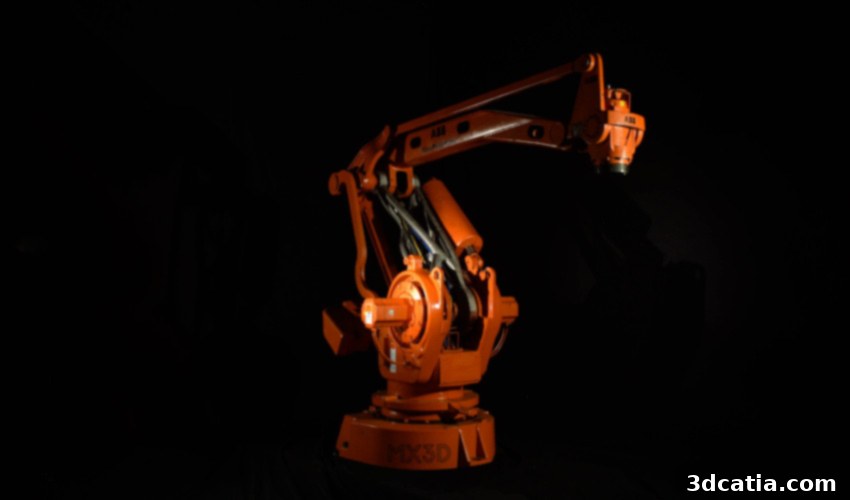
MX3D: Pioneering Large-Scale Metal 3D Printing with Robotic WAAM Technology for Industrial Innovation
MX3D, an innovative company established in 2014 and based in Amsterdam, has rapidly become a frontrunner in the specialized field of robotic metal 3D printing. Renowned for its ambitious and groundbreaking projects, MX3D has consistently captured headlines, from the iconic 3D printed stainless steel pedestrian bridge gracing the heart of Amsterdam to their more recent achievement, the Optimized Robot Arm. The company plays a pivotal role in advancing additive manufacturing for the heavy industry sector, where its robust solutions offer unparalleled advantages. Beyond industrial applications, MX3D is also highly sought after by acclaimed designers who leverage its cutting-edge 3D printing technology to create complex structures that are as practical as they are aesthetically striking. Driven by a keen interest in their innovative approach and diverse projects, we engaged directly with Thomas Van Glabeke, an R&D Engineer and Business Developer at MX3D, to gain deeper insights into the company’s vision and technological prowess.
1. Can you introduce yourself and MX3D?
Hello! My name is Thomas Van Glabeke, and I serve as an R&D Engineer and Business Developer for MX3D, a dynamic scale-up company at the forefront of metal additive manufacturing. My daily responsibilities involve meticulously analyzing a wide array of geometric designs from various industries. My core challenge is to strategize and determine the most effective methods for bringing these intricate designs to life through 3D printing at MX3D.
 MX3D stands as a leading metal 3D printing company, fundamentally employing Wire Arc Additive Manufacturing (WAAM) as its primary deposition process. This advanced technique leverages three core components that seamlessly integrate to form a sophisticated 3D metal printer. At its heart lies an industrial robot, which provides the precise movement and control required for accurate material deposition. This robot is paired with a high-performance welding machine, responsible for melting and depositing the metal wire. The entire system is intelligently orchestrated by a proprietary software package named MetalXL, which acts as the central brain, unifying these components and transforming them into a cohesive additive manufacturing solution.
The WAAM process, while sharing similarities with conventional robotic welding, distinguishes itself by continuously stacking welds layer upon layer to construct large-scale, three-dimensional objects. Unlike traditional welding, which focuses on joining or sealing, WAAM builds up complex geometries from scratch. MX3D boasts the capability to print with virtually any metal available in welding wire form, offering immense material flexibility to its clients. Our projects span a remarkable range of sizes, from compact, football-sized components to expansive, car-sized structures, demonstrating the versatility and scalability of our WAAM technology.
2. How and when was the company launched?
The genesis of MX3D dates back to a little under a decade ago, originating within the visionary Joris Laarman Lab. The team there harbored an ambitious desire: to print 3D objects that vastly exceeded the confined build volumes of existing 3D printers. Their aspiration was to produce functional, large-scale structures, breaking free from conventional size limitations. Initial experiments involved an old industrial robot and a variety of materials. However, the true “aha!” moment arrived when the team integrated a welding machine with the robot. The immense potential of this combination—the ability to deposit metal in free-form, layer by layer—became immediately apparent. This pivotal discovery propelled the research project forward, culminating in its official spin-out from the Lab in 2014, thereby establishing MX3D as an independent startup.
Our inaugural flagship project, the MX3D Bridge, remains a testament to our pioneering spirit. This monumental undertaking involved the creation of a 12-meter-long, fully functional pedestrian bridge made entirely of 3D printed stainless steel, specifically designed for installation in the historic city center of Amsterdam. The bridge incorporates approximately 6,000 kilograms of intricately 3D printed stainless steel, a feat achieved by four industrial robots working in concert within our workshop. This project not only demonstrated the architectural and structural viability of large-scale robotic metal 3D printing but also showcased its potential to revolutionize urban infrastructure and design, establishing MX3D as a leader in additive manufacturing innovation.
3. What AM applications is MX3D involved in? What innovations did your projects introduce?
For over five years, MX3D has been at the forefront of printing large-scale metal objects, attracting interest from an impressively diverse range of industries. Our expertise has been applied across sectors including construction, architecture and design, maritime, oil and gas, and various other heavy industries, demonstrating the broad applicability of our technology.
In the construction industry, our focus is on producing optimized structures and complex nodes that deliver significantly improved performance-to-weight ratios. A notable example of our interdisciplinary innovation is the Takenaka WAAM structural steel connector. This architectural node, developed in collaboration with Takenaka, one of Japan’s largest architecture and construction firms, represents a fusion of additive manufacturing and traditional construction techniques. It is printed semi-hollow in steel using an MX3D industrial robot and subsequently cast with concrete by a Takenaka industrial robot. Through the strategic application of generative design principles and advanced printing techniques, the geometry of this connector ingeniously harnesses the inherent advantages of both steel and concrete, resulting in a highly efficient and robust component.
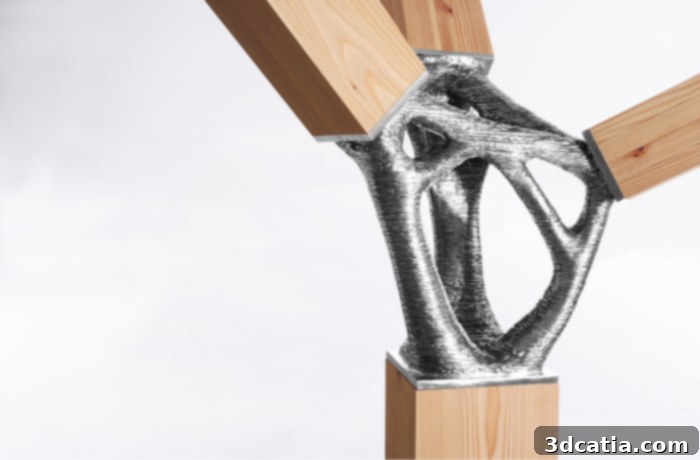
Steel connector for Takenaka, one of the largest architecture and construction firms in Japan. (All image credits: MX3D)
For heavy industries, we specialize in printing near-net-shape parts that undergo partial or full CNC milling as a post-processing step. The synergy between WAAM’s high deposition rate and the precision of CNC machining dramatically reduces lead times and facilitates highly agile production processes. This combination allows for rapid prototyping and efficient manufacturing of complex components. Examples of our Wire Arc Additive Manufacturing (WAAM) applications in this sector include custom pipe connectors for the demanding oil & gas industry, specialized gears and components for large-scale machinery, and both hollow and solid propeller blades for the maritime industry, all benefiting from enhanced design freedom and material efficiency.
While industrial clients frequently approach us with specific needs, designers consistently challenge the boundaries of our technology, pushing us towards new innovations. We have successfully printed breathtaking metal sculptures that demanded extremely complicated toolpath planning and sophisticated data handling. Interestingly, the advanced algorithms and code developed for these artistic endeavors often find their way into industrial business cases shortly thereafter, proving the practical value of pushing creative limits. Moreover, we developed a system that allows for the mixing of different alloys during the printing process for a project with Joris Laarman Lab. This innovative solution ultimately became a valuable industrial application for components requiring wear-resistant outer shells, demonstrating how artistic exploration can lead to significant industrial breakthroughs in material science and functional design.
4. Can you tell us more about the industrial MX3D Robot Arm?
Approximately a year ago, MX3D had already successfully printed numerous large-scale, optimized metal objects for heavy industry clients. These parts ranged from entirely new components to crucial spare or legacy parts for which traditional lead times were prohibitively long. Given the sensitive nature of these projects, most requests originated from the R&D departments of major multinational corporations and remained confidential due to strict NDA agreements. This presented a unique challenge: possessing such advanced technology capable of tackling incredibly complicated shapes, yet being unable to publicly showcase its capabilities felt like a missed opportunity. It was then that we turned our attention inward, observing the components of our own machines within the workshop. The idea of our industrial robots printing their own parts quickly took shape, evolving into a compelling internal demonstration of our technology’s potential.
ABB, a global leader in industrial robotics, expressed keen interest in this innovative concept and generously provided us with an old, 2,000-kilogram industrial robot that was ripe for rejuvenation. To ensure engineering excellence, we then partnered with Altair, a software company at the forefront of simulation and optimization technologies, to assist with the design and analysis aspects of the project. Within a mere couple of weeks, we embarked on a comprehensive revamp of the robot’s lower arm. The process involved several critical stages: disassembling the existing robot, meticulously reverse engineering the original arm, optimizing its design for additive manufacturing, 3D printing the new component, and finally, precisely finishing the part. Although the COVID-19 pandemic temporarily halted the project, we successfully finalized it in July 2020 by installing the newly WAAM-printed part back into the old robot, bringing our ambitious vision to fruition.
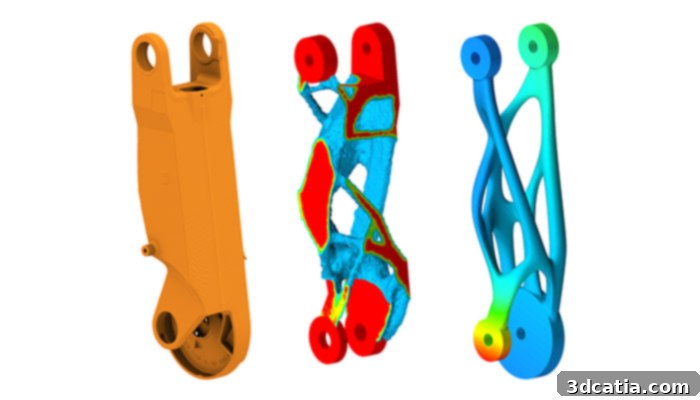
Redesign and optimization of the original robot arm (All image credits: MX3D)
The combination of advanced digital simulation and large-scale additive manufacturing unlocks a myriad of features and applications, profoundly impacting industrial design and production. On the simulation front, Altair’s engineers achieved a remarkable feat: they were able to reduce the mass of the robot arm by an astonishing 50% while rigorously maintaining all essential functional requirements and ensuring the part remained fully printable through WAAM. They elevated the optimization process to an unprecedented level by creating a precise digital replica of the model – a “digital twin.” This digital twin allowed them to simulate every conceivable movement, speed, acceleration, and torque, meticulously analyzing how these factors influenced every component within the complete robotic system. Gaining such comprehensive insight empowers engineers to precisely fine-tune for critical performance metrics such as manufacturability, accuracy, energy consumption, and any other variable crucial to optimizing the robot’s operation.
From the WAAM perspective, we are harnessing a computer-controlled process characterized by a high production rate, making it an ideal solution for modern manufacturing challenges. This technology makes mass customization – the ability to mass produce items while individually customizing each object – incredibly accessible for large metal parts. The inherent flexibility of WAAM empowers manufacturers to reconfigure and adapt each part every single time it is printed, without the need for costly tooling changes. For instance, one robot arm could be specifically designed with an extended reach for a unique operational use case. The very next arm could feature entirely different mounting options to accommodate specialized external hardware. Another iteration might even branch out into two distinct tool holders, significantly enhancing its versatility. When these design optimizations are combined with the inherent benefits of WAAM, numerous advantages emerge: the robot’s maximum carrying capacity can be expanded, the hardware requirements for its motors can be reduced, and the yearly energy consumption can be substantially lowered, leading to significant operational cost savings. Indeed, our WAAM technology unlocks a vast array of other advantages, truly transforming the potential of industrial robotics.
5. Why did MX3D decide to launch the MetalXL software?
When MX3D initially ventured into the realm of large-scale metal printing, a significant void in the market became immediately apparent: the absence of robust and dedicated WAAM software packages. The existing options at the time typically forced users to piece together disparate software snippets, none of which had been originally developed with the specific intricacies of WAAM in mind. Consequently, several key parameter settings essential for effective WAAM operations were either exceedingly complex to manage, required elaborate workarounds to implement, or were entirely absent from these generic packages. This fragmentation and lack of dedicated functionality frequently resulted in prints of suboptimal quality, hindering the full potential of the WAAM process.
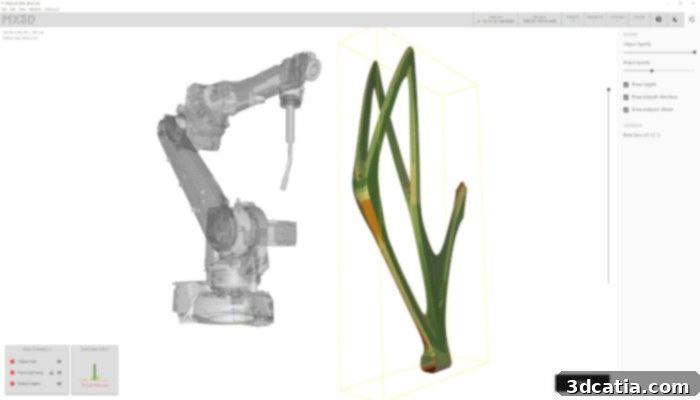
Aluminum bicycle frame in MX3D’s MetalXL WAAM software
Recognizing this critical need, MX3D made the strategic decision to build its own software platform from the ground up, specifically engineered and optimized for WAAM. This proprietary WAAM software has been rigorously developed and tested in our own production facility for the past five years, undergoing continuous refinement and validation through countless real-world projects. We are now proud to release this advanced platform to the public as MX3D’s MetalXL. MetalXL is a comprehensive, dedicated WAAM platform that equips users with all the necessary tools to seamlessly transition from initial CAD design to a flawlessly printed part. Its extensive capabilities include efficient object slicing, intelligent toolpath generation, advanced inverse kinematics solutions for industrial robots, precise monitoring and control of the printing process, and the provision of insightful data into print performance. Given that many industries have stringent and unique requirements concerning processes, materials, and certifications, MetalXL offers unparalleled flexibility. It allows our clients to meticulously calibrate and log their own specific materials and processes, thereby significantly streamlining their certification processes and facilitating the smooth integration of WAAM into their existing production chains. This dual capability makes MetalXL an exceptionally flexible yet highly controlled software solution, ensuring consistent quality and reliability in 3D metal printing.
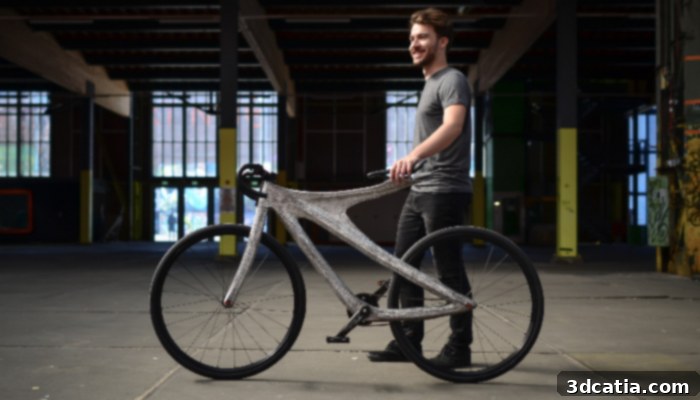
The final result – ARC BIKE II, manufactured with WAAM
6. What is your vision of the metal AM market?
The interest in metal additive manufacturing (AM) is experiencing a dramatic and rapid surge, with particular attention focused on Direct Energy Deposition (DED) technologies such as WAAM. A broad spectrum of stakeholders, including researchers, universities, small and medium-sized enterprises (SMEs), and large corporations alike, are increasingly eager to adopt and implement large-scale metal printing capabilities. Concurrently, there is a growing and undeniable need for the seamless integration and robust certification of metal AM processes within established production chains, ensuring quality, reliability, and regulatory compliance.
In light of these dynamics, MX3D is deeply committed to accelerating the widespread adoption of 3D metal printing across various industries. We are actively involved in pivotal initiatives designed to advance this goal. For instance, we are a key participant in the “Integradde” program, an extensive consortium comprising 26 partners from across Europe. This collaborative effort is dedicated to developing an intelligent, data-driven value chain specifically for the manufacturing of certified metal parts, addressing one of the industry’s most pressing challenges. Additionally, MX3D is part of the prestigious RobotUnion accelerator program, where we are further expanding the capabilities of our MetalXL software to ensure compatibility with an even wider array of robotic brands and welding machines. Through these concerted developments, our overarching aim is to significantly speed up the adoption and deep integration of WAAM into the mainstream production chain. I confidently anticipate that an increasing number of DED processes will achieve certification in the near future. This trend will inevitably lead to the creation of highly agile and tightly controlled production environments, fostering a steep growth curve in the actual use cases and applications of additive manufacturing. Companies leveraging these advanced processes will be uniquely positioned to swiftly supply industries with a broad and diverse range of objects, fabricated from an extensive selection of different alloys, thereby revolutionizing manufacturing flexibility and efficiency.
7. Any last words for our readers?
Stay safe, stay healthy, and keep on exploring the exciting possibilities of 3D printing!
For more comprehensive information about MX3D’s groundbreaking projects and innovative services, please visit their official website, accessible HERE. We’re eager to hear your thoughts on this pioneering company! Please share your insights in a comment below or connect with us on our Facebook and Twitter pages. Don’t miss out on the latest advancements in 3D printing – sign up for our free weekly Newsletter to receive all the crucial news directly in your inbox!