
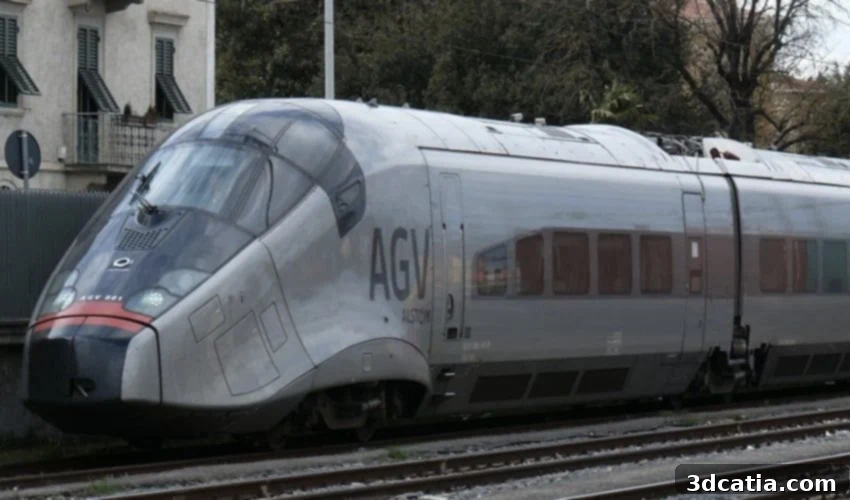
Revolutionizing Railway Maintenance: How Alstom Leveraged 3D Printing for High-Speed Train Parts
Alstom, a renowned French multinational corporation, stands at the forefront of providing cutting-edge and sustainable mobility solutions, particularly for high-speed rail networks globally. For over a decade, one of their prominent fleets, the AGV ETR575, had reliably transported countless passengers across Europe. However, the relentless demands of daily operation began to take their toll, leading to the gradual deterioration of critical components. This wear and tear not only impacted operational efficiency but also escalated the risk of potential safety hazards, a concern of paramount importance in the railway sector where safety standards are non-negotiable.
To address this pressing issue, Alstom’s dedicated maintenance team, based in Nola, Italy, faced the formidable task of replacing approximately 200 essential parts for the AGV ETR575, a very high-speed electric passenger train. The conventional approach to manufacturing these spare parts, often required in small batches and with complex geometries, had become prohibitively expensive and time-consuming. This traditional process involved significant upfront investment in tooling and lengthy lead times, rendering it unsustainable for the agile and cost-effective maintenance required for a modern train fleet. Recognizing this inefficiency, Alstom sought an innovative alternative that could deliver rapid, high-quality, and economical solutions. Their search led them directly to the transformative capabilities of **3D printing technology**, also widely known as **additive manufacturing**.
Before fully committing to this new method, Alstom embarked on a meticulous analysis of 3D printing technology, thoroughly evaluating its myriad benefits and applications. The company swiftly concluded that **additive manufacturing** offered the most viable and efficient path forward for producing **spare parts for high-speed trains**. Specifically, their teams opted for **resin 3D printing**, leveraging advanced material solutions from **LOCTITE 3D**. After a comprehensive review of LOCTITE’s extensive portfolio of additive manufacturing materials, Alstom identified **LOCTITE 3D 3843 HDT60** as the ideal resin to meet the stringent requirements of their application. This semi-flexible resin possesses a unique combination of properties, including high impact strength, excellent temperature resistance, and a superior surface finish, all of which are crucial for producing finely detailed, durable components capable of withstanding the rigorous operating conditions of high-speed rail.
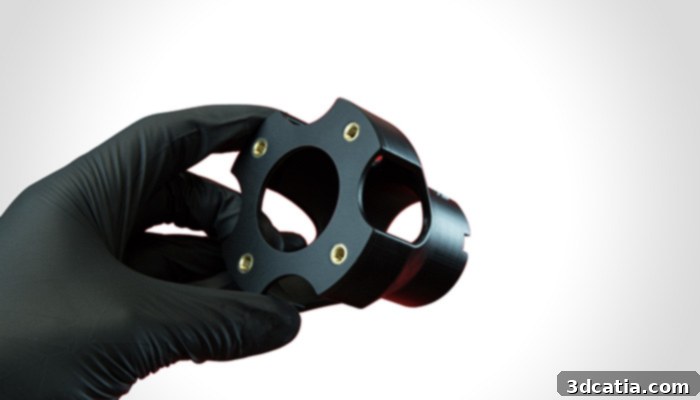
Alstom has utilized LOCTITE resin in the design and production of its parts. (Photo credits: LOCTITE)
Unlocking Unprecedented Speed and Savings with Additive Manufacturing
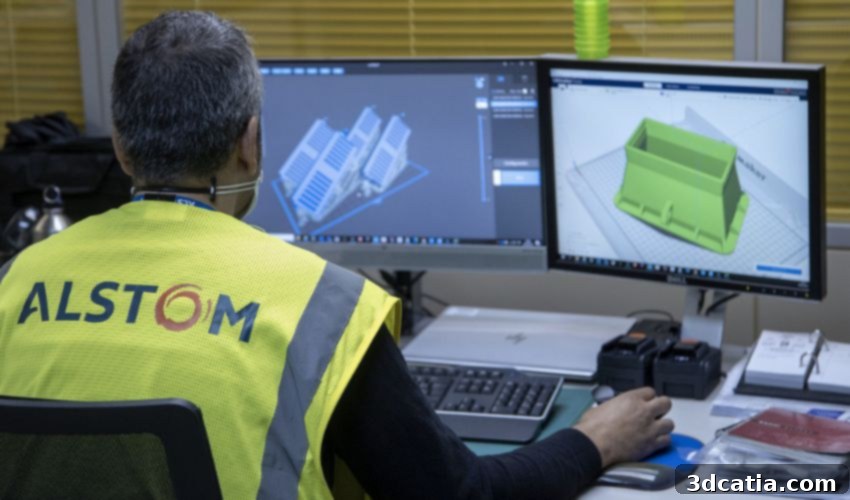
To execute the precise design and production of these vital train components, Alstom strategically partnered with Nexa 3D, employing their state-of-the-art **NXE 400Pro 3D printer**. This collaboration allowed the French multinational to fully experience and capitalize on the profound advantages that **3D printing** brings to critical infrastructure sectors like railway operations. The integration of **additive manufacturing** yielded results that were nothing short of transformative, fundamentally redefining their production timelines and significantly optimizing their economic outlay.
One of the most remarkable benefits Alstom realized was an extraordinary reduction in **delivery time**. By adopting **3D printing**, the company achieved an astounding 96% decrease in the lead time required for these essential replacement parts. Previously, sourcing these components through conventional manufacturing methods could take a maximum of 180 days. With the agility and efficiency of **additive manufacturing**, the entire process, from design to production, was compressed into just **one week**. This incredible acceleration translated into saving a remarkable 172 days, drastically improving operational responsiveness, minimizing train downtime, and ensuring the swift return of their high-speed fleet to service.
Beyond the impressive gains in speed, **3D printing** delivered substantial **cost reductions** for Alstom. The project saw an overall reduction in production costs by a significant 25%, resulting in monetary savings exceeding €20,000 for this specific batch of parts. These efficiencies were primarily achieved by eliminating the need for expensive and time-consuming tooling, reducing material waste through precise on-demand manufacturing, and streamlining the entire supply chain. Such tangible economic benefits underscore the compelling case for integrating **additive manufacturing** into **railway maintenance** strategies, demonstrating its capability to provide both high-quality solutions and considerable financial advantages. For more in-depth information, you can explore the full case study HERE.
“We are very interested in 3D printing, so we have incorporated Nexa 3D technology into our construction process which fits perfectly with the LOCTITE 3D material. In fact, we are considering printing additional parts for our other fleet of trains.” Lorenzo Gasparoni, apparatus manager at Alstom.
Alstom’s successful adoption of **3D printing** for its high-speed train components is a powerful indicator of the technology’s increasing maturity and strategic importance across various critical industries. This pioneering spirit is not unique to Alstom within the rail sector. For example, Siemens Mobility has long been a frontrunner in leveraging **additive manufacturing** to maintain and upgrade various train fleets, notably in supporting Russian trains. These instances highlight the profound capability of **3D printing** to enhance **railway maintenance**, significantly improve part availability, and extend the operational lifespan of valuable infrastructure assets, ensuring both efficiency and sustainability.
The transformative impact of **3D printing** extends well beyond the railway sector, revolutionizing **mobility** in its broadest sense. From the aerospace industry, where lightweight, complex parts are crucial for fuel efficiency, to the automotive sector, which benefits from rapid prototyping and customized components, companies are increasingly harnessing **additive manufacturing**. Recent innovations, such as the successful development of carbon fiber 3D-printed bikes, exemplify the versatility and potential for mass customization and enhanced performance that the technology offers. These diverse applications collectively paint a clear picture: **3D printing** is not merely a niche solution but a pervasive technological force destined to expand its influence across an ever-wider array of **industries**, driving unprecedented innovation, fostering greater efficiency, and promoting long-term sustainability.
The case of Alstom’s AGV ETR575 fleet serves as a compelling testament to how the strategic adoption of **3D printing** can effectively overcome significant operational and financial challenges within demanding sectors like high-speed rail. By embracing **additive manufacturing**, Alstom has not only ensured the safety and longevity of its critical fleet but also established a powerful precedent for developing more agile, cost-effective, and **sustainable mobility solutions** on a global scale. We are undoubtedly witnessing a profound paradigm shift in how complex engineering and maintenance challenges are approached and successfully resolved across industries.
What are your thoughts on the burgeoning role of **3D printing** in **high-speed trains** and other critical industries? We invite you to share your insights and join the conversation in a comment below, or connect with us on our LinkedIn, Facebook, and Twitter pages! Don’t miss out on the latest advancements, breaking news, and innovative applications in **additive manufacturing** – sign up for our free weekly Newsletter here to have updates delivered straight to your inbox! You can also explore all our insightful videos and interviews on our YouTube channel.
*Cover photo credits: Alstom