

Revolutionizing Manufacturing: How 3D Printing is Scaling Up to Mass Production
The landscape of manufacturing is undergoing a profound transformation. Once primarily confined to prototyping and low-volume specialty parts, 3D printing, also known as additive manufacturing, has decisively moved into the realm of large-scale production. This shift challenges long-held perceptions about its cost-effectiveness and production speeds, proving that high-volume manufacturing can indeed embrace customization, unparalleled quality, and exceptional efficiency. Across diverse industries, from intricate industrial components to highly personalized consumer goods, 3D printing is emerging as a robust and viable solution for mass production. This article delves into several groundbreaking case studies where additive manufacturing has been instrumental in producing thousands, even millions, of end-use parts, unequivocally demonstrating its potential to redefine and surpass traditional manufacturing paradigms.
Adidas and Carbon: Pioneering 3D Printed Footwear at Scale
In a landmark collaboration that began in 2016, athletic footwear giant Adidas partnered with Carbon, a leading innovator in digital manufacturing, to revolutionize the creation of high-performance running shoes. Their ambitious goal was to move beyond conventional manufacturing limits, leveraging 3D printing to produce groundbreaking designs at scale. This partnership bore fruit in 2017 with the launch of the Futurecraft 4D – a running shoe featuring a revolutionary multi-zone midsole. This innovative midsole, characterized by its intricate, lattice-like structure, could be produced in a single printing session, a feat impossible with traditional molding techniques. The initial production run aimed for an impressive 100,000 pairs, signaling a strong commitment to mass production through additive manufacturing.
The success of Futurecraft 4D paved the way for further innovation. In 2018, Adidas introduced the AlphaEDGE, building on the previous model by strategically adding thickness to the uprights directly beneath the heel – a critical zone where runners exert maximum pressure. This targeted reinforcement showcased the design flexibility inherent in 3D printing, allowing for performance-enhancing adjustments with precision. The evolution continued with the 2021 launch of the Adidas 4DFWD, the third generation of their 4D midsoles. This iteration harnessed the physical property of anisotropy, optimizing the material’s response to force to create a midsole that provides unparalleled comfort and forward propulsion for runners. The 4DFWD midsole is produced using Carbon’s advanced Carbon DLS™ (Digital Light Synthesis) process, employing an upgraded material: EPU 44 elastomer. This next-generation material surpasses its predecessor, EPU 41 (used in Futurecraft 4D), offering superior resilience and tear resistance. Crucially, EPU 44 also boasts enhanced sustainability through a 40 percent bio-based formulation, aligning with contemporary environmental goals. The Adidas 4DFWD stands as a testament to the brand’s ability to combine cutting-edge technological innovation, advanced design, and industrial-scale sustainability, all powered by additive manufacturing.
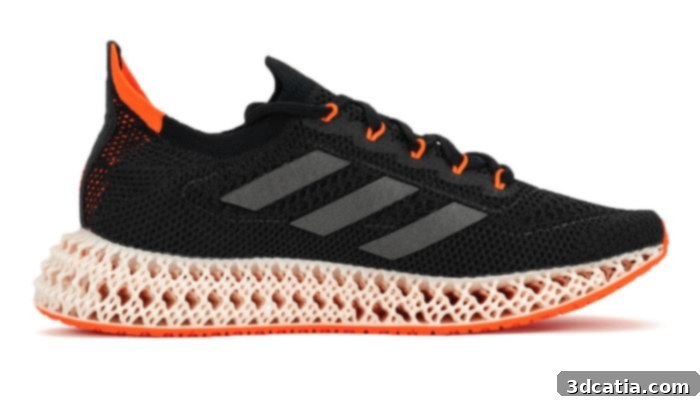
Photo Credits: Carbon
Align Technology: Mass Customization in Dental Orthodontics
Align Technology is a paramount example of how 3D printing facilitates mass production alongside intricate customization, particularly within the medical and dental sectors. This American company is renowned globally as the inventor of Invisalign clear aligners, fundamentally transforming orthodontic treatment. Their commitment to digital dentistry is profound, evidenced by strategic acquisitions such as iTero, a leading manufacturer of intraoral 3D scanners, in 2011, and more recently, polymer 3D printer manufacturer Cubicure in 2024. Additionally, their long-standing partnership with 3D Systems underscores their reliance on advanced additive manufacturing solutions.
At Align Technology, 3D printing is not just a peripheral tool; it’s central to their entire production workflow. It is utilized for everything from creating the highly precise molds required for their flagship Invisalign aligners to directly manufacturing specialized orthodontic devices, such as their innovative palatal expander – the company’s first direct 3D printed orthodontic product. The scale of their operations is truly remarkable: Align Technology produces up to one million unique aligner parts every single day. To achieve this unprecedented level of personalized production, they rely on 3D printing to create hundreds of thousands of individual aligner molds daily. This intricate process allows for each patient’s unique dental anatomy to be precisely addressed, delivering customized treatment plans with industrial efficiency. Align Technology masterfully demonstrates how 3D printing can combine the demand for mass production with the critical need for individual patient customization, setting a benchmark for precision manufacturing in healthcare.
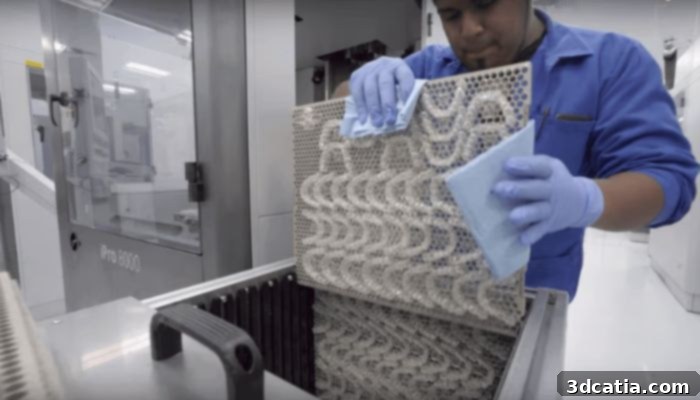
Photo Credits: Align Technology
Chanel: Personalized Luxury with 3D Printed Mascara Brushes
The luxury cosmetics industry has also embraced the transformative potential of 3D printing, with Chanel leading the way in personalized beauty. In 2018, Chanel launched its groundbreaking Volume Révolution mascara, which immediately garnered significant attention for an innovative feature: a 3D-printed brush. This project was a true testament to mass production capabilities, demonstrating that additive manufacturing could be scaled for consumer goods with high demand. Erpro 3D Factory, the startup behind the brush printing, reported an astounding production capacity of 250,000 brushes per week using a fleet of approximately fifteen machines. This achievement underscored the speed, efficiency, and industrial viability of 3D printing for components that require precise geometries.
Building on this success, Chanel and Erpro 3D Factory further elevated the concept of personalization with the introduction of E.Y.E, a bespoke 3D-printed mascara service. This innovative service allows consumers to select their ideal mascara brush from a choice of 10 distinct models via a user-friendly tablet application. This customization caters to individual makeup preferences and desired effects. Once selected, the brush is precisely 3D printed using PA 11, a robust and flexible polyamide. While the exact total number of brushes produced to date remains undisclosed, this pioneering initiative vividly illustrates the compelling advantages of additive manufacturing: it seamlessly merges high-volume production with unparalleled personalization, delivering a unique luxury experience tailored to each customer’s needs. The ability to rapidly produce diverse brush geometries without costly tooling changes provides a significant competitive edge in a dynamic market.
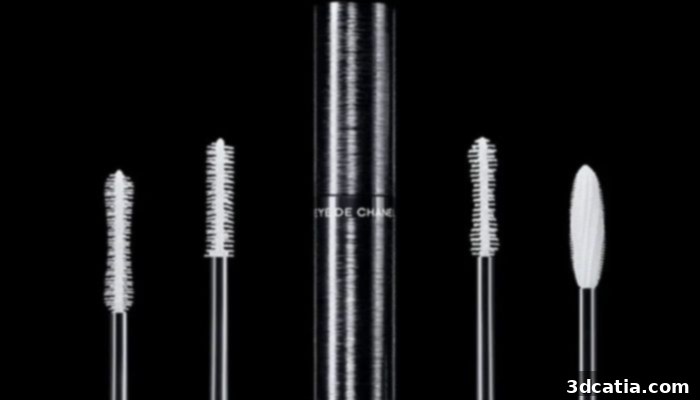
Photo Credits: ERPRO / Chanel
GE Aviation: Advancing Aerospace Components with Industrial 3D Printing
GE Aviation stands as a beacon of large-scale additive manufacturing within the demanding aerospace industry, achieving significant milestones in the mass production of critical aircraft components. Their pioneering efforts have demonstrated the superior performance and efficiency gains offered by 3D printing over conventional methods. At their Asheville, North Carolina plant, GE Aviation has successfully produced over 100,000 turbine components from Ceramic Matrix Composite (CMC) materials. Simultaneously, the Auburn, Alabama facility has manufactured more than 100,000 fuel nozzle components using advanced additive manufacturing processes.
The adoption of Ceramic Matrix Composites (CMC) represents a monumental leap forward. CMC is an advanced material composed of silicon carbide fibers embedded in a ceramic matrix. Its remarkable properties include being one-third the weight of traditional nickel-based metal alloys while withstanding temperatures twice as high. These characteristics are crucial for jet engines, as they allow for higher operating temperatures and significant weight reduction. The result is improved engine thermal efficiency, which directly translates to reduced fuel consumption and lower carbon emissions – a critical objective for modern aviation. The Asheville plant, which commenced CMC component production in 2014, holds the distinction of being the aviation industry’s first mass production site for 3D printed jet engine components made with CMC materials. Following this success, the Auburn facility began producing 3D printed fuel nozzles in 2015, becoming the industry’s first mass production site for aircraft engine components manufactured through additive means. These achievements highlight GE Aviation’s strategic vision and their capability to integrate sophisticated 3D printing technologies into the core of their high-stakes manufacturing operations, delivering parts that are lighter, more durable, and environmentally friendlier.
3D printed turbine components in CMC (photo credits: GE Aviation)
Photocentric and Badgemaster: Rapid Mass Production of Custom Badges
The collaboration between UK-based Badgemaster, a leading name in personalized identification solutions, and Photocentric, an innovator in resin 3D printing, offers another compelling demonstration of additive manufacturing’s capacity for mass production, especially under tight deadlines. When faced with an urgent and high-volume demand for customized badges, Badgemaster sought a solution that could bypass the lead times and limitations of traditional manufacturing methods. They turned to Photocentric’s proprietary resin 3D printing technology, specifically deploying its high-throughput LC Magna machines.
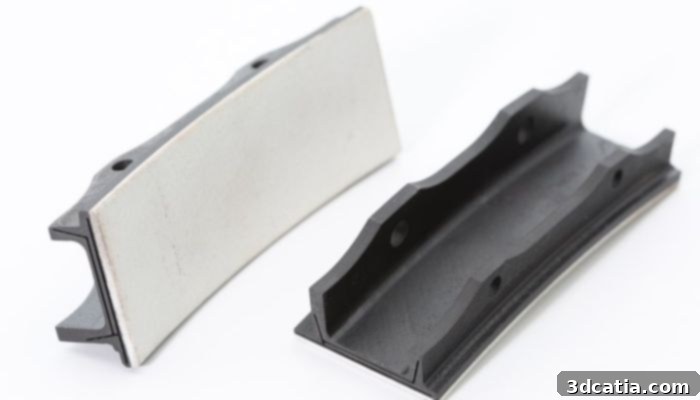
This strategic choice allowed Badgemaster to rapidly produce 30,000 final parts with exceptional quality, completely eliminating the need for expensive and time-consuming traditional molds or tooling. The agility of this additive manufacturing process proved particularly beneficial during periods of logistical challenges, such as those exacerbated by global pandemics, which significantly disrupted conventional supply chains. By leveraging Photocentric’s technology, Badgemaster was able to maintain production flexibility and responsiveness, ensuring that critical orders were fulfilled on time. This successful partnership vividly underscores the potential of industrial 3D printing to address pressing market demands, offering fast, adaptable, and highly efficient solutions for customized product runs, even in scenarios requiring rapid deployment and large volumes. It exemplifies how digital manufacturing can enhance supply chain resilience and operational flexibility.
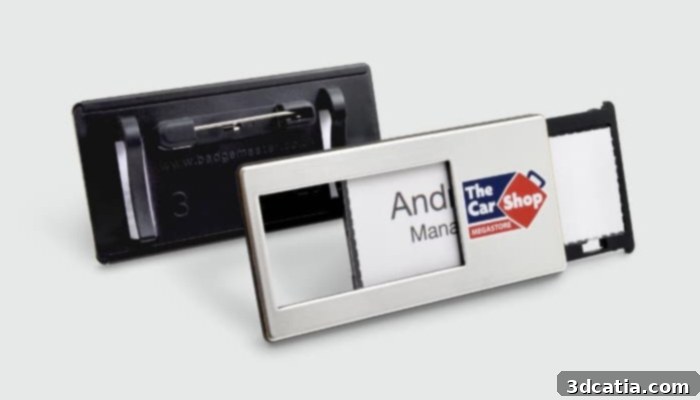
Photo Credits: Badgemaster
Cobra Golf: Transforming Golf Equipment with Metal 3D Printing
Cobra Golf has heralded a new era in golf equipment design and manufacturing by unveiling the first mass-produced putter utilizing HP Metal Jet technology. This innovation signals a significant shift in the sports industry, demonstrating how additive manufacturing can combine cutting-edge design and large-scale production while maintaining cost efficiencies. For several years, Cobra Golf has been at the forefront of exploring additive manufacturing’s capabilities to engineer golf clubs with ever-higher performance metrics. The integration of HP Metal Jet technology has granted Cobra’s engineers unprecedented design freedom, allowing them to conceptualize and produce intricate internal structures and geometries that would be impossible to achieve with traditional casting or forging methods.
Previously, metal 3D printing was largely confined to prototyping due to limitations in speed and surface quality. However, advancements in technologies like HP Metal Jet have matured to a point where they deliver the necessary quality, speed, and cost-effectiveness for industrial-scale production. This breakthrough enables Cobra to precisely control weight distribution within the putter head, optimize feel, and enhance overall performance for golfers. In close collaboration with HP, Cobra has not only accelerated the development cycle of their advanced clubs but has also made these high-performance, 3D printed components accessible to the broader golfing public. This represents a pivotal moment where additive manufacturing moves beyond niche applications to revolutionize a mainstream consumer product, offering superior performance and customization options previously unimaginable.
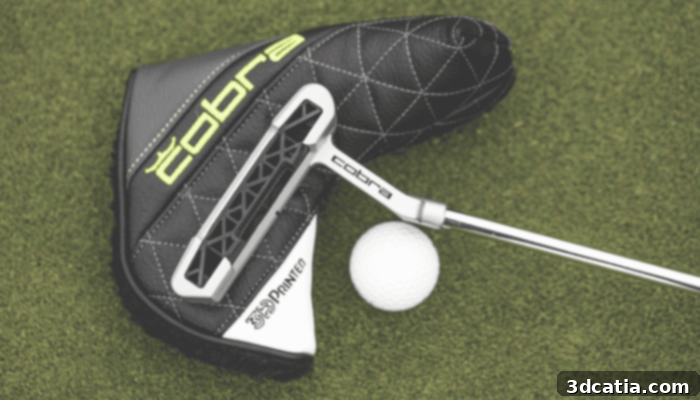
Photo Credits: HP
Stryker: Mass Producing Advanced Medical Prostheses
The medical sector has been profoundly impacted by additive manufacturing, particularly in the mass production of highly specialized prostheses. Since 2013, the Irish medical technology company Stryker has significantly advanced production capabilities by fabricating approximately 2 million prostheses using state-of-the-art 3D printing technologies. Central to their success is the development of Tritanium, a proprietary titanium alloy specifically engineered for additive manufacturing. This advanced material enables the creation of highly porous structures that mimic natural bone, promoting biological fixation and enhancing patient outcomes.
Stryker has successfully applied Tritanium to produce a range of critical medical devices, including the cementless Triathlon Tritanium knee prosthesis and three distinct Tritanium spinal prostheses. The Triathlon Tritanium system exemplifies their innovation, combining an advanced anatomical design with highly porous biologic fixation technology. This technology, meticulously designed with SOMA tools, is fabricated using Stryker’s proprietary additive manufacturing process. Through comprehensive life cycle analyses of their knee prostheses, Stryker has unequivocally demonstrated the numerous benefits of utilizing additive manufacturing. These benefits extend beyond clinical advantages, encompassing significant economic efficiencies, substantial savings in material resources, and a reduced environmental footprint. Further solidifying their commitment to sustainable manufacturing, Stryker has joined the Additive Green Manufacturing Trade Association, actively promoting the widespread adoption of 3D printing in industry to drive increasingly sustainable production choices and contribute to a greener future for medical device manufacturing.
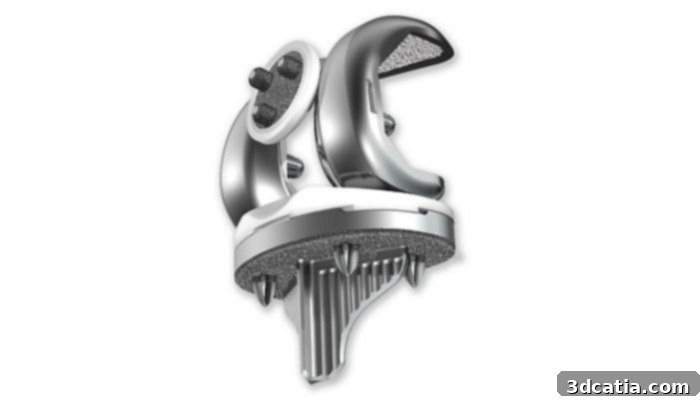
The Triathlon Tritanium model, the uncemented knee prosthesis, can be seen in the image (photo credits: Stryker)
Bosch Advanced Ceramics: Scaling Ceramic 3D Printing for Medical Devices
Ceramics have rapidly emerged as pivotal materials within the additive manufacturing industry, offering exceptional properties like biocompatibility, high temperature resistance, and electrical insulation. Bosch Advanced Ceramics has masterfully capitalized on this material potential by successfully scaling up the production of high-precision ceramic medical components through 3D printing. Their focus has been on producing insulating sleeves, which are essential components of laparoscopic instruments used in minimally invasive surgeries. These sleeves demand extremely small dimensions and rigorous precision to ensure the safety and efficacy of surgical procedures.
The development of these insulating sleeves presented significant technical challenges due to their intricate design: an outer diameter of just 1.3 mm and a remarkably thin wall thickness of 90 microns. Achieving such a high level of detail and dimensional accuracy with traditional methods would be exceedingly difficult and costly. To overcome these hurdles, Bosch Advanced Ceramics employed Lithoz’s LCM (Lithography-based Ceramic Manufacturing) technology, a sophisticated Digital Light Processing (DLP) process. This layer-by-layer photopolymerization method enables the fabrication of complex ceramic geometries with unparalleled quality control and precision. After a successful sampling phase that validated the process, the company achieved an impressive feat: printing 1,400 components in a single batch. This level of efficiency positions them to meet an annual demand of up to 20,000 units, showcasing the industrial scalability of ceramic 3D printing for highly specialized applications. Bosch Advanced Ceramics’ achievement underscores the transformative power of additive manufacturing in producing advanced ceramic parts for critical medical instruments at scale, pushing the boundaries of what is possible in precision engineering.
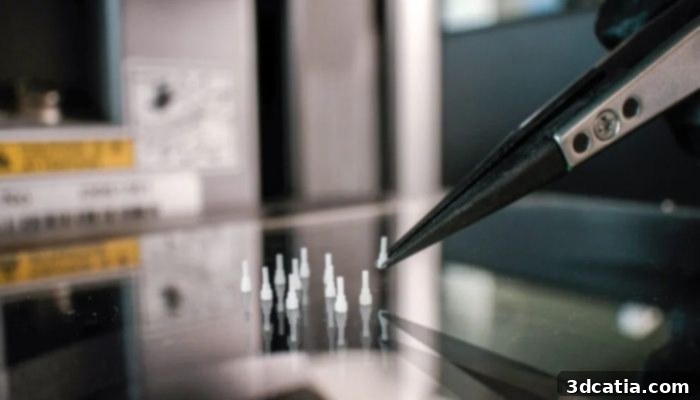
Caption: 3D printed ceramic components ready for use in laparoscopic instruments (photo credits: Lithoz)
These compelling examples unequivocally demonstrate that 3D printing is no longer a technology solely for prototyping. It has evolved into a powerful, efficient, and versatile manufacturing method capable of delivering high-volume, customized, and complex end-use parts across a multitude of industries. As materials, hardware, and software continue to advance, additive manufacturing will undoubtedly continue to challenge and redefine traditional production methods, paving the way for even greater innovation and sustainability in mass production. We encourage you to share your insights! Do you know of any other mass production projects in 3D printing that deserve recognition? Let us know in a comment below or on our LinkedIn, Facebook, and Twitter pages! Don’t forget to sign up for our free weekly newsletter here to get the latest 3D printing news straight to your inbox! You can also find all our videos on our YouTube channel.