
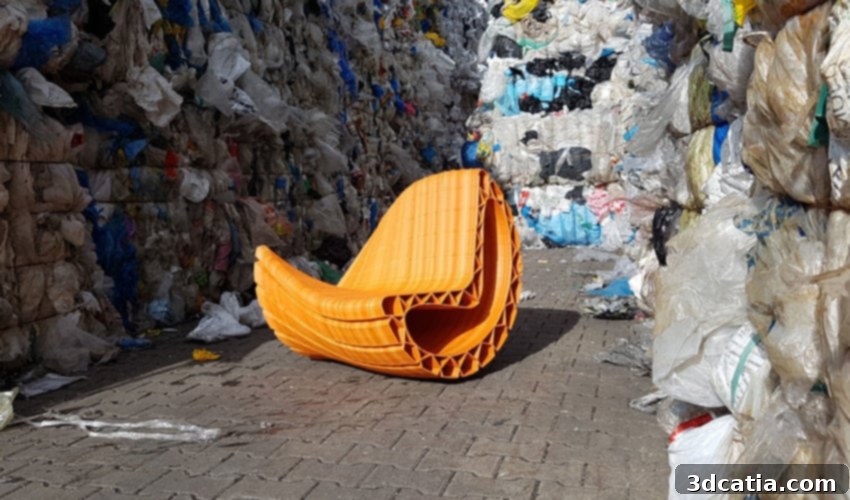
Revolutionizing Urban Spaces: How Amsterdam’s 3D Printed Benches Transform Plastic Waste into Sustainable Street Furniture
The picturesque canals and vibrant streets of Amsterdam are now home to a groundbreaking initiative that is redefining urban sustainability. As part of its innovative ‘Print Your City’ program, the city is transforming vast quantities of plastic waste into stylish and functional 3D printed benches. This ambitious project, spearheaded by the Rotterdam-based design studio The New Raw, is more than just about creating street furniture; it’s a powerful statement on the potential of circular economy principles and advanced manufacturing to tackle one of the most pressing environmental challenges of our time. By repurposing plastic waste that would otherwise pollute our planet, Amsterdam is setting a compelling example for cities worldwide, demonstrating how design and technology can converge to create a greener, more sustainable future. This initiative not only reduces the annual accumulation of waste but also enriches public spaces with uniquely designed, eco-conscious installations.
Plastic: A Growing Global Crisis Demanding Innovative Solutions
The global challenge of plastic waste has reached critical proportions, with alarming figures reflecting its pervasive impact on ecosystems and human health. In Amsterdam alone, the average resident contributes approximately 23 kilograms of plastic waste each year – a staggering amount that underscores the urgency for innovative solutions. This isn’t merely a local issue; it’s a microcosm of a much larger global problem. Traditional manufacturing and consumption models operate within a “linear economy,” characterized by a “take-make-dispose” approach. Resources are extracted, products are manufactured, consumed, and then discarded, often ending up in landfills or polluting our oceans. This unsustainable cycle has led to monumental waste accumulation, non-biodegradable pollution, and a significant carbon footprint. The environmental consequences are dire, ranging from habitat destruction and microplastic contamination in our food chain to greenhouse gas emissions from incineration. Recognizing this critical flaw in our current system, visionary designers and policymakers are actively seeking ways to transition towards a “circular economy,” where waste is minimized, resources are kept in use for as long as possible, and products and materials are regenerated at the end of their service life. The ‘Print Your City’ initiative is a brilliant embodiment of this essential shift, proving that urban environments can become crucibles for radical ecological change and demonstrate pathways to global sustainability.
The New Raw: Pioneering Sustainable Design Through Additive Manufacturing
At the heart of Amsterdam’s ‘Print Your City’ success lies The New Raw, a pioneering Rotterdam-based design studio founded by Panos Sakkas and Foteini Setaki. Driven by a profound commitment to sustainable practices and cutting-edge design, The New Raw recognized the inherent paradox of plastic – a material designed for durability, yet often used for fleeting moments before being discarded. Panos Sakkas eloquently articulated this dilemma: “Plastic packaging is everywhere and has an important design flaw: it was designed to last forever when it is only used for a few seconds and then thrown away very easily. It follows a linear production process, from use to disposal. We want to turn this linear process into a loop that we could close in order to create new products from waste.” This philosophy forms the bedrock of their work. Instead of viewing discarded plastic as mere trash, they envision it as a valuable raw material, an untapped resource waiting to be transformed. Their innovative approach involves harnessing advanced robotic 3D printing technology to give this discarded material a second, more meaningful life, diverting it from landfills and transforming it into beautiful, functional urban infrastructure. Through their meticulous research and design process, The New Raw is not just creating products; they are engineering a new paradigm for urban resource management and sustainable living, demonstrating that waste can indeed become a catalyst for creative and ecological innovation, shaping public spaces for the better.
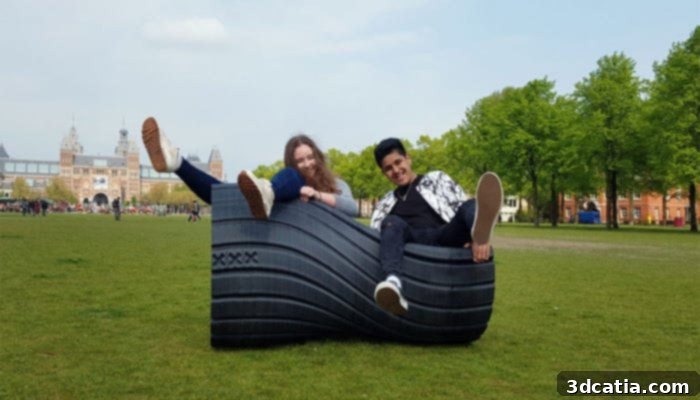
The 3D Printed benches rock up and down, encouraging social interaction.
‘Print Your City’: Amsterdam’s Vision for Green Urban Transformation
Amsterdam’s ‘Print Your City’ program is an ambitious and holistic urban sustainability project, designed to engage its citizens directly in the transformation of their city. Beyond simply installing benches, the initiative seeks to foster a deeper connection between residents and their environment by involving them in the recycling process. The long-term vision is to create a tangible, visible cycle where residents contribute their plastic waste, and in return, see it reincarnated as essential and aesthetically pleasing urban amenities. This direct participation helps to demystify the recycling process and instills a sense of ownership and pride in the city’s sustainable efforts. The program highlights Amsterdam’s commitment to becoming a global leader in circular economy practices, aiming to significantly reduce its annual waste output and enhance the quality of its public spaces simultaneously. By integrating art, technology, and community engagement, ‘Print Your City’ serves as a living laboratory for how cities can evolve towards a more resource-efficient and environmentally responsible future, proving that sustainability can be both beautiful and functional.
The Ingenious Benches: Design, Functionality, and Interaction
The 3D printed benches created by The New Raw are far more than just ordinary seating. Each bench is a testament to innovative design and functionality, meticulously crafted from 50 kilograms of recycled plastic, measuring 150 centimeters in length and 80 centimeters in width, comfortably accommodating up to four people. What truly sets these benches apart is their distinctive rounded shape, a deliberate design choice that allows them to gently rock. This unique feature isn’t merely for novelty; it’s a thoughtful element designed to encourage social interaction and collaboration among users. To find a stable balance, individuals sitting on the bench must subtly coordinate their movements, transforming a solitary act of resting into a shared, interactive experience. This subtle, playful design element fosters community engagement, prompting strangers to interact and work together, even if just for a moment. This innovative approach to urban furniture design demonstrates how public spaces can be reimagined to promote social cohesion and human connection, adding a layer of communal experience to everyday urban life. The benches become conversation starters, symbols of sustainability, and catalysts for positive human interaction within the urban landscape.
3D Printing: A Catalyst for the Circular Economy and Sustainable Manufacturing
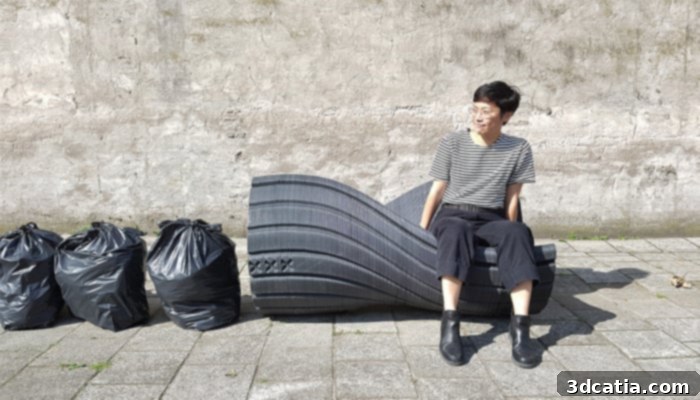
The use of 3D printing, specifically large-scale robotic additive manufacturing, is absolutely pivotal to The New Raw’s circular economy project. This advanced technology allows for the precise and efficient transformation of plastic pellets – derived directly from Amsterdam’s city waste – into robust, functional, and aesthetically pleasing street furniture. The process, facilitated by an Aectual printing system, offers unparalleled flexibility. Each bench can be customized in terms of shape, size, and even incorporate specific logos or messages. This level of customization is crucial for a public initiative, as it allows local communities to add their unique identity to the benches, further fostering a sense of ownership and pride in their environment. Beyond customization, 3D printing minimizes material waste during production itself, as only the necessary material is deposited layer by layer. This stands in stark contrast to traditional manufacturing methods, which often involve significant material offcuts. The agility of additive manufacturing also enables on-demand production, reducing inventory needs and logistics, which further contributes to a more sustainable supply chain.
The New Raw’s project is a shining example of how 3D printing is becoming an indispensable tool in the global shift towards a circular economy. They are not alone in this endeavor. Other visionary companies are also exploring the intersection of additive manufacturing and sustainability. For instance, OWA 3D has made significant strides in producing recycled and recyclable filaments for desktop 3D printers, making sustainable 3D printing more accessible to a broader audience. These initiatives collectively illustrate the transformative power of 3D printing to close material loops, reduce environmental impact, and create innovative products from what was once considered waste. By leveraging these technologies, we can move closer to a future where resources are perpetually cycled, and waste becomes a valuable input for new creations, driving forward genuine environmental stewardship and resource efficiency.
Encouraging Environmental Responsibility and Community Engagement Through Design
The customization aspect of these 3D printed benches goes beyond aesthetics; it serves as a powerful tool for community engagement and environmental education. The ability to embed a logo, a specific message, or even a community-chosen design directly onto the benches transforms them into communicative objects. The city hopes that this personalization will resonate deeply with residents, encouraging them to waste less and become more respectful and conscious of their impact on the environment. When people see their own community’s message or logo on a bench made from their recycled waste, it creates a tangible connection between their actions and a positive outcome. This direct visual feedback reinforces the importance of responsible consumption and waste management, transforming what might traditionally be perceived as a mundane civic duty into an inspiring act of community building. Furthermore, the presence of these vibrant, distinctive benches throughout Amsterdam’s public spaces acts as a constant, subtle reminder of the city’s commitment to sustainability, influencing public perception and fostering a collective sense of environmental stewardship. It’s a subtle but effective way of nudging civic behavior towards more eco-friendly habits, making sustainability a visible and celebrated part of urban life.
You can find the whole story of the 3D printed benches and their impact in the video below:
A Blueprint for Sustainable Urban Futures: Inspiring Global Change
Amsterdam’s ‘Print Your City’ initiative, spearheaded by the innovative designs of The New Raw, offers a compelling blueprint for urban environments grappling with the twin challenges of waste management and sustainable development. This project is much more than just a clever recycling scheme; it’s a testament to the transformative potential of combining advanced 3D printing technology with circular economy principles to create genuinely impactful solutions. By turning municipal plastic waste into attractive, interactive, and functional street furniture, the program not only diverts tons of plastic from landfills but also enriches public spaces and fosters community engagement.
The success of these 3D printed benches lies in their ability to inspire. Recycling, often perceived as a tedious chore, is revitalized through this initiative, becoming a visible and celebrated act of creation. The colorful, trendy pieces of furniture challenge the stigma associated with waste and demonstrate that sustainability can be synonymous with innovation and aesthetic appeal. This powerful narrative encourages both citizens and other cities globally to take environmental responsibility more seriously and explore similar creative approaches to resource management. This project serves as a powerful call to action, illustrating that waste is not an end point but a potential beginning for new products and sustainable cycles. As we look towards a future of increasing urbanization and resource scarcity, initiatives like ‘Print Your City’ provide invaluable models for creating resilient, resource-efficient, and truly livable cities. It’s a bold step forward in proving that waste can be a valuable resource, and that creativity, when coupled with technology, can lead to a more sustainable world for everyone.
Has this inspiring initiative encouraged you to consider your own recycling habits more deeply? Let us know your thoughts in a comment below or join the conversation on our Facebook and Twitter pages! Don’t miss out on the latest advancements in additive manufacturing – sign up for our free weekly Newsletter to get all the news in 3D printing straight to your inbox!