
Unlocking the Future of Manufacturing: Innovation in Metal Binder Jetting Materials and Applications
In the rapidly evolving landscape of additive manufacturing (AM), metal binder jetting stands out as a groundbreaking process poised to revolutionize industrial production. This innovative technology employs industrial printheads to precisely deposit a liquid binding agent onto thin layers of powder particles, which can range from various metals, sands, and ceramics to advanced composites. The result is the creation of complex, high-value, and often one-of-a-kind parts and tooling, offering unparalleled design freedom and functional capabilities. Its ascendancy in the AM sector is largely attributed to its exceptional speed, impressive accuracy, and, critically, its immense potential for high-volume production, addressing a key bottleneck in the broader adoption of 3D printing for large-scale industrial applications.
For metal 3D printing in particular, binder jetting is increasingly recognized as a superior choice for scaling up additive manufacturing operations. This growing concern among companies has been amplified by the technology’s demonstrated success and resilience, notably during the COVID-19 pandemic, where agile production methods proved invaluable. A significant advantage of binder jetting lies in its cost-effectiveness when compared to many other metal AM techniques, particularly those reliant on expensive laser systems. Unlike laser-based methods that often face limitations in terms of build size, processing speed, and material costs, binder jetting circumvents many of these issues, offering a more economically viable path to mass production. Furthermore, the technology boasts a vast array of existing applications and compatible materials, with ongoing research and development rapidly expanding these horizons. This begs the crucial questions: What are the specific applications driving this innovation, and what are the latest trends shaping material development?
Driving Innovation: Insights from Industry Leaders on Metal Binder Jetting
To delve deeper into these pivotal questions and explore the latest advancements in metal binder jetting, 3Dnatives hosted an insightful webinar titled “How Are Materials and Applications Driving Innovation in Metal Binder Jetting Technology.” Held on October 14th, the event brought together leading experts from ExOne, a pioneer in binder jetting systems, and the esteemed Fraunhofer Institute for Manufacturing Technology and Advanced Materials (Fraunhofer IFAM), a global leader in materials research. The webinar offered a comprehensive exploration of the metal binder jetting process, guiding attendees through every stage from the initial selection and preparation of powder materials to the intricacies of design for binder jetting (DFAM) and the critical final sintering process.
Attendees gained invaluable insights into diverse material applications, understanding the nuances of metal adoption strategies within additive manufacturing, and witnessing firsthand the ongoing revolution in 3D printed materials. This rich educational experience was made possible by the combined expertise of Fraunhofer IFAM, an institution consistently at the forefront of cutting-edge 3D printing research and development, and ExOne, a market leader in binder jetting printer manufacturing and a key innovator in developing compatible materials for the technology. Their collaborative efforts illuminate the path forward for industrializing additive manufacturing. The full replay of this enlightening session is available below, offering continued access to these expert perspectives.
The Transformative Power of Binder Jetting in Modern Manufacturing
Metal binder jetting represents a significant paradigm shift in how complex metal components are manufactured. Unlike traditional methods or even other AM techniques like powder bed fusion (which uses lasers or electron beams to melt powder), binder jetting builds parts layer by layer by selectively depositing a liquid binder. This process produces “green parts” that are then subjected to a sintering process to achieve final density and mechanical properties. This two-stage approach offers several distinct advantages, including much faster print speeds and the ability to process a wider range of materials, as the material itself is not melted during the printing phase. The absence of high-power lasers during the printing stage also means less residual stress in parts, larger build volumes are more easily achievable, and energy consumption is generally lower, contributing to both cost savings and environmental benefits.
The inherent scalability of binder jetting makes it particularly attractive for mass production. It can create multiple parts simultaneously within a single build, greatly enhancing throughput compared to serial laser-based processes. This capability is vital for industries seeking to move beyond prototyping and into full-scale manufacturing using additive technologies. From intricate geometries for aerospace components to durable tooling for automotive applications and customized medical devices, binder jetting’s versatility in application is immense. Furthermore, the ability to work with various metal powders, including stainless steels, tool steels, copper, and even ceramics, opens up new possibilities for material innovation and functional part development, enabling engineers to design parts with optimized performance characteristics tailored to specific demands.
Meet the Visionaries: Key Speakers Driving Binder Jetting Forward
Eric Bader: Driving Commercialization and Strategic Growth at ExOne
 Eric Bader has played a pivotal role in the strategic development and expansion of ExOne, a leading innovator in binder jetting technology. Beginning his tenure as Chief Financial Officer for ExOne’s European operations in April 2015, Mr. Bader quickly ascended to the position of General Manager in February 2017. His leadership is underpinned by more than a decade of extensive experience in strategic planning and implementation, a crucial asset for a company at the forefront of additive manufacturing. Prior to joining ExOne, he held a diverse range of senior international roles, including Financial Controller, China General Manager, Europe General Manager, Business Unit Director, and Managing Director across various organizations. This broad international exposure, encompassing multi-site responsibilities in Asia and Europe, managing sales teams, and reporting to US headquarters, including living abroad in Malaysia and China, has provided him with a unique global perspective on business operations and market dynamics. Mr. Bader’s expertise is instrumental in steering ExOne’s commercial strategies and ensuring the widespread adoption of binder jetting solutions in diverse industrial sectors.
Dr. Sebastian Hein: Advancing Material Science at Fraunhofer IFAM
 Dr. Sebastian Hein is a distinguished figure in the field of advanced materials and additive manufacturing, with a strong foundation in chemistry. He pursued his chemistry studies at the esteemed Leibniz University of Hannover and holds a doctoral degree in inorganic chemistry, which has provided him with a profound understanding of material properties at a fundamental level. Since 2007, Dr. Hein has been a vital member of the Fraunhofer Institute for Manufacturing Technology and Advanced Materials (Fraunhofer IFAM) in Bremen, a world-renowned institution for applied research. Currently, he serves as the group manager for “Shaping and digital manufacturing,” where he leads initiatives focused on cutting-edge material development. His research primarily revolves around novel functional materials and their innovative shaping technologies, deeply rooted in powder technology principles such as Powder Injection Molding (PIM), Extrusion, and Additive Manufacturing. Furthermore, Dr. Hein’s work on the design of temporary processing agents, specifically binders, is critical to advancing the binder jetting process itself, ensuring superior part quality and expanding material compatibility. His contributions are indispensable for pushing the boundaries of what is possible with binder jetting.
Madeleine Prior: Communicating Innovation at 3Dnatives
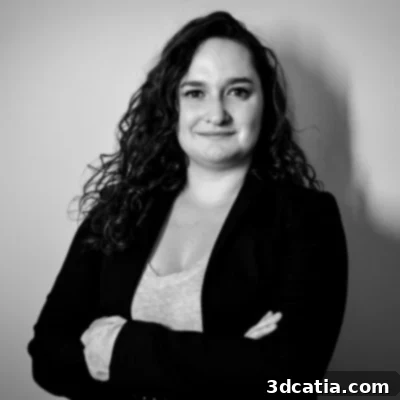 Madeleine Prior serves as the English Content Specialist for 3Dnatives, recognized as the leading international online magazine dedicated to 3D Printing and Additive Manufacturing. In her crucial role, Madeleine is responsible for curating and defining the content that 3Dnatives provides to its extensive English-speaking audience. She plays a pivotal part in bridging the gap between complex technological advancements and a global readership, ensuring that the latest news, trends, and implications of the additive manufacturing sector are communicated clearly and effectively. Her dedication to disseminating information helps industry professionals, enthusiasts, and newcomers alike stay informed about the rapid developments in the AM world. Madeleine’s efforts are key to fostering understanding and encouraging innovation within the additive manufacturing community, highlighting the transformative potential of technologies like metal binder jetting.
The Future Landscape: Continued Innovation in Metal Binder Jetting
The collaborative insights shared during the webinar underscored a critical message: the future of metal binder jetting is not just about the printers themselves, but equally about the relentless innovation in materials and applications. As binder jetting technology matures, its ability to process an ever-broader range of materials—from high-strength alloys to specialized composites—will define its impact across industries. Researchers are continuously exploring new binder formulations and powder characteristics to enhance mechanical properties, surface finish, and overall part integrity. This material-driven evolution is directly fueling new application possibilities, allowing for the creation of components that were previously impossible to manufacture with traditional methods, or even with other AM technologies.
Looking ahead, metal binder jetting is poised to become a cornerstone of industrial manufacturing. Its capacity for high-volume, cost-effective production, coupled with increasing material versatility, positions it as a key technology for agile supply chains and localized manufacturing. The ongoing advancements in post-processing techniques, particularly sintering, are also crucial, ensuring that the final parts meet the rigorous demands of various industries. The synergy between machine manufacturers like ExOne and research institutions like Fraunhofer IFAM will continue to accelerate this progress, addressing current challenges and unlocking new opportunities. As the webinar highlighted, understanding and leveraging these innovations in materials and applications will be essential for any company looking to harness the full potential of metal binder jetting and stay competitive in the evolving landscape of advanced manufacturing.