
Advancing Healthcare: Bone3D’s Innovations in Medical 3D Printing for Enhanced Surgical Precision and Training
The medical sector is experiencing a transformative period, largely driven by advancements in 3D technologies. With an impressive annual growth rate of 35% reported by the SME association, medical 3D printing is no longer a niche concept but a vital component in modern healthcare. Leading this charge are innovative companies like Bone3D, a French startup that leverages cutting-edge 3D printing to develop bespoke surgical guides and advanced surgical simulators. These revolutionary tools empower medical professionals, allowing surgeons to meticulously plan and rehearse complex operations before ever entering the operating room. Bone3D’s unique approach involves fostering an exceptionally close relationship with the medical community, ensuring their solutions are precisely tailored to the specific needs and realities faced by diverse specialists, from dentists and podiatrists to neurosurgeons and orthopedists. We recently had the opportunity to speak with Jérémy Adam, the visionary founder of Bone3D, to delve deeper into the intricate process behind these 3D printed medical devices and explore the profound advantages they bring to the surgical landscape.
Meet Jérémy Adam: Pioneering Medical 3D Printing

Jérémy Adam, Founder of Bone3D
“I am Jérémy Adam, the founder of Bone3D. My journey into the world of 3D printing began during my academic career. After completing a Master’s degree in medical bioengineering, my doctoral research focused intensely on the applications of 3D printing in personalized medicine. Specifically, my PhD thesis explored the development of titanium 3D printed meshes designed to treat specific types of bone cancer in patients. This foundational work sparked a deep conviction that additive manufacturing held immense potential to revolutionize patient care, particularly in areas requiring high precision and customization.”
“Driven by this passion and the clear need for advanced medical solutions, I was inspired to establish a French startup dedicated to harnessing the full power of medical 3D printing. Our primary goal at Bone3D is to make the incredible benefits of this technology accessible to the broadest possible spectrum of patients and medical professionals. Today, I am incredibly proud to say that Bone3D collaborates with some of the world’s leading reference centers for rare diseases, alongside numerous university hospitals (CHUs) across France, and a growing number of international healthcare facilities. This extensive network allows us to truly make a difference in patient outcomes and advance surgical practices globally, pushing the boundaries of what is achievable in personalized medicine through innovative 3D printing technologies.”
Bone3D’s Innovative Medical Devices: Tailored for Every Specialty
At Bone3D, our commitment to advancing healthcare through patient-specific solutions is reflected in our diverse range of medical devices. We cater to various surgical disciplines, including cosmetic and maxillofacial surgery, neurosurgery, orthopedics, dentistry, and podiatry. Our product portfolio is meticulously designed to enhance precision, improve patient comfort, and facilitate superior surgical training.
Firstly, we offer **custom-made surgical guides**. These highly precise tools are indispensable for surgeons, providing invaluable assistance during both the pre-operative planning phase and the actual surgical procedure. By mapping out the exact pathways for incisions, drilling, or resections, these guides ensure unparalleled accuracy, minimize risks, and ultimately lead to more predictable and successful patient outcomes. For instance, in dental implantology, a custom guide can dictate the precise angle and depth of implant placement, while in complex maxillofacial reconstructions, it can guide the repositioning of bone segments with millimeter precision.
Secondly, Bone3D provides **custom-made splints**. Unlike generic, off-the-shelf splints, our patient-specific designs are crafted to offer optimal support and comfort post-surgery. These splints are crucial for the proper consolidation of surgical sites, promoting effective healing and reducing recovery times. The personalized fit significantly enhances patient compliance and overall satisfaction, making the recovery process smoother and more efficient. For example, a custom splint for a fractured jaw or a foot deformity ensures stable immobilization tailored to the unique anatomy of the individual.
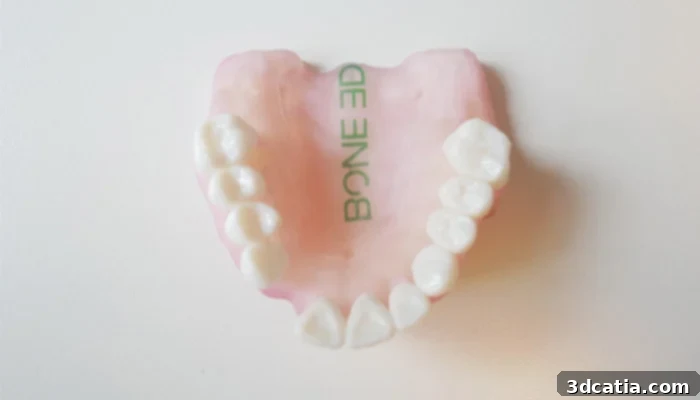
Finally, and perhaps most innovatively, we develop **multi-material 3D printed surgical simulators**. These sophisticated simulators are a game-changer for surgical training and for preparing for exceptionally complicated surgical cases. Designed to replicate the intricate anatomical and mechanical properties of real patient tissues, our simulators allow surgeons to practice and refine their operative skills in a risk-free, true-to-life environment. This capability is invaluable for repeating operations until mastery is achieved, enhancing surgical dexterity, and familiarizing oneself with rare or challenging anatomical variations. These advanced training tools are critical for residents and experienced surgeons alike, ensuring continuous professional development and the highest standards of surgical readiness.
Maxilla anatomical model for surgical planning | Photo Credits: Bone3D
The Meticulous Process: Crafting Bone3D’s Medical Devices and Simulators
The creation of every medical device and simulator at Bone3D follows a meticulously structured and highly precise process, ensuring the utmost quality, accuracy, and patient safety. This rigorous workflow begins with the fundamental step of medical data acquisition.
Upon receiving a medical prescription, our team initiates the process by gathering comprehensive medical imaging data from the patient. This includes highly detailed scans such as Magnetic Resonance Imaging (MRI), Computed Tomography (CT-Scan), and even advanced Bodyscanner data. These sophisticated imaging techniques provide us with an incredibly accurate, patient-specific anatomical dataset, capturing the unique complexities of each individual’s internal structures. From this raw imaging data, our specialized engineers then create precise 3D digital models, forming the foundational blueprint for the custom medical device.
With these robust 3D models in hand, we move to the crucial stage of computer-aided design (CAD) and virtual surgical planning. This is where Bone3D’s collaborative spirit truly shines. Working in direct consultation with the surgeon, we virtually perform the entire operation within the digital environment. This allows for exhaustive pre-operative planning, enabling the surgeon to anticipate potential challenges, optimize approaches, and make critical decisions regarding the device design. Through this iterative feedback loop, we fine-tune the design of our medical devices – whether it’s a surgical guide, a splint, or a complex simulator – to precisely meet the surgeon’s requirements and the patient’s unique anatomical needs. This virtual rehearsal significantly reduces operative time, minimizes complications, and enhances surgical confidence.
Once the designs are finalized and comprehensively validated by the surgeon, the files are prepared for 3D printing. Depending on the specific application and desired material properties of the medical device, we primarily utilize two advanced additive manufacturing technologies: Stereolithography (SLA) or PolyJet. SLA technology is renowned for its exceptional surface finish and precision, ideal for producing rigid, biocompatible surgical guides and anatomical models. PolyJet, on the other hand, excels in multi-material printing, allowing us to create surgical simulators with varying densities and textures that accurately mimic different human tissues like bone, cartilage, and soft tissue, offering unparalleled realism for training. Our medical devices are predominantly crafted from specialized resins due to their versatility and suitability for various medical applications. Additionally, for certain applications requiring flexibility and patient comfort, we offer a range of silicone devices, which are produced using highly accurate 3D printed molds, ensuring precise anatomical replication.
After the printing phase, the parts undergo a rigorous post-treatment process. This includes heat and UV treatment to ensure material stability and optimal mechanical properties. Following this, as both SLA and PolyJet technologies require support structures during printing, our expert technicians meticulously clean the parts to remove all residues, ensuring a smooth and pristine finish. Before any device is dispatched, a critical quality control step involves scanning each part to verify its exact correspondence to the healthcare professional’s desired specifications and the validated digital model. Only after successfully navigating all these stringent steps is the device securely packaged and sent to hospitals. Upon arrival, depending on its intended use, the device undergoes a final, crucial step: sterilization, preparing it for safe clinical application.
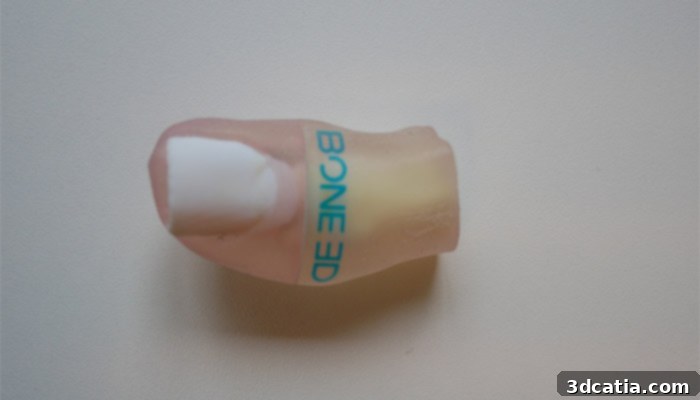
Anatomical Hallux care simulator | Photo Credits: Bone3D
Bone3D’s Deep Collaboration with the Medical Profession
The relationship between Bone3D and the medical profession is not merely transactional; it is a profound partnership built on mutual respect, shared goals, and continuous collaboration. This deep integration is fundamental to our innovation process. Every single one of our ground-breaking inventions and medical devices is the direct result of an exceptionally close working relationship with medical staff, who are involved from the very genesis of each project. This ensures that our solutions are not just technologically advanced but also clinically relevant and truly address the unmet needs of surgeons and patients.
A prime example of this collaborative spirit is our partnership with the Assistance Publique – Hôpitaux de Paris (AP-HP), one of Europe’s largest hospital systems. This collaboration has already led to the filing of a joint patent application, underscoring the innovative synergy between Bone3D’s engineering expertise and the AP-HP’s clinical insights. Such initiatives are vital for translating cutting-edge research into practical, patient-benefiting applications.
Our commitment to this integrated approach extends even further: Bone3D proudly includes three active surgeons within its shareholder pool. This unique structure means that medical professionals are not just external collaborators but are intimately involved in Bone3D’s internal policy, strategic direction, and product development roadmap. This deep involvement provides us with an unparalleled understanding of the medical profession, allowing us to “speak the same language” as healthcare providers. This inherent synergy has been instrumental in opening the doors of numerous hospitals to our innovative solutions and consistently fosters new partnerships. By embedding clinical expertise directly into our organizational DNA, Bone3D ensures that every product is designed with a profound understanding of surgical realities, patient needs, and clinical workflows, ultimately accelerating the adoption of medical 3D printing for enhanced patient care.
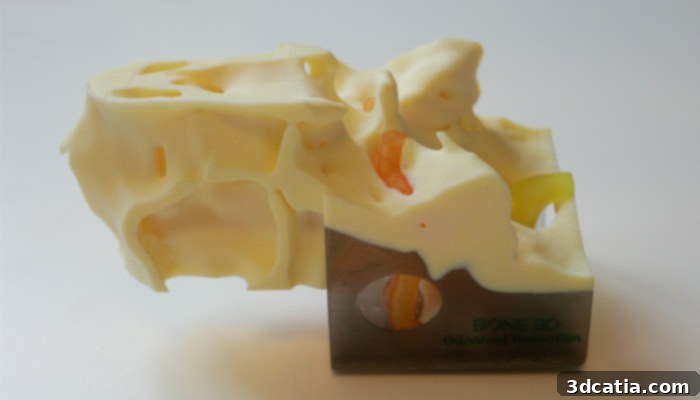
Endonasal neurosurgery simulator | Photo Credits: Bone3D
The Inevitable Turn to Additive Manufacturing for Personalized Medicine
Our decision to embrace additive manufacturing was a strategic imperative driven by the evolving demands of modern industry and, more critically, by the fundamental principles of medicine itself. We are currently witnessing a profound shift in consumer expectations across various sectors, where personalization and customization are becoming the norm. This trend is amplified exponentially within the healthcare domain, where the concept of a “one-size-fits-all” approach is increasingly untenable and, frankly, unethical. Each patient is a unique individual, with distinct anatomical variations, physiological responses, and specific pathological conditions. Therefore, it is illogical and often ineffective to treat every individual in an identical manner with standardized tools and implants.
This inherent variability in human biology underscores why 3D printing is not just a preferable solution, but an essential one, especially for medical devices. Additive manufacturing offers unparalleled capabilities for creating patient-specific instruments and implants that precisely match an individual’s unique anatomy. This level of customization simply cannot be achieved with traditional manufacturing methods. By leveraging 3D printing, Bone3D can design and produce surgical guides, splints, and simulators that perfectly conform to a patient’s body, optimizing surgical accuracy, improving functional outcomes, and significantly enhancing patient comfort and recovery. This paradigm shift towards personalized medicine, empowered by advanced 3D printing technologies, is at the core of Bone3D’s mission to deliver superior, individualized healthcare solutions.
Navigating the Challenges of Medical 3D Printing in a Demanding Sector
Operating within the highly regulated and demanding medical sector presents a unique set of challenges for any technology, and 3D printing is no exception. Without hesitation, the most significant hurdle we face is compliance with the stringent European and international regulations governing medical devices. These regulations, such as the Medical Device Regulation (MDR) in Europe and similar requirements from agencies like the FDA in the United States, are incredibly strict and rightly so, given the direct impact on patient safety. Adhering to these rules demands a very significant and sustained investment for a young startup like Bone3D, encompassing extensive documentation, rigorous testing, quality management systems, and continuous audits. Navigating this complex regulatory landscape requires dedicated resources and expertise, making it a constant, yet essential, priority.
However, regulatory compliance is not the only challenge. While 3D printing has advanced remarkably, the technology itself still needs to mature further, particularly to address and reduce the currently high costs associated with medical-grade materials, specialized equipment, and the entire production workflow. Achieving greater cost-efficiency without compromising quality or safety is a continuous goal. Despite these challenges, we firmly believe that 3D printing still holds an immense amount of untapped potential for the medical field. At Bone3D, we are committed to continually evolving this technology. We maintain a very active research and development (R&D) department that works tirelessly to explore new materials, optimize printing processes, and develop innovative applications. Furthermore, we collaborate closely with leading 3D printer manufacturers, contributing to the advancement of the technology itself and helping to shape the future of medical additive manufacturing.
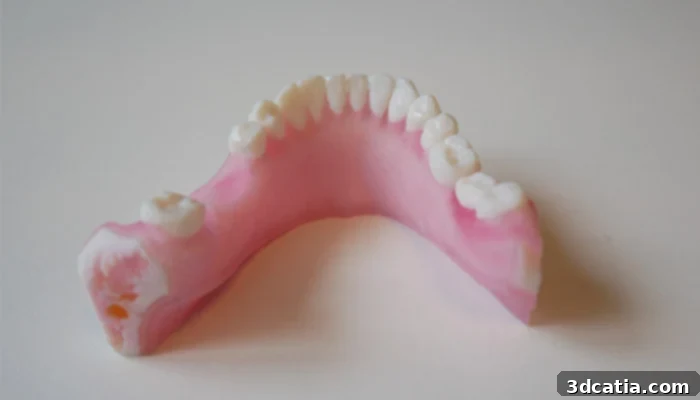
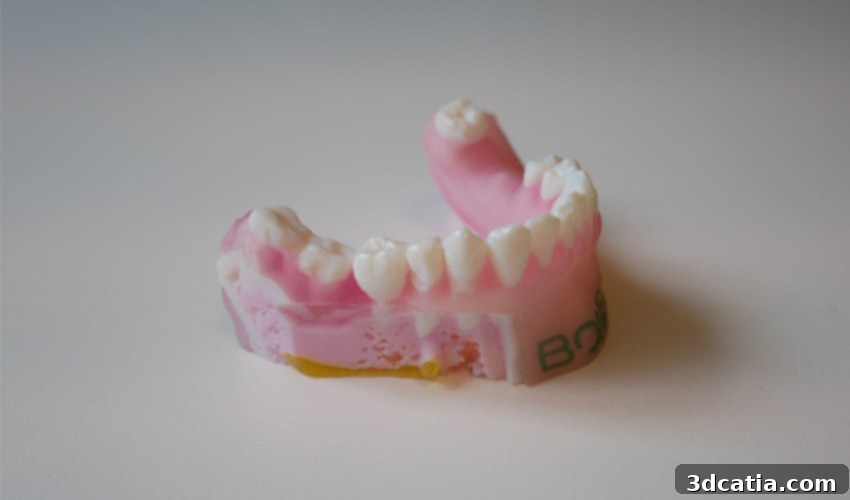
Anatomical implant surgery simulator | Photo Credits: Bone3D
Connect with Bone3D and Join the Medical 3D Printing Revolution
To our valued readers, we extend an invitation to join us on our journey to revolutionize surgical practices. We encourage you to follow Bone3D on our social networks and spread the word about our innovative work to your dentist and medical friends. Your comments, likes, and shares are incredibly valuable to us. You are the best advocates to help our ambitious startup shine not just locally, but across the globe! We are excited to announce that we will be expanding our distribution internationally starting in 2020, bringing our advanced medical 3D printing solutions to more healthcare professionals and patients worldwide. For more in-depth information about Bone3D and our pioneering medical devices, please visit our official website HERE.
What are your thoughts on Bone3D, our featured startup of the month, and their groundbreaking contributions to medical 3D printing? We’d love to hear from you! Please share your comments below or engage with us on our Facebook and Twitter pages. And don’t forget to sign up for our free weekly Newsletter to receive all the latest news and innovations in the world of 3D printing delivered directly to your inbox!