
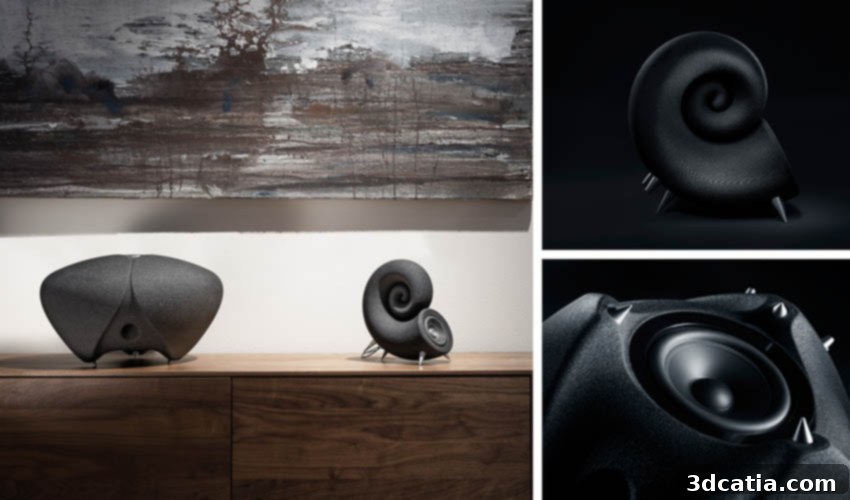
DEEPTIME: Pioneering High-Fidelity Audio with the World’s First 3D Printed Sand Speakers
In a remarkable leap for both additive manufacturing and the high-fidelity audio industry, the Prague-based startup DEEPTIME has introduced the world’s first 3D printed speakers crafted entirely from sand. This innovative company, a design and technology studio, seamlessly blends cutting-edge 3D printing techniques with sophisticated design principles to create truly unique sound systems. We had the distinct pleasure of speaking with DEEPTIME’s visionary co-founders, Ondrej Chotovinsky and Martin Hreben, who shared insights into the inspiration behind their groundbreaking Ionic Sound System and the pivotal role 3D printing technology plays in their revolutionary approach to audio engineering.
The Genesis of DEEPTIME: A Vision for Innovative Audio
Ondrej Chotovinsky: We founded DEEPTIME a little over six years ago, driven by a shared vision to establish a company dedicated to the innovative application of advanced technology within beautifully designed, yet functional objects. We weren’t just aiming to create aesthetically pleasing products; our goal was to craft pieces that offered both utility and profound beauty. Martin and I both harbored a deep passion for design engineering, rapid prototyping, and 3D printing, alongside an unwavering love for music. Therefore, embarking on our journey by developing speakers and audio systems was an incredibly natural and obvious choice for us.

Martin Hreben: Our initial ambition was to leverage the extensive knowledge and experience we had accumulated working in the demanding automotive and product design industries. Of course, we also understood that much would be learned through the inevitable challenges and mistakes along the way. Both Ondrej and I brought significant design and engineering expertise to the table from the outset. My professional background included over seven years in Research & Development at Skoda Auto, while Ondrej’s portfolio boasted projects for globally renowned brands such as Aston Martin, McLaren, Honda, and Airbus – a truly extensive list. This rich experience meant we were well-versed in the intricacies of prototyping and developing premium products for highly specialized, niche markets.

Ondrej Chotovinsky: The name DEEPTIME itself holds significant meaning for us. In its literal sense, it refers to the scientific concept of geologic time – vast timeframes that stretch far beyond the grasp of human imagination. Scientifically, “deeptime” encapsulates the condensed history of Earth, the natural world, and the evolution of species. This resonated deeply with our philosophy on multiple levels. Our primary material, sand, is fundamentally natural, and much of our aesthetic and engineering inspiration is drawn directly from the natural world. Furthermore, the term “deeptime” is often used to describe the psychological state of “flow,” where one becomes completely immersed in an activity, losing all track of time. This feeling of timeless engagement is precisely what we aim to evoke with our sound systems.
Martin Hreben: To put it in less poetic terms, after five intensive years dedicated to research and development within the complex fields of acoustics and the audio industry, DEEPTIME has evolved into an independently operated company exclusively focused on crafting premium, exclusive audio systems. We were immensely proud to introduce our first limited edition, the Ionic Sound System, a culmination of this extensive work. The breakthrough moment came in late 2018, when, after four or perhaps even five years of dedicated development, we successfully achieved effective 3D printing using sand. This accomplishment was nothing short of revolutionary, and it filled us with immense pride. We are already actively exploring new design concepts and product ideas to continue pushing the boundaries of what’s possible in audio.
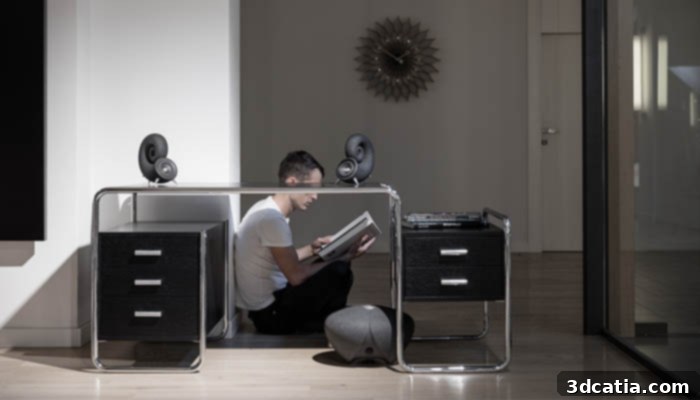
The Evolutionary Path: From Wood Prototypes to Revolutionary Sand 3D Printing
Martin Hreben: The initial spark for what would become the Ionic Sound System ignited approximately four years ago. At that time, operating under our previous name, AKEMAKE, we unveiled a prototype of what was then touted as the world’s first speaker 3D printed from a timber-based material. This original Spirula speaker garnered significant attention and generated considerable demand for a commercially available product. However, the existing FDM (Fused Deposition Modeling) technology proved to be inadequate for manufacturing these wooden Spirula speakers in series. The challenges were multifaceted: process reliability was inconsistent, printing times were excessively long, manufacturing costs were prohibitive for commercial viability, and most critically, the resulting sound quality fell far short of our desired standards. It became clear that we needed to seek a radically different solution.
Our quest led us to explore alternative technologies that could facilitate small-batch production while simultaneously enhancing acoustic performance. It was during this period that we discovered sand printing, a form of binder jetting primarily utilized for creating molds for metal casting. The raw, printed sand material was inherently fragile, presenting a significant hurdle. Undeterred, we embarked on a multi-year journey of intensive experimentation, meticulously refining the process. Our breakthrough came with the successful development of specialized compound hardeners. These proprietary formulations allowed us to transform the delicate, semi-finished sand prints into the robust, durable, and acoustically perfect silica sand composite that now forms the core of our speakers. This meticulous development process was essential to achieve the rigidity, durability, and superior acoustic properties required for high-end audio.
DEEPTIME’s Deep Dive into 3D Printing: Shaping the Future of Audio
Ondrej Chotovinsky: Our journey with 3D printing technologies spans several years, during which we’ve extensively experimented with and utilized various methods including SLS (Selective Laser Sintering), FDM (Fused Deposition Modeling), SLA (Stereolithography), and many other forms of additive manufacturing. Through this comprehensive exploration, we have become firm believers that 3D printing, and specifically sand printing (binder jetting), holds immense, untapped potential for the audio industry. For DEEPTIME, sand printing has unlocked an unprecedented degree of design freedom. It has enabled us to produce complex, nature-inspired speaker enclosures as single, seamless pieces – a feat that would be virtually impossible to achieve with conventional manufacturing techniques. This capability allows us to craft speakers that are truly optimized from both an engineering and an aesthetic perspective, ensuring both acoustic perfection and stunning visual appeal. Moreover, this additive approach makes it remarkably straightforward to accommodate custom requests, such as unique shapes or sizes, offering a level of personalization previously unimaginable in high-fidelity audio.
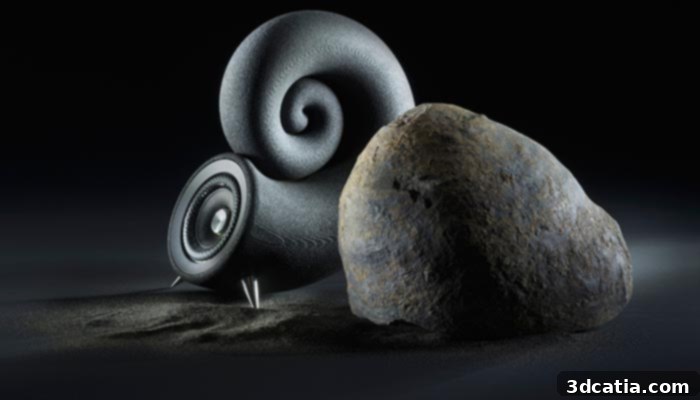
Unrivaled Uniqueness: Blending Groundbreaking Technology with Organic Design
Martin Hreben: From a technological standpoint, our product stands alone. We are unequivocally the first in the world to successfully produce high-performance speakers using 3D printed silica sand. This pioneering use of material undoubtedly makes us unique, but our innovation extends far beyond the raw material itself. The capabilities afforded by this advanced technology have allowed us to engineer speaker enclosures that are exceptionally compact while simultaneously being optimized for utmost acoustic efficiency. What this means in practice is that the entire Ionic Sound System delivers a surprisingly powerful and rich sound output for a set of speakers of this modest size. Our satellite speakers, for instance, stand at a mere 20 centimeters tall, yet they produce an expansive and immersive soundstage.
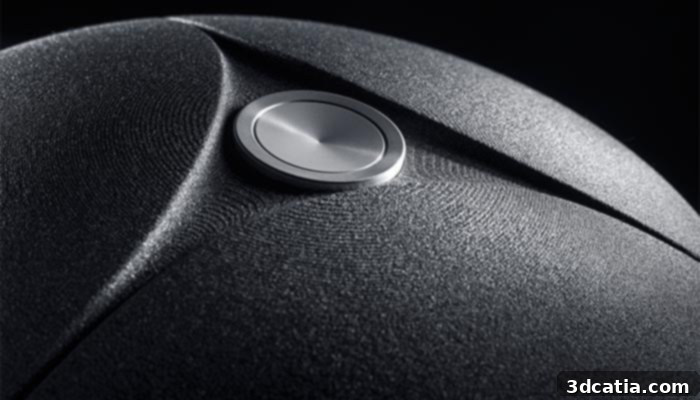
Furthermore, sand has proven to be an exceptionally ideal material for speaker construction due to its inherent antiresonant and sound absorption properties. Unlike traditional materials that can resonate and color the sound, sand’s dense and irregular structure effectively minimizes unwanted vibrations. The naturally rough internal surface structure of our 3D printed enclosures plays a critical role in dispersing and dampening unwanted frequencies produced by the rear of the speaker cone, ensuring a cleaner, more accurate, and distortion-free audio experience. This unique combination of material science and additive manufacturing allows for an unparalleled control over acoustic characteristics.
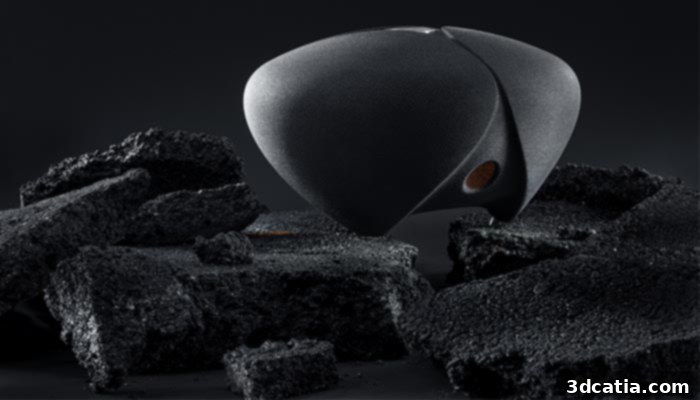
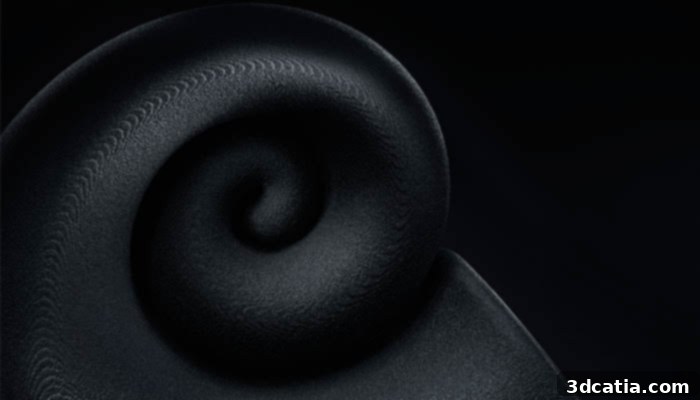
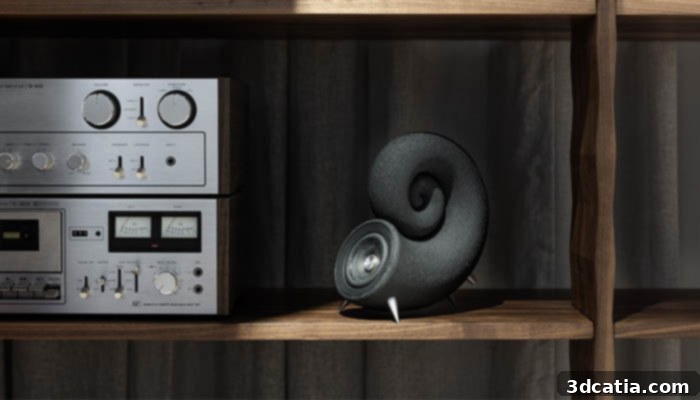
Ondrej Chotovinsky: In terms of aesthetics, our primary objective was to move far beyond the conventional “box” design that dominates the audio market. We hold a profound appreciation for the intricate shapes and forms found throughout the natural world. Did we invent the elegant spiral shape of our Spirula speakers, or the robust trilateral form of the Thunderstone subwoofer? No, we meticulously appropriated and adapted the timeless geometries found in ammonite fossils and sea urchin shells. Is this approach unique? We firmly believe it is, even if we are somewhat modest in stating it explicitly. While it’s true that Bower & Wilkins introduced their iconic Nautilus speakers in the 1990s with a similar spiral aesthetic, their offering represents a vastly different segment. The Nautilus speakers are colossal, meter-high marvels of the ultra-high-end HiFi category, commanding a staggering price tag of 60 thousand USD. In stark contrast, we have engineered shelf or tabletop speakers that deliver exceptional audio performance at a mere fraction of that cost, designed to seamlessly integrate into any contemporary living or working environment without overwhelming the space. Our innovation lies in making such sophisticated, acoustically optimized, and nature-inspired design accessible and practical.
Engaging the Audiophile Community: A Call for Feedback and Connection
Ondrej Chotovinsky: As we continue to push the boundaries of audio innovation, we sincerely invite our readers to reach out and share their thoughts with us. Whether you find our work inspiring or you have constructive criticisms, please feel free to communicate openly. We deeply value all forms of feedback, as it is integral to our continuous process of innovation and improvement. Understanding the perspectives of others – their favorite reference music, their current audio setups, preferred audio shops, or even the fairs they love attending for new ideas and sounds – is incredibly valuable to us. We are genuinely keen to hear all about your experiences and insights, as this direct engagement helps us refine our products and inform our future developments.
To learn more about DEEPTIME’s revolutionary approach to sound and explore the Ionic Sound System in detail, visit their official website HERE.
What are your thoughts on DEEPTIME’s groundbreaking 3D printed sand speakers? Share your insights and feedback in the comments section below or join the conversation on our Facebook and Twitter pages! Don’t forget to sign up for our free weekly Newsletter to receive all the latest news and innovations in 3D printing directly in your inbox!