
Boston Micro Fabrication: Leading the Revolution in High-Precision Micro 3D Printing with PμSL Technology
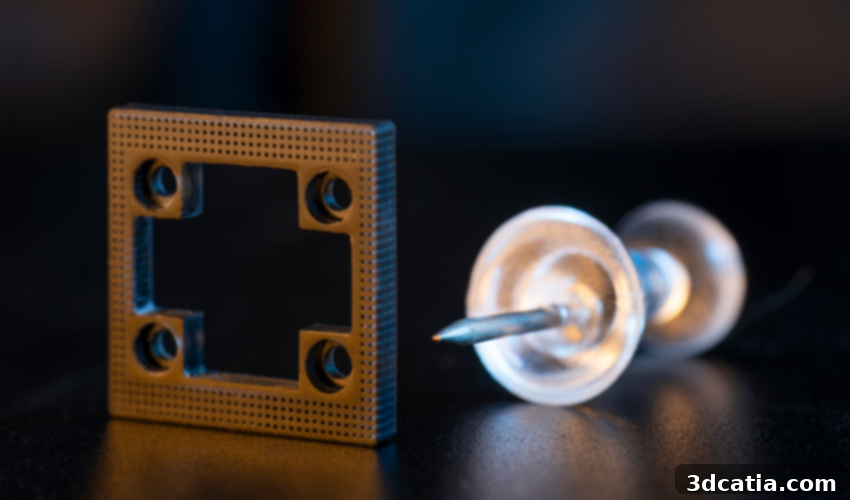
Additive manufacturing, a field constantly pushing the boundaries of innovation, is currently experiencing a fascinating shift – not towards larger scales, but a profound movement towards the microscopic. At the forefront of this miniaturization revolution is Boston Micro Fabrication (BMF), a pioneering company based in Massachusetts, USA. BMF has garnered significant recognition for its state-of-the-art micro 3D printers, which leverage a groundbreaking form of stereolithography (SLA). This proprietary technology enables the creation of incredibly accurate and intricate tiny parts, setting new industry benchmarks for precision.
BMF is a key player in the burgeoning sector of microscale 3D printing, an area where various technologies like DLP and material jetting are also being explored. However, BMF has carved out a unique niche with its SLA-based process, known as Projection Micro-Stereolithography (PμSL). This advanced approach delivers an unparalleled level of precision, positioning BMF as a direct and formidable competitor to traditional manufacturing methods such as injection molding. Critically, BMF offers these capabilities at significantly lower costs and with the added benefit of producing designs with far greater complexity and detail. To delve deeper into the company’s innovative technology and ambitious vision, we had the privilege of speaking with John Kawola, the insightful CEO of Boston Micro Fabrication.
3DN: Mr. Kawola, could you please introduce yourself and share your extensive connection to the additive manufacturing industry?
 “My journey in the additive manufacturing industry began back in 1998, a pivotal year when I first joined Z Corporation. Z Corp was a true innovator, renowned as the developer of the world’s first full-color 3D printer. During my tenure, I eventually rose to the position of CEO, where I had the exciting opportunity to introduce fast, user-friendly, full-color 3D printing solutions to a diverse array of industries. This experience provided me with invaluable insights into the transformative potential of 3D printing across various sectors, from product design and education to architecture and medical applications. Z Corp’s success ultimately led to its acquisition by 3D Systems in 2012, a significant milestone in the industry’s consolidation.
Following my time at Z Corp, I explored the robotics sector for a brief period, gaining a fresh perspective on automation and advanced manufacturing. However, the pull of 3D printing was undeniable, and I soon found myself returning to the industry I’m so passionate about. In 2016, I joined Ultimaker, a prominent leader in the open-source desktop 3D printing space, taking on the role of President of North America. At Ultimaker, my focus was on establishing and expanding the company’s presence across the North American market. This involved strategically growing our channel network and significantly boosting brand awareness, helping to bring accessible and reliable 3D printing technology to an even wider audience. My experience across these varied roles has given me a comprehensive understanding of the entire additive manufacturing ecosystem, from groundbreaking technology development to market penetration and user adoption.”
3DN: Can you tell us more about the genesis of Boston Micro Fabrication? When was the company founded, and what drives its core mission in the micro 3D printing landscape?
“Boston Micro Fabrication (BMF) was co-founded in 2016 by a remarkable team of innovators. This includes Dr. Nick Fang, a distinguished professor at the Massachusetts Institute of Technology (MIT), Dr. Xiaoning He, a highly experienced serial entrepreneur with a track record of successful ventures, and Dr. Chunguang Xia, an accomplished 3D printing technologist. I joined this exceptional team because I was immediately captivated by the sheer potential of their nascent technology. Crucially, I identified what I perceived as a significantly underserved market: the realm of micro 3D printing. This niche, I believed, held immense untapped potential for growth and innovation.
Our fundamental mission at BMF is to be the enablers of miniaturization. In an increasingly compact world, where devices and components are continuously shrinking, we empower industries to create parts, components, and packaging that facilitate this crucial trend. Whether it’s making products smaller, lighter, or more functional, our technology provides the means to achieve these goals. This drive towards miniaturization is not merely a fleeting trend; it’s a pervasive force across numerous critical industries. We see this demand acutely in sectors like advanced medical devices, where smaller, more precise components can lead to less invasive procedures and more effective treatments. Similarly, Micro-Electro-Mechanical Systems (MEMS) and the broader electronics industry are constantly seeking ways to integrate more functionality into smaller footprints, making our ultra-high-resolution additive manufacturing solutions indispensable. Our vision is to be the go-to partner for any company looking to push the boundaries of what’s possible at the microscale.”
3DN: Could you elaborate further on Boston Micro Fabrication’s ultra-high resolution 3D printers and the unique capabilities of your micro 3D precision manufacturing technology?
“Central to BMF’s groundbreaking capabilities is our microArch system, which employs an innovative 3D printing approach known as PμSL, or Projection Micro-Stereolithography. This technology builds upon the established principles of conventional stereolithography but elevates them to an unprecedented level of precision and speed at the micro-scale. Unlike traditional SLA, which cures resin point by point or line by line, PμSL utilizes a flash of UV light to rapidly photopolymerize an entire layer of resin simultaneously. This ‘projection’ method drastically reduces print times for complex microstructures.
What truly differentiates PμSL is its ability to achieve ultra-high accuracy and resolution that simply cannot be matched by other existing additive manufacturing technologies, or even many traditional manufacturing processes, when it comes to micro-parts. The controlled projection of light at such fine resolutions allows us to cure minuscule features with incredible fidelity. This represents a significant industry breakthrough because it empowers product manufacturers to design and produce parts with geometries and tolerances previously deemed impossible. Imagine creating highly intricate internal channels for microfluidics, perfectly formed tiny lenses, or microscopic medical device components – PμSL makes these a reality, opening up new avenues for innovation and product development that were once confined to theoretical discussions.”
3DN: What are the primary applications for Boston Micro Fabrication’s micro 3D precision manufacturing? Could you provide some specific examples of how micro-scale additive manufacturing is being utilized across various sectors?
“The versatility of our micro 3D precision technology allows it to address critical needs across a wide spectrum of advanced industries. Our customers are leveraging BMF’s solutions for numerous innovative applications, fundamentally transforming how products are conceived and manufactured at the microscale. One significant area is the production of highly specialized packaging for advanced electronic components. As electronics continue to shrink, the demand for equally diminutive and precise protective enclosures and interconnects grows. Our technology enables the creation of custom, high-resolution packaging solutions that perfectly house delicate microchips and sensors, ensuring optimal performance and protection.
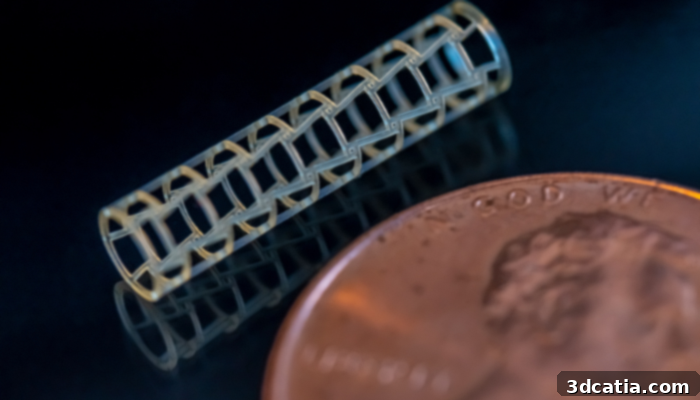
In the burgeoning field of microfluidics, our printers are indispensable for creating intricate microfluidic chips. These chips, which manipulate tiny volumes of fluid, are crucial for applications ranging from diagnostic devices and lab-on-a-chip systems to drug delivery platforms. The ability to precisely print complex channels, valves, and mixing chambers at the micron level is critical for the functionality of these devices, and PμSL excels at this. Another vital sector is medical devices. We are seeing our technology used to produce highly specialized components such as endoscope heads, which require incredibly small and precise parts to navigate the human body with minimal invasiveness. The precision and biocompatibility potential of our materials are game-changers in this field.
Perhaps one of the most exciting and emerging use cases involves microneedles. This innovative application represents a novel and highly scalable method to significantly increase vaccine delivery efficiency. Imagine a patch of tiny, painless microneedles that can deliver vaccines more effectively and with less discomfort than traditional injections, potentially expanding access and improving global health outcomes. The ability to precisely control the geometry and array of these microneedles at a microscopic level is paramount to their efficacy, and BMF’s technology is perfectly suited for this advanced manufacturing challenge. These examples illustrate how micro-scale AM is not just a theoretical concept, but a practical and impactful solution for real-world problems across diverse and critical industries.”
3DN: What are the distinct benefits and advantages of employing micro additive manufacturing, particularly when compared to traditional methods? How do your technology and printers differentiate themselves from other micro-scale AM technologies currently available in the market?
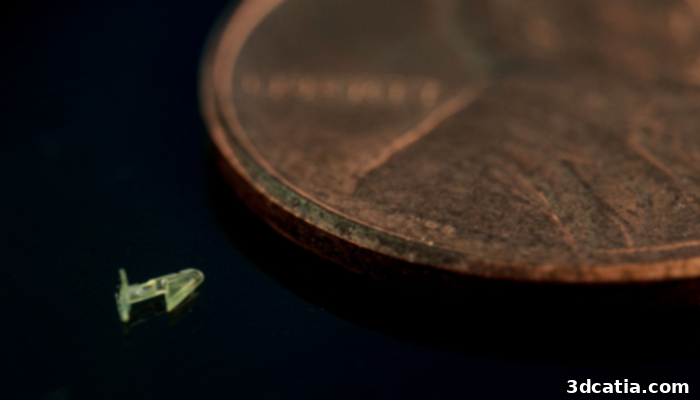
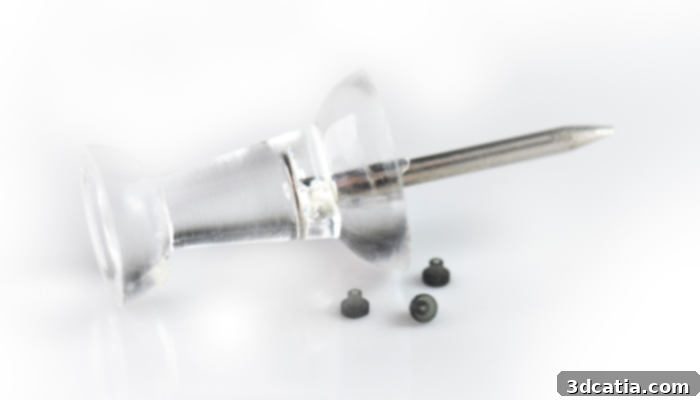
“The advantages of using BMF’s micro-AM technology, especially our microArch system, are multi-faceted and provide a compelling alternative to conventional manufacturing techniques like injection molding and CNC machining, particularly for extremely small and intricate parts. Our microArch printers are capable of achieving resolutions ranging from 2µm to 50µm, alongside impressive tolerances of +/- 10µm to 25µm. These figures represent a level of detail and accuracy that is simply unattainable with standard injection molding or milling operations at such scales. Traditional methods would require highly expensive and time-consuming tooling, often leading to iterative and costly mold revisions.
A significant benefit of BMF’s approach is its mold-free, ultra-high-resolution capability for both rapid prototyping and the production of end-use parts. This eliminates the substantial lead times and prohibitive costs associated with developing molds for injection molding, allowing for much faster design iterations and quicker time-to-market. For complex micro-parts, the tooling costs alone for injection molding can be astronomical, making BMF’s process not only faster but also economically superior for many applications. This agility is crucial in fast-paced industries like medical device development and consumer electronics.
Beyond hardware, our material strategy is another key differentiator. While we manufacture and offer our own range of high-performance materials optimized for PμSL, we also strongly support an open-source approach to materials. This philosophy allows our customers the flexibility to work with a wide variety of different resins, including tough resin for durable applications, elastic resin for flexible components, casting resin for specialized molds, and high-temperature resin for demanding environments, among others. This material versatility is a game-changer for engineers and designers across medical, electronics, microfluidics, and MEMS sectors. It empowers them with unparalleled flexibility to experiment and innovate with rapid prototyping, enabling the creation of parts with specific mechanical, thermal, or chemical properties that were previously impossible to achieve. This freedom allows for true design innovation and the exploration of novel functionalities that traditional, more restrictive manufacturing processes cannot offer, solidifying BMF’s position as a leader in advanced micro-precision manufacturing.”
3DN: What are some of the current limitations you face, and how is Boston Micro Fabrication actively working to overcome them?
“As with any cutting-edge 3D printing company, one of our continuous primary focuses is the ongoing development and expansion of our material portfolio. The technical properties of materials are often the limiting factor for unlocking new end-use part applications. While our PμSL technology offers incredible geometric freedom and precision, the ultimate success of a printed part in a demanding application depends heavily on the material’s mechanical strength, chemical resistance, biocompatibility, and thermal stability. For instance, in medical devices, new biocompatible resins with specific stiffness or flexibility are always in high demand. In electronics, materials with tailored dielectric properties or improved heat dissipation could open up entirely new component possibilities.
To address this, we are committed to a two-pronged approach. Firstly, we continue our extensive internal research and development efforts to formulate and refine new resins that push the boundaries of performance. Our in-house material science team is constantly experimenting with novel chemistries and additives to meet the evolving needs of our customers. Secondly, and equally important, we actively seek out and forge strategic partnerships with leading material developers. Collaborating with external experts allows us to leverage specialized knowledge and accelerate the development of advanced resins tailored for our PμSL process. These partnerships are crucial for expanding the range of technical properties available, thereby enabling more diverse and demanding end-use applications across all our target industries. Our goal is to ensure that our customers always have access to the best possible materials to realize their most ambitious micro-manufacturing projects.”
3DN: Do you have any final thoughts or insights you’d like to share with our readers regarding the future of micro additive manufacturing and BMF’s role within it?
“One of the most significant and transformative trends we are witnessing in the broader additive manufacturing industry is the increasing adoption of 3D printed parts as final, end-use components, moving beyond their traditional role as mere prototypes. For this transition to be successful, two critical factors must align: the printed part must rigorously meet all the technical performance requirements of its conventionally manufactured counterpart, and the economic rationale for using additive manufacturing must be compelling. At Boston Micro Fabrication, we firmly believe that the greatest value and disruptive potential for our technology lies in fabricating parts that are inherently very difficult and expensive to produce using traditional manufacturing methods. This is particularly true for extremely small, complex, and high-precision components.
The challenges associated with manufacturing microscopic parts through conventional means—be it tooling complexity, material waste, or design limitations—are substantial. This is precisely where BMF’s PμSL technology shines. We are incredibly excited about the immense value we can bring to industries struggling with these challenges, offering solutions that are not only more cost-effective and faster but also capable of achieving levels of detail and complexity previously unimaginable. Our mission is to continue innovating and providing the tools that empower engineers and designers to overcome current manufacturing hurdles, pushing the boundaries of miniaturization and precision across various applications. We envision a future where high-precision micro 3D printing is not just an alternative, but the preferred method for producing critical micro-components, driving innovation and efficiency worldwide. We encourage anyone interested in exploring these possibilities further to visit our website and discover the full potential of Boston Micro Fabrication’s technology HERE.”
What are your thoughts on Boston Micro Fabrication’s revolutionary approach to micro 3D printing and the future of miniaturized manufacturing? Let us know your insights in a comment below or join the conversation on our Facebook and Twitter pages. Don’t forget to sign up for our free weekly newsletter, to receive all the latest news and developments in 3D printing delivered directly to your inbox!
*All Photo Credits: Boston Micro Fabrication