
Revolutionizing Disaster Response: WPI’s 3D Printed Flexible Robots for Advanced Search and Rescue
In the critical world of Search-and-Rescue (SAR) operations, success hinges on two paramount factors: rapid deployment and adaptable solutions. When a crisis strikes, the speed with which rescue efforts commence can dramatically influence survival rates, yet each disaster presents a unique set of challenges demanding highly specialized responses. Historically, achieving this delicate balance has been a significant hurdle. However, thanks to groundbreaking innovation, a transformative solution is now on the horizon. Worcester Polytechnic Institute (WPI) researcher Markus Nemitz has been awarded a substantial $599,815 CAREER Award from the National Science Foundation (NSF) to spearhead the development of revolutionary 3D printed robots. These compact, highly flexible machines are designed to excel in the most challenging terrains, capable of swimming, crawling, climbing, and diving through hostile and confined spaces, fundamentally redefining search-and-rescue capabilities.
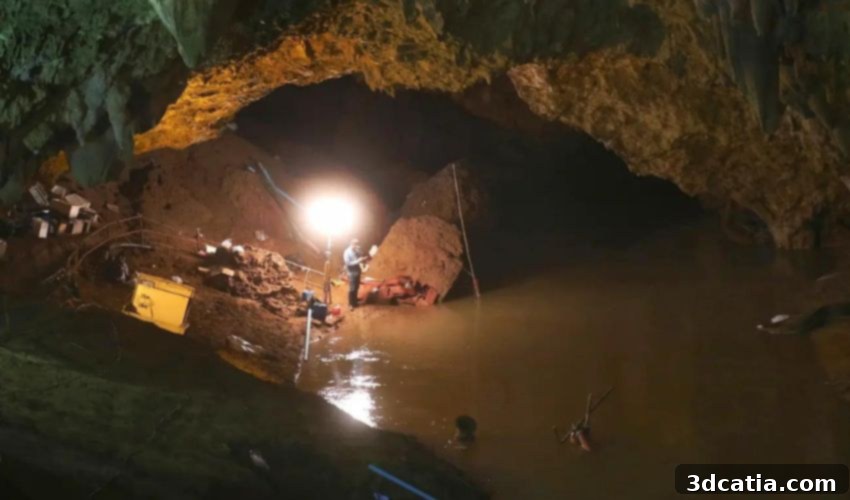
Nemitz’s visionary project draws profound inspiration from the harrowing Tham Luang cave crisis of 2018. This widely publicized incident saw twelve young members of a youth soccer team and their coach trapped deep within Thailand’s Tham Luang, a vast karstic cave system. The cave became dangerously flooded due to torrential monsoonal rains on June 23rd, transforming its intricate passages into treacherous waterways. The plight of the team captivated global attention as initial efforts to locate them were severely hampered by powerful currents, rapidly rising water levels, and the sheer complexity of the submerged environment. Even after all thirteen individuals were miraculously found alive on July 2nd, more than a week after their entrapment, the rescue operation proved immensely difficult. Rescuers faced the formidable challenges of navigating extremely narrow passages, contending with zero visibility in muddy waters, and the constant threat of further flooding. The eventual rescue, executed between July 8th and 10th by an international team comprising approximately 10,000 people, including 100 expert divers, underscored the immense human effort and the critical need for advanced tools to overcome such extreme conditions. This event highlighted the urgent demand for technologies that could access environments far too dangerous or intricate for human rescuers, propelling Nemitz’s research forward.
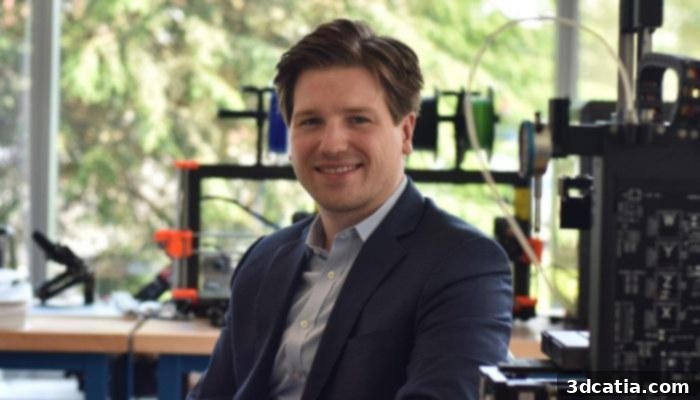
Markus Nemitz has received the grant to develop custom robots for use in search-and-rescue operations (photo credits: WPI)
The successful rescue of all thirteen individuals from Tham Luang was a testament to unprecedented innovation, requiring the consideration and adaptation of numerous different rescue strategies. This extraordinary incident served as the primary catalyst for Nemitz’s current endeavors. He is intensely focused on the rapid development and deployment of these specialized 3D printed robots, engineered with integrated fluidic circuits. His research aims to demonstrate how such custom-designed robotic solutions can be swiftly produced and effectively utilized in future disaster scenarios mirroring the complexities of the Tham Luang cave. Indeed, a core component of this ambitious five-year project involves rigorous testing of miniaturized robot models within meticulously replicated sections of the Thai cave environment. These simulations will allow Nemitz and his team to assess the robots’ maneuverability, endurance, and overall performance in conditions that closely mimic the real-world challenges faced by rescuers.
Nemitz further elucidates the profound purpose driving the creation of these adaptable robots, emphasizing their critical role in evolving disaster management. He states, “Disasters often demand unique, specialized responses, such as was required for the Tham Luang cave crisis. There lies immense potential in the development of small robots that are quickly fabricated from soft, flexible materials. These robots can significantly aid rescue efforts by exploring areas that pose potential hazards to humans or are otherwise inaccessible, including earthquake debris, flooded regions, and even nuclear accident sites.” This statement underscores the vision for these robots as invaluable reconnaissance and assistance tools, capable of operating in environments where human intervention would be too dangerous or logistically impossible. Their ability to navigate diverse and hazardous landscapes – from the claustrophobic confines of a collapsed building to the swift currents of a flooded area or the irradiated zones of a nuclear incident – positions them as a cornerstone of future emergency response protocols.
Making 3D Printed Robots for Search-and-Rescue Purposes: A New Frontier in Soft Robotics
In this pioneering project, Nemitz strategically leverages his extensive expertise in soft robotics, a rapidly advancing field that has seen increasing synergy with additive manufacturing technologies. Soft robotics, which draws inspiration from biological systems, focuses on creating robots from compliant materials, allowing for greater flexibility, adaptability, and safer human-robot interaction compared to traditional rigid robots. Nemitz’s research aims to push the boundaries of both soft robotics and printable robotics by formulating novel design principles and fabrication methods. His particular focus lies in the innovative integration of electronic circuits with cutting-edge 3D printed fluidic circuits. These fluidic circuits, which operate by utilizing pulses of air or liquid rather than electrical signals, offer distinct advantages. Crucially, they exhibit remarkable resilience against mechanical damage and electromagnetic interference, attributes that are often detrimental to traditional electronic components, making them ideal for the unpredictable and harsh conditions encountered in disaster zones.
A significant aspect of Nemitz’s approach is the emphasis on accessibility and practicality in robot production. He plans to utilize readily available commercial 3D printers and specialized elastomeric filaments to ensure that the development process remains both feasible and scalable. This choice of widely accessible technology and materials is deliberate, aimed at fostering broader adoption and deployment of these 3D printed robots in various applications. Once the robots are fabricated, their performance will be rigorously assessed within a meticulously designed, lab-based model cave system, specifically engineered to mimic the challenging conditions of the Tham Luang cave. The primary goal of these assessments will be to observe and evaluate how effectively the robots can reach designated targets, demonstrating their navigational prowess, robustness, and ability to collect critical data. The overarching hope is that this technology will not only revolutionize search-and-rescue operations but also extend its utility to an even broader spectrum of critical fields. Potential future applications include treacherous deep-sea exploration, assisting in critical space exploration missions such as investigating alien terrains or lava tubes, contributing to climate monitoring efforts in extreme environments like glacial caves or volcanic regions, and performing intricate inspection operations in other hostile settings where human presence is either impossible or too risky.
Nemitz eloquently summarizes the transformative potential of these robotic innovations, stating, “Robots can go to places beyond human reach. Equipped with sensors such as microphones and cameras, these robots will enhance the capabilities of rescuers, especially during natural disasters. To ensure a dynamic and rapid response to emergencies, we must continually innovate and develop new technologies. Robotics is at the forefront of this development.” This vision encapsulates a future where sophisticated, autonomously operating robots serve as invaluable extensions of human rescue teams, providing real-time intelligence from the heart of a disaster zone. The integration of advanced sensors – beyond just cameras and microphones, potentially including thermal imaging, chemical sniffers, and sonar – will enable these robots to gather comprehensive data, paint a clearer picture of the situation, and significantly improve the efficiency and safety of rescue missions. This project represents a pivotal step in developing technologies that will not only save lives but also fundamentally alter our approach to emergency preparedness and response. You can find out more in the press release from WPI HERE or check out the video below for a visual insight into this cutting-edge research:
The prospect of deploying these advanced 3D printed, flexible robots in search-and-rescue operations opens up a new paradigm for disaster response, offering unprecedented capabilities for navigating hazardous environments and saving lives. What are your thoughts on the transformative potential of these robots? We invite you to share your insights in a comment below or join the conversation on our LinkedIn, Facebook, and Twitter pages! Don’t miss out on the latest advancements and news in the world of additive manufacturing – be sure to sign up for our free weekly Newsletter here, delivering the most current 3D printing news directly to your inbox. Additionally, explore our comprehensive video content on our dedicated YouTube channel to see more exciting innovations in action.
*Cover Photo: Flood water in the Tham Luang Cave crisis during the search effort for the 12 boys and their coach (photo credits: AP Photo/Sakchai Lalit)