
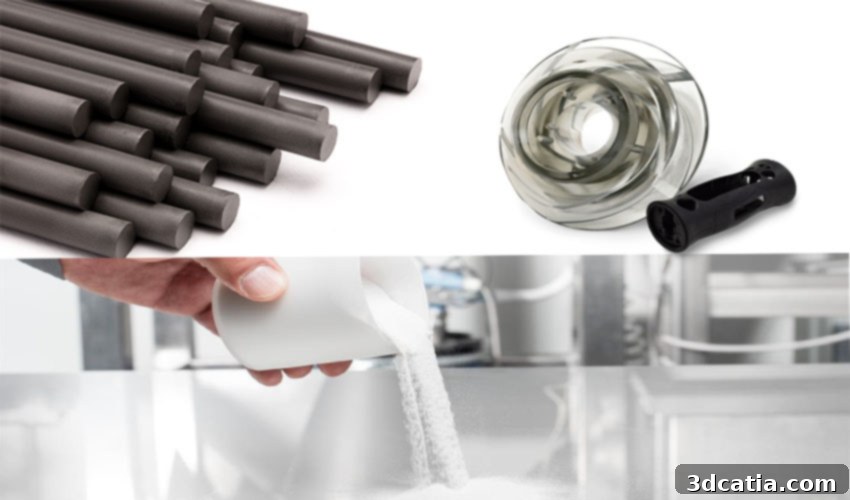
The Latest Breakthroughs in 3D Printing Materials: Driving Innovation Across Industries
The landscape of additive manufacturing is constantly evolving, with material science standing at the forefront of innovation. As industries increasingly turn to 3D printing for rapid prototyping, functional parts, and mass customization, the demand for advanced, application-specific materials grows exponentially. The capabilities of any 3D printer are fundamentally tied to the properties of the materials it can process, making new material introductions pivotal for unlocking novel applications and enhancing existing ones.
Recent announcements from leading companies in the additive manufacturing space underscore this critical trend, highlighting a concerted effort to expand the material palette available to engineers and designers. From highly flexible elastomers and high-temperature resistant polymers to robust metal alloys, these developments are pushing the boundaries of what’s possible with 3D printing. This article explores the latest material innovations from key players such as 3D Systems, Evonik, Desktop Metal, and Liberty, examining how these advancements are set to transform various industrial sectors.
3D Systems: Introducing FabPro Elastic BLK for Flexible Applications
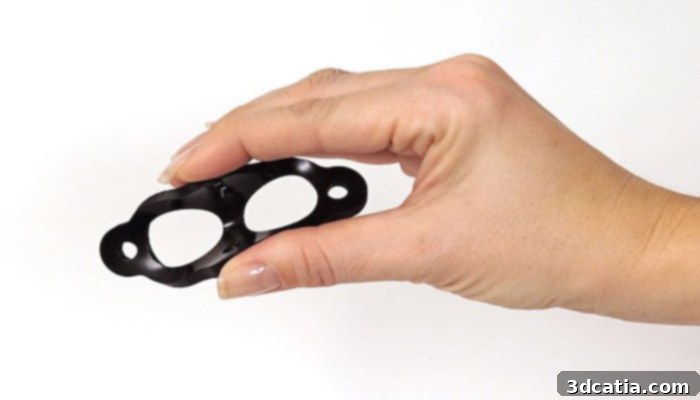
3D Systems, a pioneer in the additive manufacturing industry headquartered in South Carolina, has significantly expanded the versatility of its desktop FabPro 1000 3D printer with the launch of a new rubber-like material. Named FabPro Elastic BLK, this innovative elastomer is engineered to deliver exceptional flexibility combined with remarkable strength, opening up a new realm of possibilities for designers and engineers.
The introduction of FabPro Elastic BLK is a game-changer for applications requiring the properties of silicone or other rubber-like components. It is apparently perfect for comprehensive design verification, allowing users to create prototypes that accurately mimic the feel and performance of final elastomeric parts. This enables more realistic testing and evaluation of form, fit, and function, significantly accelerating product development cycles. Beyond prototyping, the material is also ideal for the direct 3D production of various functional rubber-like parts. These include critical components such as seals and gaskets, which require precise dimensions and excellent sealing performance; grips, where ergonomic design and tactile feel are paramount; and over-moulds, which often necessitate a flexible outer layer combined with a rigid core.
The FabPro 1000 machine itself is a testament to 3D Systems’ commitment to providing professional-grade additive manufacturing solutions in a compact desktop format. Designed specifically for engineering and jewelry applications, its expertise lies in high-quality, low-volume, and small-part prototyping, as well as direct 3D production across a wide spectrum of materials. This Digital Light Processing (DLP) SLA 3D printer is already compatible with an extensive list of resins, including tough engineering plastics that offer durability and impact resistance, advanced dental materials for restorative and orthodontic applications, and castable materials for investment casting processes. The addition of FabPro Elastic BLK further solidifies the FabPro 1000’s position as a highly versatile and indispensable tool for professionals seeking to produce diverse parts with demanding material properties.
Vyomesh Joshi, CEO of 3D Systems, emphasized the strategic importance of material innovation last year, noting its critical role in delivering functional prototyping capabilities to industry professionals through desktop solutions. This new material further solidifies that commitment, demonstrating how targeted material development can unlock new application frontiers and empower users to achieve previously unattainable designs and functionalities on a desktop system. The ability to quickly and cost-effectively produce high-fidelity flexible parts means engineers can iterate faster, test more thoroughly, and bring innovative products to market with greater efficiency.
Evonik: Pioneering High-Temperature Polyamide 6 Powder
The German chemical giant Evonik Industries, recognized globally as the largest specialty chemicals company, has made a significant stride in high-performance polymer 3D printing. They have launched a new polymer powder specifically engineered for high-temperature additive manufacturing applications. This new high-temperature polyamide (PA) 6 3D printing powder is a direct response to the escalating demands from industrial partners who require materials capable of performing under extreme conditions.
The newly introduced PA 6 powder boasts an impressive combination of properties. It is said to present exceptionally high mechanical strength, making it suitable for structural components that endure significant stress. Furthermore, it offers excellent chemical resistance, allowing parts to withstand exposure to a wide range of aggressive chemicals, and superior temperature resistance, ensuring stability and performance in elevated thermal environments. These characteristics make it particularly attractive for demanding sectors such as automotive, aerospace, and industrial machinery, where components are routinely subjected to harsh operating conditions, aggressive fluids, or high temperatures.
Evonik has strategically produced this advanced material at its state-of-the-art facilities in Marl, Germany, leveraging its extensive expertise in polymer chemistry and manufacturing. A key advantage of this new PA 6 powder is its broad compatibility; it is apparently suitable for use across virtually all powder-based 3D printing technologies, including Selective Laser Sintering (SLS) and Multi Jet Fusion (MJF). This wide compatibility ensures that a broader base of industrial users can integrate this high-performance material into their existing additive manufacturing workflows, fostering wider adoption and enabling more sophisticated applications.
The 3D printing sector is certainly not a new frontier for Evonik. The company has a well-established history and a clear strategic vision for additive manufacturing. They opened their dedicated Marl plant in 2017, specifically for the production of their highly successful PA 12 materials, which have become a benchmark in polymer 3D printing. Building on this success, Evonik later announced ambitious plans to open an even larger, new €400 million PA 12 production plant in Marl, signaling a long-term commitment to scaling up high-performance polymer production for the additive manufacturing market. In January 2019, Evonik further solidified its position by acquiring Structured Polymers, a move that expanded its technological capabilities and diversified its material portfolio. The new PA 6 material is a significant addition to their already comprehensive range of available powders, which includes PEEK (polyether ether ketone), PA 12 (polyamide 12), and PEBA (polyether block amide) – all high-performance polymers catering to diverse industrial needs. This continuous innovation positions Evonik as a vital enabler of advanced additive manufacturing applications, consistently delivering materials that meet the evolving demands of a rapidly growing industry.
Desktop Metal: Expanding Metal 3D Printing with 316L Stainless Steel
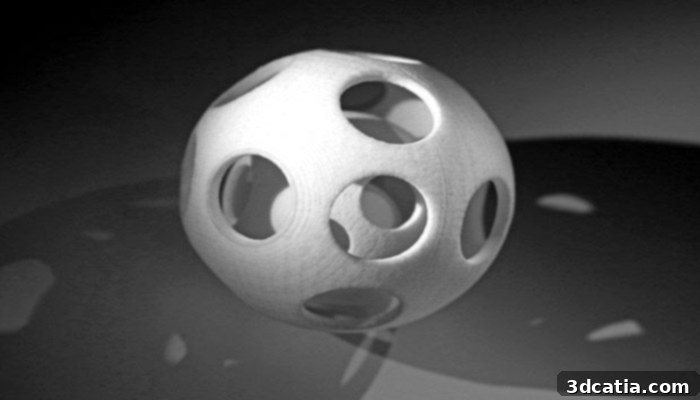
Desktop Metal, a frontrunner in the metal 3D printing arena, has announced a crucial addition to its material library: 316L stainless steel. This new material is specifically designed for use with its acclaimed Studio System, an innovative solution that has been heralded as the world’s first affordable, office-friendly metal 3D printing system. The Studio System’s appeal lies in its ability to democratize metal additive manufacturing, removing the traditional barriers of high cost, complex infrastructure, and specialized safety requirements often associated with metal 3D printing technologies.
The introduction of 316L stainless steel significantly enhances the capabilities of the Studio System, making it an even more versatile tool for a wider array of industrial applications. The company highlights that this material is ideal for prototyping and low-volume production in demanding environments where robust performance is essential. Its primary strengths lie in its exceptional high-temperature resistance and superior corrosion resistance. These properties make it indispensable across numerous sectors. For instance, in the marine industry, 316L is crucial for parts exposed to saltwater, preventing corrosion and ensuring longevity. In food processing environments, its resistance to caustic cleaners ensures hygiene and prevents contamination. Similarly, in the pharmaceutical sector, 316L’s chemical inertness makes it suitable for equipment that comes into contact with sensitive compounds.
Ric Fulop, CEO and co-founder of Desktop Metal, underscored the transformative potential of this new material. He stated, “The addition of 316L enables engineers to print metal parts for a wide range of applications, including engine parts, laboratory equipment, pulp and paper manufacturing, medical devices, chemical and petrochemical processing, kitchen appliances, jewellery and even cryogenic tools and equipment.” This extensive list demonstrates the broad utility of 316L stainless steel, spanning from industrial machinery to consumer goods and specialized scientific instruments. Fulop further emphasized the operational advantages, noting that “Teams are now able to iterate quickly on 316L prototypes, print complex geometries that are not possible with most manufacturing methods, and produce end use parts cost-effectively.” This highlights the core benefits of the Studio System: enabling rapid design cycles, unlocking geometric freedom previously unattainable with traditional manufacturing techniques, and facilitating economical production of functional metal components.
Recognizing the accelerating adoption of metal 3D printing across diverse industries, Fulop added, “As innovative companies across multiple industries adopt metal 3D printing, it’s critical to help accelerate this growth by expanding the portfolio of desired materials.” This sentiment perfectly encapsulates Desktop Metal’s strategy: to continuously broaden its material offerings to meet the specific needs of its growing customer base, thereby fostering wider adoption of metal additive manufacturing and pushing the boundaries of industrial production. The availability of 316L stainless steel is a key step in providing solutions for critical applications that require materials capable of enduring harsh conditions, ultimately driving greater efficiency and innovation in metal part manufacturing.
Liberty: Investing in a Multi-Million Metal Powder Production Plan
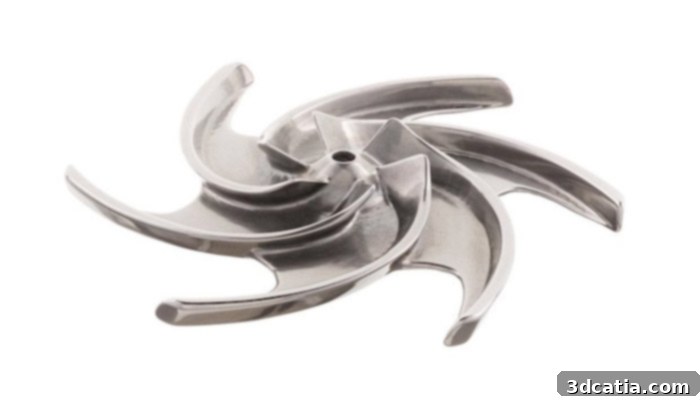
In a strategic move set to significantly impact the supply chain for advanced additive manufacturing, Liberty has announced a multi-million-pound plan to establish a new metal powder production facility. Liberty House, an international metals and industrial group headquartered in London, boasts a comprehensive portfolio specializing in commodities, metals recycling, and the manufacture of steel, aluminum, and various engineering products. Their venture into additive manufacturing powdered materials is a natural extension of their extensive expertise in metallurgy and industrial production, positioning them as a critical supplier for the evolving 3D printing sector.
The core focus of Liberty’s new program involves the production of high-performance additive manufacturing powdered materials, with a particular emphasis on specialty steel alloys. This initiative aims to address a specific gap in the current market, as articulated by Dr. Simon Pike, Technical Director at Liberty. Dr. Pike comments, “Currently available powder is limited to stainless steel and tool steel which is high-cost and not that suitable for the additive manufacturing process.” This statement highlights a crucial challenge in the industry: while basic metal powders are available, there’s a pressing need for materials specifically optimized for the unique demands of 3D printing processes, which can often be constrained by the properties of conventional powders.
Liberty’s ambition is to overcome these limitations by developing a new generation of powder alloys. These future materials will feature finer grains, a characteristic that is crucial for achieving superior part quality and performance in additive manufacturing. Dr. Pike elaborates on the anticipated benefits: these new alloys “provide better mechanical properties making them stronger, tougher and more formable as well as being ideal for 3D printing.” This translates directly into tangible advantages for end-users, enabling the creation of parts with enhanced structural integrity, greater resistance to fracture, and increased design flexibility. The ability to produce more formable materials also opens up possibilities for complex geometries and intricate designs that might be challenging with existing powders, thereby expanding the design freedom inherent in 3D printing.
This substantial investment by Liberty signifies a strong belief in the future of additive manufacturing and the crucial role that advanced materials will play in its widespread adoption. By focusing on specialty steel alloys, Liberty aims to provide tailored solutions for industries requiring high-performance metal components, such as aerospace, defense, automotive, and energy. Their deep understanding of metallurgical processes, combined with this focused investment in AM powders, positions them to become a key enabler for the next generation of industrial metal 3D printing. This move is not just about producing more material; it’s about producing better, more application-specific materials that unlock the full potential of additive manufacturing for demanding industrial applications, ultimately driving innovation and efficiency across various manufacturing sectors.
The Future is Material: A Concluding Outlook
The recent announcements from 3D Systems, Evonik, Desktop Metal, and Liberty collectively paint a vibrant picture of an additive manufacturing industry that is rapidly maturing, driven by a relentless pursuit of advanced materials. These innovations, spanning from highly flexible elastomers to high-temperature resistant polymers and robust metal alloys, are not just incremental improvements; they represent foundational advancements that empower engineers and manufacturers to push beyond previous design and performance constraints.
The introduction of materials like FabPro Elastic BLK enables more realistic functional prototyping and the direct production of complex flexible components, transforming product development in consumer goods and medical devices. Evonik’s high-temperature PA 6 powder unlocks new possibilities for demanding industrial applications in automotive and aerospace, where components must withstand extreme environments. Desktop Metal’s 316L stainless steel brings corrosion-resistant and high-strength metal parts to a broader range of industries through an affordable, office-friendly system, democratizing advanced metal manufacturing. Finally, Liberty’s strategic investment in specialty metal powder production promises to deliver next-generation alloys optimized for additive manufacturing, addressing critical performance gaps and fostering innovation in high-stakes sectors.
These developments highlight a crucial trend: the future of 3D printing is inextricably linked to the evolution of its materials. As companies continue to invest in material science, we can anticipate even more specialized and high-performance options tailored to specific industrial needs. This continuous innovation in materials will undoubtedly accelerate the transition from prototyping to large-scale, functional end-part production across virtually every sector, solidifying additive manufacturing’s role as a cornerstone of modern industry. The journey towards a more adaptable, efficient, and innovative manufacturing future is clearly being paved by these groundbreaking material breakthroughs.
What do you think of these exciting new materials and their potential impact? We invite you to share your thoughts in a comment below or join the discussion on our Facebook and Twitter page! Don’t forget to sign up for our free weekly Newsletter, ensuring you receive all the latest news and updates in 3D printing delivered straight to your inbox!