
Revolutionizing Construction: Apis Cor Builds a 395 Sq. Ft. 3D Printed House in Just 24 Hours
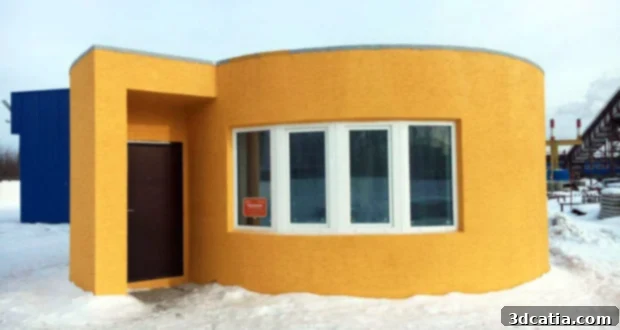
The age-old dream of owning a fully functional, yet incredibly low-cost home is no longer a distant fantasy. Today, this aspiration is rapidly materializing, largely thanks to the transformative power of 3D printing technology. At the forefront of this revolution is Apis Cor, a pioneering Russian manufacturer specializing in concrete 3D printers. They have achieved a significant milestone by successfully 3D printing an entire residential house in Moscow, accomplishing this remarkable feat in an astonishingly short period of just 24 hours. What makes this achievement even more extraordinary is that it was carried out under extremely cold conditions, a testament to the technology’s resilience. This project has not only captured widespread public imagination but has also generated a surge of excitement across social media platforms and news outlets worldwide, highlighting the immense potential of rapid and affordable home construction.
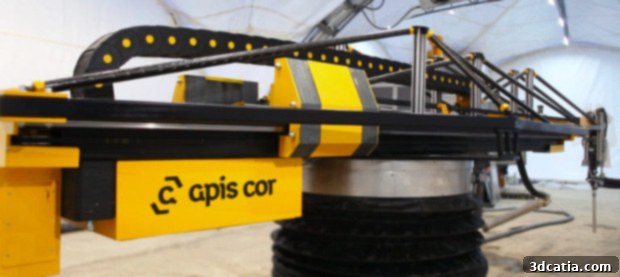
Apis Cor’s core business revolves around developing advanced 3D printers specifically engineered for constructing large concrete structures. A defining characteristic of their machines is their exceptional mobility and user-friendly design. These innovative printers can be transported to virtually any construction site and swiftly installed, becoming operational in as little as 30 minutes. This significantly reduces the extensive setup and preparatory time typically associated with conventional building methods. Central to their printer’s adaptability is its unique, removable arm, which offers extensive multi-directional movement capabilities. This unparalleled flexibility allows the machine to effortlessly navigate around the construction footprint, enabling it to complete entire homes with remarkable ease and speed. This inherent versatility makes Apis Cor’s technology a game-changer within the dynamic and often slow-moving building sector.
The burgeoning application of such advanced 3D printing technology in construction is already expanding across the globe. A compelling example can be seen in France, where the regional housing company Habitat 76 partnered with the innovative XTreeE startup. Together, they successfully built an entire studio apartment for students using sophisticated 3D printing techniques. While the French project showcased the ability to print complex foundational elements and intricate geometries, Apis Cor further distinguishes itself through its capacity to manufacture both the interior and exterior walls of a structure, moving far beyond merely printing foundations. Their printer’s flexible, removable arm, coupled with an extruder that pivots on two distinct levels, guarantees the agility required to move efficiently around the entire building. This integrated approach not only enhances construction speed but also broadens the scope of what can be accomplished in a single printing session, ensuring that a complete structural shell can be erected with unprecedented efficiency and precision.
Unprecedented Speed and Resilience in Extreme Conditions
When evaluating Apis Cor’s groundbreaking achievements, the sheer speed of their construction process stands out as a monumental accomplishment. While the general efficiency of 3D printing is widely recognized, Apis Cor’s feat of constructing a 395-square-foot house in a mere 24 hours sets an entirely new benchmark for the industry. This remarkable timeline becomes even more astounding when considering that the project was undertaken during one of Russia’s harshest winter periods. Such extreme conditions posed significant logistical and technical challenges, impacting not only the human team working on-site but also the intricate machinery and the concrete building materials themselves. Concrete, being the primary material used in this additive manufacturing process, requires specific temperature conditions to cure properly and achieve its intended strength. A minimum temperature of 5°C (41°F) is absolutely crucial to prevent the concrete from freezing and to ensure the structural integrity of the final product.
To counteract the severe effects of the brutal Russian winter, where ambient temperatures plummeted to a staggering -31°F (-35°C), Apis Cor’s team devised an ingenious and practical solution. They erected a massive, insulated tent structure that enveloped both the 3D printer and the house under construction. This protective enclosure effectively created a controlled microclimate around the building site, allowing for the necessary heating to maintain the optimal concrete curing temperature throughout the process. This innovative and adaptive approach vividly demonstrated the extraordinary versatility and robust operational capabilities of Apis Cor’s machines. It proved conclusively that their technology can function effectively and reliably even in the most adverse climatic conditions, far exceeding typical construction limitations. This proven resilience opens up significant possibilities for future deployment in diverse global environments, including remote regions or areas with extreme weather patterns where conventional construction methods would be highly impractical, costly, or even impossible.
Beyond the Structure: Crafting Livable, Smart Homes
The house itself, despite being printed with incredible speed, was meticulously designed with careful consideration for both aesthetic appeal and long-term durability. The roof of the structure was specifically engineered to be perfectly flat, a deliberate design choice that offers multiple practical benefits. This flat surface was then treated with a resilient polymer coating, providing an additional, robust layer of protection against harsh environmental elements suchs as heavy rain and UV radiation. To further enhance the building’s thermal performance and overall structural robustness, solid insulation plates were carefully added on top, effectively isolating the entire structure from external temperature fluctuations. The flat roof design also provides crucial support, particularly vital in regions prone to heavy snowfall, ensuring the building can withstand significant loads and remain protected from adverse weather conditions year-round, contributing to its longevity and energy efficiency.
Apis Cor’s vision extended far beyond merely printing the structural shell; they aimed to deliver a fully furnished, modern, and ready-to-live-in home. To achieve this comprehensive approach, they forged a strategic partnership with the global electronics giant, Samsung. Samsung generously supplied a comprehensive suite of state-of-the-art appliances, seamlessly transforming the raw printed structure into a comfortable, functional, and technologically advanced living space. This included essential kitchen items such as a refrigerator, oven, dishwasher, and microwave, providing all the necessities for modern living. Furthermore, to complement the unique architectural design of the 3D printed walls, Samsung provided a curved television, which gracefully conforms to the contours of the interior, integrating seamlessly with the aesthetic. This collaborative effort with Samsung underscores a crucial evolving aspect of 3D printed housing: it’s not simply about erecting walls quickly, but about creating complete, livable, and potentially “smart” homes from the ground up, ready for immediate occupancy and offering all the conveniences of contemporary living.
The Transformative Potential of 3D Printed Construction for a Sustainable Future
Apis Cor’s groundbreaking achievement in Moscow represents more than just a technological triumph; it signifies a pivotal and transformative moment in the evolution of the construction industry. The remarkable ability to print an entire residential structure in a single day, especially under such challenging environmental conditions, has profound implications for addressing some of the world’s most pressing socio-economic and environmental issues. This includes tackling pervasive affordable housing shortages, facilitating rapid disaster relief and reconstruction efforts, and driving sustainable development practices globally. This innovative method dramatically reduces traditional construction timelines, often cutting months off project schedules, and can significantly lower labor costs. By automating much of the construction process, it makes homeownership more accessible to a wider demographic, offering a viable solution to housing crises. Furthermore, the inherent precision and optimized material use in 3D printing inherently minimize material waste, contributing significantly to more eco-friendly building practices compared to conventional methods that often generate substantial construction debris and waste.
The far-reaching implications of this technology extend well beyond just single-family homes. The modular nature, rapid deployment capabilities, and consistent quality of Apis Cor’s technology suggest immense potential for quickly building entire communities. This could be vital for emergency housing in post-disaster zones, establishing remote settlements, or even catalyzing urban revitalization projects in underserved areas. Architects and designers are also set to gain unprecedented creative freedom, empowered to create complex, organic shapes, and highly customized structures that would be either prohibitively expensive, labor-intensive, or structurally impossible with traditional construction techniques. This opens doors to innovative architectural expressions and more efficient, aesthetically pleasing use of space, tailored precisely to specific needs, cultural contexts, and environmental considerations.
Looking ahead, the future of 3D printed construction appears incredibly promising and vibrant. As the technology continues to mature and evolve, we can anticipate further significant advancements in materials science, leading to the development of even stronger, lighter, and more sustainable building composites. The integration of artificial intelligence and robotics is likely to streamline the entire construction process even further, from initial design and material optimization to automated execution and quality control. The Moscow project stands as a powerful and inspiring testament to what is achievable today, serving as a clear indicator of the limitless possibilities that lie ahead for Apis Cor and the entire 3D construction printing industry. We are truly at the beginning of a profound revolution that promises to redefine how we conceive, design, and build our homes and cities, propelling us towards a future where housing is not only affordable and accessible but also sustainable, innovative, and perfectly adapted to human needs and environmental imperatives.
To delve deeper into this groundbreaking project and witness the construction firsthand, we invite you to watch the video below:
What are your thoughts on Apis Cor and the incredible potential of 3D printed homes? Share your insights and comments below!