
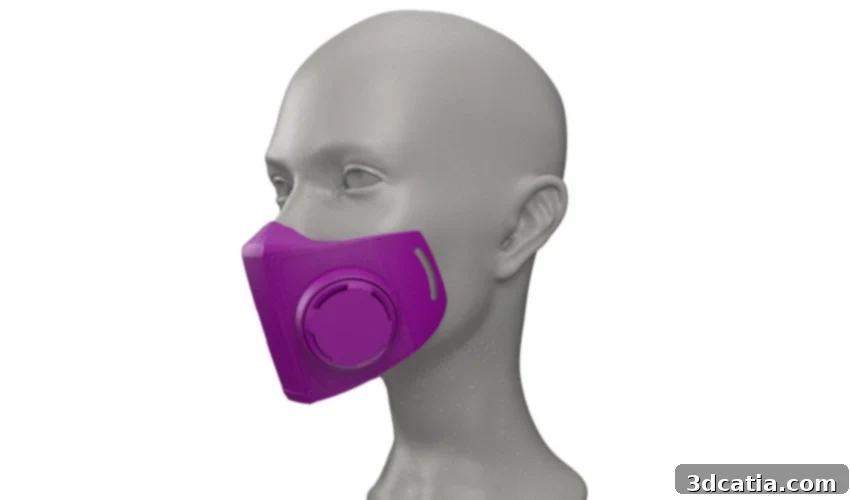
Revolutionizing Pandemic Response: The Rise of 3D Printed N95 Masks and Copper3D’s NanoHack Initiative
Important Disclaimer: The following information describes a device that has not been officially certified by regulatory bodies for medical use. Before attempting to 3D print or utilize this medical device, it is absolutely crucial to consult with qualified industry professionals. This includes seeking expert advice on appropriate materials, ensuring proper design specifications, understanding necessary safety measures, and adhering to all required precautions. Medical validation and certification by relevant health authorities are mandatory steps that must be completed before any such mask can be safely and effectively deployed in a clinical or public health setting. This content serves for informational purposes regarding a community-driven initiative during a crisis and does not endorse the immediate, unvalidated use of 3D printed medical devices.
In an unprecedented global health crisis, innovative solutions often emerge from unexpected corners. One such pioneering effort came from Copper3D, a prominent manufacturer of advanced 3D printing materials. Recognizing the severe shortage of essential personal protective equipment (PPE) during the initial stages of the COVID-19 pandemic, Copper3D swiftly launched its “Hack The Pandemic” initiative. This ambitious project aimed to leverage the power of additive manufacturing by releasing an open-source STL file for a 3D printable N95-style mask, dubbed the NanoHack. The core objective was to mobilize a global network of machine manufacturers, fablabs, and 3D printing services to rapidly produce these much-needed masks. The critical scarcity of N95 masks placed an immense burden on hospitals and frontline healthcare professionals worldwide, highlighting an urgent need for agile and decentralized production methods.
While the concept of a 3D printed mask offered a ray of hope amidst dire circumstances, it also raised legitimate questions regarding its efficacy compared to conventionally manufactured N95 masks. Copper3D, however, asserted that the NanoHack project benefited from the expertise of numerous scientists and researchers, underscoring its commitment to a scientifically informed design. Furthermore, the company took the significant step of filing a patent application, indicating the innovative nature of their design. Although Copper3D might be considered a relatively new entrant in the broader medical device sector, its track record in developing specialized materials, particularly its antibacterial substances incorporating copper nanoparticles, suggested a strong foundation for creating effective and potentially safer solutions in the healthcare domain. This blend of material science expertise and a rapid open-source response positioned the NanoHack as a notable contribution to pandemic mitigation efforts.
The N95 mask became a widely recognized symbol of protection during the pandemic, and for good reason. Engineered to provide superior respiratory protection, it boasts a filtration efficiency of at least 95% against airborne particles, including aerosols containing viruses. This high level of filtration makes N95 masks significantly more effective than standard disposable surgical masks, which were also in critically short supply. The urgent demand underscored the potential of additive manufacturing to bridge this supply gap. However, it is essential to acknowledge that a 3D printed mask, particularly those produced through consumer-grade desktop printers, is generally unlikely to achieve the same stringent filtration and sealing standards as a professionally manufactured, certified N95 respirator. Nevertheless, in the face of an extreme emergency and overwhelming shortages, a responsibly designed 3D printed alternative could serve as a vital stop-gap measure, offering a degree of protection that would otherwise be unavailable.
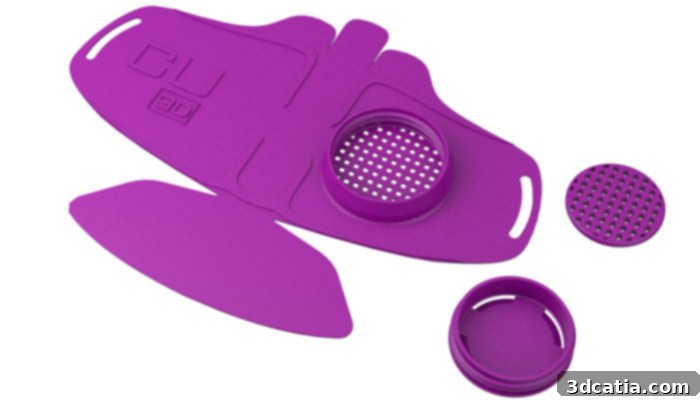
The various components of the NanoHack mask, designed for 3D printing and assembly | Credits: Copper3D
NanoHack: An Open-Source, Innovative Solution for Pandemic Preparedness
The NanoHack mask, conceptualized and developed by Copper3D, was engineered with several groundbreaking features intended to address key challenges faced during a pandemic. Beyond mere filtration, the design aimed to be antiviral, reusable, modular, washable, recyclable, and crucially, affordable. These attributes present significant advantages over conventional disposable masks, which, as the Chilean company pointed out, typically require disposal after a relatively short period, often around 8 hours of use. By prioritizing reusability and washability, the NanoHack offered a more sustainable and cost-effective alternative, reducing both waste and the continuous demand on manufacturing supply chains. To maximize its impact, Copper3D made the corresponding STL file immediately available online, fostering widespread access and empowering individuals and organizations globally to contribute to mask production for those most in need. This commitment to open-source sharing, combined with the strategic decision to register a patent, underscored their dual approach of rapid deployment and intellectual property protection for future development.
Daniel Martinez, the Innovation Director at Copper3D, eloquently articulated the vision behind the initiative. He explained, “The current virus caused an unprecedented breakdown in distribution chains across the globe. We understood that 3D printing held immense potential to help, but we also recognized that printing these masks typically takes about 2 hours per unit. This bottleneck forced us to adopt a truly collaborative mindset. We identified the critical need for a distributed manufacturing concept – one that could harness networks of 3D printers operating continuously, 24/7, to produce a substantial quantity of masks within an extremely short timeframe. This realization led us to proactively coordinate a vast global network, comprising startups, established manufacturers, universities, and partner companies, all united in their commitment to help us print and distribute these essential masks.” This statement perfectly encapsulates the spirit of the “Hack The Pandemic” movement, emphasizing collaboration, speed, and decentralized production as key strategies in responding to a global health emergency.
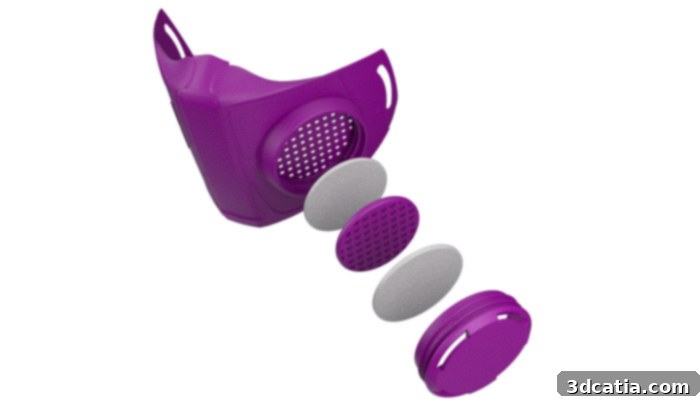
The NanoHack mask features an integrated modular filtration system, demonstrating advanced design for respiratory protection | Credits: Copper3D
A cornerstone of the NanoHack’s innovative design, as detailed by Copper3D, is its advanced, scalable filtration system. This system reportedly incorporates a proprietary copper nanocomposite material, which has demonstrated broad effectiveness in inactivating viruses. The integration of copper nanoparticles into the filtration medium provides an additional layer of protection, moving beyond simple mechanical filtration to actively combat viral pathogens. This sophisticated system is designed with multiple layers, each featuring distinct geometries, meticulously crafted to ensure the effective filtration of even the finest airborne particles. The mask itself is conceptualized as a multi-part assembly, intended to be 3D printed in separate components and then easily put together. Copper3D has provided comprehensive and clear instructions on its website, guiding users through the printing, assembly, and usage processes, thereby democratizing access to this potentially life-saving technology.
Broader Global Initiatives: The Collective Power of Additive Manufacturing
The initiative by Copper3D was not an isolated effort but part of a much larger, global movement demonstrating the versatility and responsiveness of the additive manufacturing community during the crisis. Numerous platforms and organizations stepped up to facilitate the production and distribution of vital supplies. For instance, the popular Cults platform, a hub for 3D model files, also made available various open-source STL files for protective masks against COVID-19. These designs often catered to common 3D printing materials like PLA (Polylactic Acid), with recommended settings such as a layer thickness of 2.5 mm to optimize print quality and material usage. While these community-driven designs provided much-needed alternatives, it was consistently emphasized that their complete efficiency or certification for medical use could not be universally guaranteed, reinforcing the initial disclaimer about validation.
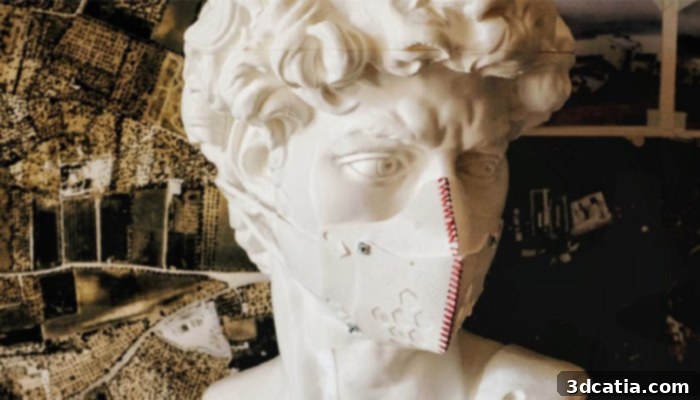
Beyond masks, the broader implications of the pandemic prompted urgent calls for other critical medical equipment. The European Commission, recognizing the immediate and dire need across its member states, issued an urgent request for an increased supply of both protective masks and life-saving ventilators. In response, organizations like Mobility Goes Additive stepped forward to play a crucial intermediary role. This organization acted as a vital bridge, connecting players within the additive manufacturing industry – those possessing the expertise and technology to design and produce these essential components – with the European Commission. This collaborative ecosystem allowed for a streamlined process, enabling the rapid submission and evaluation of innovative designs and production capabilities. Individuals and companies with creative solutions and 3D printing expertise were strongly encouraged to contribute their ideas and capabilities, demonstrating the profound collective impact that can be achieved when innovation and community spirit converge in times of crisis. These collective efforts underscored the pivotal role that 3D printing, with its inherent flexibility and speed, could play in fortifying global healthcare supply chains and bolstering preparedness for future challenges.