
Revolutionizing 3D Printing: Weekly Highlights from Additive Manufacturing’s Cutting Edge
The world of additive manufacturing is constantly evolving, bringing forth new materials, innovative machines, and groundbreaking applications that redefine what’s possible. This week, we delve into some of the most compelling news and developments that continue to push the boundaries of 3D printing technology. From sustainable materials like 3D printed wood to revolutionary SLA machines featuring conveyor belts, and from sophisticated texture engines to large-scale concrete construction, the sector is buzzing with innovation. We also explore strategic acquisitions by industry giants, highlighting the dynamic growth and consolidation within the market. Join us as we unpack these significant advancements, offering a comprehensive look at how these innovations are shaping the future of manufacturing and design.
Aectual Pioneers Sustainable 3D Printed Wood
Leading Dutch architecture and interior design firm Aectual, renowned for its commitment to sustainability and its extensive use of XL 3D printing with recycled waste materials, has unveiled a remarkable new product: 3D printed wood. This innovative material stands as a testament to Aectual’s mission to foster a more circular economy within the design and manufacturing industries. Derived primarily from wood-waste residue, this unique material is ingeniously blended with natural ingredients such such as lignin and cellulose. This careful composition not only mimics the authentic look, feel, and even scent of traditional wood but also inherits its desirable characteristics. Crucially, Aectual’s 3D printed wood goes beyond mere aesthetics; it actively contributes to environmental sustainability. The material possesses the incredible ability to absorb CO2 from the atmosphere, making it a powerful tool in combating climate change. Furthermore, it is fully biodegradable, ensuring that its lifecycle is environmentally responsible, and perhaps most impressively, it can be re-printed and reused after its initial application, embodying the true spirit of circularity. The initial applications for this groundbreaking material have been for elegant 1 x 2-meter wooden screens, designed to serve a variety of purposes including sophisticated wall paneling, practical and stylish room dividers, or contemporary window blinds. This development by Aectual signifies a major step forward in integrating eco-conscious solutions into high-end design, proving that aesthetics and environmental responsibility can indeed go hand-in-hand in the additive manufacturing space. The potential for this renewable and versatile material extends far beyond these initial uses, promising a new era for sustainable design and construction with wood-based 3D printing.

Photo Credits: Aectual
A Groundbreaking Resin 3D Printer with a Conveyor Belt for Continuous Production
While continuous printing systems using conveyor belts have become somewhat common in Fused Deposition Modeling (FDM) machines, enabling endless production runs and boosting throughput, the concept has remained largely uncharted territory for resin-based 3D printers. This week, we highlight a truly innovative breakthrough from Israeli start-up Sprybuild, which has ingeniously applied this productivity-enhancing principle to Stereolithography (SLA) technology. Sprybuild has engineered an SLA machine that replaces the traditional static build tray with a dynamic conveyor belt, fundamentally transforming the resin 3D printing workflow. This revolutionary design allows for uninterrupted, continuous production, dramatically increasing output and efficiency in a sector often limited by batch processing. The Sprybuild system boasts an impressive conveyor belt speed of 3300 mm/hour, coupled with a remarkable print precision of 100 microns, ensuring that speed does not compromise quality. The primary objective behind this innovative design is to minimize human intervention as much as possible, steering towards a highly autonomous manufacturing process. By reducing the need for constant operator oversight and manual part removal between prints, Sprybuild’s conveyor-belt SLA printer is set to unlock new levels of automation and scalability for resin 3D printing applications. This advancement is particularly significant for industries requiring high volumes of detailed resin parts, from dental and medical sectors to prototyping and small-batch manufacturing, offering a compelling solution for businesses looking to enhance their productivity and streamline their additive manufacturing operations. Sprybuild is undoubtedly a start-up to watch, as their technology could redefine the benchmarks for efficiency and autonomy in the resin 3D printing landscape.
Formlabs Introduces Texture Engine for Enhanced 3D Print Aesthetics and Functionality
Achieving desired surface textures and patterns on 3D printed parts has long been a labor-intensive aspect of post-processing, often requiring additional steps like laser etching, sandblasting, or manually adding features to molds. These processes can be time-consuming, expensive, and sometimes limit design flexibility. Formlabs, a leading innovator in the desktop 3D printing market, is addressing this challenge head-on with the launch of its new Texture Engine. Currently available in a beta version, this powerful tool promises to revolutionize how users apply complex surface details to their 3D models. The Formlabs Texture Engine enables users to directly integrate intricate textures into their designs, effectively bypassing the need for extensive post-processing or reliance on advanced CAD tools that may not inherently support direct texture mapping during the design phase. This means that designers and engineers can now quickly and effortlessly create textured prints, enhancing both the aesthetic appeal and the functional properties of their parts. For instance, textures can improve grip, diffuse light, or even create biomimetic surfaces. The flexibility of this engine is a significant advantage, as it is designed to be beneficial for a wide array of 3D printing technologies, including Fused Deposition Modeling (FDM), Selective Laser Sintering (SLS), and Stereolithography (SLA). This broad compatibility ensures that a wider range of users, regardless of their preferred printing method, can leverage the Texture Engine to elevate their designs. This development by Formlabs streamlines the design-to-print workflow, empowers creativity, and opens up new possibilities for product differentiation and functional integration across various industries, from consumer goods to medical devices. The beta release indicates Formlabs’ commitment to continually refining user experience and expanding the capabilities of 3D printing technology, making advanced features more accessible.
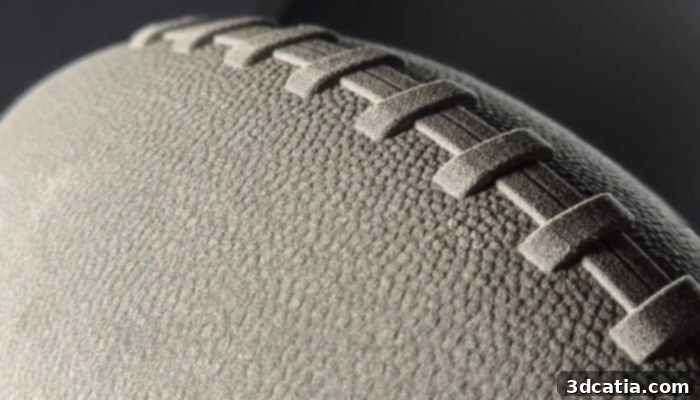
Photo Credits: Formlabs
COBOD and Abyan Collaborate on Monumental 3D Printed Water Tanks
The application of 3D printing in the construction sector continues to demonstrate its transformative potential, particularly for large-scale infrastructure projects. This week, an impressive collaboration in Kuwait highlights the power of construction additive manufacturing. Construction company Abyan has leveraged the advanced concrete 3D printers from COBOD, a global leader in this specialized field, to design and construct colossal water tanks. These structures stand at an impressive 4.5 meters in height and span 7 meters in diameter, showcasing the capabilities of automated construction. A critical advantage of employing additive manufacturing in this project was the significant material optimization; these 3D printed tanks utilized 25% less material compared to conventional construction methods, contributing to both cost savings and a reduced environmental footprint. Furthermore, the speed of construction was remarkable, with the entire design and printing process completed in a mere 5 days. A particularly innovative aspect of these tanks is the structural reinforcement: instead of traditional steel rebar, the walls were reinforced with macrofibers integrated directly into the concrete mix. This technique not only simplifies the construction process but also offers inherent advantages in material properties. Dr. Ahmad Al-Nassem, CEO of Abyan, articulated the company’s vision and commitment to innovation: “Abyan is wholeheartedly committed to revolutionising the construction industry at large by integrating cutting-edge 3D printing technology within concrete construction along with innovative solutions in design and construction materials, bringing forth a new era of efficiency and sustainability. So, when all of our calculations showed that with 0,95% macro fibers in the concrete, we could remove all hard reinforcement of the tank walls, we were keen to prove this new design concept with a real-life project.” This statement underscores a pioneering approach to civil engineering, challenging established norms and demonstrating the efficacy of new material science combined with additive manufacturing. These robust 3D printed water tanks are slated for use by local chicken farms, providing a practical and sustainable solution for agricultural water storage and proving the viability of such large-scale concrete printing for essential utilities and infrastructure globally. The project is a testament to the growing maturity and diverse applications of 3D construction printing.
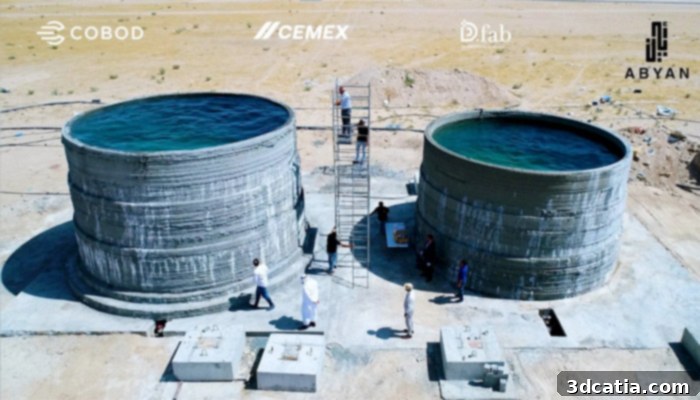
Photo Credits: COBOD
Stratasys Continues Strategic Expansion with Arevo Acquisition
In a strategic move that underscores the dynamic growth and consolidation within the additive manufacturing sector, industry giant Stratasys has announced its acquisition of manufacturer Arevo. This latest acquisition is part of Stratasys’ ongoing strategy to expand its technological portfolio and solidify its market leadership in diverse 3D printing solutions. While Arevo ceased its operations in 2023, the company had been a significant player, responsible for a number of highly promising innovations, particularly in the realm of carbon fiber 3D printing. Arevo was known for pushing the boundaries of composite additive manufacturing, developing technologies that allowed for the creation of strong, lightweight parts with enhanced material properties. The key intellectual property and expertise acquired from Arevo will undoubtedly bolster Stratasys’ capabilities, especially concerning advanced composite materials. Rich Garrity, Stratasys’ Chief Industrial Business Officer, articulated the strategic importance of this acquisition, commenting: “The technology we’ve acquired allows for increasingly improved isotropy of physical properties in FDM parts, which opens up additional use for customers.” This statement highlights a crucial aspect of composite 3D printing: achieving isotropic properties, meaning the material exhibits uniform mechanical characteristics regardless of the direction of stress. Traditionally, FDM parts, especially those made with fiber reinforcement, can have anisotropic properties, which can limit their application in high-performance scenarios. Arevo’s developments in carbon fiber printing focused on overcoming these limitations, making it possible to produce parts with strength and stiffness comparable to traditionally manufactured composite components. For Stratasys, integrating this technology means offering its customers FDM parts with superior performance characteristics, expanding the range of industrial applications, particularly in aerospace, automotive, and other demanding sectors where material consistency and strength are paramount. This acquisition not only strengthens Stratasys’ position in advanced materials and composite printing but also demonstrates its proactive approach to integrating valuable intellectual property to drive future innovation and meet evolving customer needs in the competitive additive manufacturing landscape.
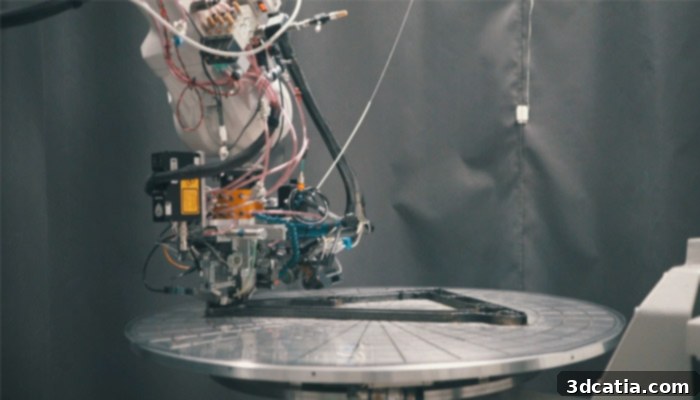
Arevo developed a composite printing solution (photo credits: Arevo)
This week’s roundup of additive manufacturing news showcases the incredible pace of innovation across the sector, from eco-friendly materials to groundbreaking machine designs and impactful applications. Aectual’s biodegradable 3D printed wood is a significant stride towards sustainable manufacturing, offering both aesthetic appeal and environmental benefits. Sprybuild’s conveyor belt SLA printer promises a leap in productivity for resin 3D printing, while Formlabs’ Texture Engine empowers designers with unprecedented control over surface finishes. Meanwhile, COBOD and Abyan’s massive 3D printed water tanks highlight the transformative potential of additive construction for infrastructure, emphasizing efficiency and material reduction. Finally, Stratasys’ strategic acquisition of Arevo underscores the industry’s drive for advanced materials, particularly in high-performance composites like carbon fiber. These developments collectively paint a picture of an industry that is not only growing rapidly but also diversifying its offerings and addressing complex challenges across various domains. The future of 3D printing continues to be bright, with continuous advancements promising even more revolutionary solutions. What do you think of this 3D printed wood from Aectual? Which news in this #3DExpress was the most exciting for you? Let us know in a comment below or on our LinkedIn, Facebook, and Twitter pages! Don’t forget to sign up for our free weekly newsletter here, the latest 3D printing news straight to your inbox! You can also find all our videos on our YouTube channel.