
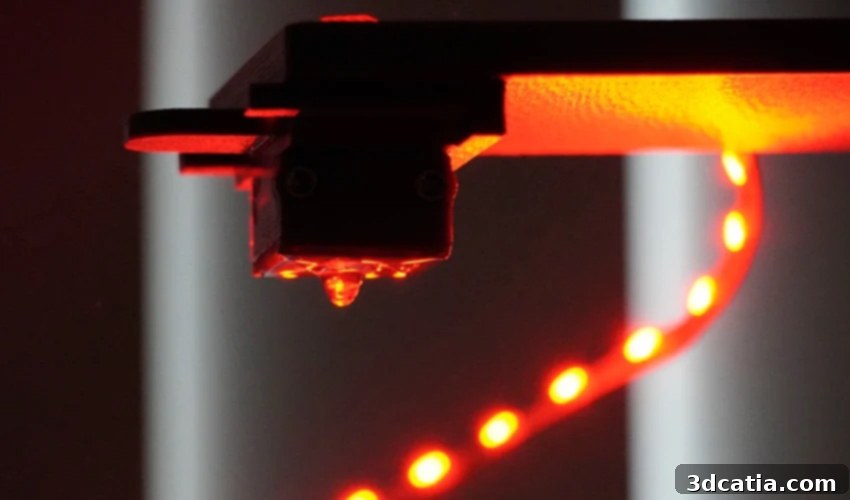
Advancing Regenerative Medicine: Vital3D’s Vision for Personalized 3D Bioprinting in Healthcare
The landscape of regenerative medicine is being rapidly transformed by the innovative applications of 3D bioprinting. This cutting-edge field sees a growing number of companies dedicated to developing sophisticated additive manufacturing solutions, aiming to create organs and tissues precisely tailored to the unique physiological needs of individual patients. At the forefront of this revolution is Vital3D, a dynamic biotech company that offers advanced solutions across medical research, drug discovery, and regenerative medicine. Their ambitious goal is to seamlessly integrate state-of-the-art 3D bioprinting technologies, such as the highly precise two-photon polymerization, to fundamentally reshape the future of medicine through truly personalized patient treatment. To delve deeper into their groundbreaking manufacturing systems and gain insight into their vision for the current state of 3D printing in the healthcare sector, we had the opportunity to speak with Vital3D’s visionary CEO.
3DN: Could you introduce yourself and elaborate on your journey into the world of 3D printing?
My name is Vidmantas Sakalys, and I proudly serve as the CEO of Vital3D Technologies. My professional background began in computer engineering, a field in which I honed my skills over two decades through practical experience in managing various IT companies. This extensive experience provided me with a strong foundation in complex system management and technological innovation. My career then took a serendipitous turn, introducing me to the fascinating laser microfabrication industry. For over 10 years now, I have been deeply immersed in the realm of photonic innovations, exploring the immense potential of light-based technologies. Lasers, as I discovered, are exceptionally effective tools for 3D printing models that demand extraordinary precision and intricate detail – qualities that are absolutely critical for biological structures. It was this profound understanding and expertise in laser manufacturing that naturally guided my path into the specialized and rapidly evolving field of 3D bioprinting, where precision and innovation converge to create life-changing solutions.

Vidmantas Sakalys, CEO of Vital3D, spearheading advancements in bioprinting technology.
3DN: Could you tell us more about Vital3D, its mission, and what sets it apart?
Vital3D is a pioneering Lithuanian-based biotech company, established with a steadfast commitment to innovating advanced solutions across the critical areas of medical research, drug discovery, and regenerative medicine. Founded in late 2021, Vital3D brought together a multidisciplinary team of experts, each specializing in critical domains such as lasers, biotechnology, software programming, and mechanical engineering. This diverse expertise allows us to approach the complex challenges of bioprinting from multiple angles, fostering truly groundbreaking innovations. Our primary mission is to introduce and refine innovative bioprinting technology that can effectively bridge the ever-widening gap between the critical demand for organs and their extremely limited supply. We specialize in the 3D printing of human organs, with a particular strategic focus on the kidney, an organ whose chronic diseases represent a massive global health burden and whose transplant needs far outstrip available donations.
The inspiration behind Vital3D is deeply personal. Having witnessed one of my mentors succumb to urinary cancer while working at a previous startup, I harbored a profound desire to develop a technology that could genuinely alleviate suffering from such terminal illnesses. This personal experience fueled a relentless drive to make a difference. Collaborating with a brilliant colleague specializing in laser technology, we envisioned light as the perfect instrument for life sciences applications. Could we harness light to print new human organs, thereby offering a viable solution for conditions similar to those my mentor faced? This powerful question laid the foundation for Vital3D. By the end of 2021, this compelling idea had solidified into a concrete plan: to develop a sophisticated 3D bioprinter specifically designed for printing functional kidneys.
Today, Vital3D offers a dual approach to advancing bioprinting. Firstly, we provide the Vital Light 3D printer as a state-of-the-art device for research institutes actively engaged in life sciences. This printer empowers researchers with unprecedented precision and flexibility for their experiments. Secondly, and equally crucial, we offer specialized printing services for the creation of intricate medical devices, complex tissues, and even entire organs. Our overarching vision is not merely to sell printers but to evolve into the premier service provider for the 3D printing of bespoke tissues and organs, transforming personalized medicine from concept to reality for patients globally.
3DN: How does Vital3D’s 3D bioprinting technology work, and what are its innovative applications?
Vital3D’s advanced bioprinting process is fundamentally rooted in the precise application of laser light as its primary printing tool. Unlike conventional methods that might rely on molecular spraying or extrusion, our process involves directing a highly focused light source onto a specialized photosensitive bioink. This bioink, formulated with biocompatible polymers and living cells, reacts to the light, causing the material to selectively harden or polymerize under the targeted “pressure” of the light beam. The intricate three-dimensional structure emerges layer by layer directly from the liquid bio-ink pool, allowing for unparalleled resolution and complexity.
To illustrate our dynamic light manipulation technology, known as FemtoBrush, consider this analogy: Imagine you are drawing a detailed picture with a fine pen, meticulously coloring each tiny segment. Now, envision needing to paint an entire wall; using only that pen would be an impractical, unending task. To paint faster, you would naturally switch to a wider brush, covering larger surfaces with efficiency. This analogy perfectly captures the essence of FemtoBrush. Our technology dynamically changes the shape of the laser beam on the fly, allowing it to act like a precise pen (as small as 1 micron for ultra-fine details), a broader brush for larger areas, or even more sophisticated custom shapes, such as an ellipse, to optimize printing speed and accuracy for various geometries. This adaptability is crucial for handling the diverse structural requirements of biological tissues and organs.
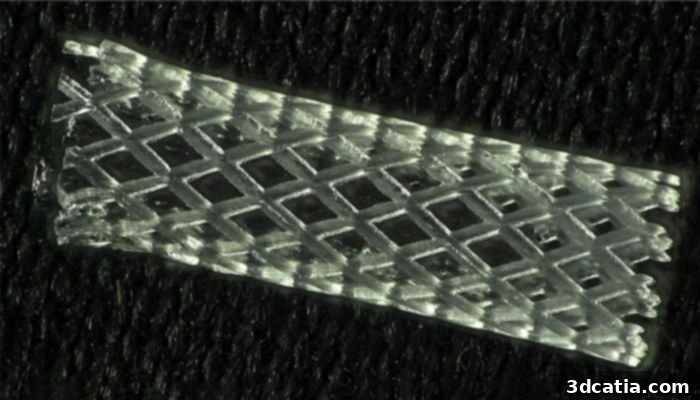
A finely detailed stent demonstrating the precision achievable with Vital3D’s FemtoBrush technology.
By introducing this significant innovation to light-based bioprinting, we aim to overcome one of the most formidable challenges in organ printing: vascularization. The ability to create functional networks of blood vessels (vascularization) is paramount for the survival and long-term viability of any bioprinted organ. The FemtoBrush system’s “pen” mode allows us to print the smallest, most intricate vascular structures, down to a single micron, faithfully replicating natural capillary networks. Crucially, switching to “brush” mode dramatically accelerates the printing process, speeding it up hundreds of times. This dual capability is what enables our ambitious goal of printing an entire, complex organ like a kidney within a remarkable 24-hour timeframe, making large-scale production a more tangible reality and potentially revolutionizing transplant medicine.
3DN: What are the primary advantages of 3D printing for organs, and what significant limitations still exist?
3D organ bioprinting undeniably represents one of the most rapidly advancing and promising fields in modern medicine, holding the potential to revolutionize transplantation and regenerative therapies. However, despite rapid progress, it is important to acknowledge that the capability to print fully functional, transplantable human organs for routine clinical use is not yet a reality. While there have been encouraging reports of bioprinted tissue being successfully integrated and functioning within animal models, the monumental leap from these successes to reliable human transplantation remains a distant, long-term objective.
The inherent complexity of organ biology and the formidable challenges of achieving long-term compatibility, robust functionality, and sustained viability within the human body are the principal hurdles that researchers worldwide are diligently working to overcome. Among these, the critical process of vascularization – the meticulous creation of a dense and functional network of blood vessels to supply nutrients and remove waste – within bioprinted tissue continues to be a major scientific and engineering challenge. Without an efficient and integrated vascular network, 3D-printed organs cannot receive the necessary support to remain alive, functional, and integrated into the host organism.
So, given these current limitations, what tangible advancements can we already achieve with 3D bioprinting? The field has already yielded remarkable progress in several areas. We can successfully 3D print:
- Tissue and Organ Models: These highly realistic models serve as invaluable tools for fundamental research, enabling scientists to study disease progression, cellular interactions, and tissue development in a controlled environment.
- Organoids (Miniatures): These self-organizing 3D cultures derived from stem cells mimic the structure and function of full organs on a miniature scale, providing powerful platforms for drug screening, toxicology testing, and personalized disease modeling, significantly reducing reliance on animal testing.
- Surgical Models: Patient-specific 3D models of organs or complex anatomical structures allow surgeons to practice intricate procedures, plan surgeries with greater precision, and anticipate potential complications, leading to improved patient outcomes and reduced operating times.
- Dental and Personalized Implants: Custom-fit implants, crowns, and bridges can be precisely fabricated to match individual patient anatomy, enhancing comfort, fit, and aesthetic results.
- Prostheses and Hearing Aids: 3D printing allows for the rapid and cost-effective creation of highly customized, lightweight, and comfortable prosthetic limbs and hearing aid shells, significantly improving quality of life for users.
- Drug Delivery Devices: Personalized devices can be designed to deliver specific doses of medication at controlled rates, offering targeted therapies and optimizing treatment efficacy.
- Personalized Surgical Tools: Instruments tailored to a surgeon’s specific needs or a patient’s unique anatomy can enhance precision and efficiency during complex operations.
- Patient-Specific Guides: These guides assist surgeons in accurate incision placement, drilling, or alignment during procedures, crucial for fields like orthopedics and maxillofacial surgery.
These applications demonstrate the immediate, transformative impact of 3D printing in various medical subfields, even as the ultimate goal of full organ transplantation remains a powerful, long-term endeavor.
3DN: How do you envision the future trajectory of 3D bioprinting within the medical field?
While the long-term vision of being able to print any part of a human being is undeniably compelling and captures the imagination, it is crucial to understand that its realization will most likely be a gradual, iterative process, unfolding over many years, if not decades. Most leading researchers and experts actively working in this transformative field generally agree that a timeframe of 15 to 20 years represents a reasonable and optimistic projection for the initial appearance of the first large-scale, fully functional 3D bioprinted human organ that could potentially be used for transplantation. This significant milestone will require not only continued technological breakthroughs but also a deeper, more nuanced understanding of complex biological systems and their integration.
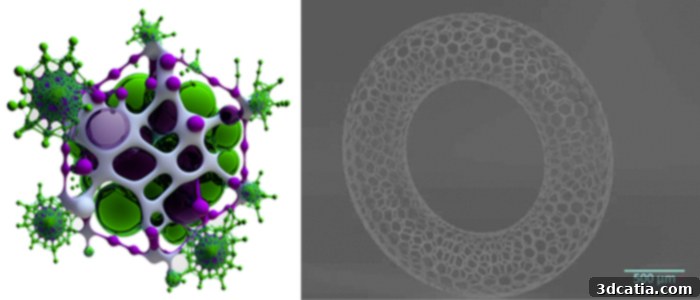
Vital3D’s advanced bioprinting system facilitates the creation of diverse models, propelling personalized medicine forward.
As 3D bioprinting technology continues to advance and our knowledge of human biology at the cellular and molecular levels deepens exponentially, it is highly probable that in the future, an ever-wider range of human body parts will become accessible to 3D printing and subsequent transplantation. This could extend beyond complex solid organs like kidneys and hearts to include intricate tissues such as cartilage, nerve tissues, or even specialized skin grafts. This progress promises not just to treat disease but to truly restore function and enhance human capability. I envision a future where bioprinting could significantly extend the healthy human lifespan, offering restorative solutions that not only add years to life but also profoundly improve the quality of the “second half” of our lives, allowing individuals to maintain vitality, independence, and overall well-being far beyond what is currently possible. This holds the potential to redefine aging and human potential.
3DN: Do you have any final thoughts or insights you’d like to share with our readers?
The integration of bioprinters into the medical field signifies a profoundly promising and ethically transformative shift, extending its impact far beyond merely organ transplantation. Its influence is equally profound in accelerating disease research and revolutionizing drug development processes. The ability to print intricate organoid models, “organ-on-a-chip” systems, and complex tissues offers a paradigm shift from traditional research methodologies. These bioprinted models create significantly more humane and biologically relevant alternatives compared to the animal models predominantly used today. This ethical advancement also translates into increased precision and efficiency within the research process, as human-derived tissues can provide more accurate predictions of drug efficacy and toxicity in humans, ultimately leading to faster development of new medical breakthroughs.
Currently, the development and adoption of organ-on-a-chip models are experiencing exponential growth, a clear indicator of a highly promising future for the active integration and broad adaptation of this technology across various research domains. As ongoing technological innovations relentlessly drive improvements in the reproducibility, structural complexity, and scalability of these sophisticated organ-on-a-chip models, researchers will gain access to an increasingly refined and powerful set of tools. These tools will enable an unprecedented understanding of human physiology and pathology, delving into the intricacies of disease mechanisms at the cellular and molecular levels. Such profound advances promise not only to revolutionize our fundamental understanding of disease but also to drastically reduce the ethical and practical necessity for traditional methods of animal experimentation. This paves the way for a new era of biomedical science characterized by more humane, more precise, and ultimately more effective approaches to research and therapeutic development. We invite everyone interested to explore further information and engage with our work on the Vital3D website, accessible HERE.
We eagerly await your thoughts on Vital3D’s groundbreaking work! Please share your insights in a comment below or connect with us on our LinkedIn, Facebook, and Twitter pages. Don’t miss out on the latest advancements in 3D printing – sign up for our free weekly newsletter here to receive news directly in your inbox! You can also discover more about our innovative technologies and applications by visiting our YouTube channel for exclusive video content.
*All Photo Credits: Vital3D