
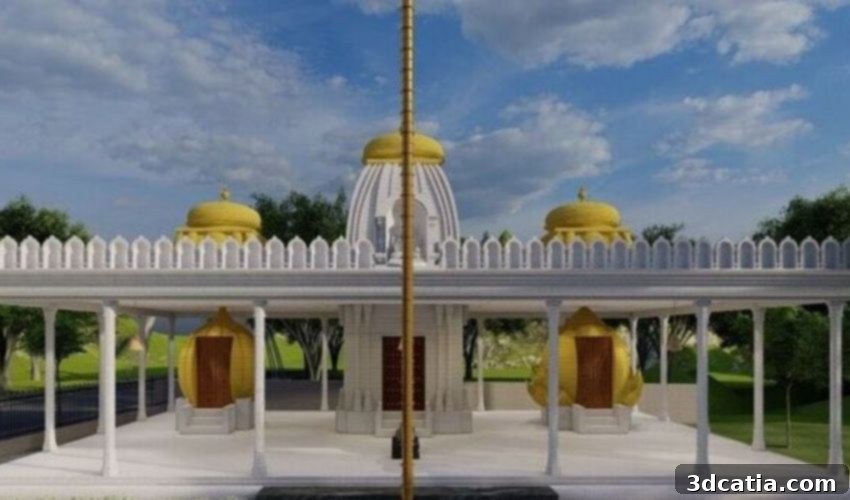
Revolutionizing Architecture: The World’s First 3D Printed Hindu Temple Unveiled in Telangana, India
In a monumental leap for both religious architecture and construction technology, India continues to pioneer additive manufacturing applications. Following the inauguration of the world’s first 3D printed post office in Bengaluru, the state of Telangana is now making global headlines by spearheading the construction of the world’s first 3D printed Hindu temple. This groundbreaking project, nestled within the serene landscapes of Charvitha Meadows in Siddipet, represents a profound collaboration between two innovative entities: Apsuja Infratech and Simpliforge Creations. Spanning an impressive 3,800 square feet, this sacred structure stands as a testament to the harmonious convergence of cutting-edge technology, deep cultural reverence, and a commitment to sustainable creativity. It redefines what is possible in the realm of modern construction, pushing boundaries while honoring ancient traditions.
The architectural design of this unique temple complex is both intricate and deeply symbolic, featuring three distinct sanctums, traditionally known as “garbhas,” each meticulously dedicated to a different principal deity. Hari Krishna Jeedipalli, the Managing Director of Apsuja Infratech, articulates the profound symbolism embedded in each sanctum’s form. The first sanctum is shaped like a modak, a sweet dumpling, which profoundly symbolizes Lord Ganesha, the remover of obstacles. The second sanctum, known as a Shivalay, is a square abode specifically devoted to Lord Shankar (Shiva), representing stability and cosmic order. Finally, a breathtaking lotus-shaped home is being crafted for Goddess Parvati, symbolizing purity, beauty, and spiritual enlightenment. The conceptualization and meticulous design of this ambitious temple were not merely artistic endeavors but were rigorously developed and thoroughly evaluated by Professor K. V. L. Subramaniam and his dedicated research team from the civil engineering department of the esteemed Indian Institute of Technology, Hyderabad. Their unparalleled expertise in structural engineering and architectural principles, combined with Simpliforge Creations’ advanced 3D printing technology, has been instrumental in translating this visionary design into a tangible, awe-inspiring architectural marvel. This collaboration underscores the critical importance of academic rigor in validating innovative construction methods, ensuring both structural integrity and aesthetic fidelity to traditional temple design.
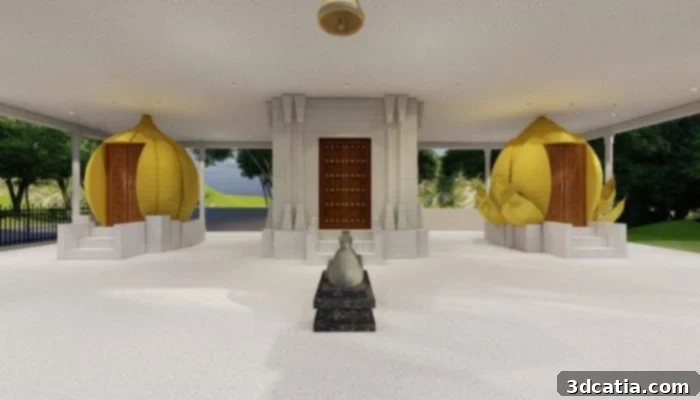
Prototype of the Temple’s internal design
The construction process, while revolutionary, was not without its formidable challenges, particularly in realizing the intricate, curvilinear geometries of the dome-shaped structures such as the Modak and the Lotus. Traditional construction methods would typically require extensive formwork, skilled labor, and significant time for such complex designs. However, the team at Simpliforge Creations and Apsuja Infratech rose to these challenges, demonstrating remarkable ingenuity. They triumphed over these obstacles through a combination of innovative design techniques, precise analytical modeling, and an unwavering commitment to both the structural principles of engineering and the sacred tenets of temple architecture. The ability to print these complex, overhanging shapes in situ, without extensive temporary support, showcases the advanced capabilities of their 3D printing technology. This fusion of ancient design philosophy with modern fabrication techniques allowed for unprecedented levels of precision and customization, which would be prohibitively expensive or even impossible with conventional construction methods. The success in tackling these unique geometric demands has set a new benchmark for 3D concrete printing in architectural applications, especially for structures requiring high aesthetic and symbolic value.
Significant progress has already been achieved in the project’s initial phase, marked by the successful completion of the Modak and Shivalay sections. These completed sanctums stand as physical manifestations of the team’s dedication and the technology’s efficacy. Currently, the skilled team is channeling its focus and expertise into the intricate construction of the Lotus structure, a design that demands even greater precision and technical finesse, along with the towering spires, traditionally known as gopurams. These gopurams are iconic features of South Indian temples, often elaborately decorated and rising majestically, symbolizing the gateway to the divine. Dhruv Gandhi, the insightful CEO of Simpliforge Creations, expresses profound optimism regarding the project’s timeline and the application of gained knowledge. He anticipates that the invaluable insights and techniques acquired during the construction of the Modak — particularly concerning complex curvature and overhangs — will significantly expedite the completion of the Lotus sanctum. Gandhi elaborates on the remarkable capabilities of Simpliforge’s additive manufacturing technology: “This structure demonstrates Simpliforge’s ability to print 51º and 32º in outward and inward cantilevers, respectively, especially while printing in-situ catering to the architectural/aesthetic requirements. This construction takes care of the structural requirements, principles of temple design, and 3D printing requirements, while dealing with the challenges of in-situ construction. This proof of concept also sets the stage for future applications of Simpliforge’s robust systems in inaccessible areas like frontiers, high altitude areas, deserts, and snowy regions with applications in challenging terrain, disaster-hit areas, and defense applications.” This statement not only highlights the technical prowess of the 3D printing system but also paints a compelling vision for its broader utility beyond religious architecture, indicating its potential for rapid deployment and construction in environments where traditional methods are impractical or impossible. The blend of architectural principles, structural integrity, and the practical demands of in-situ 3D printing is a complex dance that Simpliforge has mastered, proving the versatility and resilience of their approach.
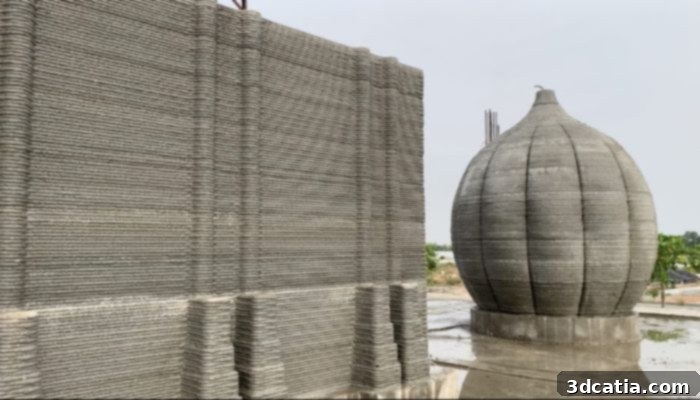
3D Printed Modak, or ‘dumpling’
Telangana’s Trailblazing Spirit in Sustainable Construction
The world’s first temple constructed using additive manufacturing is a powerful testament to Telangana’s undeniable trailblazing spirit and its proactive embrace of innovative construction methods. This remarkable achievement is not an isolated incident but rather builds upon a series of pioneering endeavors within the state. It closely follows the successful construction of India’s first 3D printed bridge prototype, also located within the progressive state of Telangana. These projects collectively showcase the state’s unwavering commitment to pioneering sustainable, efficient, and futuristic architectural developments. The adoption of 3D printing in construction brings numerous advantages, including significantly reduced construction time, lower material waste due to precise layer-by-layer deposition, and enhanced design flexibility that allows for complex geometries otherwise difficult or expensive to achieve. This also translates to a smaller carbon footprint, aligning with global sustainability goals. As the temple continues to majestically take shape, the world eagerly anticipates witnessing the full grandeur of the Lotus structure and the intricately designed, towering gopurams. These elements will not only complete the aesthetic vision of the temple but also further demonstrate the incredible potential of this technology. Telangana’s groundbreaking use of 3D printing technology sets an inspiring precedent for the entire global construction industry, offering a compelling vision for the future. It emphatically proves that the intelligent convergence of time-honored tradition and cutting-edge innovation can indeed create awe-inspiring masterpieces that are not only structurally sound and aesthetically pleasing but also enduring, destined to stand for generations to come. This temple is more than just a building; it is a symbol of progress, a bridge between the past and the future, and a beacon for what is achievable when creativity meets advanced technology.
The implications of this project extend far beyond religious architecture. It opens doors for rapid construction of affordable housing, emergency shelters, and infrastructure in remote or disaster-stricken areas. The ability to print complex shapes with minimal manual intervention means faster project completion, reduced labor costs, and improved safety on construction sites. Furthermore, the localized production capabilities inherent in 3D printing reduce transportation costs and the environmental impact associated with material logistics. The material science advancements in printable concretes and other composites are also being driven by such projects, leading to stronger, more durable, and potentially self-healing construction materials. The world watches closely as Telangana continues to lead the charge, proving that India is not just an adopter of technology but a significant innovator and developer in the advanced manufacturing landscape.
What are your thoughts on the world’s first 3D printed temple and its profound implications for the future of construction? We invite you to share your insights and comments below, or engage with us on our LinkedIn, Facebook, and Twitter pages! Don’t miss out on the latest advancements and news in the additive manufacturing sector. Be sure to sign up for our free weekly Newsletter here, delivering the freshest 3D printing news straight to your inbox! Additionally, you can explore all our engaging videos and in-depth content on our YouTube channel for more visual insights into the world of 3D printing.
*All photo credits: Construction Week India