
Desktop Metal’s Strategic Reboot: CEO Thomas Nogueira Unveils Future Vision for Additive Manufacturing
The journey of Desktop Metal in recent months has been nothing short of a rollercoaster, captivating the attention of the additive manufacturing industry. Those who follow the sector closely are well aware of the significant upheavals and challenges the manufacturer has navigated. From being a darling of the market with ambitious multiple acquisitions that aimed to consolidate a diverse portfolio of 3D printing technologies, the company faced an unexpected announcement of bankruptcy this summer. This stark contrast between its aggressive expansion and its subsequent financial difficulties raised numerous questions among market observers and stakeholders.
The dramatic saga involving acquisition bids from industry giants like Stratasys and Nano Dimension further added to the speculation surrounding Desktop Metal’s future. How could a company that was once at the forefront of innovation and growth experience such a rapid reversal of fortune? Was it a consequence of a broader market downturn affecting the additive manufacturing sector, an overly aggressive and perhaps poorly integrated consolidation strategy, or a fundamental change in strategic direction that led to these challenges? These complex questions left many perplexed about the company’s trajectory. However, a glimmer of hope has emerged: an investment firm, Arc Impact Acquisition Corporation, stepped in to acquire a substantial portion of Desktop Metal’s assets, signaling a potential new chapter for the company.
This acquisition by Arc Impact Acquisition Corporation heralds a new lease of life for Desktop Metal. The company has formally announced a significant revival, repositioning itself as an advanced manufacturing platform with a sharpened focus. This revitalized strategy emphasizes a powerful combination of metal and ceramic binder jetting technologies, which are critical for high-volume, cost-effective production of complex parts. Furthermore, Desktop Metal is making a substantial commitment to leveraging Artificial Intelligence (AI) to accelerate the discovery of innovative materials and to enable more precise and efficient control over its manufacturing processes. This AI-driven approach is expected to unlock new capabilities and significantly improve print quality and consistency. Concurrently, the company is dedicating resources to the development of industrial polymer foams, a segment with high potential for lightweighting and functional applications across various industries. To lead this renewed strategic direction, Thomas Nogueira, who previously served as COO and has been an integral part of Desktop Metal for nearly nine years, has been appointed as the new CEO. We had the exclusive opportunity to sit down with Mr. Nogueira to delve deeper into Desktop Metal’s refreshed strategy, his overarching vision for the business and the additive manufacturing market, and the profound consequences of the recent acquisition by Arc. Join us as we explore the manufacturer’s ambitious roadmap for the future.
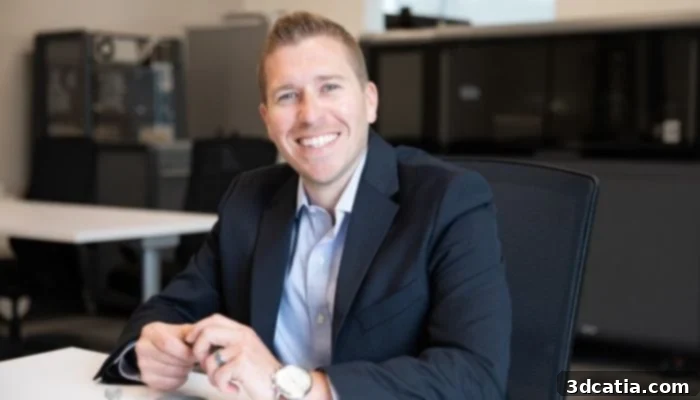
Thomas Nogueira, CEO of Desktop Metal
3DN: Can you introduce yourself and your career in the AM industry?
My professional journey prior to joining Desktop Metal was primarily rooted in the Plastics and Battery industries. Across these sectors, my focus consistently revolved around the intersection of Operations and Engineering. I had the privilege of working at prominent companies like GE, A123 Systems, and 24M Technologies, where I gained invaluable experience in managing complex manufacturing processes and driving technological innovation. I embarked on my journey with Desktop Metal in early 2017, almost eight and a half years ago. Initially, my primary responsibility was to establish and scale the foundational Operations of the company. This involved meticulously building out our capabilities across Manufacturing, Supply Chain management, and Facilities infrastructure – essentially laying the groundwork for a burgeoning additive manufacturing enterprise. As Desktop Metal experienced rapid growth, particularly following its IPO and subsequent wave of acquisitions, my role naturally evolved. By mid-2022, after the extensive integration of these acquired entities was largely complete, I transitioned into the role of Chief Operating Officer (COO). The past few years as COO have been exceptionally dynamic, focusing on the day-to-day running of the business while simultaneously navigating the complexities of absorbing numerous acquired companies. This period was further compounded by significant M&A activities, specifically the proposed transactions with both Stratasys and Nano-Dimension, which demanded considerable strategic attention and operational oversight. Now, with a clear path forward, I am personally and professionally energized by our renewed ability to concentrate intently on our core business strengths. This focused approach promises to unlock new efficiencies and accelerate innovation, paving the way for sustainable growth.
3DN: DM acquired a number of interesting companies over the last few years. What will the relationship with them be moving forward?
Our previous acquisition strategy was certainly ambitious, bringing a wealth of innovative technologies and brilliant teams into the Desktop Metal fold, including notable entities like ExOne. Moving forward, however, we are adopting a far more disciplined and strategic approach. Our current focus is on rigorously prioritizing the technologies, platforms, and teams that align most closely and synergistically with our redefined core strategy. This strategy is now squarely centered on advancing our capabilities in specific material categories: metals, ceramics, and advanced polymers. This means a careful evaluation of each acquired asset to ensure it contributes directly to our strength in these key areas and enhances our ability to deliver production-ready additive manufacturing solutions. Consequently, while some businesses that did not fit this refined strategic focus have been responsibly divested, the most critical core platforms, groundbreaking technologies, and invaluable expertise from these acquisitions remain absolutely integral to our long-term roadmap. These foundational elements are crucial to driving our future innovation and market leadership. It’s important to acknowledge that throughout this process, many of us forged strong professional relationships and personal friendships. While these decisions are strategically necessary for the company’s future, we genuinely wish all of our former Desktop Metal family members immense success in their future endeavors, whether they have remained within our restructured portfolio or moved on to new opportunities.
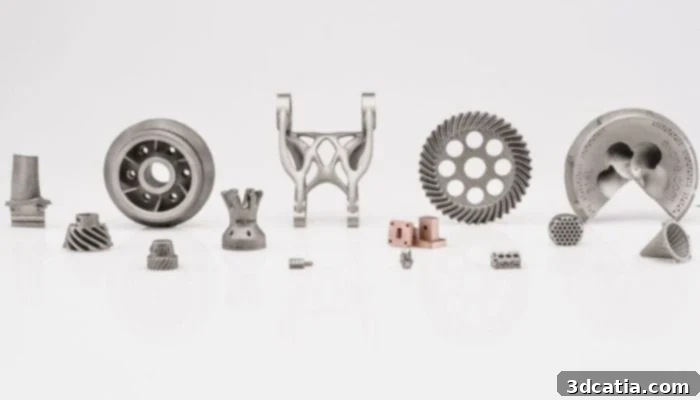
In recent years, Desktop Metal has acquired numerous companies, including ExOne.
3DN: You’ve relaunched under new ownership after Chapter 11, selling off foreign subsidiaries and major parts of the business. How do you plan to regain customer and investor trust while ensuring service continuity?
Regaining customer and investor trust after such a significant restructuring, including a Chapter 11 filing and the divestment of key assets like foreign subsidiaries, is our paramount priority. We understand the concerns this period of turbulence may have raised, and our strategy for rebuilding confidence is anchored in three core principles: clarity, execution, and unwavering customer success. Firstly, we’ve focused intensely on stabilizing the business operations and ensuring absolute continuity in our service and support for all existing customers. This means maintaining our established global support infrastructure, continuing to provide spare parts, and honoring service agreements without interruption. Secondly, we are concentrating our valuable resources precisely where we can deliver the most significant value to our customers. This involves a more targeted approach to product development, support, and innovation, ensuring that every investment directly enhances our customers’ experience and success with our additive manufacturing solutions. We are streamlining our operations to be more efficient and responsive, minimizing potential disruptions, and maximizing output. Ultimately, the foundation for regaining and sustaining trust will be built through consistent transparency in our communications and absolute reliability in our product performance and customer support. We are committed to openly sharing our progress, demonstrating tangible results, and consistently delivering on our promises. This renewed focus, combined with operational stability, is designed to show both our customers and investors that Desktop Metal is a reliable, forward-thinking partner dedicated to their long-term success.
As CEO, my focus is on clarity and execution. The past few years in additive manufacturing have been turbulent for a variety of reasons, but this reset allows us to focus on the applications and programs that matter most for customers. We are building a company that is leaner, more disciplined, and better positioned for sustainable growth. Above all, we are focused on making our customers successful.
3DN: Chinese 3D printing firms are scaling fast with lower costs. How do you plan to compete on technology and price?
We recognize the undeniable rise of Chinese 3D printing firms and their rapid scaling capabilities, often characterized by competitive pricing strategies. However, Desktop Metal’s strategic approach is not to engage in a race to the bottom on price. Our competitive edge lies firmly in innovation, superior performance, and delivering unparalleled total value to our customers. We distinguish ourselves through several key areas. Firstly, our advanced, AI-driven process control systems are game-changers. These intelligent systems enable unprecedented levels of precision, consistency, and reliability in our additive manufacturing processes, significantly reducing defects, optimizing material usage, and ensuring part quality that lower-cost providers simply cannot replicate. Secondly, our pioneering work with advanced materials, such as Silicon Carbide (SiC), allows us to unlock new applications and performance characteristics that are crucial for demanding industrial environments. These materials offer superior thermal and wear resistance, opening doors for parts in aerospace, automotive, and energy sectors that require extreme durability. Furthermore, our platforms are engineered from the ground up to be truly production-ready, focusing on industrial scalability, uptime, and ease of integration into existing manufacturing workflows. This enables our customers to achieve high-volume production with confidence, offering superior speed, reliability, and ultimately, a higher return on investment over the lifecycle of the machine and the parts produced. This comprehensive value proposition, encompassing cutting-edge technology, material innovation, and robust production capabilities, differentiates us significantly. We are also deeply committed to our customers and dedicated team members in Taiwan. Their invaluable contributions play a pivotal role in our global strategy, enhancing our research and development capabilities and strengthening our vision for a resilient and globally integrated supply chain.
3DN: How do you see the future of the AM market?
I firmly believe that the future of the additive manufacturing market is unequivocally application-driven. The era of focusing solely on the “cool factor” of 3D printing technology is behind us. Moving forward, the industry’s success and widespread adoption will be judged by its ability to reliably and economically deliver tangible, high-performance parts that genuinely matter across critical industrial sectors. These sectors include aerospace, where AM enables lightweight, complex geometries for improved fuel efficiency; defense, offering rapid prototyping and on-demand parts for enhanced operational readiness; automotive, facilitating tooling, functional prototypes, and increasingly, end-use components for electrification and customization; medical, revolutionizing patient-specific implants and surgical guides; and energy, where AM creates high-temperature, high-pressure components for advanced power generation systems. The companies that can demonstrate consistent capability to scale their additive manufacturing processes—meaning producing these crucial parts not just reliably but also economically and at volume—within these high-stakes applications will be the ones that truly define and lead the next era of the industry. This will require not only technological prowess but also robust quality control, material innovation, and a deep understanding of specific industry requirements to transition AM from a niche prototyping tool to a mainstream, industrial production method. The focus must shift from simply printing a part to solving complex manufacturing challenges with additive solutions, proving its value through performance, cost-efficiency, and market impact.
What are your thoughts on Desktop Metal’s revitalized roadmap and the strategic insights shared by CEO Thomas Nogueira? What specific innovations or market shifts do you anticipate in the future based on these plans? We’d love to hear your perspective! Let us know in a comment below or join the conversation on our LinkedIn or Facebook pages! Plus, don’t forget to sign up for our free weekly Newsletter to get the latest 3D printing news straight to your inbox. You can also find all our videos and in-depth discussions on our YouTube channel.