
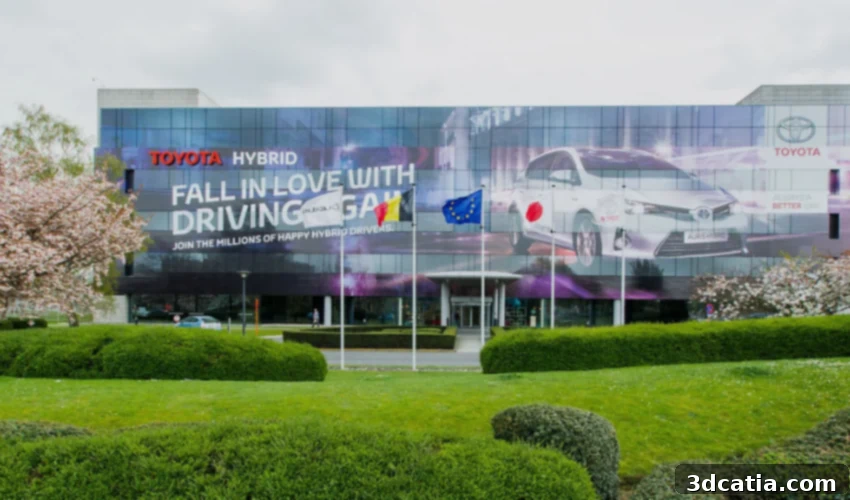
Revolutionizing Automotive Manufacturing: Toyota Europe’s Landmark 3D Printed Die Casting Insert
For decades, 3D printing in the automotive industry has primarily been celebrated for its indispensable role in prototyping and rapid iteration. Designers leverage additive manufacturing to quickly visualize and refine concepts, while engineers conduct rigorous tests on fit, form, and functionality without the significant time and cost investment of traditional manufacturing methods. This agile approach has enabled the automotive sector to experiment with innovative designs and materials at an unprecedented pace. However, a recent milestone achieved by Toyota Europe, supported by industry leaders MacLean-Fogg and Fraunhofer ILT, signals a profound shift. This development firmly establishes additive manufacturing not just as a tool for design validation, but as a robust, industrial-scale method for creating the very tools that shape the vehicles of tomorrow.
In a groundbreaking achievement, Toyota Europe successfully tested and validated the largest nearly solid 3D printed die casting insert ever produced for industrial use. This monumental component, weighing an impressive 156 kg (approximately 350 lb), was custom-built for the critical Yaris hybrid transmission housing. The insert was meticulously printed using MacLean-Fogg’s patented L-40 tool steel powder on Fraunhofer ILT’s advanced multi-laser gantry LPBF (Laser Powder Bed Fusion) system. This achievement represents far more than just a leap in physical scale; it signifies a fundamental shift in the purpose and application of 3D printing within heavy industry. Engineered for rigorous industrial operations, the insert is designed to withstand the incredibly harsh and demanding conditions inherent in high-pressure die casting, demonstrating the maturity and reliability of additive manufacturing for critical production tooling.
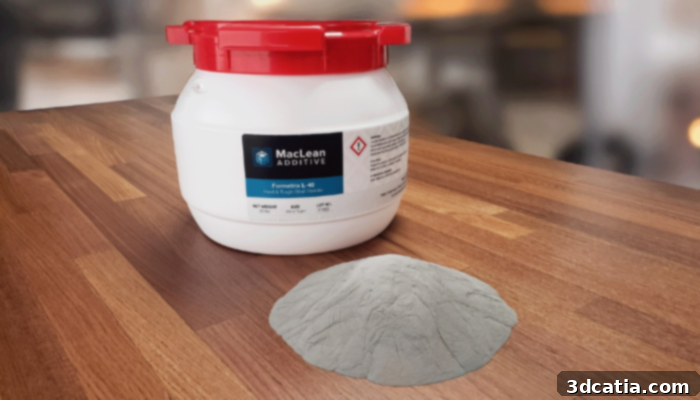
Photo Credit: MacLean-Fogg
The Paradigm Shift: From Prototyping Innovation to Production Powerhouse
Historically, the automotive industry embraced 3D printing primarily for its unparalleled ability to accelerate the design and prototyping phases. It offered a fast, cost-effective way to create complex geometries and test concepts. However, moving beyond prototypes to functional production tooling, especially for demanding processes like die casting, has always presented significant challenges due to material limitations, scalability issues, and the need for extreme durability. Toyota Europe’s success with the 156 kg insert definitively crosses this boundary, marking a pivotal moment where additive manufacturing transitions from a design aid to a core production technology.
Dr. Magdalena Coventry and Dr. Andrew Willett of Toyota Europe underscored the importance of this breakthrough, stating, “Gantry printing with L-40 tool steel powder material, a promising avenue towards scalable additive manufacturing, is opening the potential for metal 3D printing to reduce lead times and to realize more responsive manufacturing.” Their statement highlights the transformative potential: faster production cycles mean new vehicle models can reach the market quicker, adapting more rapidly to consumer demands and technological advancements. This responsive manufacturing paradigm is crucial for an industry that thrives on innovation and efficiency, allowing for greater flexibility and agility in production schedules and material procurement.
Unpacking the Technology: L-40 Tool Steel and Gantry LPBF Systems
The Power of L-40 Tool Steel Powder
Central to this groundbreaking achievement is the innovative L-40 powder, a specialized material developed by MacLean-Fogg. This advanced additive manufacturing material was engineered from the ground up to overcome many of the limitations associated with conventional materials used in 3D printing for tooling. Its unique metallurgical properties provide exceptional resistance to cracking, a common issue in large-scale metal additive manufacturing and high-stress applications like die casting. Furthermore, the L-40 powder significantly extends the lifespan of die-casting inserts, effectively doubling the operational longevity compared to traditional inserts. Crucially, its inherent properties also negate the need for extensive and often costly post-build treatments, streamlining the production process and reducing overall manufacturing time and expense.
For the automotive industry, which has historically relied on labor-intensive hardening processes for steel and endured months-long tooling cycles, the implications of L-40 are profound. The ability to produce more durable inserts faster means accelerated production launches for new models and component revisions. More durable materials translate directly into fewer interruptions in the manufacturing line, maximizing uptime and overall operational efficiency. Moreover, the ability to produce these specialized inserts locally, rather than relying on complex global supply chains, significantly enhances Toyota Europe’s supply chain resilience, allowing them greater control and flexibility in their manufacturing operations, particularly in an unpredictable global economic landscape.
The Role of Multi-Laser Gantry LPBF Systems
The successful production of such a large and complex part would not be possible without equally advanced manufacturing hardware. Fraunhofer ILT’s multi-laser gantry LPBF system played a critical role in bringing this project to fruition. LPBF, or Laser Powder Bed Fusion, is an additive manufacturing technology where a high-power laser selectively melts and fuses metallic powder particles layer by layer, based on a 3D digital design. The “multi-laser gantry” configuration takes this a step further, deploying multiple lasers simultaneously across a large build platform. This parallel processing capability drastically increases the build speed and efficiency, making it feasible to produce massive components like the 156 kg die casting insert in a commercially viable timeframe.
The gantry system provides the necessary precision and stability to maintain consistent quality across such a large build volume, ensuring that every layer is fused perfectly. This combination of advanced material science (L-40 powder) and cutting-edge hardware (multi-laser gantry LPBF) is what truly unlocked the potential for industrial-scale additive manufacturing in this context, demonstrating a powerful synergy between material innovation and machine capability.
Photo Credit: Toyota Europe
Scalability and Efficiency: Addressing Industrial Demands
Dr. Niklas Prätzsch of Fraunhofer ILT succinctly articulated the driving force behind the gantry system’s development: “This was precisely our motivating factor to develop the gantry system. L-40’s unique attributes make it possible to perform large-scale additive manufacturing of tooling inserts at lower temperatures without compromising quality.” This statement is critical because it addresses two paramount concerns for industrial adoption: scalability and maintaining quality under efficient manufacturing conditions. The ability to process L-40 tool steel at lower temperatures is a significant technical advantage, as it minimizes thermal stresses that can lead to warping or cracking in large metal parts, thereby ensuring structural integrity and precise dimensions without sacrificing performance. This means the benefit isn’t just the sheer size of the insert; it’s the simultaneous demonstration of industrial-grade scalability and cost-effective efficiency.
For sectors like automotive, which demand high volumes and consistent quality, this breakthrough signifies that additive manufacturing can now meet these stringent industrial requirements. It opens doors for customized, high-performance tooling to be produced on demand, reducing the reliance on traditional, slower, and often less flexible manufacturing processes. The collaboration between MacLean-Fogg, Fraunhofer ILT, and Toyota Europe exemplifies how targeted material development combined with advanced machine engineering can overcome long-standing barriers in additive manufacturing, pushing the technology firmly into the realm of mainstream industrial production.
Broader Implications for Automotive Manufacturing and Beyond
The successful deployment of this large 3D printed die casting insert by Toyota Europe carries significant implications that extend far beyond a single component or a single car model. It represents a paradigm shift that will reverberate throughout the automotive supply chain and potentially inspire other heavy industries.
Economic Benefits
The economic advantages are substantial. Reduced lead times for tooling mean faster product development cycles, allowing car manufacturers to bring new models and innovations to market more quickly. The extended lifespan of L-40 inserts translates into lower operational costs due to less frequent tool replacement and maintenance downtime. Furthermore, localized production capabilities, enabled by advanced AM systems, can significantly reduce shipping costs, import duties, and the inherent risks associated with global supply chain disruptions. This shift towards more resilient, regionalized manufacturing can enhance cost predictability and reduce overall expenditure in the long run.
Performance and Design Freedoms
Beyond economics, additive manufacturing offers unparalleled design freedom. Engineers can now design complex internal geometries within the die-casting inserts, such as intricate conformal cooling channels that precisely follow the contours of the part. This optimized cooling leads to more uniform temperature distribution during the casting process, which in turn results in higher quality castings, reduced cycle times, and an extended lifespan for the die itself. These improvements directly contribute to enhanced vehicle performance, lighter components, and greater fuel efficiency for the end product. The ability to iterate and optimize these complex designs quickly via 3D printing further accelerates innovation.
Environmental Considerations
Additive manufacturing also presents environmental advantages. By building parts layer by layer, material waste is dramatically reduced compared to subtractive manufacturing methods (like machining away material from a large block). The ability to print durable tools that last longer also means fewer resources are consumed in manufacturing replacements. Furthermore, optimized tool designs, such as those with conformal cooling, can improve the energy efficiency of the die casting process itself, leading to a smaller carbon footprint for each manufactured vehicle part. This aligns with the automotive industry’s increasing focus on sustainability and greener manufacturing practices.
In meeting Toyota’s challenging requirements, MacLean-Fogg and Fraunhofer ILT have accomplished something far greater than simply producing a 350-pound insert. They have vividly demonstrated how 3D printing has definitively crossed the threshold from being primarily a design and prototyping tool to becoming a fundamental production tool, integrated directly into the very core processes of how vehicles are conceived and built. This marks a truly transformative era for automotive manufacturing, promising greater agility, efficiency, and innovation.
How do you feel about this new development in automotive 3D printing? Let us know in a comment below or on our LinkedIn or Facebook pages! Plus, don’t forget to sign up for our free weekly Newsletter to get the latest 3D printing news straight to your inbox. You can also find all our videos on our YouTube channel. If you are interested in more 3D printing news in the automotive and transportation sector, visit our dedicated page HERE.
*Cover Photo Credits: Toyota Europe