
Transform Your IKEA Furniture: The Power of 3D Printing for Custom Home Solutions
The global appeal of IKEA furniture is undeniable. Synonymous with affordable, functional, and Scandinavian-inspired design, IKEA pieces populate homes worldwide. However, their very ubiquity has sparked a parallel movement: the phenomenon known as IKEA Hacks. An IKEA Hack involves taking an existing IKEA product and modifying it beyond its original intended function. This can range from adding new features and improving functionality to completely reimagining its purpose or personalizing its aesthetic. The motivation? To create unique pieces that truly reflect individual style and specific needs, moving beyond the mass-produced uniformity. In recent years, a powerful new tool has emerged to elevate these hacks to unprecedented levels of creativity and practicality: 3D printing. This innovative technology plays a pivotal role in enabling enthusiasts to design and produce bespoke components, transforming ordinary IKEA items into extraordinary, personalized home solutions. Whether you’re looking to add intelligent storage, custom legs for a classic LACK table, unique lighting fixtures, or specialized organizational inserts, the possibilities with 3D printing are virtually limitless. Let’s delve into how additive manufacturing is revolutionizing the world of IKEA Hacks and explore some inspiring examples that are sure to ignite your imagination.
Why 3D Printing is the Ultimate Tool for IKEA Hacks
At its core, 3D printing, also known as additive manufacturing, is celebrated for its unparalleled ability to create highly customized, bespoke objects with incredible precision. This makes it an ideal method for bringing personalized design visions to life, directly addressing specific user needs and overcoming design constraints that off-the-shelf solutions cannot. In the realm of interior design and home decoration, 3D printing has become an increasingly popular technology. It empowers individuals to produce objects tailored to their exact tastes, allowing for the creation of truly unique items – from decorative accents and intricate shelving brackets to custom-fit storage solutions and ergonomic enhancements. Imagine designing and printing unique stools for your bathroom, custom planters for your living room, or even bespoke components that integrate smart home technology into your furniture. For the passionate IKEA Hacker, 3D printing offers an unprecedented level of control and creativity. It enables the design and production of custom-fit pieces that seamlessly integrate with IKEA furniture, augmenting existing functions, adding entirely new capabilities, or radically changing an item’s aesthetic. The result is a truly personalized solution that stands out from the crowd and perfectly aligns with your lifestyle. Furthermore, a thriving online community and numerous platforms now host vast libraries of downloadable 3D files specifically designed for “hacking” popular IKEA items, making it easier than ever for anyone to get started.
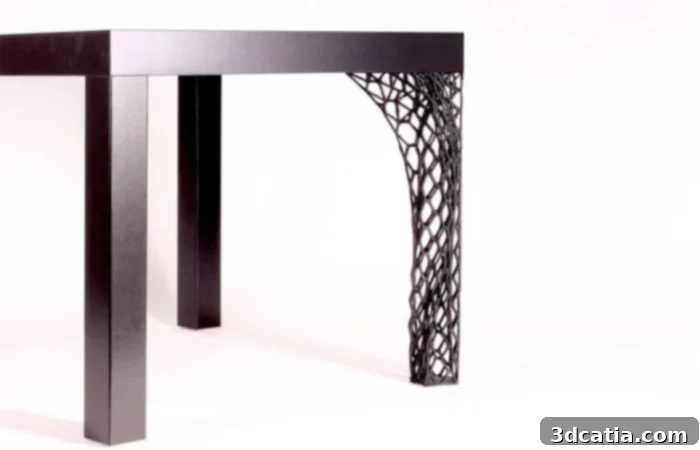
The iconic LACK coffee table reimagined with a custom 3D-printed base, showcasing advanced personalization.
The Growing Phenomenon of IKEA Hacks: Personalization in a Mass-Produced World
The widespread presence of IKEA furniture in homes across the globe means that many of us likely own at least one of their ubiquitous pieces. This universality, while making IKEA products accessible, can also lead to a desire for distinction. The concept of IKEA Hacks was born from this very idea: a shared aspiration to modify a table, chair, lamp, or storage unit purchased from the Swedish giant, transforming it to avoid having the exact same item as a neighbor or friend. This drive for individuality and bespoke functionality is precisely where 3D printing shines brightest. It offers a democratic means for anyone with access to a 3D printer (or a printing service) to become a designer and maker, crafting unique components that perfectly fit their vision.
Inspiring Examples of 3D-Printed IKEA Hacks
The creativity unleashed by the combination of IKEA furniture and 3D printing is truly astounding. Let’s explore some popular and innovative examples that demonstrate the versatility and impact of this trend:
- RABBLA Box Organizers: The simple, rectangular RABBLA storage box, while practical, can be greatly enhanced with custom 3D-printed inserts. These inserts can transform a single open space into multiple compartments of varying sizes, perfectly tailored to organize anything from craft supplies and stationery to electronics and accessories. What starts as a basic box becomes a highly organized, customizable storage solution that evolves with your needs.
- SAMLA Box Filament Dry Boxes: The SAMLA plastic storage box is a favorite among 3D printing enthusiasts for an ingenious hack. By adding 3D-printed internal spool holders, hygrometer mounts, and airtight sealing solutions, the SAMLA box is repurposed into an effective dry box for 3D printer filaments. This protects hygroscopic filaments from moisture, ensuring higher print quality and extending filament shelf-life – a perfect example of a product designed for one purpose being radically improved for another using additive manufacturing.
- Kitchen Innovations: The kitchen, a hub of activity, offers countless opportunities for 3D-printed IKEA Hacks. Imagine custom-designed spice jar holders for the ÖRTFYLLD series that perfectly fit a narrow shelf, or unique attachments for kitchen tools that enhance their ergonomics or functionality. From solutions to grind pepper faster and more efficiently to parts that optimize food storage and organization within drawers and cabinets, 3D printing allows for hyper-specific modifications that truly elevate your culinary space. You can find designs for specialized utensil dividers, bag clip holders, or even custom mounts for kitchen gadgets, all seamlessly integrated with your existing IKEA kitchen setup.
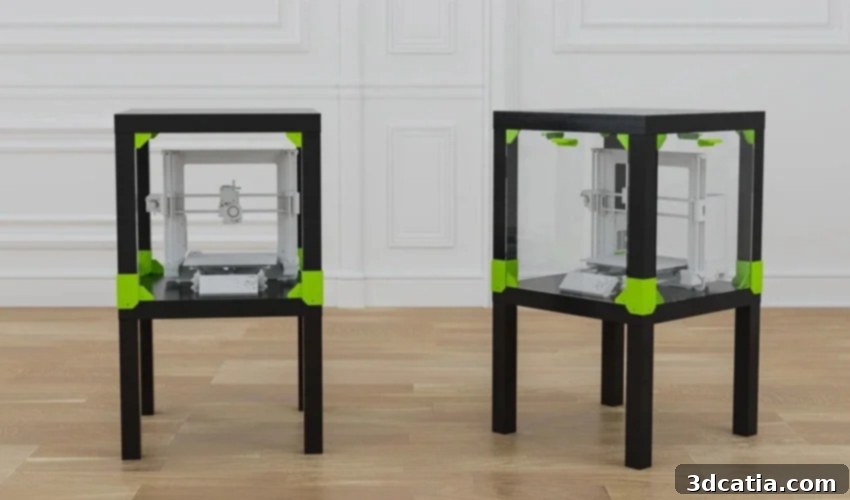
- The Versatile LACK Table: The LACK coffee table is arguably one of IKEA’s most iconic and hack-friendly pieces. Its simple, lightweight design and affordability make it a popular choice for modifications. 3D printing opens up a world of possibilities for this humble table. Users have designed and printed entirely new leg styles, transforming its aesthetic from minimalist to industrial, rustic, or even futuristic. More functionally, 3D-printed components can convert a LACK table into a protective enclosure for a 3D printer itself, offering sound dampening, dust protection, and temperature regulation – a poetic full circle for a 3D printing enthusiast (as seen in the cover photo). Other hacks include adding integrated drawers, hidden compartments, or even converting it into a pet house with custom entryways and features.
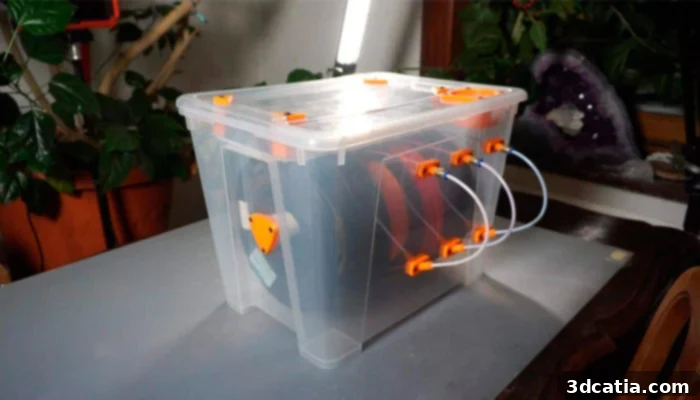
The versatile SAMLA box cleverly repurposed and enhanced with 3D-printed parts to store and protect sensitive 3D printing filaments (photo credits: IKEA Hackers).
Beyond Functionality: Aesthetic and Sustainable IKEA Hacks
While many IKEA Hacks focus on adding functionality, 3D printing also offers immense potential for aesthetic customization. Imagine printing unique drawer pulls, decorative overlays for cabinet doors, or custom feet for sofas and chairs that perfectly match a specific interior design theme. The ability to choose specific colors, textures, and geometries that are unavailable in standard IKEA offerings allows for truly bespoke home decor. Moreover, the environmental benefits of IKEA Hacks, especially those enabled by 3D printing, are significant. By modifying and improving existing furniture, rather than discarding it and purchasing new items, we actively participate in a more sustainable consumption cycle. This approach extends the lifespan of products, reduces waste, and encourages a mindset of reuse and resourcefulness. In an era where over-consumption and environmental impact are critical global concerns, initiatives that promote repair, repurpose, and personalization through methods like 3D printing are not just creative – they are environmentally responsible.
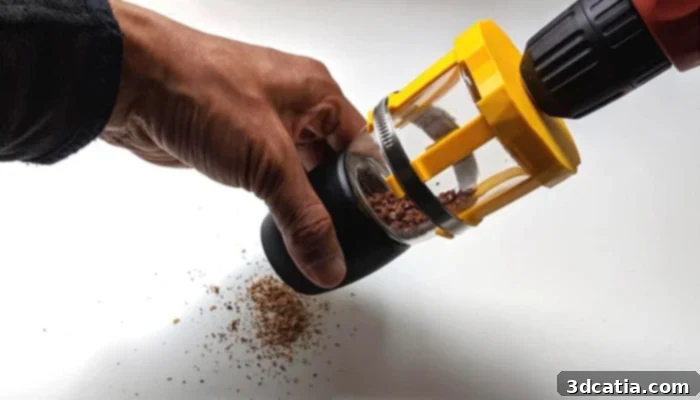
An example of intricate detailing and functional enhancement achieved through 3D printing on an IKEA furniture piece (Photo Credits: IKEA Hackers).
The Future of Furniture Customization: Accessibility and Community
The accessibility of 3D printing technology continues to grow, with more affordable printers entering the market and an expanding network of online printing services. This democratization of manufacturing means that almost anyone can participate in the IKEA Hack movement, regardless of their design or engineering background. Furthermore, the robust online communities surrounding IKEA Hacks and 3D printing are vital to this trend’s success. Platforms like Thingiverse, MyMiniFactory, Cults3D, and dedicated forums allow users to share their ingenious designs, download ready-to-print files, exchange tips, and inspire one another. This collaborative environment fosters innovation and makes it incredibly easy for newcomers to discover, learn, and contribute to the movement. From simple hooks and cable organizers to complex structural modifications and aesthetic enhancements, the range of 3D printable IKEA Hacks is constantly expanding, fueled by a passionate global community of makers.
As we’ve seen, the fusion of IKEA’s versatile furniture with the transformative power of 3D printing unlocks a new dimension of personalization and functionality for our homes. These innovative IKEA Hacks, whether crafted with additive manufacturing or other DIY techniques, are undoubtedly gaining traction and will only grow in popularity. They represent more than just creative projects; they embody a thoughtful approach to consumption, encouraging us to maximize the utility and longevity of our possessions. By promoting reuse and discouraging premature disposal, these initiatives align perfectly with contemporary calls for greater environmental responsibility and sustainable living. We encourage you to explore this exciting intersection of design, technology, and sustainability. Don’t hesitate to share your own inventive ideas for 3D-printable IKEA Hacks – your next creation could inspire countless others!
What are your thoughts on leveraging additive manufacturing to enhance the functionality and aesthetics of IKEA furniture? We’d love to hear from you! Let us know in a comment below or join the conversation on our LinkedIn, Facebook, and Twitter pages! For the latest insights and breaking news in the world of 3D printing, be sure to sign up for our free weekly newsletter here, delivered straight to your inbox. You can also explore our extensive library of videos on our YouTube channel.
*Cover Photo Credits: EugenioFructuoso/Thingiverse