
Exploring the Cutting Edge: This Week’s Top 5 3D Printing Innovations and Applications
Welcome to another exciting installment of our weekly dive into the world of 3D printing! Each Sunday, we scour the latest developments and bring you the most compelling videos showcasing groundbreaking advancements in additive manufacturing. This week’s selection is particularly diverse, highlighting how 3D printing is revolutionizing industries from advanced material science and professional sports to critical infrastructure and consumer goods like footwear. We’ll explore innovative multi-material printing solutions, see how elite cycling teams gain a competitive edge, learn how 3D printing keeps essential transport systems running, understand its impact on shoe manufacturing, and finally, enjoy the mesmerizing process of creation through a captivating time-lapse. Prepare to be amazed by the versatility and transformative power of additive manufacturing as we showcase these five must-see videos. We hope you find inspiration in these incredible innovations and have a fantastic Sunday!
Top 1: Aerosint’s Pioneering Multi-Material Powder Recoater Technology
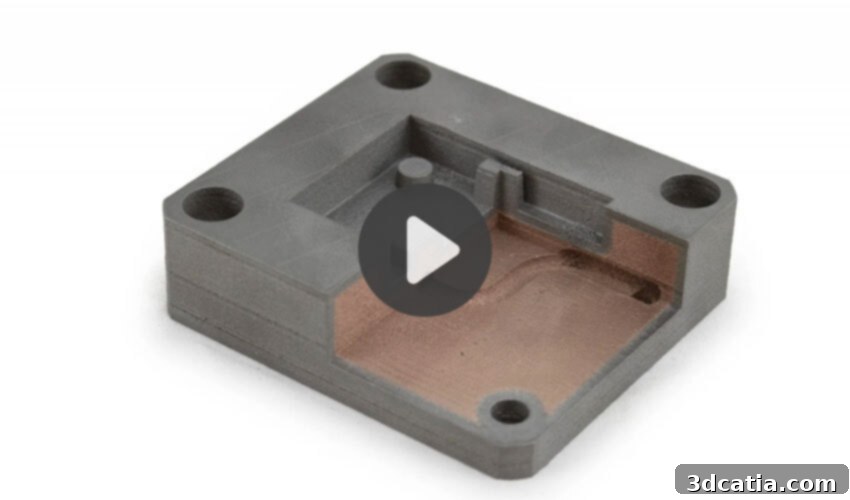
Kicking off our list is a remarkable innovation from Aerosint, an additive manufacturing company based in Herstal, Belgium. They have unveiled a revolutionary 3D printing solution that empowers users to print with multiple powder-form materials simultaneously. At the heart of this breakthrough is their specialized recoater, an advancement designed to precisely deposit different metal powders within the same layer of a build. This capability is truly transformative, as it opens up unprecedented possibilities for creating parts with localized material properties, combining different metals or even ceramics and polymers in a single build. Previously, multi-material printing in powder bed fusion processes was largely limited or required complex, multi-stage processes. Aerosint’s technology streamlines this, promising components with optimized performance for specific functions, such as parts with a tough core and a wear-resistant surface, or electrical components with integrated conductive and insulating sections. While currently compatible with the most common types of metal powders, the potential for expanding this to a wider range of materials, including advanced alloys and composites, is immense. This development is set to significantly impact industries demanding high-performance, functionally graded materials, from aerospace and medical devices to automotive and tooling sectors, pushing the boundaries of what’s achievable with powder-based additive manufacturing.
Top 2: Team DSM Leverages Additive Manufacturing for Peak Cycling Performance
Our second video highlights how the Dutch Cycling Team DSM, formerly known as Team Sunweb, is harnessing the power of 3D printing to achieve unparalleled performance on the track and road. In the highly competitive world of professional cycling, every gram of weight saved, every aerodynamic advantage gained, and every millimeter of fit customization can make the difference between victory and defeat. This is where additive manufacturing company Covestro steps in, utilizing cutting-edge 3D printing technologies to develop high-quality, custom components for the team’s bikes and equipment. Additive manufacturing allows for the rapid prototyping and production of ultra-lightweight, intricately designed parts that are impossible to create with traditional manufacturing methods. Whether it’s aerodynamic handlebars tailored precisely to a rider’s physique, optimized saddle components for improved comfort and power transfer, or lightweight structural elements that reduce overall bike weight without compromising strength, 3D printing offers a distinct competitive edge. The ability to iterate designs quickly and produce bespoke parts on demand means Team DSM can continually refine their equipment to perfectly match the demands of different races and individual rider preferences, ensuring their cyclists are always equipped for peak speed and performance. Discover more about this fascinating application of AM in elite sports in the following video.
Top 3: Wabtec’s Innovative Use of 3D Printing to Minimize Train Downtime
Our third feature delves into a critical application of 3D printing that has significant implications for industrial efficiency and safety: reducing train downtime. Pittsburgh-based company Wabtec, a leading global provider of equipment, systems, digital solutions, and value-added services for the freight and transit rail industries, is pioneering a 3D printing service focused on creating custom-made spare parts for a vast array of industries. This service proves especially invaluable for critical infrastructure like trams and trains. In the past, the challenge of sourcing unique or obsolete spare parts for rail systems could lead to extensive downtime, high maintenance costs, and significant operational hurdles. Imagine a train halted due to a defective, irreplaceable component – the logistical nightmare and economic impact could be immense. Thanks to advancements in 3D scanning and additive manufacturing, Wabtec is transforming this landscape. They can now rapidly scan an old, broken part, digitally recreate its design, and then 3D print a high-quality, functional replacement. This “digital inventory” approach eliminates the need for vast physical warehouses of rarely used parts and drastically reduces lead times. It ensures that essential transportation networks can return to service much faster, minimizing disruptions, improving safety, and extending the lifespan of valuable assets. This on-demand manufacturing capability is a game-changer, not just for rail but for any industry facing challenges with parts obsolescence or the need for highly customized, low-volume components.
Top 4: BASF Explains 3D Printing Solutions Revolutionizing Footwear Production
The footwear industry has become a hotbed for 3D printing innovation, a trend brilliantly illustrated in our fourth video featuring experts from the German chemical giant BASF. As many consumers are aware, major brands like Nike, Adidas, and Asics have already introduced 3D printed footwear to the market, showcasing the technology’s transformative potential. In this insightful video, Christian and Marta from BASF elaborate on how the company leverages additive manufacturing for shoe production and unveil their latest printing solutions specifically tailored for footwear. 3D printing offers unparalleled advantages in this sector, primarily the ability to create highly customized, performance-enhancing components such as midsoles and insoles. Traditional manufacturing struggles to produce the intricate lattice structures and variable densities that 3D printing excels at, which can be precisely tuned to offer superior cushioning, support, and energy return. BASF, a key player in materials science, develops advanced polymers perfectly suited for these applications, offering durability, flexibility, and lightweight properties. This technology not only allows for rapid prototyping and design iteration, significantly speeding up product development cycles, but also enables mass customization – creating shoes perfectly adapted to an individual’s foot geometry and biomechanics. From athletic performance to everyday comfort, 3D printing is fundamentally reshaping how shoes are designed, manufactured, and experienced by consumers, providing both innovative aesthetics and functional improvements.
Top 5: The Magic of Creation: 3D Printing in Time-Lapse
Rounding out our weekly compilation is a visually captivating video that brings the intricate process of 3D printing to life through time-lapse photography. This mesmerizing footage allows viewers to witness the magic of additive manufacturing as objects materialize layer by excruciatingly precise layer. Watching the printer nozzle or laser beam gradually build a complex shape from raw material is not only fascinating but also provides a clear understanding of how these intricate items are formed. The time-lapse format compresses hours of printing into a few short minutes, highlighting the continuous evolution of each object from a digital design to a tangible final piece. For this particular demonstration, the operator utilized a Neptune 3 3D Printer. This model exemplifies the growing accessibility of 3D printing technology, being a budget-friendly desktop unit packed with features that make it suitable for a wide range of users, from hobbyists and educators to small businesses and designers. Such printers have democratized access to additive manufacturing, enabling countless individuals to experiment, innovate, and bring their ideas to life. This video beautifully showcases the elegance and efficiency of modern desktop 3D printing, making the complex process understandable and truly inspiring for anyone interested in how physical objects are created in the digital age.
We hope this week’s curated selection of 3D printing videos has provided valuable insights into the dynamic and ever-expanding world of additive manufacturing. From industrial breakthroughs that enhance material capabilities and streamline essential services to consumer-focused innovations in sports and fashion, and the pure joy of desktop creation, 3D printing continues to push the boundaries of what’s possible. These stories underscore the immense potential of this technology to solve real-world problems, foster creativity, and drive progress across diverse sectors. What were your favorite highlights from this week’s innovations? We encourage you to share your thoughts and opinions in the comments section below! You can also join the ongoing conversation and stay updated on the latest trends by connecting with us on our LinkedIn, Facebook, and Twitter pages. Don’t miss out on any crucial developments – be sure to sign up for our free weekly Newsletter here to receive the freshest 3D printing news directly in your inbox. For a visual feast of all our content, explore our extensive library of videos on our YouTube channel. Thank you for joining us on this journey through innovation!