
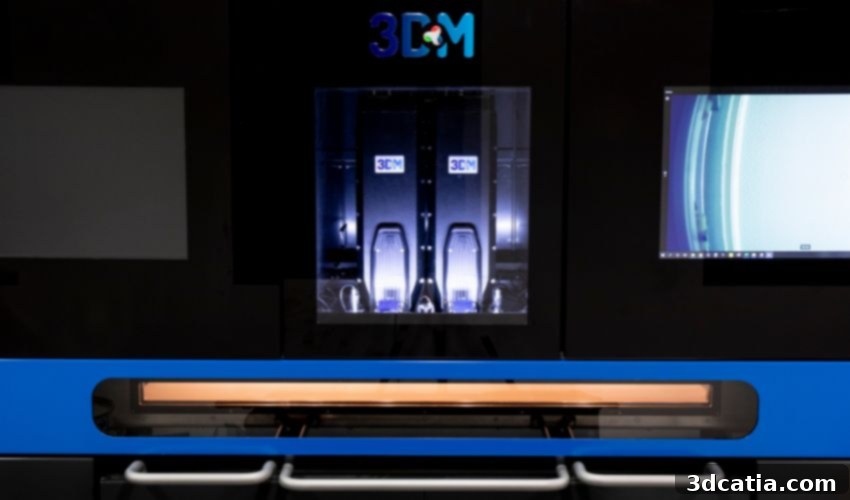
Revolutionizing Industrial SLS 3D Printing: 3DM’s Parallel Laser Technology Drives Production Scalability
Additive manufacturing, commonly known as 3D printing, has undergone a remarkable transformation since its inception in the 1980s. While its early applications were predominantly confined to rapid prototyping, the industry has witnessed a significant shift over the past few years. Additive manufacturing technologies are rapidly industrializing, moving beyond mere concept models to the creation of functional, end-use parts across a multitude of sectors. Despite this progression, significant questions persist regarding the inherent scalability of these processes, especially when considering high-volume production requirements. Fortunately, a wave of innovation is actively addressing these formidable obstacles, pushing the boundaries of what’s possible in the world of industrial 3D printing.
Among the pioneering companies leading this charge is 3DM, an Israeli firm that has developed a groundbreaking printhead technology centered on a unique parallel laser beam approach. This proprietary solution promises to fundamentally change the landscape of Selective Laser Sintering (SLS) 3D printing. By leveraging its advanced technology, 3DM aims to dramatically accelerate printing speed and throughput, all while simultaneously enhancing printing resolution. This innovation directly tackles some of the most pressing challenges in SLS 3D printing, making it a more viable and competitive option for large-scale manufacturing. To delve deeper into 3DM’s vision and technological advancements, we recently had the opportunity to speak with Ido Eylon, the company’s CEO.
Introducing Ido Eylon and the Vision Behind 3DM
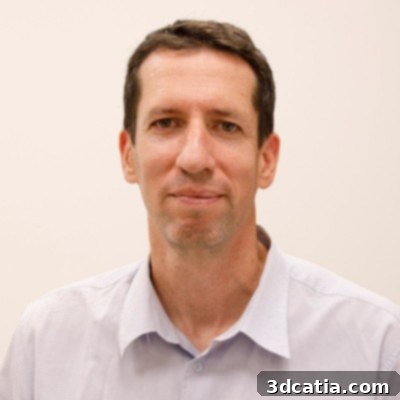
Ido Eylon, CEO of 3DM
Ido Eylon, who has served as CEO of 3DM for the past year, brings a wealth of experience from the additive manufacturing (AM) industry. His career trajectory has provided him with invaluable insights into the intricacies and potential of 3D printing. Prior to joining 3DM, Ido held a pivotal role as the VP of Sales and Marketing at Massivit for three years, a period that deepened his understanding of market dynamics and customer needs within the AM space. Before his tenure at Massivit, Ido dedicated nearly a decade to Stratasys, a global leader in 3D printing. He transitioned to Stratasys following its merger with Objet, starting in a more technical capacity as a manager for the applications team in Israel.
This foundational technical experience proved crucial, as it allowed Ido to develop a profound understanding of the practical applications and limitations of 3D printing technology. He gained a clear perspective on what approaches made sense for real-world scenarios and, equally important, what pitfalls to avoid. His journey continued with a move to the United States, where he served as the applications and pre-sales manager for North America. This role brought him closer to customers and diverse use cases, providing broader exposure to the business aspects of the industry. Subsequently, Ido played a key role in expanding Stratasys’s global footprint by establishing a business unit in Singapore, where he was the business manager for South Asia. His final significant role at Stratasys was VP of Sales for Asia Pacific, completing a three-and-a-half-year period in Singapore that further enriched his commercial, business, and application knowledge across different regions and markets.
Just before taking the helm at 3DM, Ido was particularly enthusiastic about the additive manufacturing industry’s accelerating shift from its rapid prototyping roots towards true industrial-scale production. He recognized 3DM as a unique opportunity to contribute significantly to this transformative movement. Selective Laser Sintering (SLS), in particular, stands out as one of the most promising technologies for high-volume production, capable of manufacturing tens of thousands of parts. This is precisely where 3DM positions itself: to take SLS, which already boasts impressive capabilities, and elevate it to unprecedented levels of performance and efficiency, thereby unlocking its full potential for mainstream industrial applications.
3DM itself was founded by Dr. Daniel Majer, a distinguished physicist holding a PhD from the Weizmann Institute of Science in Israel. Dr. Majer is a recognized expert in laser technology, having previously led several companies within this specialized field before conceiving 3DM. His profound expertise was instrumental in building the very first prototype for 3DM with his own hands. The company’s initial growth was fueled by seed capital raised from an Israeli incubator, allowing it to begin its innovative journey. Approximately two years ago, 3DM took a significant step by going public in Tel Aviv, successfully raising additional capital to further accelerate its development processes. Today, 3DM stands on the brink of commercialization, with ambitious plans to deploy its first beta units into the field within the coming months, marking a critical milestone in bringing its cutting-edge technology to the market.
Unveiling 3DM’s Revolutionary SLS 3D Printing Technology
To truly appreciate 3DM’s specific solution, it’s essential to first understand the fundamental strengths of Selective Laser Sintering (SLS) technology. Even in its non-optimized forms, SLS consistently demonstrates the greatest promise for achieving true industrial production capabilities with 3D printing. This inherent advantage stems from its core principles: SLS enables the simultaneous creation of numerous high-quality parts within a single build, without the need for support structures, offering unparalleled design freedom and customization potential. However, despite these inherent strengths, conventional SLS still grapples with several challenges that have limited its widespread industrial adoption. These include issues related to speed, resolution, material versatility, and sometimes the mechanical properties of the final parts. 3DM’s innovative approach is specifically designed to meticulously address and overcome these long-standing obstacles, pushing SLS into a new era of efficiency and capability.
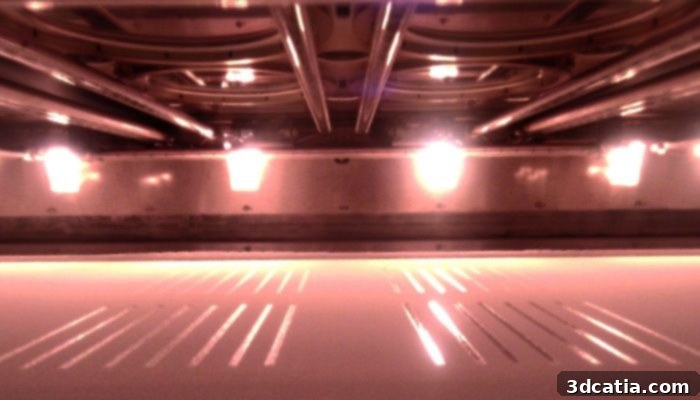
The 3DM printing process
At the heart of 3DM’s breakthrough lies its proprietary QCL (Quantum Cascade Laser) technology. Unlike traditional SLS systems that typically rely on off-the-shelf CO2 or fiber lasers, 3DM has developed its own bespoke QCLs. The most significant and unique characteristic of these lasers is that they are not merely adapted but are meticulously designed, planned, and manufactured from the ground up to achieve optimized plastic melting. This bespoke approach means 3DM is not constrained by the fixed wavelengths or inherent limitations of standard industrial lasers. Instead, their QCLs can be precisely tuned to specific wavelengths, allowing for unparalleled material compatibility and melting efficiency. This capability ensures that the laser energy is delivered at the exact wavelength required for optimal absorption by a particular thermoplastic, leading to superior material processing and part quality.
To truly grasp the ingenuity of this approach, it’s helpful to consider the principles of FTIR (Fourier Transform Infrared Spectroscopy) analysis. FTIR is a powerful analytical technique widely employed across various scientific disciplines – from assessing the quality of food products to detecting prohibited materials or explosives. Essentially, FTIR provides a detailed molecular “fingerprint” of a material, revealing which specific infrared wavelengths it will interact with most efficiently and intensely. This is precisely where Dr. Majer, 3DM’s founder, began his journey in developing their unique laser technology. By understanding a material’s optimal absorption spectrum, 3DM can tailor its lasers for maximum effectiveness.
Every thermoplastic material possesses one or more specific wavelengths at which it absorbs infrared energy most efficiently, leading to the most effective melting. An FTIR analysis clearly illustrates these optimal wavelengths as distinct peaks in the absorption spectrum. The goal of 3DM’s technology is to operate as close as possible to these peaks, ensuring the material reacts in the most desired and controlled manner. In contrast, if one uses a conventional CO2 laser, its output is fixed at approximately 10.6 microns. While this wavelength might cause some materials to melt if they absorb enough energy, it is rarely the optimal wavelength for a wide range of plastics. To compensate, manufacturers often resort to using higher power CO2 lasers, which can melt more material, but at the cost of increased energy consumption, higher operating expenses, and potential degradation of material properties due to non-optimal heating. This highlights a fundamental limitation: traditional lasers are rarely optimized for each specific material. This is precisely the void 3DM fills, meticulously analyzing how different materials react to different wavelengths to achieve unprecedented levels of optimization.
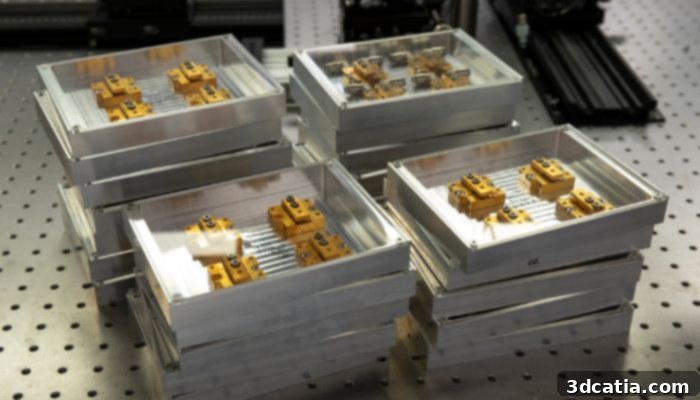
The four lasers are paired in couples
Once the optimal wavelengths are understood, 3DM proceeds to fabricate its custom QCL chips. These chips are remarkably small, typically only half a millimeter wide and approximately five millimeters long, yet capable of emitting between 2-3 watts of light – an extraordinarily strong output for lasers of this minuscule size. These powerful chips are then mounted onto a sophisticated cooling device, forming the initial optical element. From there, multiple elements are built up to create a complete laser module. Ultimately, 3DM integrates four, and potentially more, of these powerful laser modules. These are then precisely combined within a beam head to significantly increase overall power and capabilities. Within this advanced beam head, all individual lasers are harmoniously combined and meticulously focused into a single, high-intensity beam, which then creates the precise melting spot on the powder bed. This parallel laser approach is key to achieving higher speeds and resolution simultaneously.
Furthermore, the design of these beam heads intrinsically ensures the technology is truly scalable. A single 3DM solution can incorporate multiple beam heads, with each head featuring four QCL lasers arranged in couples. Each of these individual lasers can be independently set to its own specific, optimized wavelength, providing unparalleled flexibility for processing different materials or fine-tuning the melting process. This modular and customizable setup represents the ideal configuration for industrial applications, supporting large-format machines designed for continuous production. With these advanced, tunable lasers, 3DM theoretically possesses the capability to melt virtually any thermoplastic material. While currently focusing on expanding the range of readily available 3D printing materials, 3DM is confident that as its technology matures and gains wider adoption, it will enable printing with materials that are currently incompatible with any other additive manufacturing system, opening up entirely new possibilities for product development and innovation.
The Distinct Advantages of 3DM’s SLS Technology
3DM’s unique SLS technology offers a host of compelling benefits that extend far beyond simply broad material compatibility and diverse application possibilities. These advantages address critical pain points in industrial manufacturing, making additive manufacturing a more attractive and viable option for end-use part production. Among the most notable benefits are significantly higher printing speeds, considerable reductions in operational costs, and the flexibility of an open material platform. Crucially, even with these enhancements in speed and versatility, 3DM’s technology maintains rigorous control over the printing process, allowing it to consistently guarantee the desired mechanical properties of the printed parts. By understanding precisely how specific wavelengths interact with materials, 3DM ensures that the final product not only meets but often exceeds the performance expectations for functional components. An additional significant advantage is that the final parts produced are isotropic, meaning their mechanical properties are uniform across all axes, including the critical z-axis. This is a crucial differentiator, as many other additive manufacturing technologies often struggle to achieve true isotropy, leading to anisotropic parts with varying strengths depending on orientation.
Precision is another paramount benefit derived directly from 3DM’s laser absorption efficiency. In conventional SLS systems utilizing fixed-wavelength CO2 lasers, the primary method for controlling the melting process is by adjusting the laser’s intensity. While this offers some degree of control, it inevitably affects the selectivity and precision of the melting, often leading to compromises in detail and surface finish. The laser’s reactivity to the material remains fixed, meaning it cannot be perfectly optimized for every polymer. In stark contrast, 3DM’s QCL technology allows for direct adaptation to the ideal wavelength for optimized melting, specific to each material. This targeted energy delivery results in exceptionally finer details, tighter tolerances, and a significantly superior surface finish on printed parts. The ability to precisely tune the laser to the material’s optimal absorption spectrum minimizes excessive heat input and thermal stress, leading to a more controlled and accurate sintering process.
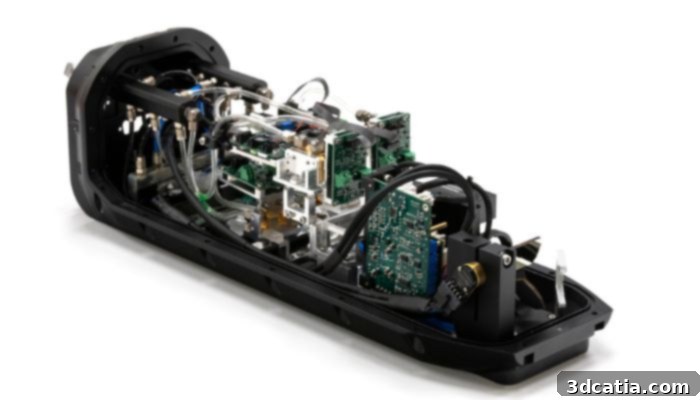
A look inside of a beam head
Furthermore, the scalable nature of 3DM’s technology stands out as a clear advantage over many other additive manufacturing methods. As previously highlighted, the more QCL lasers that are incorporated into a system, the higher the achievable printing speed and resolution. 3DM’s beam heads are ingeniously designed to fully leverage this parallel laser approach, allowing for the integration of multiple powerful lasers. This modularity ensures a better overall result because it fundamentally addresses the fact that in SLS 3D printing, the laser source exerts the most significant impact on the final part quality and especially on the production throughput – a crucial factor when producing many parts simultaneously. Beyond the laser itself, the second most critical aspect in SLS is effective heat management within the powder bed. 3DM has innovatively addressed this by integrating advanced heating devices directly between the lasers within the beam head. This strategic placement allows for precise and localized heating of the powder, even in the middle of a build, ensuring optimal temperature uniformity and further enhancing the consistency and quality of the printed parts.
Scaling Additive Manufacturing for Production: 3DM’s Solution to Industry Challenges
As discussed, Selective Laser Sintering (SLS) is widely recognized as one of the few additive manufacturing technologies inherently capable of scaling for true industrial production. 3DM’s innovative solution amplifies this capability even further, thanks not only to its unique technological properties but also to its strategic approach to market challenges. One significant concern for manufacturers, which often acts as a barrier to wider AM adoption, is the cost of materials. Recognizing this, 3DM has firmly established a policy of operating as an open platform. This commitment to openness means working in very close collaboration with a diverse range of material manufacturers to ensure that users have access to a broad and competitive selection of optimized materials. The exact business model regarding materials is designed to be highly flexible, demonstrating 3DM’s dedication to doing what is best for the customer, particularly in the context of high-volume production and specific application requirements. This open material ecosystem is one of the key pillars supporting 3DM’s efforts to facilitate higher volume production for its users, allowing them to choose materials that best fit their performance and cost targets, rather than being locked into proprietary options. This forward-thinking strategy also differentiates newer companies like 3DM from older players, many of whom originated from a prototyping-focused mindset rather than mass production.
Thanks to this flexible and open approach, coupled with its advanced laser technology, 3DM is strategically targeting all markets where high-volume production using 3D printing, and specifically SLS, makes sound economic and technical sense. Prominent examples include the electronics and consumer goods industries, which are particularly well-suited for 3DM’s capabilities due to the increasing demand for customized components, intricate designs, and responsive supply chains. Beyond these, 3DM’s solution is ideally suited for virtually any industry where customization provides significant added value, or where concerns about supply chain resilience, agility, and on-demand manufacturing are paramount. This is especially true for sectors that can leverage extensive personalization to differentiate products or respond rapidly to market changes, showcasing the immense potential of 3DM’s scalable and adaptable SLS technology.
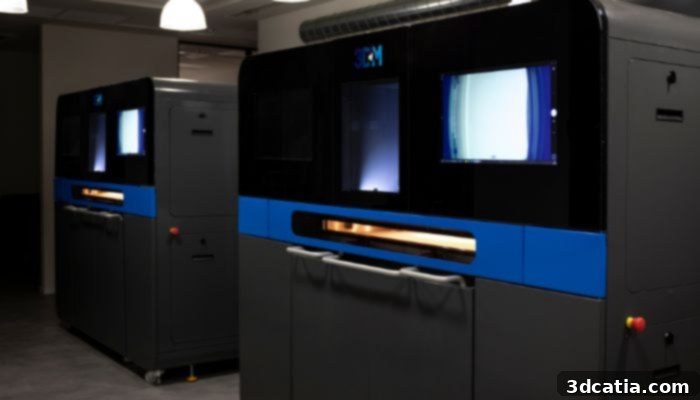
3DM’s full solution
Looking Ahead: 3DM’s Commercialization and Invitation for Collaboration
As we conclude our discussion, 3DM has two primary messages for our readers. Firstly, the company is rapidly approaching the critical phase of commercialization and productization of its groundbreaking technology. This means that interested parties can expect to see more exciting developments and product announcements very soon, signaling a new era for industrial SLS 3D printing. Secondly, while 3DM is already actively collaborating with various industry leaders who are poised to become beta or early bird users of this transformative technology, the company is keen to expand its network. 3DM is always eager to engage with more potential partners and customers, learning about their specific high-volume production goals and understanding their unique needs. This open dialogue helps 3DM further refine its offerings and ensures its solutions are perfectly aligned with market demands. We encourage anyone interested in exploring the future of industrial additive manufacturing with 3DM to get in contact with them and learn more HERE.
What are your thoughts on 3DM’s innovative approach to SLS 3D printing? We invite you to share your perspectives in a comment below or join the conversation on ourLinkedIn,Facebook, andTwitter pages! To stay updated with the very latest 3D printing news delivered straight to your inbox, don’t forget to sign up for our free weeklyNewsletter here. Additionally, you can find all our engaging videos and exclusive content on ourYouTube channel.
*All Photo Credits: 3DM