
Revolutionizing Canadian Construction: How 3D Printing and Industry 4.0 Address Labor Shortages and Drive Innovation
The global construction industry is undergoing a profound transformation, with the adoption of advanced technologies, particularly 3D printing, becoming increasingly prevalent. Over the past few years, these innovative solutions have carved out a significant role, driven by several compelling factors. One of the primary motivations is the urgent need to address the escalating housing crisis by facilitating the rapid and cost-effective construction of homes. This capability promises to deliver housing solutions at an unprecedented pace and lower economic barrier, making homeownership more accessible and communities more resilient. Beyond housing, however, a critical catalyst for this technological shift is the severe and persistent labor shortage plaguing the sector across many developed nations.
To illustrate the scale of this challenge, consider the situation in North America. In the United States, the Associated Builders and Contractors (ABC) projected a staggering deficit for 2023, estimating that an additional 545,000 workers would be required to meet the existing demand. This shortfall is exacerbated by an aging workforce, with a lack of young workers entering the trades to replace those nearing retirement. Canada faces a parallel crisis, where the Canadian Construction Association (CCA) has highlighted the need to fill approximately 62,000 jobs, while an estimated 156,000 workers are expected to retire within the next few years. This demographic shift has created a critical void, leading to widespread labor scarcity. In Quebec, for example, a striking 94% of construction companies reported insufficient workers, a figure that hovers around 86% nationally. This pervasive shortage not only delays projects and increases costs but also stifles potential growth and innovation within the industry. Recognizing the urgency of this situation, KPMG in Canada, in collaboration with the CCA, recently published a comprehensive report titled “Cue Construction 4.0: Make-or-Break Time.” This landmark study aimed to illuminate the myriad benefits of embracing new technologies, including cutting-edge 3D printing, as strategic solutions to these pressing industry challenges.
The report, “Cue Construction 4.0: Make-or-Break Time,” represents a vital pulse check on the Canadian construction industry’s journey towards modernization. KPMG, a renowned full-service Audit, Tax, and Advisory firm, meticulously gathered data from 275 Canadian companies through extensive interviews. The objective was to track the tangible progress the industry has achieved in integrating disruptive technologies since 2020. This extensive survey covered a wide spectrum of innovations falling under the umbrella of “digital” technology and Industry 4.0 principles, including additive manufacturing (3D printing), advanced robotics, sophisticated drone technology for site monitoring and data collection, and Building Information Modeling (BIM) for enhanced project visualization and collaboration. The impetus for this research dates back to 2020 when KPMG first recognized the critical importance of digitizing and modernizing operations for the future sustainability and competitiveness of Canadian construction. Tom Rothfischer, Partner and National Industry Leader for Building, Construction, and Real Estate at KPMG in Canada, articulated the core philosophy behind this drive: “Technology can help the construction industry address Canada’s housing and infrastructure challenges. Digital tools, if used smartly, save time and money, reduce waste, and improve worker safety and productivity. In short, they help get projects done on time or ahead of schedule and on budget.” His statement underscores the multifaceted advantages that technological adoption offers, extending beyond mere efficiency to encompass economic viability, environmental responsibility, and enhanced worker well-being. By leveraging these advanced tools, the industry can overcome longstanding hurdles, delivering projects more predictably and sustainably, thereby contributing significantly to Canada’s economic and social infrastructure.
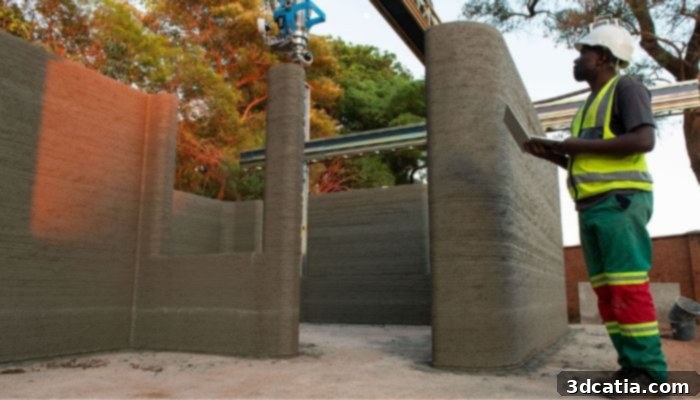
3D printing is being adopted worldwide in construction, such as with this 3D printed house in Africa (photo credits: CDC Group)
Driving Efficiency and Competitiveness: How Canadian Construction Embraces Industry 4.0
The findings of the KPMG report paint an encouraging picture of accelerating technological adoption within the Canadian construction sector over the past two to three years. Despite the ongoing challenges, particularly the acute shortage of skilled labor and trades affecting a staggering 90% of construction companies, there is a clear consensus emerging regarding the potential of disruptive technologies. A compelling 86% of companies surveyed agreed that these innovative tools can generate substantial savings and significantly boost operational efficiency. Furthermore, an equally impressive 85% believe that disruptive technologies hold the key to enhancing their companies’ overall competitiveness in an increasingly challenging market. While 73% of respondents expressed concerns that the Canadian construction industry still lags behind other countries in the pace of digital technology adoption, the report also highlights a proactive shift in investment. More than half (56%) of the interviewed companies reported making either great or considerable investments in these advanced technologies, signaling a decisive move towards modernization. In contrast, only 20% indicated limited investment, and a mere 25% had not invested at all. This significant commitment from a majority of firms underscores a rapidly changing landscape, demonstrating a growing recognition that embracing Industry 4.0 principles is no longer an option but a strategic imperative for survival and growth in the contemporary construction environment. This investment trend points towards a future where digital fluency and technological integration will define success in the Canadian construction sector.
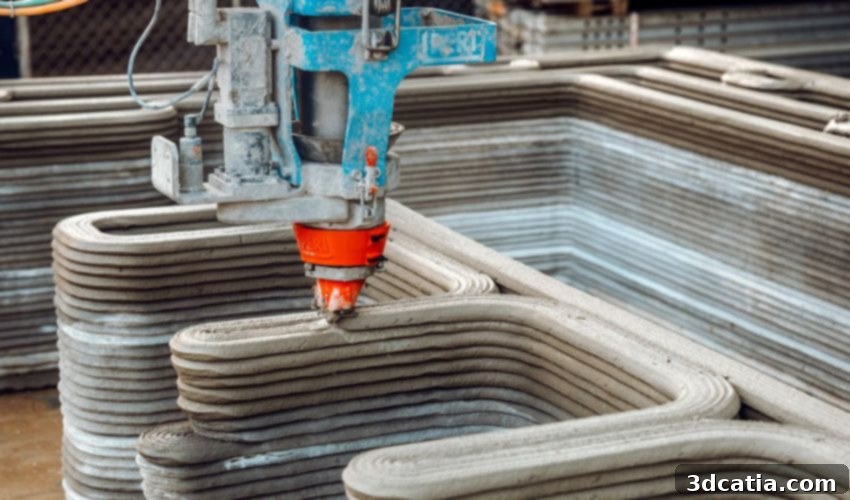
Among the array of advanced technologies highlighted in the KPMG report, additive manufacturing, commonly known as 3D printing, is playing a particularly pivotal role in transforming the construction landscape. Its unique capabilities, especially in efficiently laying concrete structures and fabricating complex steel shapes, significantly reduce the reliance on extensive manual labor. This directly addresses the critical labor shortage, allowing projects to proceed with considerably fewer workers while maintaining or even accelerating timelines. The data unequivocally supports this trend: since 2020, there has been a remarkable 80% increase in the adoption of additive manufacturing within Canadian construction companies. This growth outpaces other significant technologies, with robotics seeing a 63% increase and Building Information Modeling (BIM) and digital twin technologies experiencing a 78% rise in adoption over the same period. The strong performance of 3D printing underscores its immediate and tangible benefits for the industry.
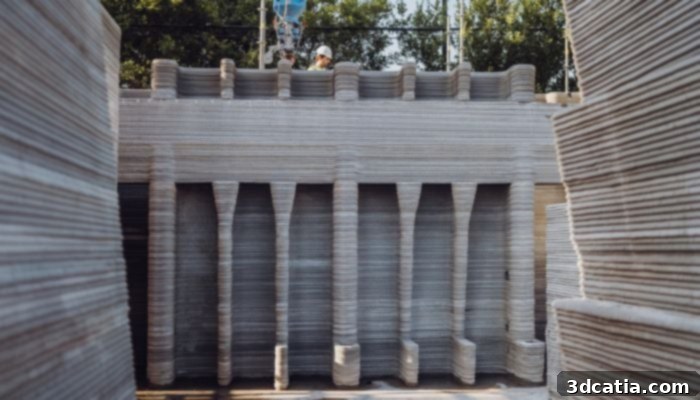
Beyond adoption rates, implementation is also gaining momentum. The report reveals that approximately 18% of projects utilizing these advanced technologies have already seen successful implementation. A prime example of this progress is the two-story residential building 3D printed by nidus3D last year, a landmark project demonstrating the practical viability and scalability of construction 3D printing. Such initiatives are not isolated events but rather indicators of a broader movement towards integrating 3D printing into mainstream construction practices. The technology’s ability to automate repetitive tasks, reduce material waste, and enhance precision makes it an invaluable tool for improving overall project efficiency and sustainability. By streamlining the construction process and minimizing the need for large, skilled labor crews, 3D printing emerges as a powerful solution to mitigate the impact of labor shortages, accelerate project delivery, and ultimately contribute to addressing Canada’s housing and infrastructure challenges. The ongoing planning for even more projects in the coming years further solidifies the crucial importance of 3D printing in shaping the future of construction. For those eager to delve deeper into these transformative insights, the full KPMG report is available for free download HERE, offering a detailed analysis of how technology is redefining the industry.
The integration of 3D printing and broader Industry 4.0 technologies is undeniably charting a new course for the Canadian construction industry. As evidenced by the KPMG report, these innovations are not merely theoretical concepts but practical, implementable solutions directly addressing critical challenges such as the persistent labor shortage and the urgent demand for affordable, rapidly built housing. The shift towards digital transformation represents an opportunity for enhanced productivity, improved safety, reduced waste, and greater competitiveness on a global scale. The commitment to investment and the increasing rate of adoption demonstrate a clear recognition among industry leaders that technological innovation is paramount for future success and resilience. By embracing these advancements, Canada’s construction sector is positioning itself to overcome current obstacles and build a more efficient, sustainable, and technologically advanced future.
What are your thoughts on the significant role that 3D printing and other Industry 4.0 technologies can play in mitigating the labor shortage and driving innovation within Canadian construction? We invite you to share your perspectives in a comment below or join the conversation on our LinkedIn, Facebook, and Twitter pages! Don’t forget to sign up for our free weekly Newsletter here to receive the latest 3D printing news straight to your inbox. You can also find all our engaging videos and in-depth analyses on our YouTube channel, offering visual insights into the world of additive manufacturing.
*Cover Photo Credits: Leslie Lok and Sasa Zivkovic/Cornell University