
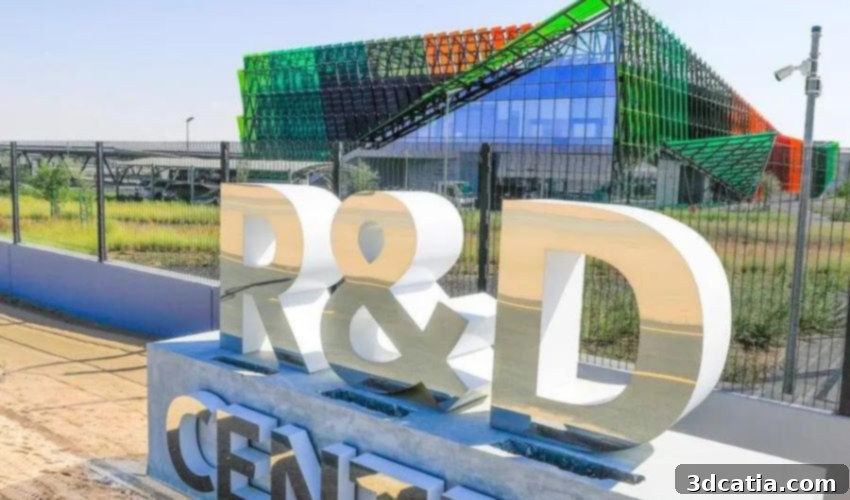
Advancing Metal 3D Printing: DEWA’s New Patent Boosts Extrusion Technology
The landscape of 3D printing is in a constant state of flux, characterized by relentless innovation and technological breakthroughs. Even foundational additive manufacturing methods like Fused Deposition Modeling (FDM) and Stereolithography (SLA), which trace their origins back to the 1980s, continue to evolve, seeing significant improvements in both user experience and overall performance. This evolutionary drive is particularly pronounced in the realm of metal 3D printing, a sector ripe for advancements that can democratize access and expand applications. In a significant development for the industry, the Research and Development (R&D) Center of the Dubai Electricity and Water Authority (DEWA) has recently announced the filing of a patent for a novel device. This innovative solution is poised to significantly enhance and optimize extrusion metal 3D printing processes, marking a notable step forward in the adoption and efficiency of metal additive manufacturing.
It comes as no surprise that such pioneering work is emerging from the United Arab Emirates (UAE). The nation, and particularly Dubai, has firmly positioned itself at the forefront of integrating cutting-edge 3D printing technologies across a multitude of sectors and fields. This commitment is underpinned by strategic initiatives like the Dubai 3D Printing Strategy, which actively seeks to transform Dubai into a preeminent global hub for additive manufacturing. The strategy specifically targets key areas such as construction, healthcare, and consumer goods, aiming to leverage 3D printing for sustainable economic growth and technological leadership. This forward-thinking approach creates a fertile ground for research and development, fostering an environment where innovations like DEWA’s latest patent can thrive.
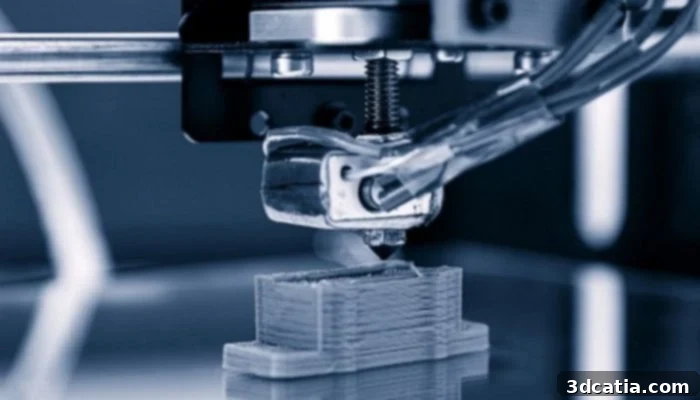
The patented device from DEWA’s R&D Center is engineered to enhance metal 3D printing processes (photo credits: DEWA)
The UAE’s dedication to additive manufacturing is evident in numerous groundbreaking projects already implemented across the country. These include ambitious initiatives like the restoration of delicate coral reefs through advanced 3D printing techniques, demonstrating a commitment to environmental sustainability through technology. Another significant application involves the innovative use of additive manufacturing for essential road maintenance, highlighting how 3D printing can enhance efficiency and durability in infrastructure. Beyond government and industry, there is strong public endorsement for these technologies. A comprehensive YouGov poll conducted last year revealed that UAE residents overwhelmingly consider 3D printing as the top technology for government investment. A remarkable 83% of respondents believed it would benefit society, with an even higher 85% anticipating that 3D printing would become widespread in the near future. This broad-based support creates a conducive ecosystem for further investment and innovation in the field.
Saeed Mohammed Al Tayer, MD & CEO of DEWA, provided further insights into the R&D Center’s strategic decision to delve into metal 3D printing. He articulated DEWA’s crucial role in fulfilling the objectives of the Dubai 3D Printing Strategy, an initiative launched by His Highness Sheikh Mohammed bin Rashid Al Maktoum, Vice President and Prime Minister of the UAE and Ruler of Dubai. The strategy’s overarching aim is to harness this transformative technology for the betterment of humanity and to solidify the UAE and Dubai’s standing as a leading global hub for 3D printing technology by the year 2030. Al Tayer emphasized that the R&D Center is a crucible of innovation, hosting a diverse team of leading researchers and creative minds who are instrumental in supporting a sustainable economy and enriching the global scientific community. He further highlighted DEWA’s internal adoption of 3D printing, leveraging it as an innovative solution for its operational needs. This includes producing spare parts for essential devices and equipment, which not only streamlines maintenance but also significantly extends the operational lifespan of critical infrastructure, embodying a practical approach to sustainable resource management.
The Evolution of Metal Extrusion 3D Printing
Metal 3D printing has diversified significantly over the past decades, moving beyond traditional powder bed fusion technologies to include more accessible and often safer methods. Extrusion-based metal 3D printing, frequently referred to as Bound Metal Deposition (BMD) or Metal Fused Filament Fabrication (MFFF), represents a pivotal advancement in this field. Unlike powder bed fusion, which uses high-powered lasers or electron beams to selectively melt metal powder, extrusion-based systems operate similarly to conventional FDM 3D printers. They utilize a filament or paste composed of fine metal particles embedded within a polymer binder matrix. This “green part” is then debound (the binder is removed) and sintered in a furnace, densifying the metal particles into a solid, functional metal component. This process often reduces equipment costs and safety requirements compared to handling loose metal powders, making it an attractive option for a wider range of industries seeking to adopt metal additive manufacturing.
The journey of FDM and SLA from plastics to metals is a testament to the versatility of additive manufacturing. Early FDM systems revolutionized prototyping with thermoplastics, while SLA offered high-resolution models using photopolymer resins. As material science advanced, researchers began integrating metal powders into polymer matrices, effectively bringing the simplicity and accessibility of FDM-like processes to metal fabrication. This hybrid approach allowed for the creation of intricate metal parts without the need for the complex and costly infrastructure typically associated with traditional metalworking or powder-bed metal 3D printing. However, this method still faces challenges, primarily related to maintaining consistent material flow, achieving optimal melting and extrusion temperatures, and ensuring reliable part density and mechanical properties after post-processing (debinding and sintering). DEWA’s latest innovation directly targets these specific pain points, aiming to refine the core extrusion process itself.
Dubai: A Global Hub for Additive Manufacturing Innovation
Dubai’s proactive stance on 3D printing is not coincidental; it’s a deliberate strategy to diversify its economy, foster innovation, and establish itself as a leader in future technologies. The Dubai 3D Printing Strategy, launched in 2016, outlines an ambitious vision for the emirate. It aims to have 25% of its new buildings 3D printed by 2030, alongside significant advancements in healthcare, where customized medical devices and implants are becoming commonplace, and in consumer goods, offering personalized products on demand. This comprehensive strategy creates a robust framework for local organizations, including DEWA, to invest heavily in R&D and implement cutting-edge solutions. The government actively promotes partnerships between public and private sectors, academic institutions, and international technology providers, fostering an ecosystem where knowledge sharing and technological transfer can accelerate the adoption of additive manufacturing.
The UAE’s leadership recognizes the transformative potential of 3D printing to address various societal and economic challenges. From creating sustainable solutions for environmental conservation, as seen in the coral reef restoration project, to improving urban infrastructure efficiency through road maintenance applications, 3D printing offers flexibility and speed that traditional methods often cannot match. The enthusiastic public response, as highlighted by the YouGov poll, further validates this strategic direction. The belief that 3D printing can significantly benefit society and is poised for widespread adoption indicates a cultural readiness to embrace technological change. This public acceptance is a powerful catalyst, encouraging continued investment and public-private collaboration to push the boundaries of what additive manufacturing can achieve.
DEWA’s Patented Innovation: Enhancing Metal Extrusion Performance
While specific technical schematics remain proprietary, DEWA has provided key insights into the capabilities of its newly patented device. The innovation is primarily engineered to optimize the critical stages of melting and extruding raw metal materials used in 3D printing. One of its core functions is to maintain an ideal and consistent temperature throughout the entire extrusion process, which is paramount for successfully handling diverse raw metal compositions. Fluctuations in temperature can lead to inconsistent material flow, nozzle clogging, or defects in the printed object, compromising both structural integrity and surface finish. By precisely regulating the thermal environment, DEWA’s device aims to ensure a smooth, uniform extrusion, critical for high-quality metal parts.
According to the official press release, the expected benefits of this advanced temperature control and extrusion enhancement are substantial. The device is projected to significantly improve the overall performance of DEWA’s 3D printers, translating directly into tangible operational advantages such as reduced printing costs and lower energy consumption. This aligns perfectly with Dubai’s broader sustainability goals and DEWA’s mandate as an electricity and water authority. Furthermore, a highly practical feature of this new device is its detachability. Similar to many metal extrusion modules designed for FDM 3D printers, it can be easily removed when metal printing is not required. This versatility allows the same 3D printer to seamlessly switch between metal additive manufacturing and conventional polymer additive manufacturing, offering greater flexibility and maximizing equipment utilization. This dual-functionality can be particularly advantageous for organizations that require both plastic prototypes and functional metal parts, streamlining their additive manufacturing workflow.
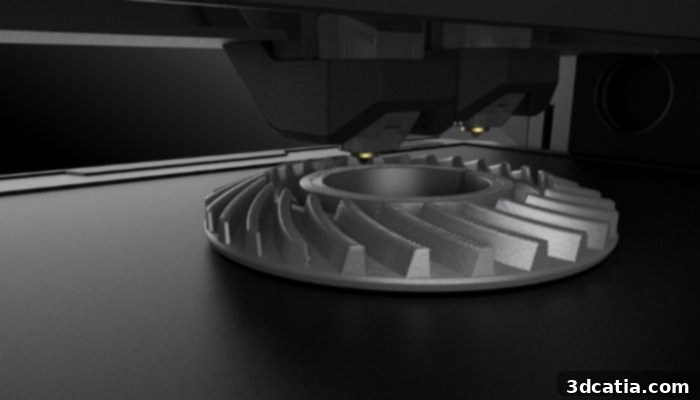
Extrusion metal 3D printing has gained popularity, often integrating metal within a polymer matrix before post-processing (photo credits: UltiMaker)
A Broader Vision: DEWA’s Commitment to Advanced Manufacturing
This latest patent is not an isolated achievement but rather builds upon a series of innovations from DEWA. Notably, it complements another recent patent for a novel build plate and method designed to enable the automatic detachment of 3D printed objects. This previous invention streamlines the post-printing workflow by simplifying part removal and facilitates continuous printing operations without manual intervention for each completed part. The combined impact of these patents signals DEWA’s dedicated focus on addressing key bottlenecks in additive manufacturing, particularly within metal 3D printing processes. By enhancing both the extrusion mechanics and the post-printing handling, DEWA aims to significantly improve efficiency, reduce labor requirements, and increase throughput for industrial applications.
DEWA’s overarching goal appears to be the development of a highly advanced and automated infrastructure for 3D printing and additive manufacturing in general. Their internal adoption of 3D printing for producing spare parts for devices and equipment is a prime example of this commitment. By fabricating components on-demand, DEWA can reduce reliance on external suppliers, mitigate supply chain disruptions, and potentially lower inventory costs. More critically, extending the lifespan of equipment through readily available 3D printed spare parts contributes to greater operational sustainability and resource efficiency. This internal application demonstrates a practical, results-driven approach to leveraging additive manufacturing for strategic advantage and achieving long-term sustainability objectives. DEWA’s efforts underscore a clear strategy to not only innovate but also to practically apply these innovations to enhance their core operations, further solidifying Dubai’s reputation as a leading hub for advanced manufacturing technologies. For more in-depth information, the official press release from DEWA is available HERE.
The Future of Metal 3D Printing in a Smart City Context
DEWA’s latest patented device for enhancing metal extrusion 3D printing signifies a crucial step forward for the additive manufacturing industry, particularly in regions committed to technological leadership and sustainable development. By addressing fundamental challenges in material processing and temperature control, this innovation promises to make metal 3D printing more reliable, cost-effective, and energy-efficient. Such advancements are vital for expanding the practical applications of metal additive manufacturing across various industrial sectors, from aerospace and automotive to energy and general manufacturing. As Dubai continues its journey towards becoming a global smart city, DEWA’s contributions in optimizing advanced manufacturing technologies are instrumental in building a resilient, innovative, and sustainable future, setting a benchmark for others to follow.
We’re eager to hear your thoughts on this exciting new metal extrusion device from DEWA! Share your insights and comments below, or engage with us on our social media platforms: LinkedIn, Facebook, and Twitter. Don’t miss out on the latest 3D printing news and developments – sign up for our free weekly Newsletter here, delivered directly to your inbox! You can also explore all our exclusive videos and content on our YouTube channel.
*Cover Photo Credits: DEWA