
Genecis Bioindustries: Pioneering Sustainable Bioplastics from Food Waste for 3D Printing
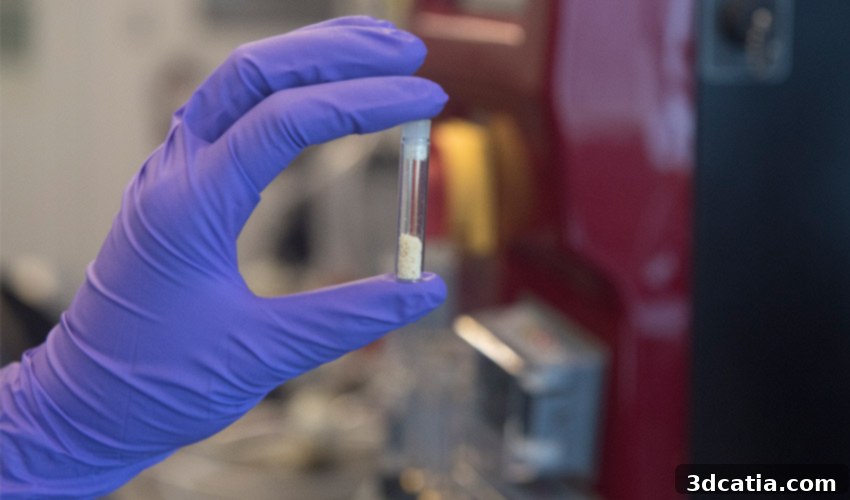
In an era increasingly focused on environmental sustainability and circular economy principles, Genecis Bioindustries Inc. stands out as a Canadian innovator. This dynamic company leverages advanced biotechnologies to tackle two pressing global challenges simultaneously: food waste and plastic pollution. Through a sophisticated bacterial fermentation process, Genecis converts organic waste into Polyhydroxyalkanoates (PHAs), a revolutionary class of fully biodegradable bioplastics. These versatile materials hold immense promise, particularly for applications like 3D printing filaments, paving the way for significantly more environmentally friendly manufactured parts. Unlike conventional plastics, PHA degrades completely in nature within a single year and in less than ten years even in challenging marine environments, offering a beacon of hope for a cleaner planet. To delve deeper into this transformative technology, its manufacturing processes, and its profound impact on both the 3D printing and broader manufacturing industries, we spoke with Michael Williamson, Polymers Manager at Genecis.
Genecis: A Visionary Leader in Sustainable Bioplastics for a Circular Economy
Genecis Bioindustries Inc. defines itself as a leading bio-cleantech company committed to up-cycling food waste into higher-value materials. This core mission addresses critical environmental concerns by transforming what would typically be discarded into a valuable resource. The flagship product line currently being commercialized by Genecis consists of Polyhydroxyalkanoates (PHAs). These are not just any biodegradable polymers; PHAs from Genecis are designed to readily degrade in both marine and terrestrial environments within approximately a year, offering a stark contrast to the persistent nature of traditional plastics. Beyond their biodegradability, PHAs boast superior properties compared to common conventional plastics such as polypropylene and polyethylene.
Specifically, Genecis’ PHAs exhibit a compelling suite of physical and chemical characteristics, including excellent biocompatibility, low water permeability, and high thermal resistance. Furthermore, PHAs are incredibly versatile, capable of being blended with various petroleum-based plastics and easily recycled to form composite resins. This adaptability makes them an ideal candidate for numerous applications, with 3D printing filaments being a particularly exciting prospect. When used in combination with other popular 3D printing materials like PLAs, ABS, or starch-based bioplastics, PHA filaments can significantly enhance the physical characteristics and environmental profile of printed end-products, driving innovation towards more sustainable manufacturing practices.

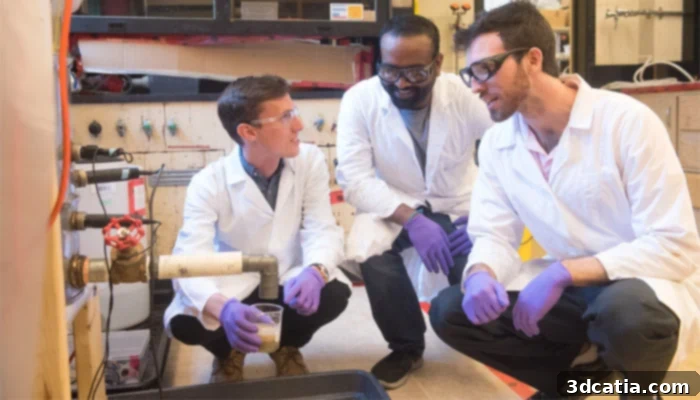
The Genecis team
The Inspiration Behind the Innovation: Transforming Food Waste into Bioplastic
The pioneering idea of transforming food waste into bioplastic originated from Genecis Founder, Luna Yu. Her extensive research into anaerobic digestion revealed the inherent unprofitability of conventional anaerobic processes and led to a profound insight: the entire process could be optimized by dividing it into two distinct and highly efficient microbial fermentation steps. The initial step involves a relatively rapid fermentation process that generates an intermediate product. This intermediate then serves as a nutrient source for a specialized set of bacteria, which are specifically selected for their ability to consume these carbons and, in turn, produce Polyhydroxyalkanoates (PHAs). This innovative approach not only enhances efficiency but also unlocks a new realm of possibilities for waste valorization. PHAs represent a family of high-quality biodegradable polymers that offer functionalities superior to many commodity plastics, paving the way for hundreds of potential applications across a diverse range of industries.
The Science of Sustainability: Describing the PHA Manufacturing Process
The production of Genecis’ PHAs employs an innovative and efficient three-step biotechnological process. This method significantly streamlines the conversion of organic waste into high-quality biodegradable polymers. The initial phase begins with the breakdown of organic waste, which is carefully treated with a specialized bacterial culture. This culture efficiently converts the complex organic matter into volatile fatty acids. These fatty acids are crucial intermediates, as they serve as the primary feedstock for the next stage.
In the second step, these volatile fatty acids are introduced to a different, specifically selected bacterial culture. These bacteria are cultivated for their unique ability to synthesize and accumulate PHAs within their cells as a carbon storage mechanism. This biological conversion is the heart of the process, transforming waste-derived carbon into valuable biopolymer precursors. Finally, an advanced extraction process is utilized to effectively crack open these bacteria cells, allowing for the isolation, compilation, and purification of the PHA plastic. The entire integrated process is remarkably efficient, typically completing within a mere seven days. This stands in stark contrast to other waste conversion methods, such as the production of biogas, which can often take up to 21 days, highlighting Genecis’ commitment to speed and sustainability.
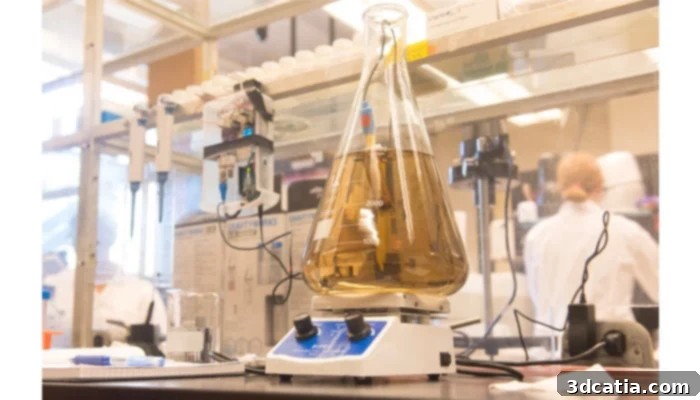
Photo Credits: Genecis
Unlocking Superiority: The Benefits of Genecis’ PHA Over Traditional Plastics
While Poly(lactic acid) (PLA)/PHA blends are already present in the market for various 3D printing applications, Genecis’ proprietary PHA offers a distinct set of advantages that elevate its performance and environmental credentials. Genecis’ PHAs are specifically engineered as a copolymer of Polyhydroxybutyrate (PHB) and Polyhydroxyvalerate (PHV), commonly referred to as PHBV. This specific copolymer composition is key to its enhanced properties. PHB, on its own, is recognized as a hard and strong material, sharing many similar properties with PLA. However, PHV introduces a crucial element: it is significantly softer and more ductile than both PHB and PLA. By meticulously altering the monomer composition within their polymer, specifically the ratios of HB to HV, Genecis can produce a pure, non-blended plastic that exhibits an expansive range of mechanical properties. This versatility is simply not achievable with standard PLA, allowing for greater customization and application suitability.
Beyond mechanical properties, another monumental advantage of Genecis’ PHA is its significantly faster degradation rate under normal environmental conditions, encompassing both terrestrial and marine environments. This is a critical factor in combating global plastic pollution. Unlike many chemically polymerized bioplastics, PHA is produced by bacteria, making it inherently recognizable and digestible by other microorganisms. As a result, these PHA bioplastics can be readily broken down by a wide array of bacteria and other microorganisms at ambient temperatures. This natural process occurs because PHA serves as a carbon storage molecule for these microorganisms. Consequently, these beneficial bacteria and microorganisms, which are abundant in typical environmental conditions, efficiently degrade PHAs. Simply leaving PHA in soil or a home composter allows nature to take its course, breaking it down without forming any toxic byproducts, thus completing a truly circular material lifecycle.

Photo Credits: Genecis
Broad Compatibility: PHA for FDM and Industrial Manufacturing
A significant objective for Genecis is to ensure the widespread applicability of its innovative material. Genecis’ PHA is being developed to be compatible with the vast majority of Fused Deposition Modeling (FDM) 3D printers. This broad compatibility means that designers, engineers, and manufacturers can integrate this sustainable bioplastic into their existing workflows without requiring substantial equipment overhauls. Beyond FDM 3D printing, Genecis’ PHA is also designed to work seamlessly with various other industrial manufacturing equipment, including extrusion, injection, and blow molding processes. The precise parameters for processing, such as melt flow rate, extrusion speed, and cooling temperature, will naturally be process-specific. Genecis is actively engaged in comprehensive examination and study of these parameters with their polymers to provide optimal guidelines and ensure robust performance across diverse manufacturing platforms.
PHA vs. PLA: A Deeper Dive into Biodegradability and Performance
To truly appreciate the environmental advantages of PHA, it is crucial to understand its distinctions from Poly(lactic acid) (PLA), another commonly referenced bioplastic. Regular amorphous PLA, while biodegradable under specific conditions, presents several significant limitations. It is notably brittle and exhibits low impact strength and tear strength, making printed or manufactured parts susceptible to damage upon impact. Furthermore, PLA possesses a low heat distortion temperature, typically ranging from 55-65°C. This characteristic severely restricts its applications, rendering it unsuitable for items exposed to elevated temperatures, such as coffee cups, hot food utensils, or components used in warmer environments.
In terms of permeability, PLA also falls short compared to many other plastics. It has a much higher oxygen and water permeability, which makes it an unsuitable material for applications requiring long shelf lives, such as bottles for carbonated drinks or food packaging designed to protect against moisture and air. These material deficiencies often necessitate the use of blends or coatings, complicating its environmental profile.
Regarding biodegradability, PLA demonstrates a complex profile. While it biodegrades within a few months under industrial composting conditions – which feature high temperatures (typically above 55°C) and controlled moisture levels that promote microbial breakdown – its performance in natural environments is vastly different. PLA is significantly more resistant to biodegradation under normal terrestrial environmental conditions, such as garden soil, and even in home composters, where conditions are less controlled and often cooler. Critically, PLA does not readily biodegrade in marine environments. This contributes to the escalating plastic pollution crisis in oceans, much like conventional petroleum-derived plastics. Estimates for PLA biodegradation rates in natural marine settings or terrestrial environments outside of industrial composters often extend into the 80+ year range, making it a persistent pollutant in many real-world scenarios.
In stark contrast, PHA exhibits a profoundly superior and significantly faster biodegradation profile in both terrestrial and marine environments. The fundamental difference lies in their production method: PHA is produced through microbial polymerization, a natural biological process, whereas PLA is primarily polymerized chemically. PHA is naturally synthesized by microorganisms as an intracellular carbon and energy storage molecule. Consequently, when PHA is released into the environment, it is readily recognized and broken down by a diverse array of microorganisms. These microorganisms efficiently metabolize PHA to access the stored carbon, facilitating its complete biodegradation. This intrinsic microbial compatibility is what sets PHA apart.
Particularly in marine environments, PHA displays markedly better degradability than PLA. A compelling study highlighted this disparity, demonstrating 50-80% degradation of PHA under marine conditions within a 12-month period. By comparison, PLA showed a mere 5-8% degradation within the same timeframe, a rate strikingly similar to that of petroleum-based low-density polyethylene (LDPE), which is widely considered non-biodegradable. This evidence underscores PHA’s potential as a genuine solution to plastic pollution, offering a truly circular and environmentally benign material alternative for a vast range of applications.
Pioneering the Future: Genecis’ Strategic Projects and Scalability
Genecis is not resting on its laurels; the company has an ambitious roadmap with several key projects currently in active development. Over the next several months, a primary focus will be on validating the optimal operating parameters for their PHA polymers across a number of industrial applications. This includes fine-tuning the material for large-scale extrusion, injection molding, and blow molding processes, crucial steps for widespread industrial adoption and commercial viability. Another major objective slated for the upcoming year involves the meticulous quantification of the intricate relationships between processing parameters, manufacturing process variables, and the resulting polymer properties. Genecis plans to achieve this through the sophisticated application of Artificial Intelligence (AI) schemes, which will analyze vast amounts of collected experimental data, allowing for predictive modeling and optimized material performance.
In addition to these research and development efforts, Genecis is also in the advanced stages of commissioning a crucial demonstration-scale plant. This facility represents a significant leap forward in the company’s scaling-up strategy. Upon completion, this plant will possess the capability to convert an impressive three tonnes of organic waste weekly into ready-to-use PHA pellets. This vital stage in their scale-up journey will serve as the final, pivotal step before the full-scale commercialization of Genecis’ groundbreaking technology. The success of this demonstration plant will prove the economic and operational feasibility of their process, paving the way for a more sustainable future in material manufacturing.
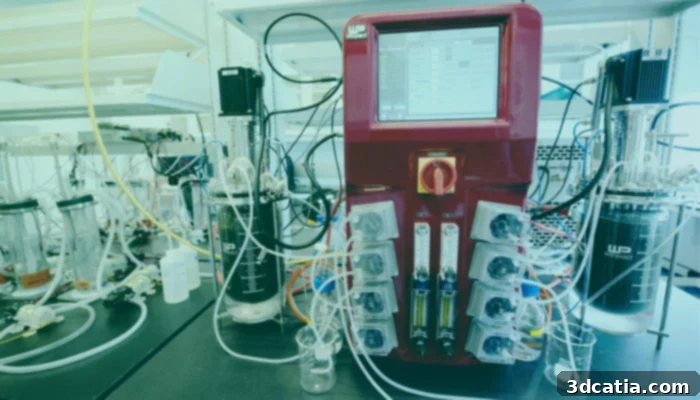
Photo Credits: Genecis
A Call to Action: Shaping a Sustainable Future with Bioplastics
The power of consumers to influence major brands and drive market change cannot be overstated. Consumer demands, wants, and needs are the ultimate drivers for product development and corporate strategy. The message for sustainable, biodegradable plastics has resonated globally, and its importance is growing. Plastic pollution is now widely acknowledged as a major environmental issue requiring urgent action. We must continue to amplify this message, while also drawing critical attention to the pervasive problem of food waste – the sheer volume produced and the limited end-of-life options available, particularly in regions like North America.
Promoting innovative solutions like Genecis’ technology is exceptionally useful because it directly tackles both these interconnected problems. To effectively commercialize this groundbreaking technology and bring its environmental benefits to a global scale, robust support is essential. This support must come from multiple stakeholders: engaged consumers demanding sustainable products, proactive large corporations integrating bioplastics into their supply chains, and supportive governments implementing policies that foster sustainable innovation and responsible waste management. Together, we can drive a paradigm shift towards a truly circular economy and a healthier planet.
You can find more information HERE.
What are your thoughts on Genecis’ innovative work in transforming food waste into sustainable bioplastics? We’d love to hear your insights! If you have additional information or comments you’d like to share, please leave a comment in the section below or engage with us on our Facebook and Twitter pages! Don’t forget to sign up for our free weekly Newsletter to receive all the latest news in 3D printing directly in your inbox!