
Miele’s 3D4U Project: Empowering Users with Free 3D Printable Home Appliance Accessories
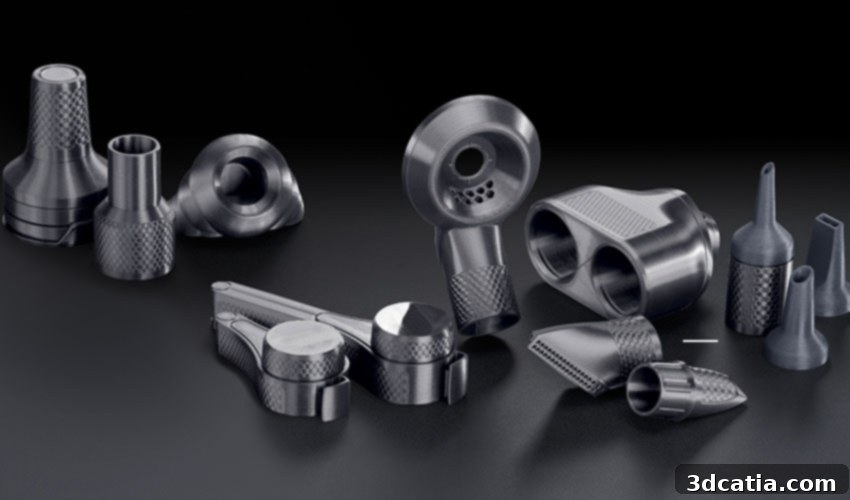
Miele, the renowned German manufacturer globally recognized for its commitment to high-end domestic appliances and robust commercial equipment, made a significant announcement in May regarding its innovative 3D4U project. This initiative involves making free STL files for a variety of household appliance accessories readily available to the public. The strategic move leverages one of the core benefits of additive manufacturing – the ability to produce unique, one-off parts at a relatively low cost. This makes the creation of custom accessories and even replacement parts for your home appliances not just possible, but also economically viable through this cutting-edge technology.
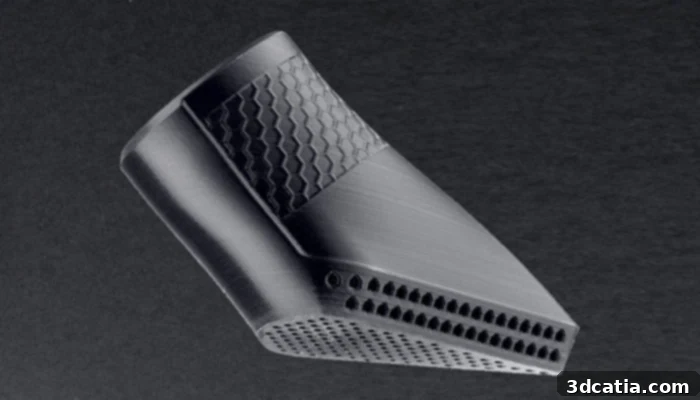
The range of accessories Miele is offering through 3D4U is both practical and ingenious. From specialized drill attachments designed to improve the functionality of vacuum cleaners by managing dust during DIY tasks, to simple yet effective coffee clips that help keep your ingredients fresh, Miele is democratizing access to meticulously designed 3D models. These models are specifically engineered to enhance utility and convenience within people’s homes. Beyond merely providing the files, Miele goes a step further by defining and recommending optimal 3D printing parameters. This crucial guidance ensures that users, regardless of their 3D printing expertise, can achieve successful and high-quality prints. To delve deeper into this groundbreaking project and understand its intricacies, we had the privilege of speaking with David Buhl, the driving force behind the technical development of 3D4U.
1. Introducing David Buhl: Bridging Innovation and 3D Printing at Miele
The 3D4U project, a testament to collaborative innovation, was meticulously developed by a dedicated team at Miele comprising over 30 experts. Each specialist contributed their unique expertise across various critical phases of the project’s development, from initial concept to final implementation. The complex technical development, overseeing all engineering and design aspects, was expertly coordinated by myself, David Buhl. My professional journey is rooted in mechanical engineering, complemented by extensive experience in innovation management. Over my tenure at Miele, I have garnered invaluable insights from working in diverse fields, ranging from exploratory blue-sky research, which pushes the boundaries of possibility, to hands-on product engineering across a wide array of Miele’s product lines.
My personal connection with 3D printing is deeply intertwined with my professional life. From a professional standpoint, I have been intimately familiar with 3D printing technologies for many years, primarily through its indispensable role in prototype development. For instance, numerous components destined for innovative products like the new Miele Triflex HX1 rechargeable handstick underwent rigorous preliminary trials as 3D-printed parts. This rapid prototyping capability allows us to quickly iterate and refine designs long before committing to costly traditional manufacturing processes. On a personal note, my engagement with 3D printing extends beyond the workplace; I proudly own a DLP-3D printer, and several members of our talented team are enthusiasts themselves, owning FLM printers from various manufacturers. This dual professional and private involvement underscores Miele’s inherent curiosity and active participation within the vibrant 3D printing community, demonstrating our commitment to understanding and leveraging this technology from every angle.
2. The Genesis of 3D4U: Why Miele Embraced User-Generated 3D Printing
Our involvement in the 3D printing fraternity, often through spare-time activities and community engagement, provided us with profound insights into the challenges faced by hobbyists and enthusiasts. We became acutely aware of just how difficult and time-consuming it is to create truly high-quality and reliable 3D data records suitable for printing. Frequently, multiple printing trials and meticulous adjustments are required before a 3D model finally achieves its desired properties, functionality, and aesthetic quality. This trial-and-error process can be frustrating and costly for individuals, often leading to wasted material and effort.
While the internet offers a plethora of ready-to-use models, notably on platforms like Thingiverse, many of these are generously created and shared by dedicated members of the 3D printing community. We observed that there were indeed data records for Miele vacuum cleaners, among other appliances, that had been independently created by private individuals. This organic development clearly demonstrated a significant, unmet need for high-quality, pre-validated templates and designs specifically for Miele products. At the same time, we recognized that developing such precise, functional, and durable 3D data records is an incredibly time-consuming and skill-intensive endeavor for private individuals. With the launch of 3D4U, Miele has effectively resolved this challenge, transforming a potential barrier into an accessible benefit for our valued customers. We have already published a growing series of meticulously engineered data records for various components, significantly extending the already considerable and innovative range of Miele accessories available, and empowering our users to customize and enhance their home appliances like never before. This initiative underlines Miele’s dedication not only to product excellence but also to fostering a creative and empowered user community.
3. Miele’s Deep Integration with 3D Printing: Beyond Prototyping
Miele’s relationship with 3D printing extends far beyond a recent experimental venture; it is deeply embedded within our product development lifecycle. For many years, we have been enthusiastic proponents of Selective Laser Sintering (SLS), primarily utilizing this advanced additive manufacturing technique to create highly functional and robust prototypes for our extensive range of development projects. SLS allows for the production of parts with excellent mechanical properties, making it ideal for rigorous testing scenarios where components need to withstand real-world stresses. However, our adoption of 3D printing is not limited to SLS alone; we regularly employ other sophisticated 3D printing processes to achieve specific material and functional requirements. This includes techniques that yield transparent components for visual inspection or fluid flow analysis, as well as processes for creating parts from sintered metal, which are critical for components requiring high strength, thermal resistance, and durability. These diverse applications ensure that Miele can leverage the full spectrum of additive manufacturing capabilities to meet complex engineering challenges.
The integration of 3D printing into our development process provides several critical advantages. It allows us to conduct comprehensive tests on our prototypes at a remarkably fast pace and at a very early juncture in the product development cycle. This agility means that any necessary improvements or design modifications can be identified and introduced into the next stage of prototyping almost immediately, drastically shortening development timelines and reducing overall costs associated with traditional tooling. This iterative design process is fundamental to Miele’s philosophy of continuous improvement and innovation. Once a product design has achieved a sufficient degree of maturity and has passed all preliminary 3D-printed prototype tests, the components transition to conventional mass production technologies, such as precision injection moulding. These conventionally manufactured parts then undergo the usual comprehensive Miele life cycle tests, which are globally recognized for their stringent standards, exceptional durability, and long-term reliability benchmarks. Therefore, 3D printing serves as an invaluable enabler, significantly contributing to Miele’s unwavering commitment to guaranteeing the functionality, exceptional quality, and long-term reliability of Miele products right from their earliest developmental stages, ultimately delivering superior performance to our customers.
4. Unlocking Practical Benefits: Who Can Utilize Miele’s 3D4U STL Files?
At present, our 3D4U service is primarily targeted at private individuals who actively search platforms like Thingiverse for innovative solutions and practical enhancements for their home. Based on our analysis of user comments, download statistics, and the geographical distribution of downloads, we confidently presume that users from all corners of the globe are eagerly accessing and utilizing our free STL files. This global reach underscores the universal appeal and practical utility of our offerings, empowering a diverse community of makers, DIY enthusiasts, and Miele customers seeking to personalize and improve their domestic environments. Our goal is to make high-quality, functional designs accessible to everyone with a 3D printer.
A unique and highly valuable aspect of the 3D4U project is that each component’s STL file comes complete with a detailed overview of Miele’s recommended 3D printing parameters. These parameters are not arbitrary; they are the result of extensive internal testing where Miele engineers have successfully created these printed parts using a variety of common Fused Layer Modelling (FLM) printers. This meticulous testing and validation significantly increases the chances of success for users attempting to print our parts using the 3D4U files on their own machines, minimizing frustration, material waste, and the steep learning curve often associated with 3D printing. The practical benefits offered by these accessories for enhancing daily life around the home are remarkably varied and address common household needs, demonstrating Miele’s focus on user-centric design and problem-solving.
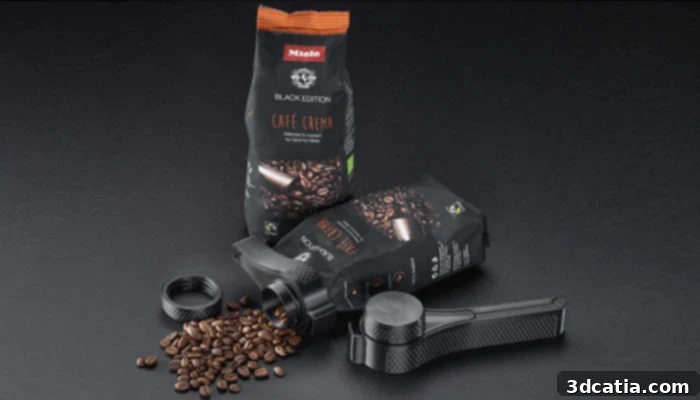
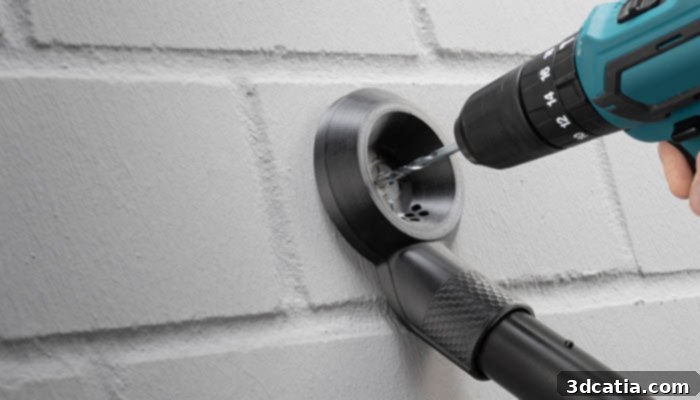
Consider the 3D4U Coffee Clip, for instance. This seemingly simple accessory serves a dual purpose: it helps to keep foodstuffs, particularly ground coffee, fresher for longer by creating an effective seal on open bags, and simultaneously makes pouring significantly easier and less messy by providing a convenient spout. This small design innovation greatly enhances daily kitchen routines. Another prime example is the drill attachment for vacuum cleaners. This ingenious tool functions like a suction pad, adhering securely to the wall to collect dust and debris directly at the source while you drill. This not only makes working with an electric drill considerably more convenient by eliminating the need for a second person to hold a vacuum, but also significantly enhances safety by ensuring a cleaner workspace and clearer vision, reducing inhalation of fine dust. The core focus of 3D4U remains firmly on developing and providing accessories that offer tangible, concrete benefits specifically in the context of Miele domestic appliances. This targeted approach allows us to fully deploy our extensive product development skills and Miele’s commitment to user-centric design, ensuring every accessory genuinely improves the user experience and adds value to their Miele products.
5. Miele’s Forward-Looking Vision for the Additive Manufacturing Market
Looking ahead, Miele anticipates continued and substantial technological progress within the realm of 3D printing hardware. We foresee significant advancements that will lead to a considerable curtailment of printing times, making additive manufacturing even more efficient and accessible for both industrial and domestic applications. This will not only speed up prototyping processes but also make on-demand manufacturing of end-use parts more viable. Beyond hardware, a parallel and equally exciting trend we are keenly observing is the steadily increasing range of printable materials. This expansion in material science is opening up entirely new functionalities and possibilities for 3D printed objects, allowing for greater versatility in terms of strength, flexibility, heat resistance, biocompatibility, and other specialized properties. At Miele, we are committed to actively leveraging this ever-growing spectrum of technological options to further expand and innovate within the additive manufacturing market, exploring new applications and product categories that were previously unimaginable.
Over recent years, the market for additive production has indeed undergone truly considerable and transformative changes. One of the most impactful developments has been the proliferation of inexpensive, yet highly capable, 3D printers that are now readily affordable for private individuals. This democratization of technology has empowered countless hobbyists, makers, and DIY enthusiasts to experiment, create, and innovate from their homes, fostering a global community of creators. Parallel to this hardware revolution, there has been a remarkable increase in the number and sophistication of data exchange platforms, such as Thingiverse or MyMiniFactory, which serve as vibrant hubs for sharing, downloading, and collaborating on 3D models. Miele’s 3D4U project stands as a pioneering example in this evolving landscape; we are proud to be the first domestic appliance manufacturer worldwide to offer a larger series of meticulously designed accessories for downloading free of charge. This bold step not only provides tangible value to our customers but also sets a precedent within the industry, encouraging other manufacturers to explore similar user-empowering initiatives.
We confidently presume that the journey of evolution for additive manufacturing is far from over, and that there will be many more exciting steps to come in this process. Envisioning future possibilities, we could, for example, even imagine expanding the 3D4U concept to offer certain vital spare parts for our products as 3D-printable versions. This would not only enhance product longevity and repairability, aligning with growing sustainability trends and reducing electronic waste, but also offer unparalleled convenience and customization options for our global customer base by allowing them to print a part exactly when and where they need it. Miele’s commitment to embracing and driving these innovations positions us at the forefront of the smart home and manufacturing sectors, continually seeking ways to empower our users and enhance their experience with our products, demonstrating a clear vision for a more sustainable and user-centric future.
6. A Call to Action: Explore the World of Miele 3D4U!
Are you intrigued by the possibilities of customizing and enhancing your Miele domestic appliances with innovative, 3D-printed accessories? Are you curious to see the creative and practical solutions that Miele’s expert team has developed for you? Then we warmly invite you to take the next step and explore the full range of designs available. Head over to our dedicated 3D4U Thingiverse profile today. There, you’ll find all the free STL files, complete with Miele’s recommended printing parameters, ready for you to download and bring to life with your own 3D printer. This is your opportunity to become an active participant in Miele’s innovation journey and tailor your home appliances to your specific needs.
We are eager to hear your thoughts and experiences! What do you think about Miele’s visionary 3D4U project? How do you envision using these free 3D models to enhance your home life, or what other accessories would you love to see Miele offer? Let us know your feedback, ideas, and creations in a comment below, or join the conversation on our vibrant community pages on Facebook and Twitter. Your insights are invaluable as we continue to evolve this groundbreaking project. And to ensure you stay ahead of the curve with all the latest developments, groundbreaking research, and inspiring entrepreneurial stories in the world of 3D printing, remember to sign up for our free weekly Newsletter. Get all the essential insights delivered straight to your inbox, keeping you connected to the future of additive manufacturing and Miele’s continued innovation.