
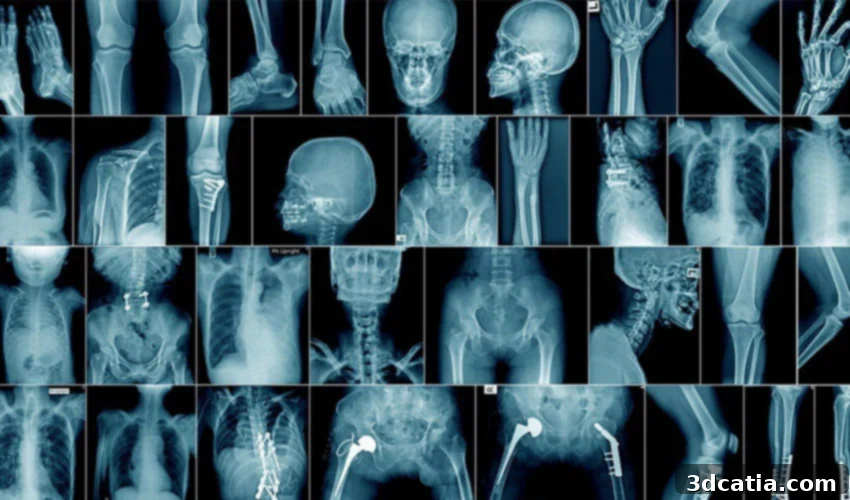
Sandvik Spearheads the Future of Medical Implants with Advanced Titanium 3D Printing and ISO 13485 Certification
In a significant stride towards revolutionizing healthcare, Sandvik’s team of additive manufacturing and metal powder specialists are actively shaping the future of medical implants. This high-tech global engineering group is at the forefront of unlocking the immense potential of 3D printed titanium devices for the medical industry. Their state-of-the-art titanium powder plants, located in Sandviken, Sweden, are central to these pioneering efforts. A monumental achievement occurred during the summer of 2020 when Sandvik’s specialist powder plant was awarded the prestigious ISO 13485:2016 medical certification for its renowned Osprey titanium powders. This certification firmly positions their highly automated production process at the pinnacle of medical device development, ensuring superior quality and safety for critical applications.
The Transformative Power of Additive Manufacturing in Healthcare
For those observing advancements in medical science, the evolution of medical implant technology over recent decades has been nothing short of remarkable. From basic prosthetics to sophisticated internal devices, the quest for better patient outcomes has driven continuous innovation. Today, additive manufacturing, commonly known as 3D printing, stands out as a profoundly disruptive technology with the capacity to fundamentally transform the landscape of patient treatment. Traditional manufacturing methods often grapple with limitations such in terms of design complexity, speed of production, and the ability to customize for individual needs. These constraints have historically meant compromises in patient care, longer wait times, and less than optimal implant performance.
However, the demands of modern medical implant developers are rigorous: they require manufacturing solutions that deliver exceptional speed for urgent cases, unparalleled individualization to perfectly match patient anatomies, and the capability to produce intricate, complex designs that enhance functionality and integration. This is precisely where 3D printing technologies excel. When strategically paired with highly biocompatible materials such as titanium, these technologies are unequivocally demonstrating their immense potential in creating life-changing, patient-specific solutions. The layer-by-layer additive process allows for geometries previously considered impossible, enabling features like porous structures that promote bone ingrowth and reduce rejection rates, significantly improving the efficacy and longevity of implants.
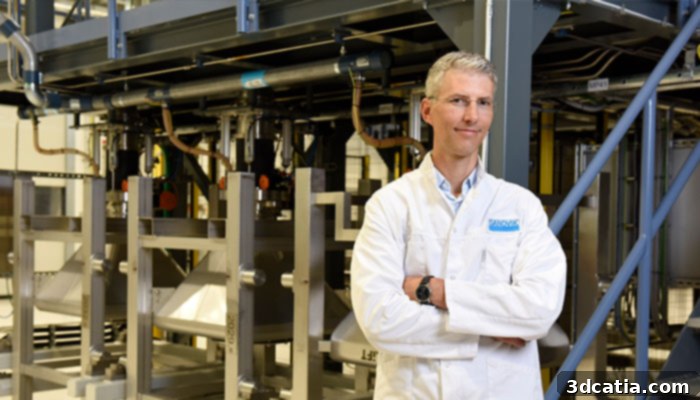
Harald Kissel, R&D Manager at Sandvik Additive Manufacturing
Titanium: The Ultimate Biocompatible Material for Medical Implants
Titanium 3D Printing: A Perfect Synergy
“Titanium, 3D printing, and the medical sector are truly the perfect match,” explains Harald Kissel, R&D Manager at Sandvik Additive Manufacturing. This synergy stems from titanium’s exceptional intrinsic properties. As one of the very few metals readily accepted by the human body, titanium exhibits remarkable biocompatibility, minimizing adverse reactions and promoting successful integration with biological tissues. Its high strength-to-weight ratio ensures that implants are robust yet lightweight, enhancing patient comfort and mobility. Furthermore, titanium boasts excellent corrosion resistance, a crucial factor for devices intended to remain within the body for extended periods, providing long-term reliability and safety. Paired with 3D printing, which can rapidly deliver bespoke results, this combination is particularly vital for an industry where swift action and precision could literally be the difference between life and death for patients.
The unique capabilities of titanium, particularly when processed through additive manufacturing, extend to the creation of advanced features such as intricate lattice structures. These porous designs mimic natural bone, encouraging osteointegration – the direct structural and functional connection between living bone and the surface of a load-bearing implant. This biological integration is paramount for the long-term success of implants, reducing the risk of loosening and subsequent need for revision surgeries. Sandvik’s expertise in producing high-quality titanium powders ensures that these advanced structures can be realized with the purity and consistency required for medical applications, further cementing titanium’s role as the material of choice for next-generation implants.
Sandvik’s Unrivaled Expertise and ISO 13485:2016 Certification
Sandvik’s commitment to advancing medical additive manufacturing is underscored by its deep material science expertise and its rigorous quality control. The company’s specialized powder plant is renowned for producing Osprey titanium powders, which are meticulously engineered for additive manufacturing processes. These powders are characterized by their exceptional purity, spherical morphology, and consistent particle size distribution—qualities that are absolutely critical for achieving high-performance and repeatable results in 3D printing, especially for critical medical applications. The automated production process employed by Sandvik minimizes human intervention, reducing variability and ensuring batch-to-batch consistency, which is a cornerstone of reliability in medical device components.
The award of the ISO 13485:2016 medical certification for Sandvik’s Osprey titanium powders is a testament to their unwavering dedication to quality and compliance. This international standard specifies requirements for a quality management system where an organization needs to demonstrate its ability to provide medical devices and related services that consistently meet customer and applicable regulatory requirements. For medical device manufacturers, partnering with an ISO 13485 certified supplier like Sandvik significantly streamlines their own regulatory approval processes. It provides concrete assurance that the raw materials used in their implants meet the highest global benchmarks for safety, performance, and traceability, thereby accelerating the time-to-market for innovative medical solutions.
Revolutionizing Design and Production with Advanced Software
The latest advancements in software play an equally crucial role, allowing manufacturers to leverage the benefits of 3D printing to an even greater extent. Harald Kissel elaborates on this, explaining that by integrating sophisticated computer tomography (CT) data, it becomes possible to optimize designs in ways that are simply unattainable through conventional manufacturing methods. This approach enables the creation of highly complex internal geometries and customized external contours that perfectly conform to a patient’s unique anatomy, leading to superior fit and function. For instance, patient-specific scans can be directly translated into a 3D model, which is then refined by engineers to create an implant that integrates seamlessly with existing biological structures.
“What’s more, we can make our designs lighter, with less material waste, and in shorter lead times,” Kissel adds. This is a significant advantage in the medical field. Lighter implants reduce stress on surrounding tissues and improve patient comfort. The additive nature of 3D printing means that material is only deposited where needed, drastically minimizing waste compared to subtractive manufacturing processes, which can be both costly and environmentally impactful. Furthermore, the ability to rapidly iterate designs and produce parts on demand significantly shortens lead times, moving from diagnosis to surgical intervention much faster. This efficiency means patients could receive a perfectly matching, high-performing, and lightweight device in a fraction of the time, leading to quicker recovery and improved quality of life.
The Dawn of Personalized Medicine: Custom Implants and Prostheses
Sandvik firmly believes that the era of custom cranial implants and bespoke medical prostheses is not a distant aspiration but a present reality. The sophisticated technology required to develop and manufacture these highly personalized medical devices already exists and is being continuously refined. This represents a paradigm shift from a “one-size-fits-all” approach to truly patient-centric healthcare, where each implant is meticulously crafted to meet the specific requirements of an individual. Imagine a patient who has suffered a severe skull injury receiving a cranial plate perfectly contoured to their unique skull structure, ensuring optimal protection, aesthetic outcome, and integration. Or a limb amputee receiving a prosthesis designed not just for function, but also for comfort, weight distribution, and a natural feel that dramatically improves their daily life.
Moreover, the critical medical certification achieved by Sandvik for its titanium powders is instrumental in enabling the company’s medical customers to navigate the complex regulatory landscape. Bringing a medical application to market requires rigorous supplier approvals and adherence to stringent industry standards. Sandvik’s ISO 13485:2016 certification provides a crucial foundation, assuring regulatory bodies of the quality and safety of the fundamental materials. This significantly eases the burden on medical device manufacturers, allowing them to focus on innovation and patient care, knowing their supply chain is robust and compliant. This symbiotic relationship between advanced material suppliers and device manufacturers is accelerating the adoption of 3D printed solutions in the medical sector, promising a future of increasingly personalized, effective, and accessible healthcare.
Explore Sandvik’s Innovations in Medical Additive Manufacturing
To delve deeper into Sandvik’s groundbreaking projects and contributions within the medical sector, you can find more detailed information and insights HERE. The commitment to innovation, quality, and patient safety is evident across all their initiatives. Furthermore, the video provided below offers a compelling visual overview and a clearer understanding of the profound impact achieved by combining the superior properties of titanium with the transformative capabilities of 3D printing in the medical field. It showcases real-world applications and the potential for improving patient lives.
Join the Conversation on Medical 3D Printing
What are your thoughts on these latest developments in the medical sector and the future of personalized implants? We encourage you to share your insights and engage with our community. Let us know in a comment below or connect with us on our Facebook and Twitter pages! Don’t miss out on the cutting-edge advancements in additive manufacturing—sign up for our free weekly Newsletter to receive all the latest news in 3D printing straight to your inbox!